
If you are asking are slim cigarettes safer than regular ones, the short answer is no, and the evidence for that is clearer than the marketing suggests. Slim cigarettes can produce lower machine-measured yields of some smoke emissions, but a smoker is not a machine, and the research we opened shows people can compensate. This guide goes through what is known, what is not, and why the only change that reliably cuts your risk is to stop. It is the same trap as the old low-tar claims, which we cover in the same myth for lights.
What makes a cigarette slim
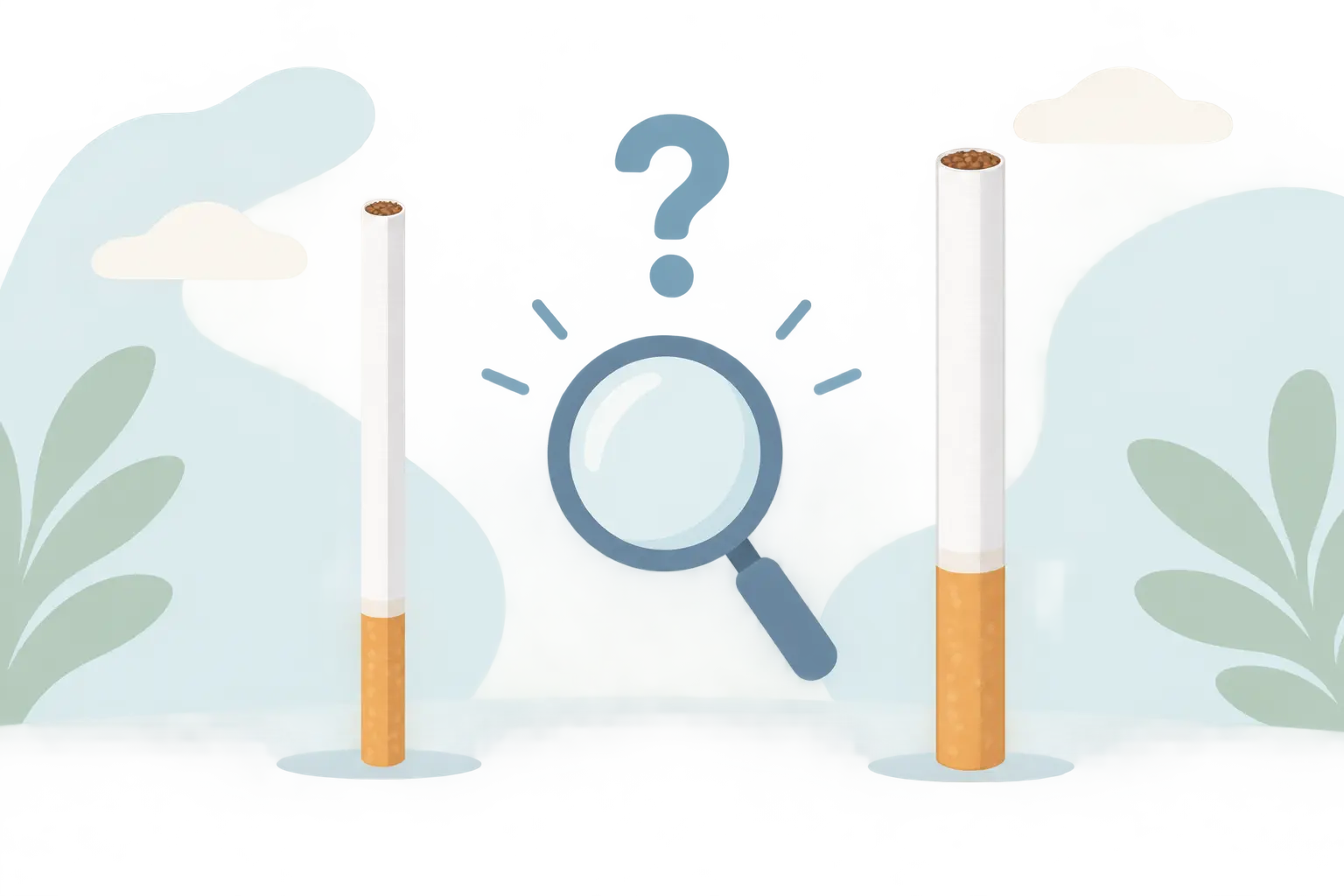
A slim cigarette is simply a narrower one. Ordinary cigarettes and slims burn the same plant, and both are lit and inhaled the same way. The difference is diameter, and often the packaging and the marketing around it. A review of cigarette design features describes how cigarette dimensions are one of the physical features that influence emissions, appeal and smoking behavior, alongside filter ventilation and flavor capsules (Tobacco Regulatory Science, 2018).
That review reached a careful conclusion: “Slim cigarettes have lower yields of some smoke emissions, but smoking behavior can be more intense than with standard cigarettes.” Both halves of that sentence matter. The first is why slims feel like a step down. The second is why they may not be one.
Tar and nicotine yields versus what you actually inhale
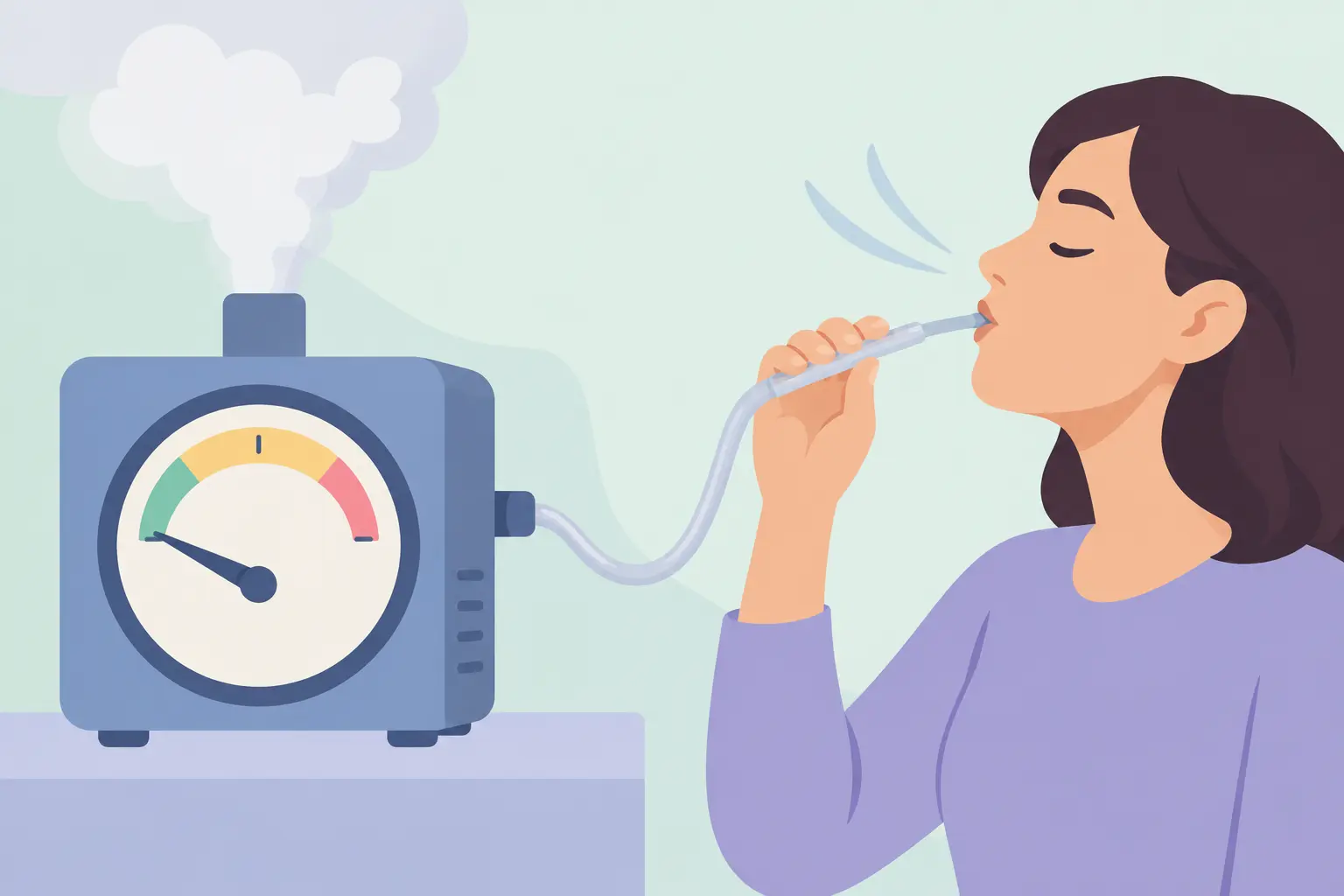
When researchers compare cigarettes, they usually use a smoking machine, which draws the same puffs from every cigarette. The National Cancer Institute explains the problem in its fact sheet on light cigarettes: “a machine cannot predict how much tar a smoker inhales,” and “the way the machine smokes a cigarette is not the way a person smokes a cigarette” (NCI fact sheet on light cigarettes).
Some machine readings really are lower for slims, and we say so plainly. A 2023 study in China measured fine particles in smoke from regular and slim cigarettes. It found that regular-cigarette PM2.5 was 116% higher than slim-cigarette PM2.5 in sidestream smoke and 31% higher in mainstream smoke. The authors then added the caution that matters: the lower levels “did not necessarily mean that S cigarettes were less harmful,” because harm also depends on other particles and on smoking habits (Environmental Science and Pollution Research, 2023).
In other words, a lower number on a lab instrument is a measurement of the cigarette, not a measurement of your risk.
Compensation: deeper, more frequent puffs
This is the mechanism behind the low-tar story, and it applies to slims too. The NCI states that “tar exposure from a light cigarette can be just as high as that from a regular cigarette if the smoker takes long, deep, or frequent puffs,” and concludes that light cigarettes “do not reduce the health risks of smoking.”
The design review describes a related effect for filter ventilation: it lowers machine-generated emissions but “leads to perceptions of lighter taste and relative safety in smokers who can unwittingly employ more intense smoking behavior to obtain the desired amount of nicotine.” Nicotine is the driver. If a cigarette delivers less per puff, a dependent smoker’s body asks for more puffs.
We did not find a trial that measured exactly how much more a slim smoker inhales, and we will not invent a percentage. What we can say is what the sources say: smoking behavior can be more intense, and the machine yield cannot capture it.
How slims are marketed
Slims are not only a product format. They are a marketing category. A Canadian paper on youth smoking begins from the point that “tobacco companies market to females and young people through slim cigarette design features and packaging” (Canadian Journal of Public Health, 2018). In the three Youth Smoking Survey cycles and one cancer-risk survey it analyzed, slim use was higher among females than males, though the difference was not statistically significant. Most students, 59.8% of females and 53.3% of males, answered “I don’t know” when asked whether slims were more or less harmful than regular cigarettes.
A survey of 20,055 people in 19 Chinese cities found a similar pattern in adults. Among smokers, 56.5% of women and 35.5% of men smoked slims, and 37.0% of the reasons slim smokers gave related directly to harm reduction. The authors added that there is an “absence of any evidence that these products actually reduce harm” and warned against repeating “the sad history of low-tar cigarettes” (PLoS One, 2021).
What the studies show on exposure
Here is where the claims stand, using only studies we opened:
| Question | What the source says |
|---|---|
| Are some machine yields lower? | Yes. Slims have lower yields of some smoke emissions (Tobacco Regulatory Science review, 2018). |
| Does that lower real exposure? | Not shown. Smoking behavior can be more intense (same review). |
| Is there evidence slims reduce harm? | A 2021 PLoS One paper cites an “absence of any evidence that these products actually reduce harm.” |
| Is the smoke different in kind? | A 2026 study of polonium-210 found conventional and slim cigarettes showed “overlapping profiles.” |
| Do smokers think slims are safer? | 21% of 5,592 smokers in six European countries said slims are less harmful (EUREST-PLUS survey). |
The polonium-210 result is worth a plain explanation. Polonium-210 is a radioactive element the NCI links to tobacco fertilizer in its smokeless tobacco fact sheet. The 2026 study measured it in conventional cigarettes, slim cigarettes and heated tobacco products and found the first two had overlapping profiles, so slim and conventional cigarettes could not be cleanly separated (Food and Chemical Toxicology, 2026).
The European survey of 5,592 adult smokers in Germany, Greece, Hungary, Poland, Romania and Spain found that “overall, 21% of smokers perceived slim cigarettes as less harmful than regular cigarettes,” and the authors concluded that misperceptions are high where slim use is more common (Open Research Europe, 2021).
Regulation: the EU rules on slims and packs
The European Union considered a ban on slims and did not adopt one. The EUREST-PLUS paper notes that “despite the initial discussion to include a ban on sale of slim cigarettes, it was excluded in the final TPD” (the 2014 Tobacco Products Directive).
The Directive does speak to the misleading-label problem. Recital 27 says tobacco products or packaging “could mislead consumers, in particular young people, where they suggest that these products are less harmful,” and lists words such as “low-tar”, “light”, “mild” and “slim” as examples. Article 13 then forbids labelling that “suggests that a particular tobacco product is less harmful than others.” Article 14 sets the pack format: “Unit packets of cigarettes shall have a cuboid shape” and must “include at least 20 cigarettes” (Directive 2014/40/EU on EUR-Lex).
We could not open the UK government’s standardized packaging page, which is no longer available, and we did not fetch a US rule on slims, so we will not describe those regimes. If you live outside the EU, the legal position on slims may differ.
How to read a claim that slims are lighter or milder
The marketing language around slims has changed over the years, but the questions to ask have not. When you see a claim that a slim, light or mild cigarette is a better choice, ask four things.
- Who measured it? A machine reading from a lab is a measurement of the cigarette, not of the person smoking it.
- Did anyone measure real smokers? The research we opened says behavior can be more intense, so a claim with no data on real puffing tells you little.
- What is it being compared with? Lower than a regular cigarette is not the same as low. The NCI says there is no such thing as a safe cigarette.
- Who benefits from you believing it? The Canadian and Chinese papers describe design and packaging aimed at women and young people.
None of this is a judgment on you. Many smokers picked slims or lights in good faith, because the pack seemed to promise less. The EU’s own Directive treats words like “slim” as potentially misleading for exactly that reason.
The only change that cuts risk
The NCI is blunt on this: “The only guaranteed way to reduce the risk to your health, as well as the risk to others, is to stop smoking completely.” It also says people who switched to light cigarettes “are likely to have inhaled the same amount of toxic chemicals, and they remain at high risk of developing smoking-related cancers and other disease.”
The same logic applies if you are cutting down rather than switching. Our piece on why cutting down is not enough explains why a smaller number of cigarettes still carries risk. For the range of illnesses, see the cancers smoking causes.

Slims also cost money. If you are smoking them because you think they are a smarter choice, set that next to the bill. Our country-by-country look at what smoking costs per year shows how the habit adds up, and you can enter your own pack price in the iQuit money dashboard.
If you switched to slims to cut down
Plenty of people move to slims thinking it is a first step. That instinct to lower your risk is a good one; the product is just the wrong tool. A more reliable first step is a quit date and a plan. iQuit lets you pick the method that fits you, whether cold turkey or gradual reduction, and includes disease-risk insights for 11 conditions. That is general information about what quitting can change, not a diagnosis.
A craving log helps you see which cigarettes you smoke on habit and which you genuinely crave. The SOS tools, including breathing exercises and craving surfing, cover the peak of an urge, and a pharmacist or doctor can talk through approved quit medicines if you want extra help.
Frequently Asked Questions
Are slim cigarettes safer than regular cigarettes?
No evidence says so. A 2018 review found slims have lower yields of some emissions, but smoking behavior can be more intense. The National Cancer Institute says there is no such thing as a safe cigarette (Tobacco Regulatory Science, 2018; NCI).
Do slim cigarettes have less tar?
Some machine-measured yields are lower. But the NCI says a machine cannot predict how much tar a smoker inhales, and tar exposure can be just as high with long, deep or frequent puffs (NCI fact sheet on light cigarettes).
Why do people think slim cigarettes are less harmful?
Design and marketing play a role. In a survey of 5,592 smokers in six European countries, 21% said slims are less harmful than regular cigarettes, and Canadian youth often answered that they did not know (Open Research Europe, 2021; Canadian Journal of Public Health, 2018).
Do women smoke slim cigarettes more?
In one survey of urban Chinese smokers, 56.5% of women and 35.5% of men smoked slims. A Canadian youth study found higher slim use among females, though the difference was not statistically significant (PLoS One, 2021; Can J Public Health, 2018).
Are slim cigarettes banned in the EU?
No ban was adopted. The 2014 Tobacco Products Directive excluded a slim ban, though its recital 27 lists the word slim among words that can mislead and Article 13 bars labelling that suggests a product is less harmful (EUR-Lex).
Do slim cigarettes cause cancer?
Smoking any kind of cigarette causes cancer. The NCI says people who smoke any kind of cigarette are at much greater risk of lung cancer than people who do not, and that smoking causes cancers of the lung, mouth, throat, bladder and other sites (NCI).
What is the best way to cut risk if I smoke slims?
Stop smoking completely. The NCI says that is the only guaranteed way to reduce risk. A pharmacist or doctor can advise on approved quit medicines, and a plan with a quit date gives you something concrete to follow (NCI fact sheet on light cigarettes).
See what quitting changes with iQuit
iQuit is free to download on Google Play and the App Store. Choose cold turkey or gradual reduction, log your cravings, use the SOS tools when an urge peaks, and see your days smoke-free and money saved add up.
Download iQuit Free on Google Play Download on the App Store


