
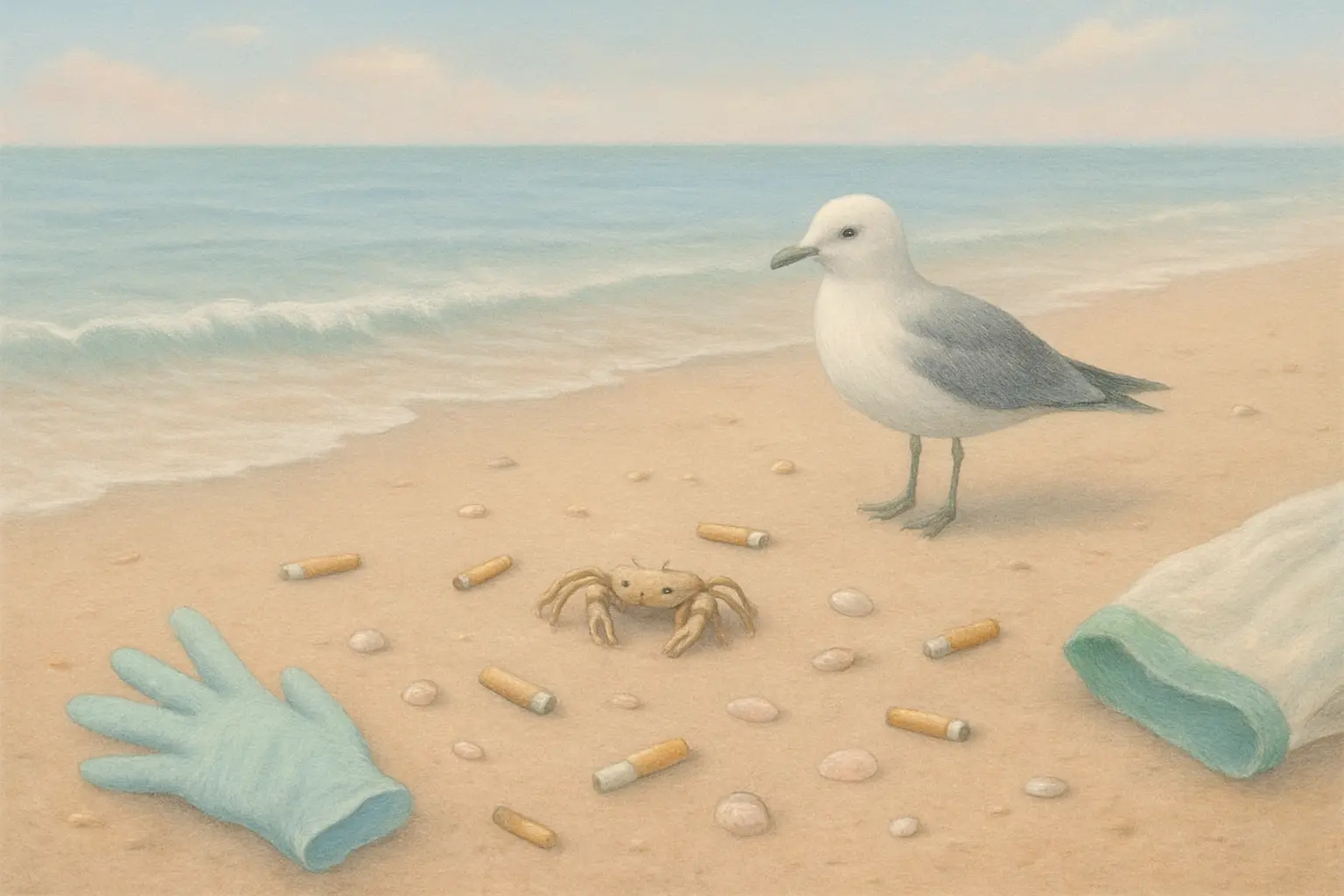
Cigarette butt pollution is one of the largest litter problems on Earth. The World Health Organization estimates that about 4.5 trillion cigarette filters pollute oceans, rivers, streets, parks and beaches every year, making tobacco products the most littered item on the planet. Butts have been the single most collected item in 40 years of global beach cleanups, and each filter is made of plastic fibers that release toxic chemicals as it slowly breaks apart.
Key Cigarette Butt Pollution Figures
The table brings together the most-cited numbers, each with the organization that published it and the year. Several come from WHO’s 2022 World No Tobacco Day campaign, which focused on tobacco and the environment.
| Measure | Figure | Source and year |
|---|---|---|
| Cigarette filters polluting the environment each year | About 4.5 trillion | WHO, 2022 |
| Rank among littered items worldwide | Most littered item on the planet | WHO, 2022 |
| Chemicals in tobacco products that can leach out | Over 7,000 | WHO, 2022 |
| Time for a cigarette butt to decompose | Approximately 10 years | WHO, 2022 |
| Smokers who discard butts improperly | About 65% | WHO, 2022, citing littering surveys |
| Cigarette butts collected on beaches, 1986 to 2025 | 65,632,086, the top item overall | Ocean Conservancy International Coastal Cleanup, 2026 report |
| Cigarette butts collected in the 2025 cleanup | 1,197,920, second only to plastic bottles | Ocean Conservancy, 2026 report |
Some of these figures are estimates built from surveys and models rather than direct counts. No one has physically counted 4.5 trillion filters. Beach cleanup totals, by contrast, are real items picked up and logged by volunteers.
How Many Butts Are Littered Each Year
WHO’s 2022 news release on tobacco’s environmental impact quotes WHO health promotion director Dr Ruediger Krech: “Roughly 4.5 trillion cigarette filters pollute our oceans, rivers, city sidewalks, parks, soil and beaches every year.” The same figure was used in a 2011 study in Tobacco Control, which described cigarette butts as the most common form of litter.
Behavior plays a big part. WHO’s World No Tobacco Day 2022 materials report that about 65% of smokers dispose of their butts improperly, for example on sidewalks or beaches.
A single smoker’s contribution adds up faster than most people expect. Our lifetime cigarette count calculator shows how many cigarettes, and therefore filters, a typical smoking history involves.
Are Cigarette Filters Biodegradable?
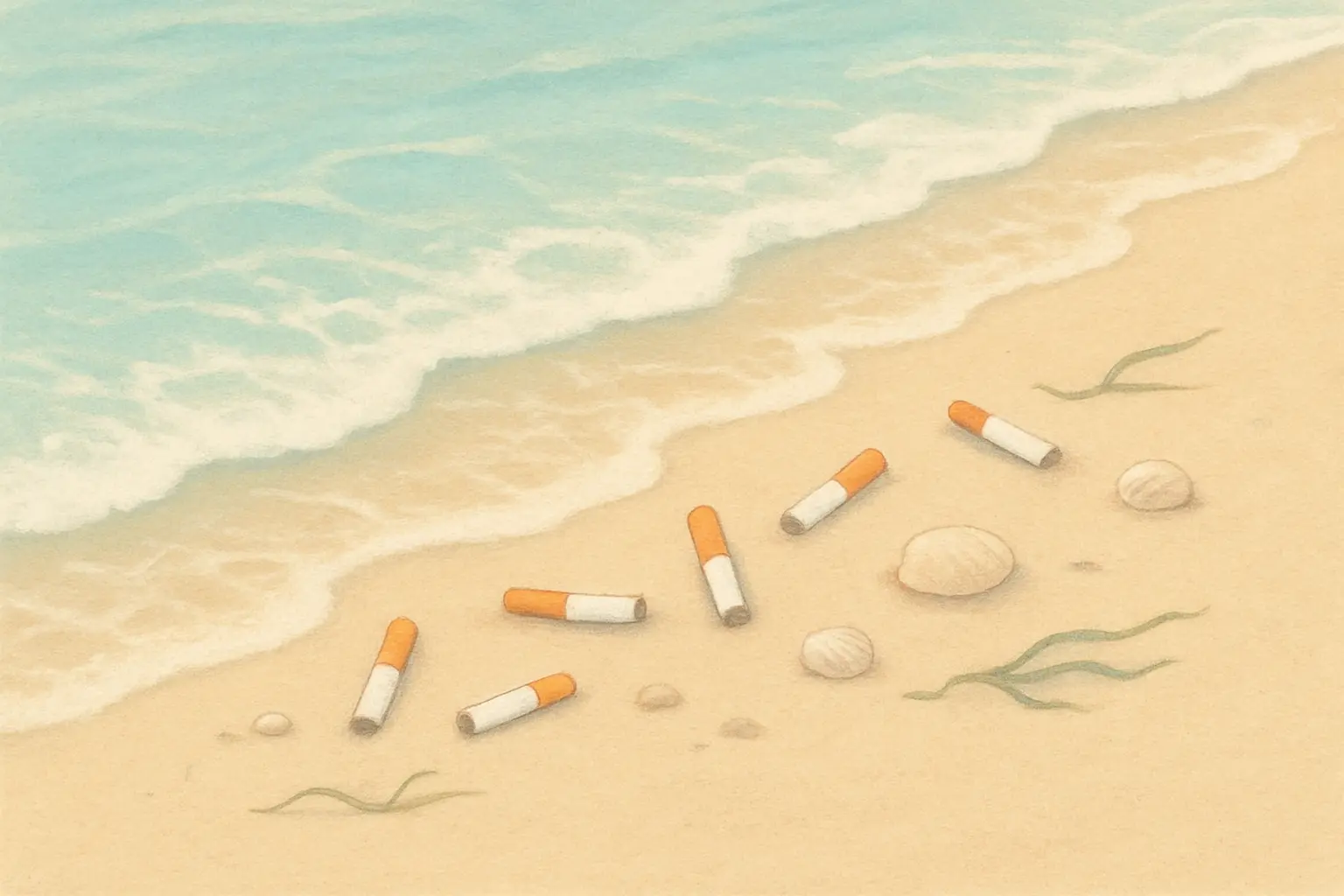
Not in any practical sense. Most cigarette filters are made from cellulose acetate, a plastic. WHO states that cigarette filters contain microplastics and are the second-highest form of plastic pollution worldwide.
WHO’s World No Tobacco Day 2022 Q&A says a cigarette butt takes approximately 10 years to decompose. During that time, nicotine and other chemicals can leach into the surrounding soil and water.
Filters also shed plastic fibers as they break apart. A 2021 study in Science of the Total Environment found that a smoked filter is made of more than 15,000 strands and releases about 100 small microfibers a day in water. The researchers roughly estimated that about 0.3 million tons of potential microfibers could reach aquatic environments each year from this source, and they measured a low rate of degradation.
Filters do not make smoking safer either. WHO says there is no evidence that filters have any proven health benefits, a point we cover in detail in our guide to what filters actually do.
What Butts Do to Water and Wildlife
The best-known evidence comes from a 2011 study published in Tobacco Control. Researchers soaked cigarette butts in water and tested the resulting liquid on fish, using standard US Environmental Protection Agency bioassays.
| What was soaked in water | Butts per liter that killed half the marine fish (topsmelt) | Butts per liter that killed half the freshwater fish (fathead minnow) |
|---|---|---|
| Smoked butts (filter plus leftover tobacco) | About 1 | About 1 |
| Smoked filters without tobacco | 1.8 | 4.3 |
| Unsmoked filters | 5.1 | 13.5 |
The “LC50” is the concentration that kills half the fish in the test. For smoked butts with leftover tobacco, that was about one butt in a liter of water for both species. Smoked filters without tobacco were less toxic, and unsmoked filters were the least toxic, but even they killed fish at higher concentrations.
In other words, a single discarded butt in a small volume of water can be lethal to some fish in laboratory conditions. Rivers and seas dilute that effect, so the laboratory result does not translate directly to open water. The 2021 microfiber study also found toxic effects on Daphnia magna, a tiny freshwater crustacean often used to test water quality.
The chemicals involved are the same ones that make tobacco smoke harmful to people. Our secondhand smoke statistics cover the human side of that exposure.
Beach and Street Clean-Up Data
Ocean Conservancy’s International Coastal Cleanup is the largest long-running record of litter found on shorelines. Its 2026 report, covering the 40th cleanup in 2025, shows cigarette butts at or near the top of the list.
| Rank | All years, 1986 to 2025 | 2025 cleanup |
|---|---|---|
| 1 | Cigarette butts: 65,632,086 | Plastic beverage bottles: 1,338,712 |
| 2 | Food wrappers: 32,469,436 | Cigarette butts: 1,197,920 |
| 3 | Plastic beverage bottles: 26,967,584 | Plastic bottle caps: 885,854 |
| 4 | Plastic bottle caps: 20,466,040 | Beverage cans: 840,046 |
| 5 | Straws and stirrers: 16,310,248 | Food wrappers: 809,645 |
Across 40 years, volunteers have logged about 439 million items, and 65.6 million of them were cigarette butts. That is roughly one item in seven, based on our calculation from the report’s totals. In 2025 alone, 630,069 volunteers collected 1,197,920 butts.
In the United States, cigarette butts were the number one item collected in the 2025 cleanup. Ocean Conservancy notes they were the top item for US volunteers for many years, and that there are now more than 1,200 US city or municipal laws addressing butt litter, such as smoke-free beaches.
The World Health Organization sets out the wider environmental toll of tobacco in this short video.
Who pays for the clean-up
WHO says the cost of cleaning up tobacco litter falls on taxpayers rather than on the industry. Its 2022 estimates for four countries are shown below.
| Country | Estimated cost per year |
|---|---|
| China | About US$2.6 billion |
| India | About US$766 million |
| Brazil | Over US$200 million |
| Germany | Over US$200 million |
WHO built these estimates from total litter clean-up costs and the share of litter that is tobacco waste. For Brazil, China and India, it had no direct litter cost data and used averages from similar countries, so the figures are approximate.
Tobacco’s Wider Environmental Footprint
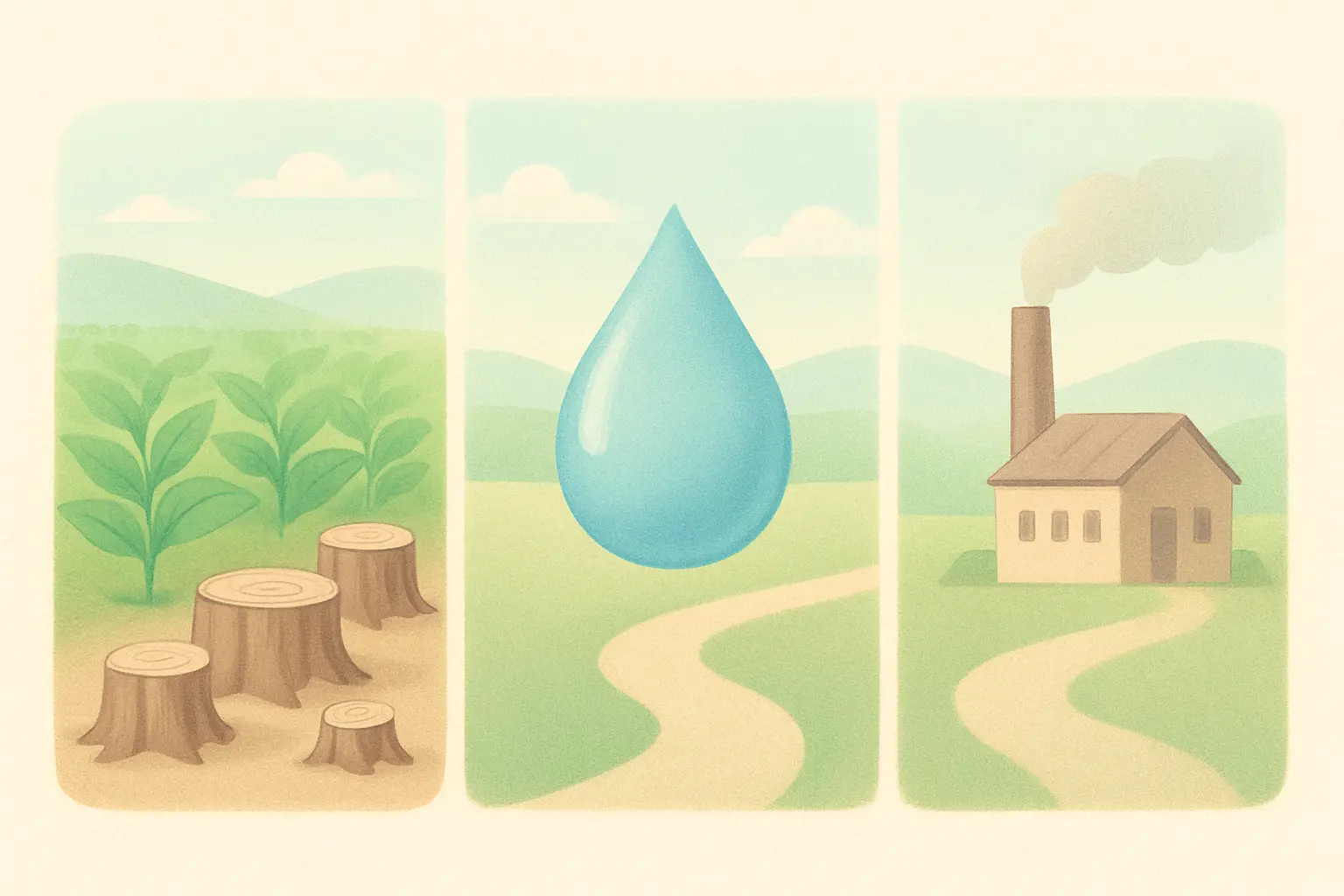
Butts are only the last stage of a cigarette’s life. WHO says that every year the tobacco industry costs the world 600 million trees, 200,000 hectares of land and 84 million tonnes of carbon dioxide.
- Trees: WHO estimates it takes approximately one entire tree to make 300 cigarettes.
- Land: about 200,000 hectares are cleared each year for tobacco growing and curing.
- Water: the full life cycle of a single cigarette uses approximately 3.7 liters of water.
- Carbon: the industry’s carbon footprint from producing, processing and transporting tobacco equals about one-fifth of the carbon dioxide produced by commercial airlines each year.
Vapes create their own waste problem, including batteries and plastic. The UK has now acted on single-use devices, as our explainer on the disposable vape ban describes.
Filter Bans and Producer Responsibility
Governments are starting to treat cigarette filters as the plastic waste they are. The main approaches are making producers pay, labeling, and in some proposals banning filters outright.
| Measure | Where | Source |
|---|---|---|
| Extended producer responsibility, making the tobacco industry pay for clean-up | France, Spain and San Francisco | WHO, 2022 |
| Cigarette butts named in single-use plastics rules, with labeling and producer clean-up obligations | European Union | European Commission |
| City or municipal laws on butt litter, such as smoke-free beaches | More than 1,200 in the United States | Ocean Conservancy, 2026 report |
| Proposal to ban cellulose acetate filters as single-use plastics | Advised by Belgium’s Superior Health Council | Everaert et al., Frontiers in Public Health, 2023 |
| Call to consider banning cigarette filters | Global | WHO, 2022 |
The European Union’s single-use plastics rules include cigarette butts among the ten plastic items most often found on Europe’s beaches. According to the European Commission, those ten items plus fishing gear make up 70% of marine litter in the EU. The rules include labeling that warns about harm to nature and clean-up obligations for producers.
WHO has gone further, urging policy-makers to treat filters as single-use plastics and to consider banning them. A 2023 article in Frontiers in Public Health reports that Belgium’s Superior Health Council has advised a ban on cellulose acetate filters at national and European level.
The simplest fix
Policy can shift who pays, but the only way to guarantee zero butts is to stop smoking. Every cigarette not smoked is a filter that never reaches a beach or a drain. iQuit’s dashboard counts the cigarettes you have avoided since quitting, which is also a running count of the butts you have not added to the litter stream. Our cleanup tips for smoke smell at home cover the other traces smoking leaves behind, and our look at how many ex-smokers there are shows how many people have already made that switch.
Methodology and Sources
All figures in this article come from sources we opened on 15 September 2026.
- WHO (2022): the World No Tobacco Day news release and Q&A on tobacco and the environment, based on the report Tobacco: poisoning our planet. The 4.5 trillion figure and clean-up costs are estimates.
- Ocean Conservancy, International Coastal Cleanup 2026 report: items counted by volunteers in 2025 and since 1986. Totals depend on where and how many volunteers take part, so they are not national litter rates.
- Slaughter et al. (2011): laboratory toxicity tests on two fish species.
- Belzagui et al. (2021): laboratory study of microfiber release from smoked filters, including a rough global estimate.
- European Commission and Everaert et al. (2023): EU rules and the Belgian filter-ban recommendation.
We did not find a verified, up-to-date count of cigarette butts littered in the UK, US, Canada, Australia or Ireland, so we do not give national litter totals.
Cigarette Butt FAQ
How many cigarette butts are littered each year?
About 4.5 trillion cigarette filters pollute oceans, rivers, streets, parks, soil and beaches every year, according to the World Health Organization. WHO describes tobacco products as the most littered item on the planet. The figure is an estimate rather than a direct count (WHO news release, May 2022).
Are cigarette butts biodegradable?
Not in practice. Most filters are made of cellulose acetate, a plastic, and WHO says a butt takes approximately 10 years to decompose. As they break down, filters shed microplastic fibers: a 2021 study found a smoked filter releases about 100 small microfibers a day in water (WHO, 2022; Belzagui et al., 2021).
Are cigarette butts toxic to fish?
Yes. In laboratory tests, leachate from about one smoked cigarette butt per liter of water killed half of the marine and freshwater fish tested. Filters without tobacco were less toxic, and unsmoked filters least toxic, but all three killed fish at some concentration (Slaughter et al., Tobacco Control, 2011).
Are cigarette butts the most common beach litter?
Over the long term, yes. Cigarette butts are the top item in 40 years of the International Coastal Cleanup, with 65,632,086 collected since 1986. In the 2025 cleanup they ranked second worldwide, with 1,197,920 collected, behind plastic bottles, and first in the United States (Ocean Conservancy, 2026 report).
What percentage of smokers litter their cigarette butts?
About 65%, according to surveys of littering behavior cited by the World Health Organization. That means roughly two in three smokers dispose of butts improperly, for example on sidewalks or beaches. Those butts add to the roughly 4.5 trillion filters WHO says pollute the environment every year (WHO World No Tobacco Day 2022 Q&A; WHO, 2022).
Who pays to clean up cigarette butts?
Mostly taxpayers, according to WHO. It estimates tobacco litter clean-up costs about US$2.6 billion a year in China, US$766 million in India, and over US$200 million each in Brazil and Germany. France, Spain and San Francisco have passed laws making the tobacco industry pay instead (WHO, 2022).
Are cigarette filters going to be banned?
None of the sources we checked reported a national filter ban, but pressure is growing. WHO has urged policy-makers to consider banning filters, and Belgium’s Superior Health Council has advised a ban at national and European level. The EU already treats cigarette butts as single-use plastic waste, with labeling and producer clean-up duties (WHO, 2022; Everaert et al., 2023; European Commission).
How does smoking affect the environment beyond butts?
WHO estimates the tobacco industry costs the world 600 million trees, 200,000 hectares of land and 84 million tonnes of carbon dioxide every year. A single cigarette’s life cycle uses about 3.7 liters of water, and the industry’s carbon footprint equals about one-fifth of commercial aviation’s (WHO, 2022).
Every Cigarette You Skip Is One Less Butt
Quitting is the one fix that removes the litter at the source. iQuit is a free app that counts the cigarettes you have avoided and the money you have saved, helps you log cravings and triggers, and gives you SOS support when an urge hits. It is free on Google Play and the App Store.
Download iQuit Free on Google Play Download on the App Store


