Learning how to be around smokers without smoking again matters most before a specific event, not in the abstract — a work drinks night, a family barbecue, a reunion with old friends who still smoke. You can’t control who else lights up around you, but you can decide in advance how you’ll handle it, and that decision is what actually protects a quit attempt.
Can You Be Around Smokers Without Relapsing?
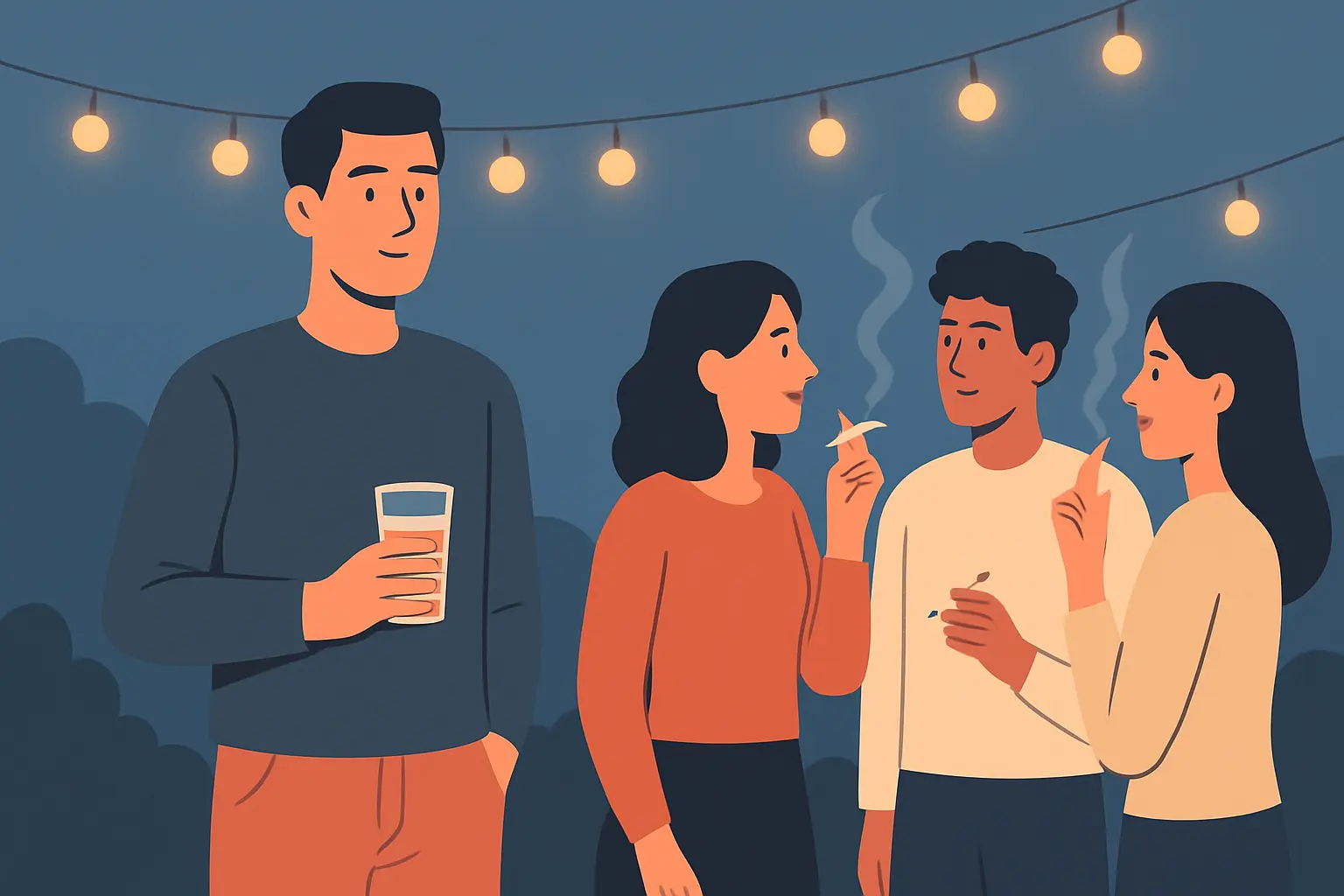
Yes — plenty of people who’ve quit spend time with smokers regularly, at work, at family events, in friend groups, without relapsing. What makes the difference is usually preparation rather than raw willpower. A 2025 study using an attention-tracking task found that when smokers were shown a social smoking scene, their attention snapped toward smoking-related cues faster than when shown a non-smoking social scene — evidence that a smoking social setting genuinely does sharpen craving-relevant attention, not just imagination. (This particular study looked at current smokers rather than people trying to quit, but the underlying mechanism — social context shaping attention toward cues — is a reasonable basis for taking the situation seriously rather than assuming willpower alone will carry you through it.)
The same research found something useful: when people were prompted to recall the negative consequences of smoking beforehand, that heightened attention toward smoking cues was reduced. In practice, that supports something a lot of quitters already do instinctively — reminding yourself concretely why you quit, right before walking into a situation where others will be smoking.
None of this means you should treat every social gathering as a minefield to survive. Most quit attempts involve dozens of ordinary exposures to smoking — a coworker on a break, a friend at a barbecue, a stranger outside a bar — and the overwhelming majority pass without incident once you have a plan. The goal of preparing isn’t to eliminate risk entirely; it’s to make sure that on the handful of occasions a craving does spike, you’re not improvising a response for the first time under pressure.
Before: Deciding Your Exit in Advance
Decide these three things before you arrive, not once you’re already there:
- Your exit line. A short, ready phrase for stepping away — “I’m going to grab some air” or “be right back” — that doesn’t require justifying yourself.
- Your time limit. It’s fine to plan on staying for a fixed window rather than the whole event, especially for your first few social situations post-quit.
- What you’ll say if offered one. Decide your response before you’re asked, so you’re not composing an answer under pressure — see a ready script for saying no when offered a cigarette.
Having these decided in advance means you’re executing a plan rather than making a decision from scratch in the moment a craving is highest — which is the hardest possible time to decide anything well.
During: Where to Stand, What to Hold, What to Say
Small physical choices reduce how much a situation feels like “smoking time” even when you’re standing right next to people who are smoking:
| Choice | Why it helps |
|---|---|
| Stand slightly upwind or at the edge of the group | Reduces direct smoke exposure and the strongest smell cues |
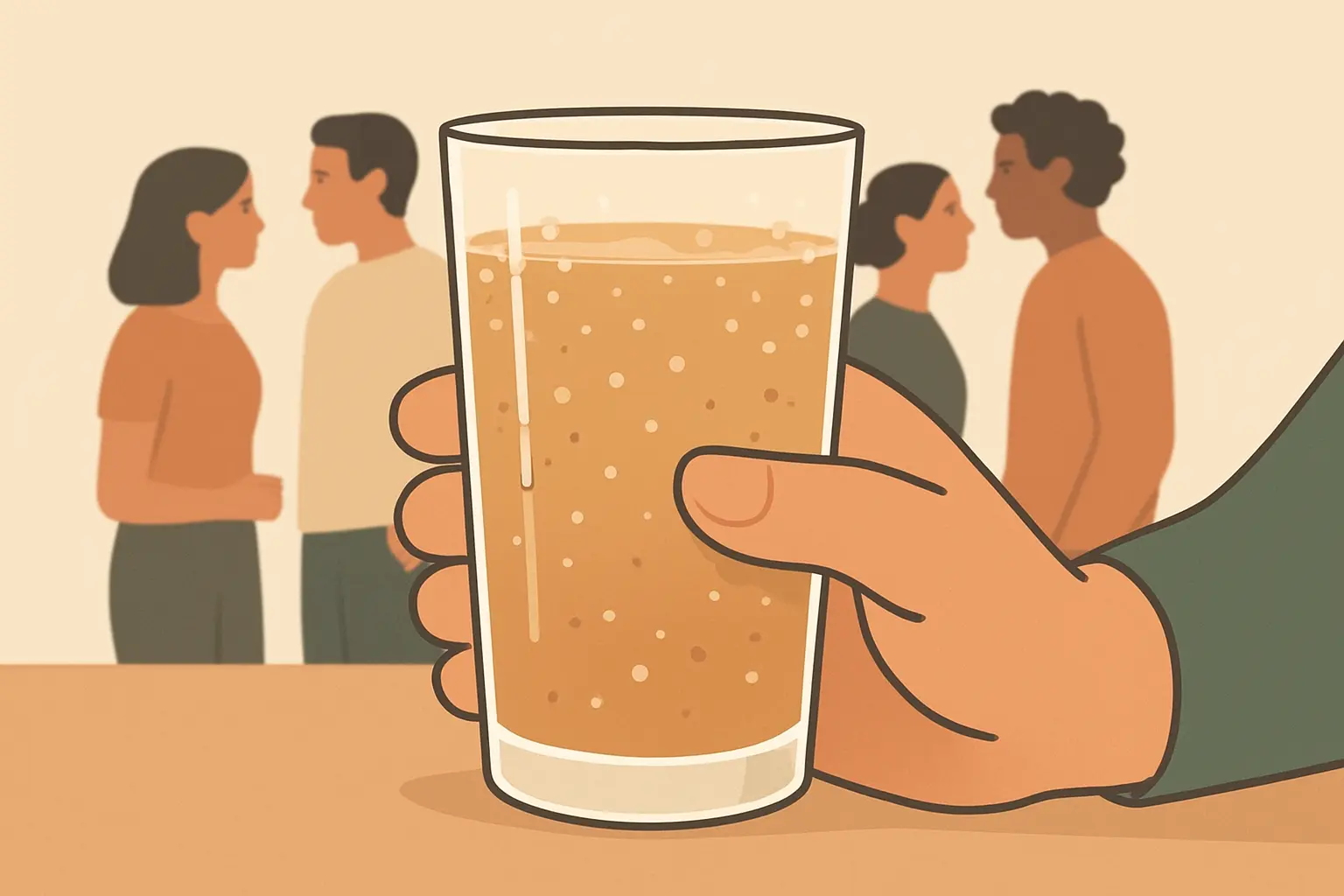
| Hold a drink or snack in your dominant hand | Occupies the hand-to-mouth motion that used to be filled by a cigarette |
| Keep talking rather than going quiet | Conversation is a natural distraction from the smoking happening around you |
| Position yourself near a non-smoker in the group | Gives you a natural person to talk to who isn’t stepping away to smoke |
Why the Smell Suddenly Appeals Again
Months into a quit, the smell of cigarette smoke can unexpectedly feel appealing rather than repulsive, which surprises and worries a lot of quitters. This isn’t a sign your quit is failing — smell is one of the most powerful, direct triggers for learned associations, and a strong scent can reactivate an old memory-and-craving pathway even after conscious desire to smoke has mostly faded. Recognizing it as a passing cue reaction, rather than evidence you secretly still want to smoke, tends to make it easier to let it pass without acting on it.
This can happen even in someone who genuinely finds smoking distasteful most of the time. A specific combination — a particular brand’s smell, a familiar voice, the exact time of evening you used to smoke — can reach back further than a general dislike of cigarettes does. Treating it as one specific cue doing its job, rather than a referendum on your whole quit, keeps a single strange moment from turning into a spiral of self-doubt.
Groups, Work Drinks, and Family Events
Different social settings carry different pressure:
- Work drinks: Smoking breaks outside are often also networking moments — you can join for the conversation without joining for the cigarette, or catch the same people back inside afterward.
- Family events: Relatives who’ve known you as a smoker for years may offer out of habit, not malice. A calm, consistent “no thanks, I quit” usually gets the message across within one or two events.
- Old friend groups: These carry the strongest cue power, since the association between the group and smoking together is often deeply rehearsed. It’s reasonable to see these friends in non-smoking contexts more often while your quit is still new.
Alcohol specifically tends to compound all of the above by lowering inhibition around cravings — for the combination of drinking and social smoking cues specifically, see how to drink without smoking.
The 3-Minute Rule in a Live Situation
Cravings typically peak and pass within a short window — often just a few minutes — which is the basis for a simple rule: when a craving hits in a live social situation, commit to waiting it out for a set few minutes before deciding anything. In practice:
- Notice the craving without immediately reacting to it.
- Start a short timer, mentally or on your phone.
- Do something with your hands and attention for that window — a drink, a conversation, a short walk.
- Reassess only after the timer ends, not during it.
Most people find the urgency has dropped substantially by the time the window is up, even though the situation around them (other people still smoking) hasn’t changed at all.

After: Logging What Happened
Right after the event, while it’s fresh, note a few things: which moment felt hardest, what helped, and what you’d do differently next time. This turns each social exposure into data rather than a one-off test you either “passed” or “failed.” Over a few events, patterns tend to show up — maybe it’s the first ten minutes that are hardest, or a specific friend who always offers — and those patterns are what let you refine the plan instead of just hoping the next event goes better.
When to Avoid the Situation Entirely
Not every situation needs to be faced head-on, especially early in a quit. It’s reasonable to skip or shorten your time at an event if:
- It’s within the first few days of quitting, when physical craving is at its peak.
- The setting combines multiple strong triggers at once (heavy drinking plus a group of close smoking friends, for example).
- You’re already stressed, tired, or emotionally drained going in.
Avoiding a specific high-risk event isn’t a failure of willpower — it’s the same risk management you’d apply to any other goal. There’s no fixed rule that you must attend every event smoke-free from week one; easing into harder situations as your quit gets more established tends to work better than forcing the hardest test first.
A useful way to think about it: treat social exposure like any other skill you’re building gradually. Start with lower-stakes situations — a short coffee break with one coworker who smokes, rather than an all-night party with a group of old smoking friends — and work up to harder ones as your confidence grows. There’s no prize for tackling the hardest scenario first, and a string of smaller successes tends to build more durable confidence than one high-risk test you got through by luck.
Frequently Asked Questions
Is it safe to be around people who smoke while I’m quitting?
Health-wise, secondhand smoke has no safe level of exposure according to the CDC, so stepping away from direct smoke when you can is worthwhile regardless of your quit attempt — but socially, plenty of people successfully spend time around smokers without relapsing.
Why does the smell of cigarettes suddenly seem appealing again?
Smell is a powerful trigger for learned associations and can reactivate an old craving pathway even after conscious desire to smoke has faded — it’s a passing cue reaction, not a sign your quit is failing.
Does research support that being around smokers increases cravings?
A 2025 study found smokers’ attention shifted toward smoking-related cues faster in a smoking social setting than a non-smoking one, and that recalling negative consequences of smoking beforehand reduced that effect — though the study looked at smokers generally, not specifically people trying to quit.
Should I avoid all my smoking friends while I quit?
Not necessarily — avoiding especially high-risk combinations (heavy drinking plus a close smoking friend group) early on is reasonable, but you don’t need to cut out every smoking friend permanently to stay smoke-free long term.
What should I do if a craving hits while I’m standing with smokers?
Notice the craving, give it a short set window (a few minutes) before reacting, and occupy your hands and attention with something else during that window — most cravings lose intensity well before the window ends.
Is it okay to leave an event early if being around smokers feels like too much?
Yes — leaving early or skipping a high-risk event entirely is a reasonable risk-management choice, not a failure, especially in the first weeks of a quit attempt.
Plan the Exposure, Not Just the Willpower
iQuit’s craving log lets you record which social situations were hardest so patterns become visible over time, and the SOS tools give you a breathing timer for exactly the live-situation window described above. If a slip happens despite the plan, here’s how to restart after a relapse without losing the progress you’d already made, and for the bigger picture of staying smoke-free long-term, see our full relapse prevention guide. If home is also a mixed-smoking environment, quitting when your partner still smokes covers that specific version of this challenge.
Have a Plan Ready Before the Next Event
iQuit’s SOS breathing timer and craving log help you get through the live moment and learn from it afterward. Free on Google Play and the App Store.
Download iQuit Free on Google Play Download on the App Store