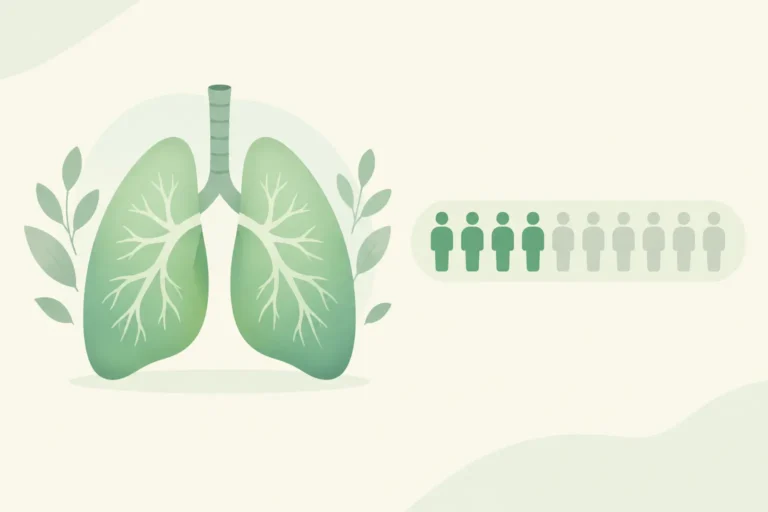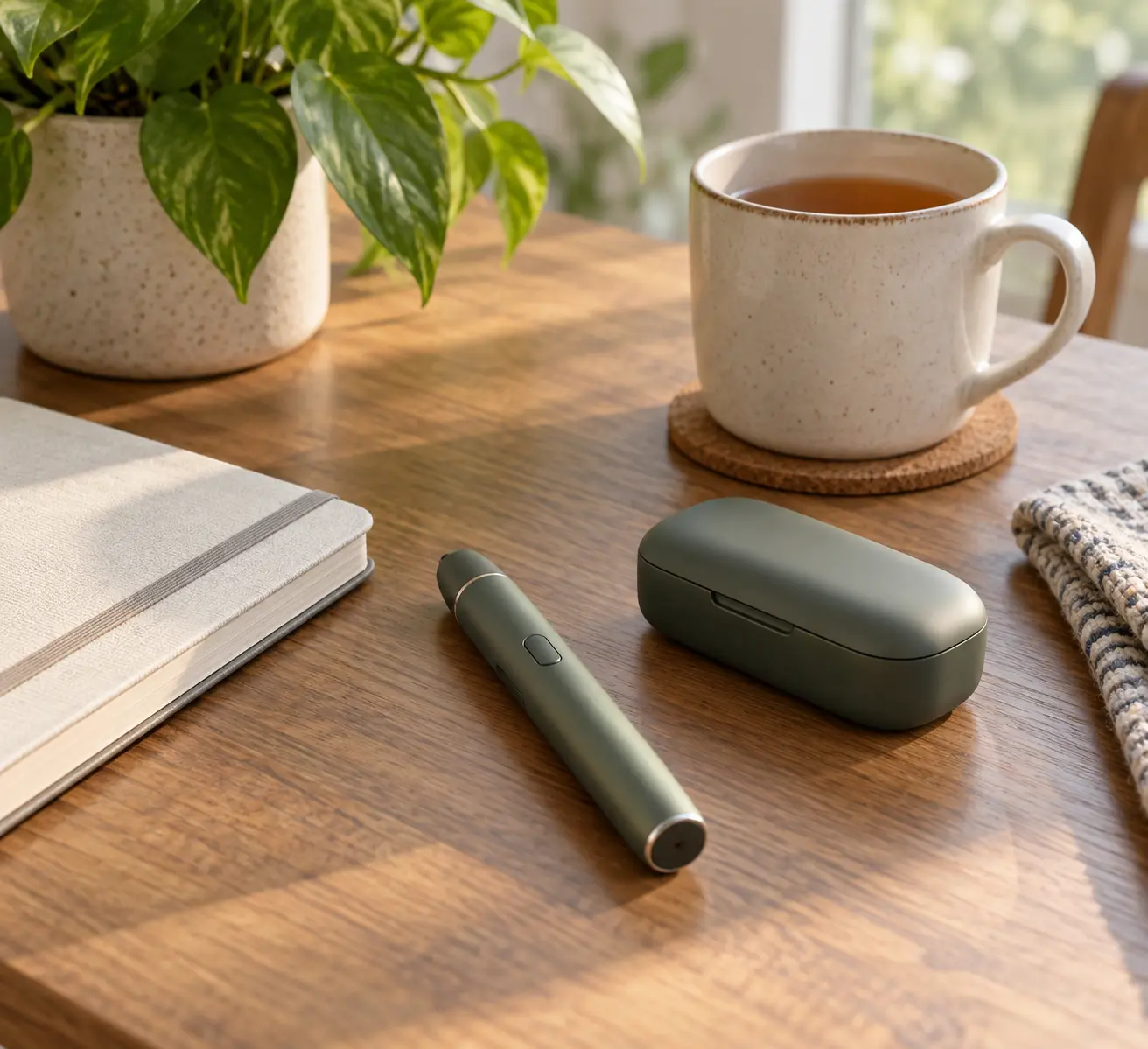
If you want to know how to quit IQOS or any other heated tobacco device, you are in a gray area that most quit advice ignores. Heated tobacco is marketed as something between cigarettes and quitting, so stopping it can feel like a different problem. It is not. The product delivers nicotine from tobacco, and the habit is built the same way: stick by stick, moment by moment, with a device ritual on top.
This guide gives a practical plan: count your sticks, choose cold turkey or a step-down, pick the right nicotine replacement, break the device routine and survive the first two weeks. It also quotes the regulators exactly, because the FDA wording on IQOS is often misread. If you are still comparing options, see our comparison of heated tobacco, vaping and quitting.
Why heated tobacco is still a nicotine habit
The World Health Organization is direct about what heated tobacco products are. In its tobacco fact sheet it says: HTPs contain tobacco and emit toxic emissions that are similar to those found in cigarettes smoke, many of which can cause cancer
. It adds: HTPs are tobacco products, do not help smokers to end tobacco use and should be regulated as tobacco products
. You can read the full text in the WHO tobacco fact sheet.
On nicotine delivery, a 2025 systematic review and meta-analysis of 30 studies with 2,728 participants compared new-generation products with conventional cigarettes. For heated tobacco products in particular, it reported that Cmax was statistically similar while AUC was lower compared to CCs
, and that Tmax was statistically similar
to that of cigarettes. In plain language, peak nicotine and how fast it arrives were similar to a cigarette, while total exposure was lower. The review is on PubMed, and its authors read the results in favor of harm reduction. That is their framing, not a reason to keep using a product you want to stop.
What this means for you: the dependence is real. If you reach for the device first thing in the morning, after meals and with coffee, you are following the same cue-and-reward pattern as cigarettes.
Count your sticks
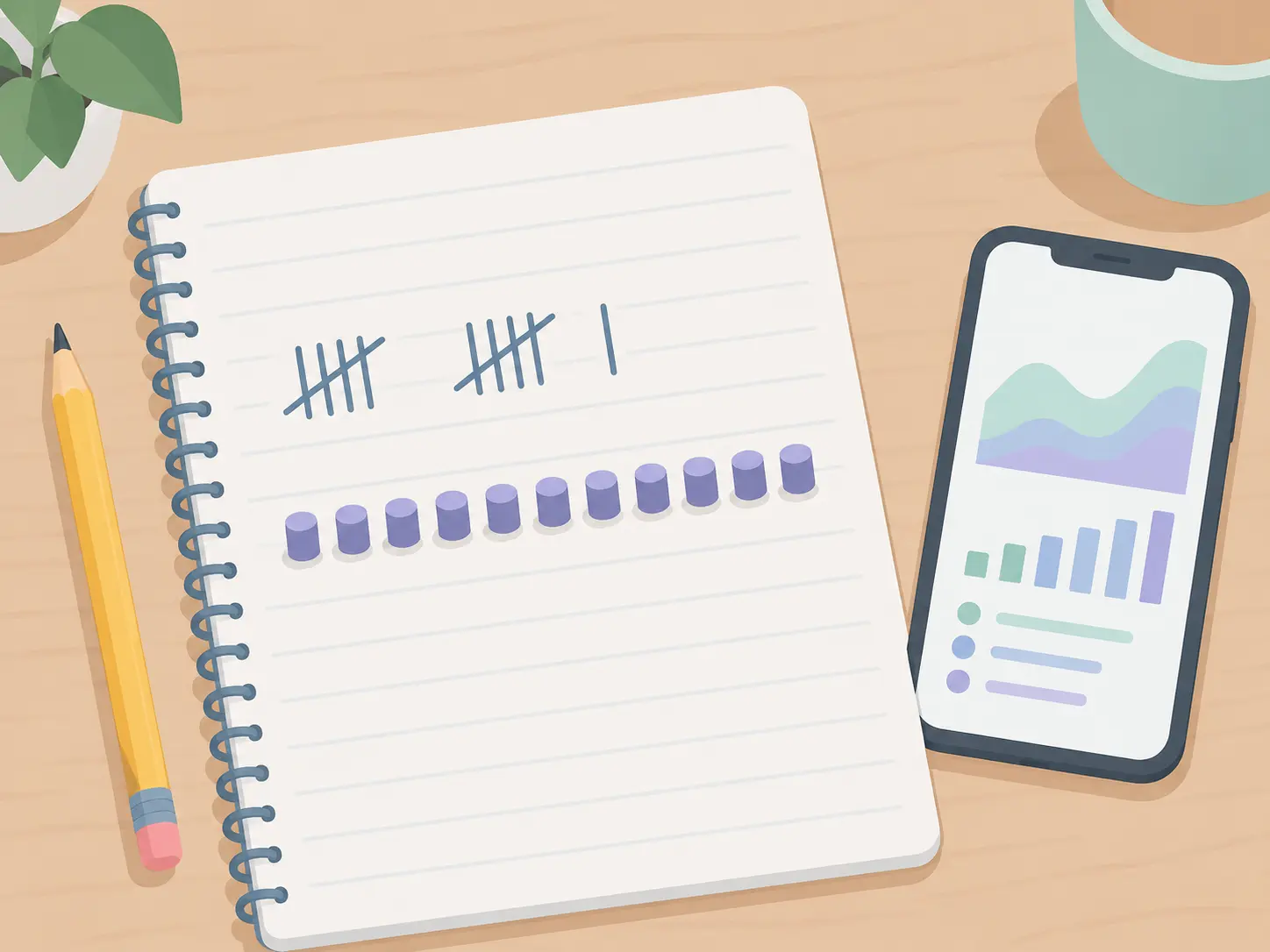
Before you change anything, count. For three to five days, write down every stick with the time, the place and what you were doing. Do not judge the numbers. You are building a map of your habit.
- Total per day. This is your baseline for a step-down, and it tells you how much nicotine your body expects.
- First stick of the day. How soon after waking you use it is a clue to how strong the dependence is, and it tells you where a morning plan matters.
- Automatic sticks. The ones you use while scrolling, driving or waiting are the easiest to drop first.
- Hard sticks. After meals, with alcohol, at work breaks. These need a plan, not willpower.
The count often shows more use than people expect, and that is useful to know before you start.
Cold turkey or step-down?
We could not find a trial in the sources we checked that tests quitting heated tobacco in particular. A 2024 systematic review in Tobacco Control found 40 trials of heated tobacco products, 29 of them tobacco industry affiliated, with 33 judged at high risk of bias, and concluded the trials were limited to investigating effects of short-term exposure
. See the abstract on PubMed. So the advice below borrows from general cessation evidence, not from IQOS studies.
The WHO states that counselling and medication can more than double a tobacco user’s chance of successful quitting
. That is the part to take seriously, whichever pace you pick.
| Approach | May suit you if | Watch out for |
|---|---|---|
| Cold turkey on a set date | You use a few sticks a day, or you are done with the device and want a clean break. | Strong first-week cravings. Pair it with NRT and a plan for your hard moments. |
| Step-down over two to four weeks | You use many sticks daily and the first stick comes soon after waking. | Drifting. Set a stop date inside the plan so the taper does not go on forever. |
A simple step-down: in week one, count only. In week two, drop your automatic sticks. In week three, cut to about half and delay the first stick. In week four, stop on a fixed date. Adjust it to your own numbers.
Choosing nicotine replacement
Nicotine replacement therapy (NRT) gives nicotine without the tobacco. The NHS says the best approach is to combine a fast-acting source of nicotine, like a mouth spray with a slow-acting source of nicotine like a patch
. The Cochrane review of NRT timing and dosing, on PubMed, reports high-certainty evidence that combination NRT beats a single form (risk ratio 1.27, 95% CI 1.17 to 1.37, 16 studies). That is the strongest figure we can give you, and it comes from studies of people who smoke, not from IQOS users specifically.
On duration, the NHS guide to stop-smoking products says the general advice is to use NRTs and other products for at least 12 weeks, or even longer if needed
. Dose and strength depend on how much nicotine you use, which is hard to read from a stick count. A pharmacist, doctor or stop smoking service can help you choose. Our comparison of the best NRT options lists what is available.
If you use cigarettes as well as the device, tell the pharmacist. It changes the starting point.
Breaking the device ritual
Heated tobacco comes with its own ritual: the holder, the charger, the stick, the heating wait. That ritual is part of the habit, and it is something you can change.
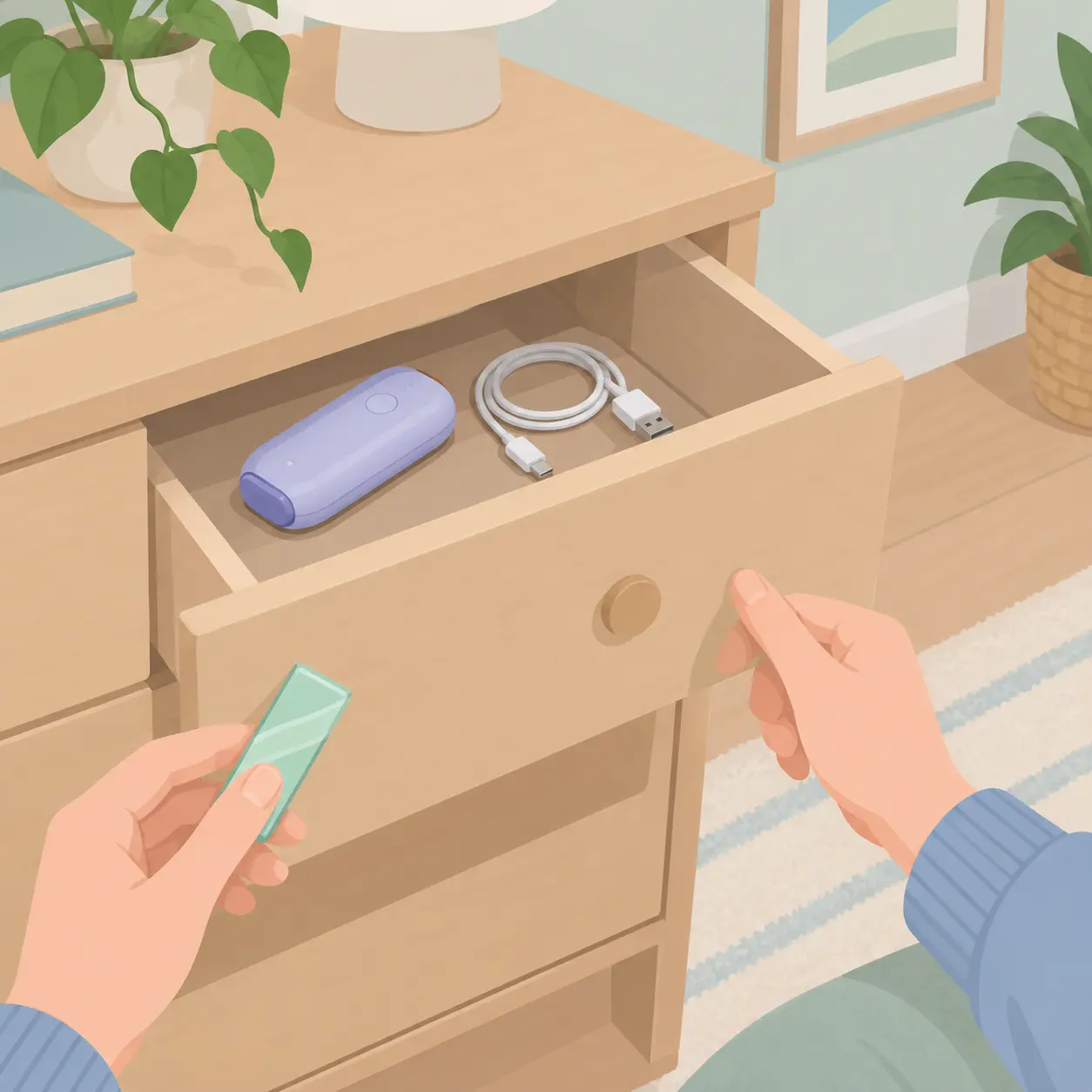
- Remove the hardware. Put the holder and charger somewhere inconvenient, or give them away. A device within reach turns every craving into a decision.
- Stop charging it. No charge, no automatic reach.
- Change the cue. If the device came out with coffee or after dinner, change the order or the place for two weeks.
- Replace the hand and mouth action. Gum, a pen or a stress ball can cover the physical routine.
- Tell someone your date. One person who knows can check in at the hard moments.
The first two weeks
Expect irritability, restlessness, poor concentration and strong cravings early on. They are normal signs of nicotine withdrawal, and our hour-by-hour withdrawal timeline shows what to expect. A few practical rules help.
- Plan the hard moments. Decide before you get there what you will do instead.
- Delay, then decide. When a craving hits, wait ten minutes and do something else. Cravings rise and fall.
- Use your NRT on schedule. Do not save it for emergencies, or it will not smooth the day.
- Aim for 28 days. The NHS says that
your goal is to reach 28 days smoke free
and that if you do,you’re 5 times more likely to quit for good
. See the NHS quit smoking page.
If you slip, treat it as information. Note what the trigger was, then go back to your plan the same day.
Not switching back to cigarettes
Some people stop the device and drift back to cigarettes, especially during stress. It helps to know what the regulator actually said, because the headline is easy to misread.
In April 2026 the FDA renewed its modified risk orders for IQOS, and the order letter says the product may be marketed with this reduced exposure information: The IQOS system heats tobacco but does not burn it. This significantly reduces the production of harmful and potentially harmful chemicals. Scientific studies have shown that switching completely from conventional cigarettes to the IQOS system significantly reduces your body’s exposure to harmful or potentially harmful chemicals
. The order is classed as an exposure modification order, not a risk modification order. You can find it on the FDA modified risk orders page and in the order letter.
Notice what that wording does not say. It is about exposure to chemicals, not about being safe, and it applies to adults switching completely from cigarettes. The letter itself says users must understand that cutting down on CC per day while using the MRTPs is not sufficient to reduce their exposure to HPHCs
, and that for people who use other tobacco products the reduction in HPHCs from use of the MRTPs is relative to smoking CC and not to other types of tobacco use
. The wording also says nothing about the device helping you stop. If your aim is to quit, going back to cigarettes moves you the wrong way. We did not verify the US status of newer devices such as IQOS ILUMA, so check the FDA site if that matters to you.
Where iQuit fits
iQuit is a quit-smoking app, free on Google Play and the App Store. You can choose your own method, including cold turkey or gradual reduction, and log each craving with its trigger and intensity so you can see your riskiest hours. Its money dashboard shows your savings in your own currency. It is built around cigarettes and has no heated-tobacco mode, so it will not count sticks for you. Our 8-week quit plan gives a general structure, and our guide to quitting disposable vapes covers the vape side if you use one too.
Frequently Asked Questions
Is IQOS addictive?
Yes, it delivers nicotine from tobacco. A systematic review reported that for heated tobacco products peak nicotine (Cmax) and time to peak (Tmax) were statistically similar to cigarettes, while total exposure (AUC) was lower. The WHO calls heated tobacco products tobacco products. (PubMed meta-analysis; WHO)
Does the FDA say IQOS is safe?
No. The FDA modified risk order says the product may be marketed with information that switching completely from cigarettes significantly reduces exposure to harmful or potentially harmful chemicals. That is an exposure claim for people who switch completely, not a safety claim. (FDA order, April 2026)
Can I use nicotine patches to quit IQOS?
Many people use NRT to quit tobacco products, and the NHS recommends combining a fast-acting form with a patch. We found no IQOS-specific trial, so ask a pharmacist how to choose strength. Combination NRT had high-certainty evidence in studies of smokers. (NHS; Cochrane)
Should I quit IQOS cold turkey or taper?
There is no heated-tobacco-specific trial to settle it. Stopping on a set date can suit lighter use, while a two to four week step-down may help if you use many sticks. Counseling and medication can more than double the chance of quitting. (WHO; Tobacco Control review)
How long should I use nicotine replacement after quitting IQOS?
The NHS general advice is to use NRTs and other products for at least 12 weeks, or even longer if needed. Ask your pharmacist or stop smoking service about the right schedule for you. (NHS)
Is it better to switch back to cigarettes than to stop?
No. The FDA letter says the reduced exposure information relates to switching completely from cigarettes to IQOS, and it says nothing in favor of going back. Quitting all tobacco is the goal. The WHO says heated tobacco products do not help smokers end tobacco use. (FDA; WHO)
How long do IQOS withdrawal symptoms last?
It differs by person, and we could not find a heated-tobacco-specific timeline. Cravings, irritability and restlessness are common early on and ease with time. The NHS suggests aiming for 28 days smoke free, which makes quitting for good about 5 times more likely. (NHS)
Keep Your Quit Plan on Track With iQuit
Quitting is easier with a plan you can see. iQuit lets you pick your method, including cold turkey or gradual reduction, and gives you a craving log for triggers and intensity, craving forecasts that show your risky hours, SOS tools such as breathing exercises and craving surfing, and a money dashboard with your own currency. It is free on Google Play and the App Store. It has no heated-tobacco mode and does not replace NRT or professional advice.