How to Quit Smoking and Drinking at the Same Time: A Combined Step-by-Step Plan (2026)
Smoking and drinking are among the most common co-occurring habits — and among the most mutually reinforcing. Alcohol relaxes the prefrontal cortex’s inhibitory control, making it significantly harder to resist a cigarette. A drink in hand has, for many people, become an almost automatic cue to light up. If this is your pattern, you already know that cutting one while continuing the other is an uphill battle.
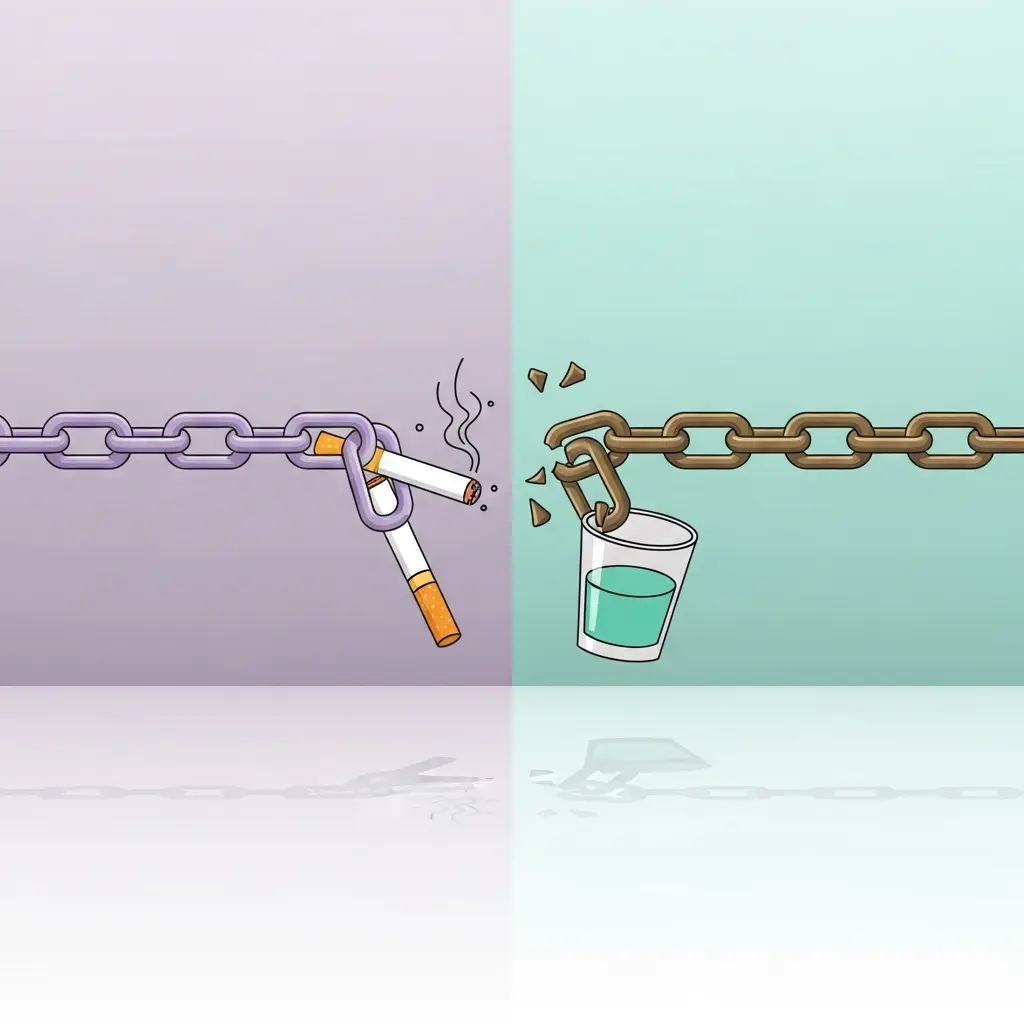
The good news is that quitting both at the same time is more achievable than most people expect — and the evidence suggests doing so can actually make each quit easier. A meta-analysis of 19 randomised controlled trials by Prochaska and colleagues, published in the Journal of Consulting and Clinical Psychology (2004), found that smoking cessation interventions delivered during addictions treatment were associated with a 25% increased likelihood of long-term abstinence from alcohol and illicit drugs. The habits that built each other up can, when tackled together, tear each other down.
Why Smoking and Drinking Are Linked
Both nicotine and alcohol act on the brain’s dopaminergic reward system. Over time, the two habits become conditioned together — your brain learns to associate the taste of alcohol with the expected nicotine hit. This is why many smokers who can go all day without a cigarette find themselves desperate for one after a single drink.
The relationship appears to work in both directions. Peer-reviewed research has found that, among many smokers, alcohol consumption tends to fall during and after a successful quit attempt, and that breaking the smoking habit can weaken the conditioned cue that links the two behaviours. For practical purposes, the takeaway is consistent across the literature: tackling the alcohol cue is part of protecting your quit, not a separate project.
Step 1: Screen Your Alcohol Use
Time estimate: 5 minutes | Difficulty: Low
Before planning your approach, use the AUDIT-C (Alcohol Use Disorders Identification Test) to classify your drinking. The test is three questions and is freely available from the WHO or your GP. It places your drinking into one of these categories:
- Low-risk: Below 14 units/week (UK guidance for both men and women) with no binge episodes — standard cessation approach applies
- Hazardous or harmful: Above these thresholds but no physical dependency — dual quit plan as outlined below
- Dependent: Physical withdrawal symptoms (shaking, sweating, anxiety, insomnia) when not drinking — requires GP involvement before any alcohol quit attempt
If you are in the dependent category, this plan’s tobacco cessation steps still apply — but please seek medical support for the alcohol component through your GP, the SAMHSA National Helpline (US: 1-800-662-4357), or NHS Alcohol Support before stopping drinking abruptly.
Step 2: Understand the Combined Trigger Cycle
Time estimate: 10 minutes of reflection | Difficulty: Low
The cue-routine-reward cycle for smoking-while-drinking is particularly strong because alcohol impairs the prefrontal cortex’s ability to maintain decisions. You may intend not to smoke when you go out for a drink — and still reach for one within 20 minutes. This is not weakness; it is neuroscience.
Understanding this means you can plan for it: the moment you accept a drink in a familiar setting, your risk of smoking increases substantially. Your plan must address the drinking environment, not just the smoking urge in isolation.
Step 3: Map Your Joint Triggers
Time estimate: 20 minutes | Difficulty: Moderate
Write down every situation in the past week where you smoked and drank together. Be specific:
- Friday evening at the pub with colleagues
- Wine on the balcony after dinner
- Social events where everyone smokes outside
- Stress drinking after a difficult day that leads to cigarettes
For each situation, write two responses: one for if you are drinking (how to resist smoking) and one for if you are avoiding alcohol (what to do instead of drinking and smoking). This dual-response approach covers both quit attempts at once.
See our guide on how to stop smoking cravings instantly for specific in-the-moment techniques you can deploy when both urges hit at once.
Step 4: Set Your Quit Dates
Time estimate: 2 minutes | Difficulty: Low
For smoking: set a specific quit date within the next two weeks. Start NRT on that date.
For alcohol: if your drinking is hazardous or harmful but not dependent, you have two reasonable options:
- Same-day quit: Quit both on the same date. This removes the primary smoking cue (alcohol) immediately and is often the cleaner approach for hazardous but non-dependent drinkers.
- Graduated reduction then quit: Reduce alcohol to a safe level over two weeks while you start NRT for smoking, then fully quit alcohol. This softens total withdrawal load.
Either path can work. The key is choosing one and committing to a date rather than leaving it open-ended. If you are physically dependent on alcohol, do not set an abrupt alcohol quit date without your GP — withdrawal can be medically serious.
Step 5: Choose Your Support for Each Habit
Time estimate: One pharmacy or GP appointment | Difficulty: Low–Moderate
For smoking: Start with combination NRT (a 24-hour patch plus gum or lozenge for breakthrough cravings). Varenicline is the most effective pharmacological option for motivated quitters — discuss with your GP. For a full breakdown of nicotine withdrawal management, see our nicotine withdrawal step-by-step guide.
For alcohol: Depending on your drinking level, appropriate support includes:
- SMART Recovery (smartrecovery.org) — evidence-based, secular, free online meetings
- NHS Alcohol Support (nhs.uk/live-well/alcohol-advice) — UK readers
- SAMHSA National Helpline (US: 1-800-662-4357; findtreatment.gov) — US readers; treatment finder and self-help tools
- Alcoholics Anonymous — peer support, widely available globally
- GP referral to a community alcohol team for structured support
The same dual-habit logic applies if tobacco is paired with cannabis rather than alcohol — many people who smoke both together face an identical joint-trigger problem, just with a different second substance. Our dedicated guide on how to quit tobacco and weed together adapts this same support-matching approach specifically for that combination.
Step 6: Restructure High-Risk Situations
Time estimate: Ongoing, most critical weeks 1–6 | Difficulty: High
Avoiding every social situation is not realistic or desirable long-term. But in the first four to six weeks, reducing your exposure to situations where both habits are the norm gives your new patterns time to solidify.
Practical restructuring strategies:
- Switch from pub evenings to activities that do not involve alcohol — cinema, walks, dinner at home
- If you do go to a bar, switch to non-alcoholic drinks. The environment becomes far less risky without alcohol lowering your inhibitions.
- Tell friends you are having a break from both alcohol and cigarettes. People who care for you will respect this.
- Sit away from smoking areas at venues
Step 7: Build a Daily Routine That Supports Both Quits
Time estimate: 1–2 weeks to establish | Difficulty: Moderate
Both smoking and drinking occupy time, ritual, and stress-regulation. Replacing them requires deliberate substitution, not willpower alone.
- Exercise: Even a 20–30 minute daily walk reduces both nicotine cravings and alcohol urges. Physical activity activates the same reward pathways without the harm.
- Sleep: Both alcohol and nicotine disrupt sleep architecture. As you quit both, expect a period of disrupted sleep followed by significantly improved rest — a real milestone to look forward to. Our guide on sleeping better when quitting smoking covers this in detail.
- Non-alcoholic social activities: Find one new regular social activity that does not involve alcohol. This builds a social identity that is not anchored to either habit.
- Journalling or app tracking: Record your smoke-free and drink-free days. Seeing the numbers grow is motivating and creates accountability.
Step 8: Manage Relapse Risk Proactively
Time estimate: Plan in advance; review weekly | Difficulty: Moderate
The key relapse pattern in dual quitters is this: a slip in one behaviour triggers the other. Having one drink on a stressful day and then lighting a cigarette. Or a cigarette at a party that leads to “well, I’ve already slipped, might as well have a drink.” Know this pattern by name so you can interrupt it.
Your relapse response plan:
- Identify that a slip has occurred without catastrophising — one cigarette or one drink is not a relapse to full habit unless you decide it is
- Contact your support person immediately
- Return to your NRT schedule and your alcohol support meeting
- Review your trigger map from Step 3 to identify what went wrong and update your plan

Use the iQuit app to track both your smoke-free milestones and access craving management tools at the moments when risk is highest.
Frequently Asked Questions
Is it harder to quit smoking if you also drink alcohol?
Yes. Alcohol reduces inhibitory control and acts as a powerful conditioned cue for smoking. Research consistently shows alcohol consumption is associated with higher smoking relapse rates, particularly in the early weeks and months after quitting. This is why addressing both together — or eliminating alcohol exposure during the critical early weeks — improves outcomes.
Should I quit smoking and drinking on the same day?
For hazardous or harmful (but not dependent) drinkers, quitting both on the same date is feasible and research supports the mutual reinforcement of dual quitting. For people with alcohol dependency, alcohol withdrawal requires medical supervision — speak with your GP before setting an alcohol quit date.
Does quitting smoking help with alcohol cravings?
Evidence suggests it can. Peer-reviewed studies have found that successful smoking cessation is often associated with reduced alcohol consumption, and a meta-analysis found that treating smoking during addictions treatment improved long-term sobriety outcomes. The habits are neurologically linked — breaking one can weaken the conditioned associations that sustain the other.
What if I am dependent on alcohol?
If you experience physical withdrawal symptoms (shaking, sweating, anxiety, rapid heartbeat) when you go without alcohol, you may have alcohol dependency. Stopping abruptly without medical guidance can be dangerous and carries a risk of seizures. Contact your GP, call the SAMHSA National Helpline (US: 1-800-662-4357), or access NHS Alcohol Support before stopping drinking. You can still begin your smoking quit plan simultaneously under medical supervision.