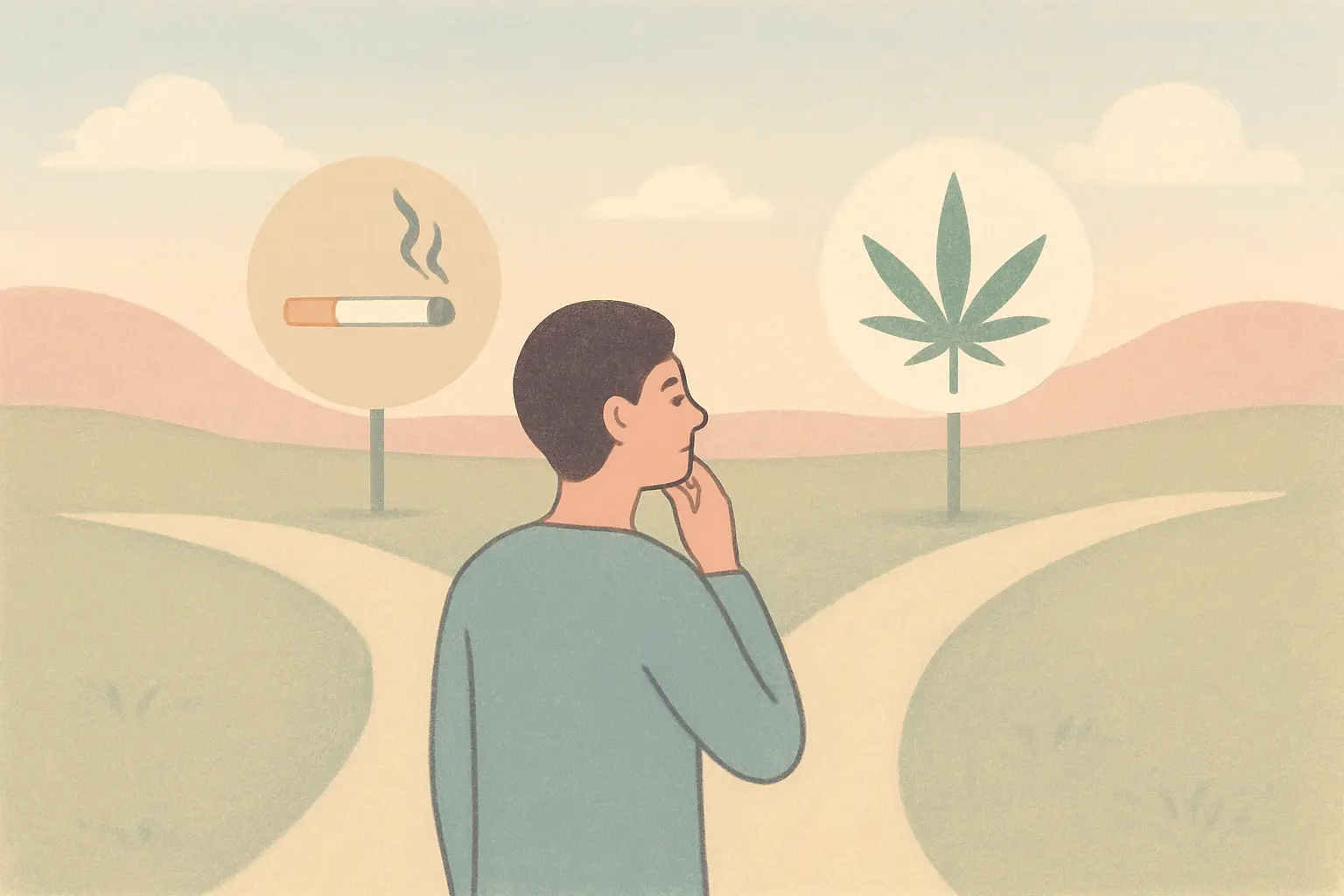
Figuring out how to quit smoking tobacco and weed together is harder than quitting either one alone, because in the UK and much of Europe, Australia, and New Zealand, cannabis is usually smoked mixed with tobacco as a spliff or joint — which means most people trying to quit aren’t managing one habit, they’re managing two intertwined ones at once. This plan covers the three realistic paths (tobacco first, both together, or cannabis first), why the combined withdrawal feels heavier than either substance alone, and a two-week plan for the route most co-users actually take.
Why Combined Withdrawal Is Heavier Than Either Alone
When cannabis and tobacco are smoked together, quitting either one means giving up part of a single combined ritual, which makes triggers harder to isolate and withdrawal symptoms harder to attribute to one substance or the other. Talk to Frank, the UK government drug information service, lists cannabis withdrawal as feeling moody and irritable, feeling sick, finding it hard to sleep, finding it hard to eat, sweating, shaking, and diarrhea. NIDA describes a similar cluster — irritability, restlessness, insomnia, decreased appetite. Nicotine withdrawal independently affects the same three areas of sleep, mood, and appetite, which means someone quitting both together can face compounded versions of all three rather than a milder combined effect.
This is also why co-use creates a specific relapse risk that single-substance quitting doesn’t: someone who successfully quits cannabis but keeps smoking tobacco-only cigarettes, or who quits cigarettes but keeps rolling cannabis with tobacco, can find the surviving habit quietly pulls them back into the one they stopped. Talk to Frank is direct about the nicotine side of this: if you roll your spliffs with tobacco, you’re also at risk of getting addicted, or staying addicted, to nicotine, and you take on the same risks you get from smoking tobacco on its own.
There’s also a habit-strength issue that’s easy to underestimate: a spliff rolled with tobacco reinforces two separate reward pathways with a single action, which plausibly makes the combined habit more resistant to change than either substance smoked on its own. That’s part of why a plan built specifically around co-use, rather than a generic cigarette quit guide or a generic cannabis quit guide, tends to be easier to follow than trying to force the combined habit into either single-substance framework.
Three Realistic Paths to Choose From
There’s no single correct order — the right path depends on which dependence feels stronger and which one you’re more ready to tackle first.
| Path | Best for | What it looks like | Main difficulty |
|---|---|---|---|
| Remove tobacco, keep cannabis | Most co-users; nicotine is the dependence you didn’t choose | Tobacco-free joints or a vaporizer from day one, cannabis routine unchanged | Standalone nicotine cravings can surface separately |
| Quit both at once | People who want a single clean break and have support in place | One hard start date for both, NRT for the nicotine side | Both withdrawal profiles at the same time, especially sleep |
| Quit cannabis first, tobacco later | Heavier cannabis users where cannabis drives daily frequency | Stop cannabis, then treat the leftover tobacco habit as a normal quit | A tobacco-only habit can grow while cannabis is being addressed |
- Remove tobacco, keep cannabis (most common route). Switch to a tobacco-free joint or a vaporizer, addressing nicotine dependence first while keeping the cannabis routine unchanged for now.
- Quit both at the same time. A harder route in the short term, since you lose the ritual entirely at once, but it avoids managing two separate withdrawal timelines back to back.
- Quit cannabis first, tobacco later. Works well if cannabis is the substance driving daily use frequency, leaving a smaller, more isolated tobacco habit to address afterward.
Path 1: Remove Tobacco, Keep Cannabis
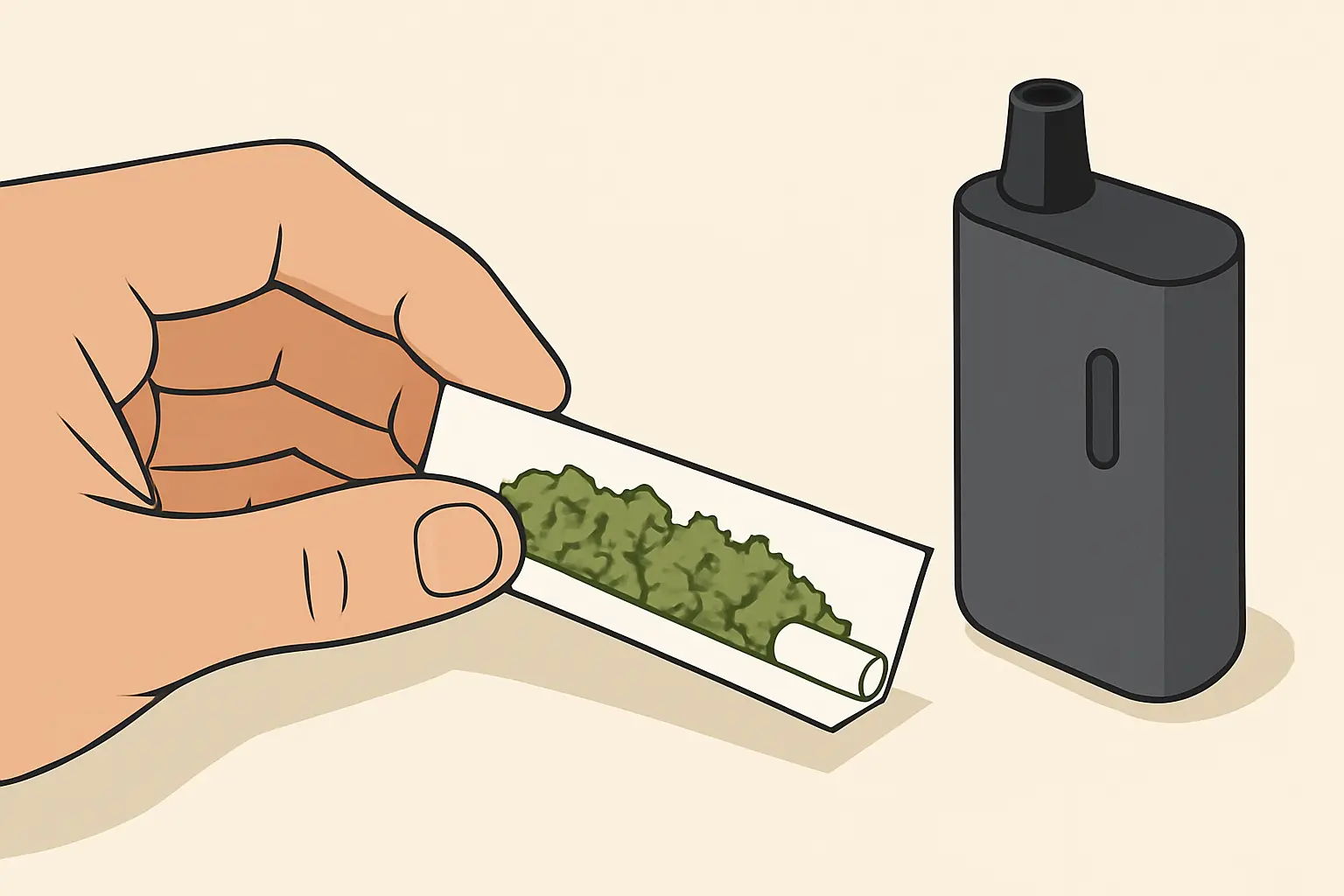
- Switch your rolling method (Day 1, ongoing). Roll joints with cannabis and a filter only, with no tobacco added — this alone removes the nicotine dependence driver while keeping the cannabis ritual familiar.
- Consider a vaporizer as an alternative (Day 1 onward). A vaporizer heats cannabis without combustion and without tobacco, which some people find an easier full switch than adjusting a rolling technique.
- Expect a short adjustment period with the new rolling method (first week). A tobacco-free joint burns differently and can feel harsher without the tobacco moderating the smoke — this settles with practice.
- Track whether cravings for tobacco specifically return (ongoing, log daily). Removing tobacco from the mix sometimes surfaces a standalone nicotine craving separate from the cannabis routine — treat that as its own trigger to manage, not a sign the switch failed.
Path 2: Quit Both at the Same Time
Quitting tobacco and cannabis simultaneously removes the ambiguity of managing a partial habit, but means facing both withdrawal profiles at once rather than in sequence. This route works best with more structure in place before you start: an NRT plan for the nicotine side, and — if cannabis use has been regular and heavy — a realistic expectation that sleep and appetite will be more disrupted in the first one to two weeks than in either single-substance quit alone. The same evidence-based structure that applies to quitting smoking and drinking together applies here: pick one hard start date for both, rather than trying to taper both substances on separate, overlapping timelines.
Path 3: Quit Cannabis First, Tobacco Later
If cannabis use is more frequent than tobacco-only smoking, or if cannabis is clearly the bigger disruption to sleep and daily function, stopping it first can leave a smaller, more manageable tobacco habit to address afterward — sometimes just a handful of standalone cigarettes a day rather than several tobacco-mixed joints. This path suits people whose cannabis use has grown well beyond the amount of tobacco they’d smoke on its own, where the cannabis side of the routine is doing most of the daily damage to sleep, motivation, or cost. Once cannabis is out of the picture, the complete step-by-step quit plan applies to the remaining tobacco habit the same way it would for any smoker, without the added complexity of a mixed-substance ritual to untangle first.
A Two-Week Plan for the Most Common Route
Here’s how the first two weeks look for the most-used path: removing tobacco while keeping the cannabis routine in place.
- Days 1–3: Make the switch and track it. Move fully to tobacco-free joints or a vaporizer, and log every use, noting whether a tobacco craving shows up separately from the usual cannabis routine.
- Days 4–7: Address standalone nicotine cravings directly. If tobacco cravings do surface on their own, use NRT or SOS craving tools rather than reaching for a tobacco-mixed joint as the easy fix.
- Days 8–10: Reassess sleep and mood. This is typically when any lingering nicotine withdrawal has eased, making it easier to tell what’s cannabis-related versus what was tobacco-related in your sleep and irritability patterns.
- Days 11–14: Decide on cannabis next steps. With tobacco fully out of the mix, decide whether to continue cannabis use as-is, reduce it, or begin addressing it as its own separate quit process.
Managing Compounded Withdrawal Symptoms
Whichever path you take, three symptom areas overlap between tobacco and cannabis withdrawal and deserve specific attention.
- Sleep disruption. Both substances affect sleep independently, and difficulty sleeping is listed as a withdrawal symptom for each by Talk to Frank and NIDA respectively. Why you can’t sleep after quitting smoking covers the nicotine side of this and how long it typically lasts.
- Irritability and mood changes. Expect a shorter fuse than usual in the first one to two weeks regardless of which path you take — feeling moody and irritable is a documented withdrawal effect for both substances, not a sign anything has gone wrong.
- Appetite changes. Cannabis withdrawal commonly reduces appetite, while nicotine withdrawal often increases it — quitting both at once can produce an unpredictable pattern worth tracking rather than worrying about. Keeping regular meals in place, along with the kind of blood-sugar-stabilizing choices covered in what to eat when quitting smoking, helps regardless of which direction your appetite swings.

Logging your specific triggers matters more here than in a single-substance quit, since co-use triggers (a particular friend, a specific time of evening, stress after work) often apply to both habits at once. Mapping those trigger hours, the way mapping your trigger hours describes, works the same way whether the craving is for a tobacco-only cigarette or the whole combined ritual. iQuit’s craving log and predictive craving forecasts learn these patterns from what you log, nudging you a few minutes before a known risky hour rather than only reacting once a craving has already started — useful specifically because co-use triggers tend to be shared between both substances. How a quit app supports a habit change covers the broader mechanics of using daily tracking for a plan like this one.
Handling This Privately, If You Need To
Cannabis use carries a different social and legal weight than tobacco in most places, and plenty of co-users would rather work through this without announcing it to friends, a partner, or a shared social circle built partly around smoking together. That’s a legitimate reason to keep the process quiet rather than a sign you’re not serious about it — the core mechanics (switching your rolling method, tracking triggers, managing compounded withdrawal) work the same whether or not anyone else knows. How to quit smoking privately without telling anyone covers the practical side of this in more depth, including how to navigate social situations built around the habit without explaining yourself.
Frequently Asked Questions
Should I quit tobacco or cannabis first?
Most co-users find it easier to remove tobacco first, switching to a tobacco-free joint or vaporizer while keeping the cannabis routine, then addressing cannabis separately once nicotine dependence is gone. The order that suits you best depends on which dependence feels stronger.
Is it harder to quit tobacco and cannabis together than separately?
Generally, yes. Both substances affect sleep, mood, and appetite independently, so quitting both at once can produce compounded versions of these withdrawal symptoms rather than a milder combined effect, particularly for regular, heavy users of either.
Can I still smoke cannabis without tobacco?
Yes. Rolling a joint with cannabis and a filter only, with no tobacco added, or using a vaporizer, are both common ways to remove tobacco from the routine while continuing to use cannabis, and this is the most-used first step for people quitting the combined habit.
What are the symptoms of cannabis withdrawal?
Talk to Frank lists feeling moody and irritable, feeling sick, difficulty sleeping, difficulty eating, sweating, shaking, and diarrhea. NIDA describes a similar set including irritability, restlessness, insomnia, decreased appetite, and unsettling dreams. Neither publishes a fixed timeline, and how long symptoms last varies with how heavily and how regularly someone has been using.
Why does mixing cannabis with tobacco increase nicotine dependence?
Every spliff or joint rolled with tobacco delivers a dose of nicotine on top of the cannabis. Talk to Frank puts it directly: if you roll your spliffs with tobacco, you’re at risk of getting addicted, or staying addicted, to nicotine — even among people who don’t think of themselves as tobacco smokers.
Can NRT help if I’m quitting a tobacco-cannabis combined habit?
Yes. NRT addresses the nicotine side of the combined habit specifically, which is useful whether you’re removing tobacco while keeping cannabis, or quitting both together, since the nicotine dependence needs its own management regardless of what happens with cannabis use.
Track Both Habits in One Place
Log cravings and triggers for the whole combined routine, not just cigarettes, and use SOS breathing and grounding tools when a shared trigger hits — free to start with iQuit.