Cravings do not check your signal bars first. They arrive on the underground, in the basement stockroom, on the plane, in the hospital corridor, on the rural drive where the map went grey — statistically, a meaningful share of quitting’s hardest moments happen exactly where connectivity fails. That’s why iQuit is built offline-first: the entire craving-rescue path runs on your device, with no round trip to a server, and syncs whenever the network reappears.
What keeps working with zero bars
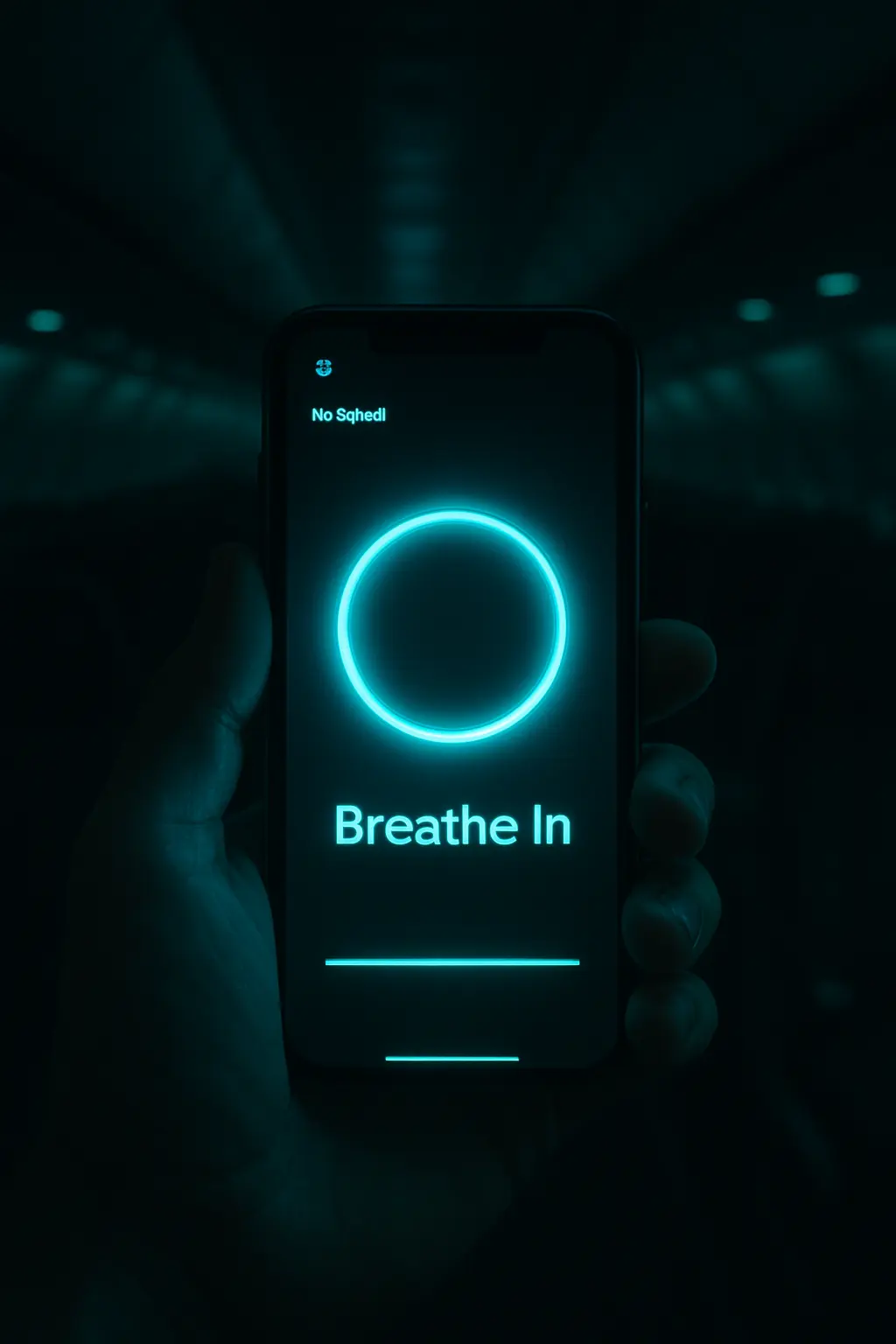
- The whole SOS flow — guided box, 4-7-8 and belly breathing, 5-4-3-2-1 grounding, craving surfing, the virtual cigarette, distraction prompts. The shake gesture works because it’s local, not because a server heard you.
- Craving logging — intensity, trigger, outcome, stored locally and merged on reconnect. Your data isn’t lost to a tunnel.
- Progress and milestones — days smoke-free, cigarettes avoided, money saved, life regained, the 15 health milestones. All computed on-device from your quit date; they keep ticking on a plane.
- Journal, daily missions, streak and shields — the daily habits that hold the quit together don’t pause for connectivity.
What needs a connection (honestly)
Two things: the AI coach, which generates personalized replies server-side — offline it falls back to a built-in library of coping responses, so you get something rather than a spinner — and community features and sync. Everything on the critical path between “craving” and “craving survived” is local.
Why this is a design choice, not a technical footnote
An app that fails during 5% of cravings isn’t 95% effective — because the failures cluster in exactly the wrong places. Underground commutes are a classic trigger window. Hospital visits are high-stress. The rural drive is precisely the long, boring, hand-idle stretch the boredom trigger feeds on. Offline-first means the tool is equally available at 2am in a signal-dead cabin as on your sofa. And there’s a privacy dividend: your logs and journal live on your device, syncing rather than streaming.
The practical implications
- Set up before you travel. Configure the app on wifi; it’ll then run a transatlantic flight, a festival field or a remote work rotation without complaint.
- Log in the moment, not later. No signal is no excuse — the entry saves locally and merges cleanly, keeping your trigger forecasts accurate.
- Keep the 4 Ds in your head anyway. Offline-first still needs a charged phone; the classic mnemonic is your zero-battery fallback.
The full offline toolkit ships in the free version of iQuit on Google Play — because the whole point of a rescue tool is being there when everything else isn’t.
FAQ
Does iQuit work without internet?
Yes — tracking, craving logs, all breathing and grounding tools, the virtual cigarette, milestones, journal and missions run on-device and sync later.
What needs a connection?
The AI coach’s personalized replies (offline it uses a built-in response library) plus community and sync.
Why does offline matter so much?
Because cravings cluster in signal-poor places — undergrounds, basements, planes, rural roads — and those moments decide streaks.
Is my data stored on my phone?
Yes — logs and journal live locally and sync when connected, which is also a privacy advantage.
Get defenses that work with zero bars: download iQuit free on Google Play.