If you are searching for Movember quit smoking ideas, you are probably doing what the month is about: taking one concrete step for your health and doing it alongside other people. Movember is a men’s health charity known for November mustache-growing, and quitting smoking fits neatly into a month when men are already talking about their health. This guide explains what Movember is, what the NHS says smoking does to men’s health, and gives you a practical 30-day plan built on Smokefree.gov and NHS advice.
What Movember Is
Movember describes its own history this way: “Twenty-two years ago, we started Movember with a simple idea: get a few mates to grow moustaches and start a serious conversation about men’s health that no one else was having.” It says those moustaches “have funded more than AUD $1.8 billion in prevention-focused work across mental health and suicide prevention, prostate cancer and testicular cancer” (Movember).
You can take part in different ways. Its homepage invites people to “Grow a moustache, Move, Host an event or Mo Your Own Way.” The key idea is that you do it with others: “Challenge a friend to do Movember with you.”
Here is a video from Movember’s own channel explaining the campaign.
One clear caveat: Movember’s campaign pages do not mention smoking or quitting, and this guide claims no partnership or endorsement. What we are doing is borrowing the month’s spirit. If you want to turn your November into a smoke-free one, the rest of this guide shows how.
Smoking and Men’s Health
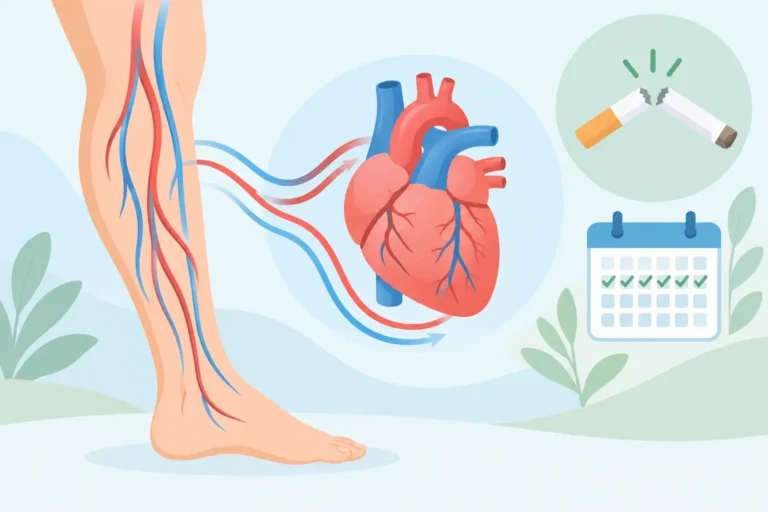
Movember’s three priorities are mental health, prostate cancer and testicular cancer. Smoking touches several parts of men’s health, and the NHS spells out some of them. Here is what the NHS actually says.
| Area | What the NHS says |
|---|---|
| Heart | “After 1 year, risk of heart attack halves compared to a smoker’s”; “after 15 years, risk of heart attack falls to the same as someone who has never smoked” |
| Mental health | “After the withdrawal stage of quitting, people have reduced anxiety, depression and stress”; “it can take as little as 6 weeks to start feeling the mental health benefits” |
| Erections | Lists “stop smoking” among healthy lifestyle changes that can sometimes help with erectile dysfunction |
| Fertility | Smoking “affects your chance of conceiving and can reduce semen quality” |
Sources: NHS, Benefits of quitting smoking; NHS, Erectile dysfunction; NHS, Infertility.
For deeper dives on each topic, see our articles on whether quitting smoking increases testosterone, erectile dysfunction recovery after quitting, male fertility and sperm recovery and smoking and prostate cancer risk.
The NHS also puts the money side plainly: “The average smoker can save around £49 a week by quitting smoking. That’s over £2,500 a year!” That is a UK figure at UK prices, so check your own numbers.

Movember Quit Smoking: A 30-Day November Plan
Every step below comes from Smokefree.gov’s quit-plan guidance or from the NHS. Adjust the dates to your own calendar. If you read this later in the month, start the clock whenever you begin.
| Phase | What to do |
|---|---|
| Before day 1 | Pick a quit day within two weeks. Throw away cigarettes, matches and lighters. Talk to your doctor or pharmacist about nicotine replacement therapy. Practice saying “No, thanks, I quit.” |
| Days 1 to 3 | Do not smoke “not even once.” Keep a craving list. Distract with water, gum, a walk or 10 deep breaths. |
| Days 4 to 14 | Smokefree.gov says “the worst symptoms of withdrawal last a few days to a few weeks.” Change routines tied to smoking. Check in with your quit buddy. |
| Days 15 to 28 | The NHS says cravings “can be especially hard to beat in the first 28 days.” Reward yourself. Review what has worked. |
| Days 29 to 30 | Plan beyond November. Triggers can return later, so keep your list and your support. |
Before day 1
Smokefree.gov says “pick a day in the next two weeks” and “pick a date that isn’t already likely to be a stressful one.” Its checklist includes “get rid of smoking supplies and other reminders” and doing laundry “so your clothes don’t smell like smoke.” It also advises you to “ask your doctor if nicotine replacement therapy or other quit medications are right for you” (Smokefree.gov, Build Your Quit Plan).
The first few days
Smokefree.gov’s quit plan says that on quit day “the most important thing is that you don’t smoke today—not even once.” For cravings it lists drinking a glass of water, eating “something crunchy” such as carrots, apples or sunflower seeds, and “taking 10 deep breaths.” Its cravings page adds: “Whatever you do, don’t smoke. The moment will pass, and you won’t lose the progress you’ve made.”
Weeks two to four
Cravings tend to ease but do not vanish. The NHS says cravings “can be especially hard to beat in the first 28 days,” when the body is adjusting to the lack of nicotine. Smokefree.gov adds that “the worst symptoms of withdrawal last a few days to a few weeks.”
A slip is not the end. Smokefree.gov says: “Be proud of all the cigarettes you didn’t smoke. You have not failed and you’re not back to square one.” It advises restarting “right away – today or tomorrow at the latest.”
Handling the Hard Moments
A November quit comes with November triggers: after-work drinks, a Movember event at a bar, a gathering where others are outside smoking. Smokefree.gov’s quit plan lists the situations most likely to cause trouble, including “Being offered a cigarette,” “Drinking alcohol or going to a bar,” “Going to a party or other social event,” “Finishing a meal” and “Drinking coffee.” It also lists emotions such as “Stressed or overwhelmed,” “Bored” and “Lonely.”
For social triggers, its advice is practical: “Practice what you will say if somebody offers you a cigarette. Keep it simple and direct: ‘No, thanks, I quit.’” If friends smoke, “ask them to respect your decision and not smoke around you.”
For routine triggers, the plan suggests changing the routine: “taking a different route to work, changing where you eat lunch and/or who you eat with, or taking a walk around the block instead of a smoking break.” Write down your top three triggers and give each one a single replacement before you begin.
Mood and quitting
Movember puts a lot of emphasis on mental fitness, so it is worth knowing what the NHS says about quitting and mood. After the withdrawal stage, “people have reduced anxiety, depression and stress,” and “people who have quit also have increased positive mood compared with people who continue to smoke.” The same page says it can take as little as 6 weeks to start feeling the mental health benefits, so a rough first month does not mean it is not working. If your mood is low or you feel unsafe, talk to a doctor or call a crisis line rather than waiting for quitting to fix it.
Smokefree.gov gives some ideas for lifting a flat patch without a cigarette: “Take a walk,” “Play with a pet” and “Meet a friend at a cafe to chat” are on its list of smoke-free stress relievers.
Moving and Quitting Together
Movember invites people to “Move” as one of its ways to take part. That fits with quitting, because Smokefree.gov says “studies show that even short periods of physical activity, especially aerobic exercise, reduce the urge to smoke,” and that “withdrawal symptoms and cravings for cigarettes decrease during exercise and up to 50 minutes after exercising” (Smokefree.gov, Fight Cravings with Exercise).
It suggests aiming for “30 minutes of physical activity most days of the week” and notes that “exercising for 10 minutes three times a day gives the same benefits as 30 minutes of non-stop exercise.” Walking, swimming, running, dancing, cycling and boxing all count as aerobic exercise on its list.
If you are already planning to move for Movember, plan the timing. A short walk when a craving hits, or a session at the time you used to take a smoke break, does two jobs at once. Please check with your doctor before starting a new exercise routine if you have a health condition.

Talking About It With Your Friends
Movember’s core idea is that men talk to each other. You can use that. Smokefree.gov recommends: “Share my plans to quit with people important to me. Find a quit buddy.” It also says you can ask people for specific things, and for what not to do: “Smoke around you,” “Offer you a cigarette,” “Nag you about your efforts to quit,” and “Doubt that you can quit or stay smokefree” (Smokefree.gov, Ask for Help To Quit Smoking).
Movember’s own guide on checking in with a friend offers a useful tone for these chats. It suggests keeping the stakes low, asking questions that “need more than a one word response,” and following up: “Checking in isn’t a one off.” You can use the same approach for a quit buddy, texting once a week to ask how the cravings are going. Movember’s article is about mental health, not quitting, so treat it as a communication tip only.
If you prefer peer meetings, our guide to Nicotine Anonymous meetings explains how they work. For tools that help you track the 30 days, see our comparison of the best quit smoking apps. For the bigger picture on staying motivated beyond November, read the quit smoking motivation guide.
Frequently Asked Questions
Is quitting smoking part of Movember?
Not officially. Movember’s campaign pages focus on mental health, prostate cancer and testicular cancer and do not mention smoking. Many men choose November as a moment to make a health change, but Movember has not endorsed this plan (Movember).
What does smoking do to men’s health?
The NHS says smoking can reduce semen quality and affect the chance of conceiving, lists stopping smoking as a lifestyle change that can help erectile dysfunction, and says quitting halves heart attack risk after one year compared with a smoker (NHS).
Can I quit smoking in 30 days?
You can stop smoking at the start of a 30-day window, and the NHS says cravings can be especially hard in the first 28 days. Staying quit for good takes longer, so keep your plan and support after day 30 (NHS Better Health; Smokefree.gov).
Does exercise help with cravings?
Smokefree.gov says studies show even short periods of physical activity reduce the urge to smoke, and that cravings decrease during exercise and up to 50 minutes afterward. Check with your doctor first if you have a health condition (Smokefree.gov).
How do I tell my friends I am quitting?
Keep it short and specific. Smokefree.gov suggests asking them not to smoke around you, not to offer you a cigarette and not to nag, and to help you stay busy and celebrate your progress (Smokefree.gov).
What if I slip during the month?
Smokefree.gov says a slip is a temporary setback and you are not back to square one. It advises thinking about why it happened and restarting quitting right away, today or tomorrow at the latest (Smokefree.gov).
Take a 30-Day Plan in Your Pocket
iQuit can help you keep the month organized: a real-time dashboard for days smoke-free and money saved, a craving log, daily missions and challenges, SOS support for the tough moments, and a moderated community. It is free to download on Google Play and the App Store.
Download iQuit Free on Google Play Download on the App Store