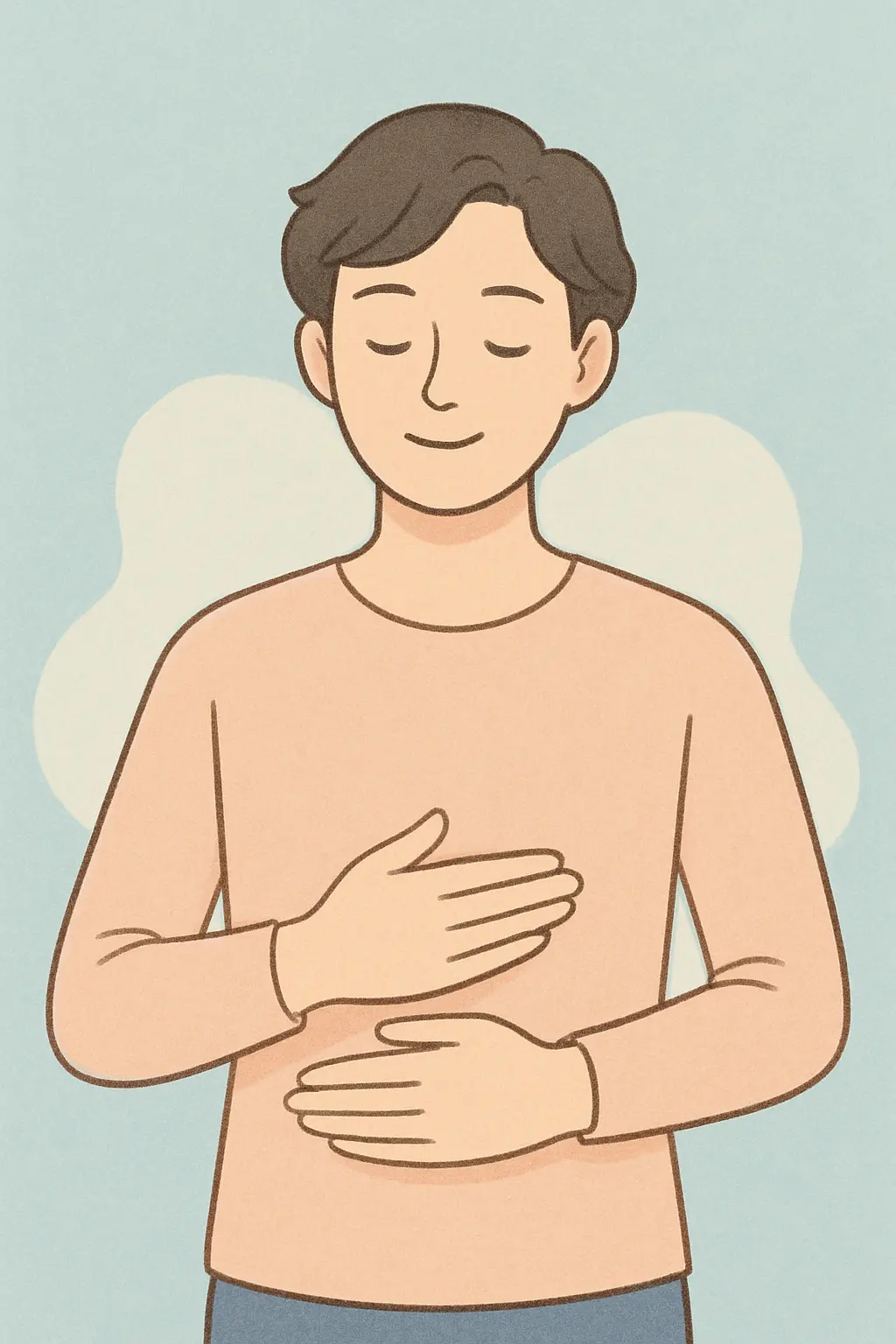
Does quitting smoking help acid reflux? For most people, yes — and the reason is mechanical, not mysterious. Nicotine relaxes the exact muscle that’s supposed to keep stomach acid where it belongs, so as long as you’re smoking, you’re actively working against your own reflux treatment, whatever else you’re doing about it.
This isn’t a minor side effect buried in a leaflet. It’s one of the more directly reversible things smoking does to your body, with a real study behind the claim rather than just plausible-sounding mechanism. Here’s how smoking causes reflux, how quickly things improve after quitting, and the honest answer on the weight-gain worry that stops some people from trying.
How smoking causes reflux
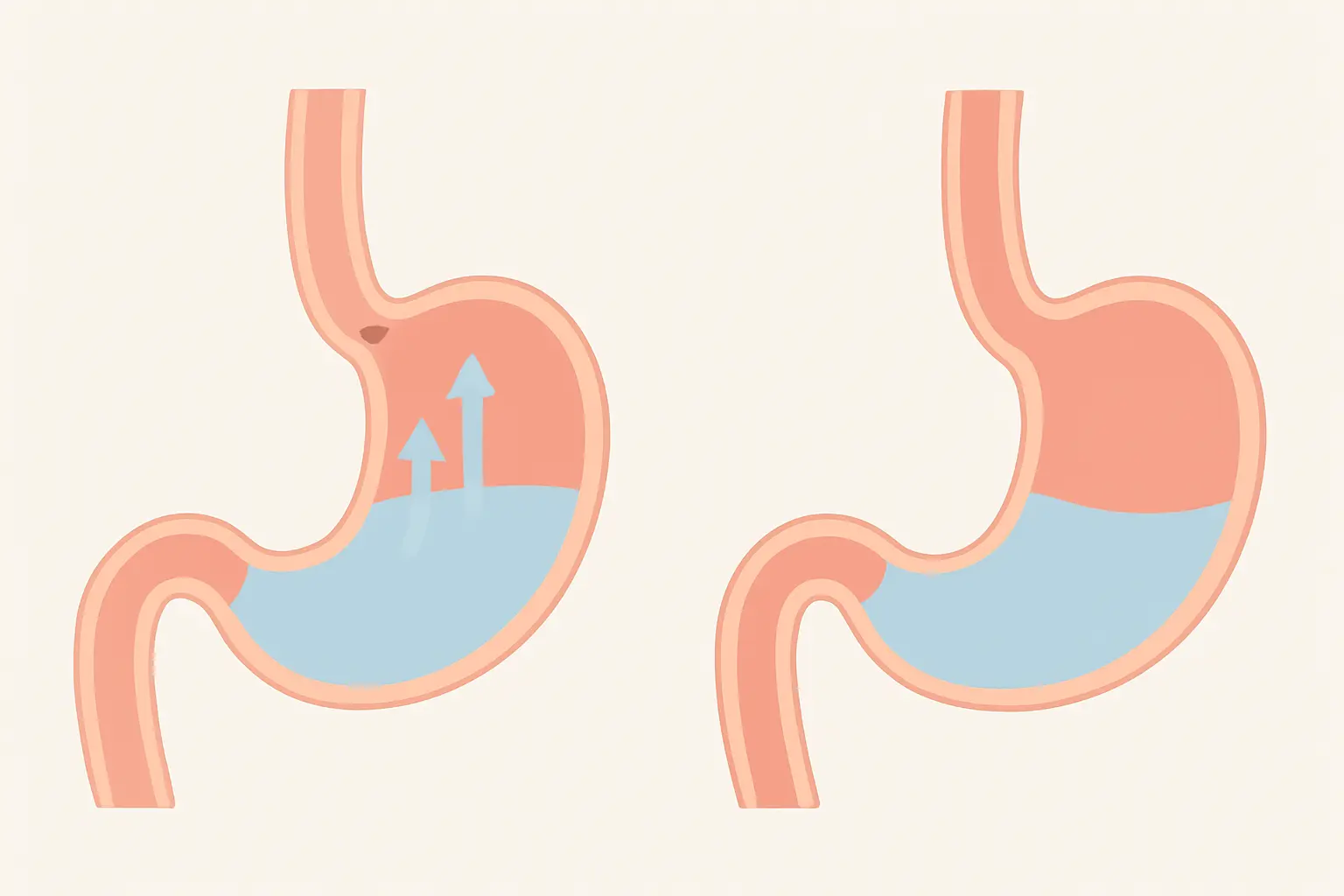
The lower esophageal sphincter (LES) is the ring of muscle between your esophagus and stomach that’s supposed to stay closed except when food is passing through. Nicotine acts on smooth muscle throughout the body as a relaxant, and the LES is smooth muscle — so nicotine exposure chronically weakens the pressure that keeps it shut, letting stomach contents travel back up more easily. Smokers have measurably lower LES pressure and more frequent reflux episodes than non-smokers as a direct result.
Cigarette smoke doesn’t stop at the sphincter, either. Inhaled smoke also appears to increase stomach acid secretion itself, meaning smokers are dealing with more acid being produced, a weaker valve keeping it contained, and a slower system for clearing it once it escapes — three separate mechanisms stacked on top of each other rather than one single cause. This is why the NHS lists smoking among the things that cause or worsen heartburn, and puts not smoking directly into its self-care advice for reflux.
Smoking compounds the problem on the clearance side too. Saliva is naturally rich in bicarbonate, which neutralizes acid that does escape into the esophagus and helps wash it back down. Smoking reduces saliva production and its buffering capacity, so any acid that gets through sits in contact with esophageal tissue for longer before it’s cleared — longer exposure time on top of more frequent events. Nicotine also relaxes the esophagus’s own downward-pushing muscle contractions, further slowing that clearance.
| Mechanism | What smoking does | What stopping does |
|---|---|---|
| LES pressure | Nicotine relaxes the smooth muscle of the valve, so it holds less firmly | Removes the relaxing input as nicotine clears; the valve regains baseline tone |
| Acid secretion | Inhaled smoke appears to increase stomach acid production | Removes that stimulus, so there is less acid available to reflux in the first place |
| Saliva buffering | Reduces both saliva volume and its bicarbonate content, so escaped acid is not neutralized | Restores the natural buffer that washes acid back down and neutralizes it |
| Esophageal clearance | Nicotine slows the downward muscle contractions that clear the esophagus | Shortens how long acid sits in contact with esophageal tissue per episode |
The reason this matters practically: four mechanisms means quitting is not a marginal tweak to one variable. It removes the driver behind all four at once, which is why the study numbers below are larger than most single lifestyle changes manage.
How fast symptoms improve after quitting
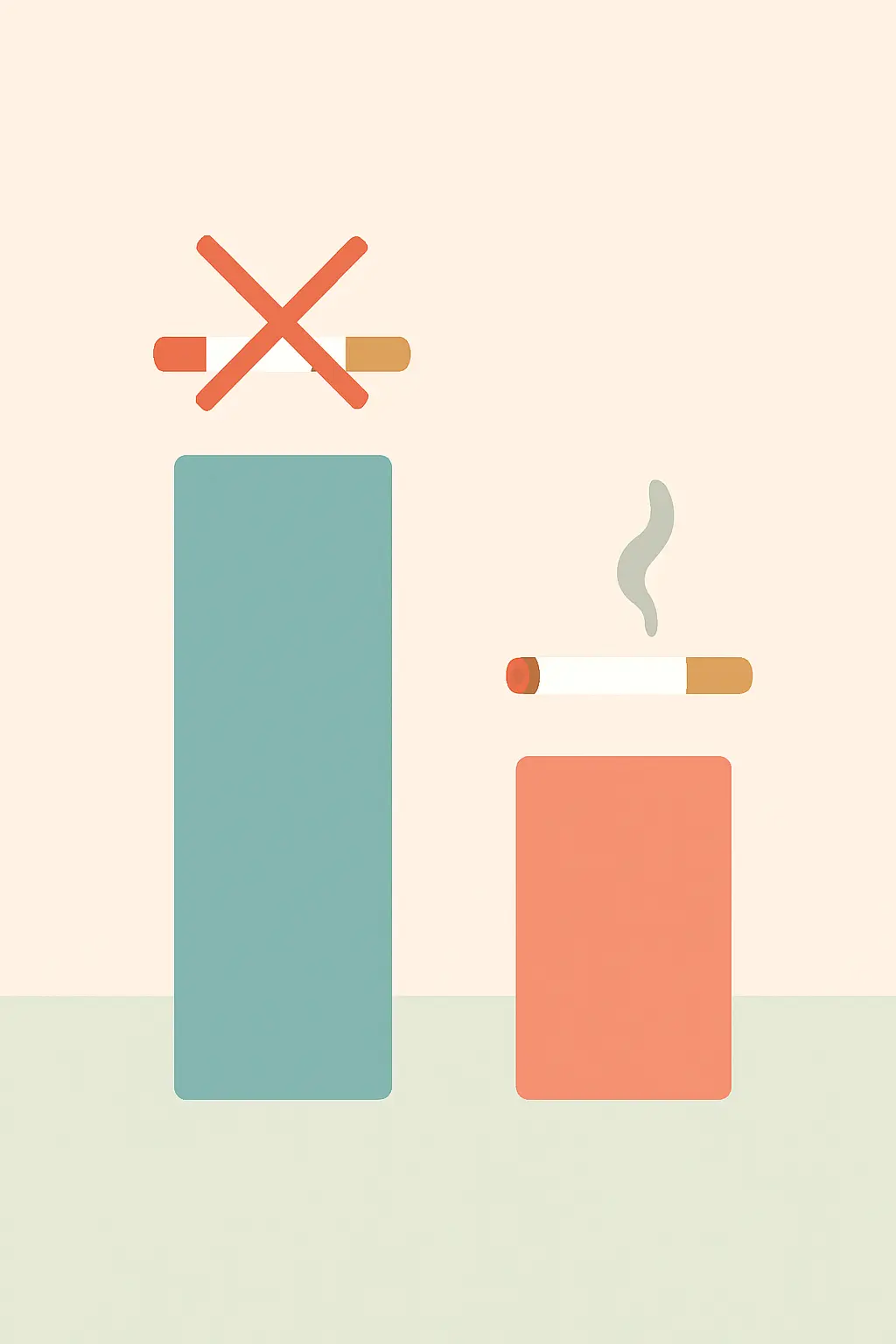
The clearest evidence here comes from a one-year study of 191 smokers using varenicline-assisted cessation: 141 quit successfully and 50 did not. Among the successful quitters, GERD improvement was reported in 43.9%, compared with just 18.2% of the group that kept smoking — a statistically significant difference that isolates quitting itself as the driver, not just general lifestyle change. That result, published in PLOS ONE in 2016, also found that the frequency of reflux symptoms and health-related quality of life improved only in the group that actually stopped. That’s a real, meaningfully sized effect, not a marginal one.
It is worth sitting with the design of that study for a second, because it answers the obvious objection. Both groups walked into the same clinic, took the same medication, and got the same advice. The only thing that separated them at one year was whether they had actually stopped smoking. That is about as clean a natural comparison as you get outside a randomized trial, and the group that stopped did roughly two and a half times better.
There’s no universally agreed single-week timeline the way there is for, say, blood pressure or heart rate, and individual response varies with how severe your reflux was to begin with and whether you have any structural issue (like a hiatal hernia) contributing on top of the smoking effect. But the mechanism reverses as soon as nicotine clears your system, so there’s no reason to expect a long lag before the sphincter starts recovering some baseline tone.
Why reflux might seem to get worse first
A common assumption is that reflux briefly worsens after quitting because of post-cessation weight gain pushing on the stomach. It’s a reasonable-sounding theory, and it’s one of the more persistent myths in this space — but the same 191-patient study specifically tested for it and found no significant association between increased body mass index after quitting and newly developed GERD. In other words, the sphincter and saliva benefits of quitting appear to hold up even when someone gains some weight in the process, at least in this cohort.
If reflux does feel worse in the first couple of weeks, more likely explanations are increased coffee or snacking to manage cravings, disrupted sleep changing when and how you eat, or simply paying closer attention to your body during withdrawal and noticing symptoms that were always mildly present.
Three reflux myths worth retiring
Reflux is a field with an unusual amount of confident folklore attached to it, and three specific beliefs keep people smoking longer than they need to.
Myth 1: “I’ll just gain weight and the reflux will be worse anyway.” This is the one the PLOS ONE data directly contradicts — increased BMI after quitting showed no significant association with newly developed GERD in that cohort. Weight is a genuine long-term reflux risk factor in the general population, but it did not cancel out the benefit of stopping in the people actually studied.
Myth 2: “Smoking settles my stomach.” A cigarette can feel like it relieves discomfort, largely because nicotine is doing something to your stress response and because the ritual interrupts the moment. What it is actually doing to the sphincter, the acid and the saliva runs in the opposite direction. The relief is short and the mechanism is working against you the whole time.
Myth 3: “If my reflux doesn’t vanish in a week, quitting didn’t help.” Symptom improvement in the study was measured at one year, not one week, and 43.9% is a share of people improved — not a promise that everyone’s heartburn disappears. Reflux has multiple drivers, and removing the smoking one does not remove a hiatal hernia, a late-night eating habit, or a medication side effect.
Weight gain and reflux: managing both
Even though the evidence above is reassuring, it’s still sensible to manage weight gain proactively rather than assume it’s irrelevant — significant weight gain over the longer term is a well-established reflux risk factor in the general population, independent of smoking status. The practical approach is to treat weight management as its own goal running alongside your quit, not a reason to delay quitting. Our metabolism after quitting smoking guide covers what’s actually happening to your resting metabolic rate and appetite in the first few months, separate from the reflux question.
If you’re also managing a related metabolic condition, the same cessation-driven improvements show up elsewhere: our guide on blood sugar recovery after quitting covers a parallel case where quitting helps a condition that weight gain could, in theory, work against — but generally doesn’t in practice for most quitters, and the same pattern shows up again in how cholesterol and HDL shift after quitting.
Do nicotine gum and lozenges cause reflux?
Since nicotine itself is what relaxes the LES, oral NRT isn’t automatically reflux-neutral — the sphincter doesn’t know whether the nicotine arrived by cigarette or by gum. That said, NRT delivers a controlled, lower dose without the saliva-suppressing and acid-stimulating effects of inhaled smoke, and without the dozens of other combustion compounds that irritate the esophagus directly. For most people managing reflux, oral NRT during a quit attempt is a considerably smaller reflux burden than continuing to smoke, even if it isn’t entirely zero. It is also worth noting that the study above used varenicline rather than NRT, so its 43.9% figure describes medication-assisted quitting generally, not gum specifically.
If reflux is a significant concern for you specifically, mention it when you’re discussing options — our guide on talking to your doctor about quitting is a useful structure for bringing up a specific condition like this rather than a generic “I want to quit” conversation. If you also have a cardiac history, the same caution applies for different reasons; our guide to quitting smoking after a heart attack covers how NRT decisions are usually made when another condition is in play.
Coffee, alcohol and the ex-smoker’s trigger stack
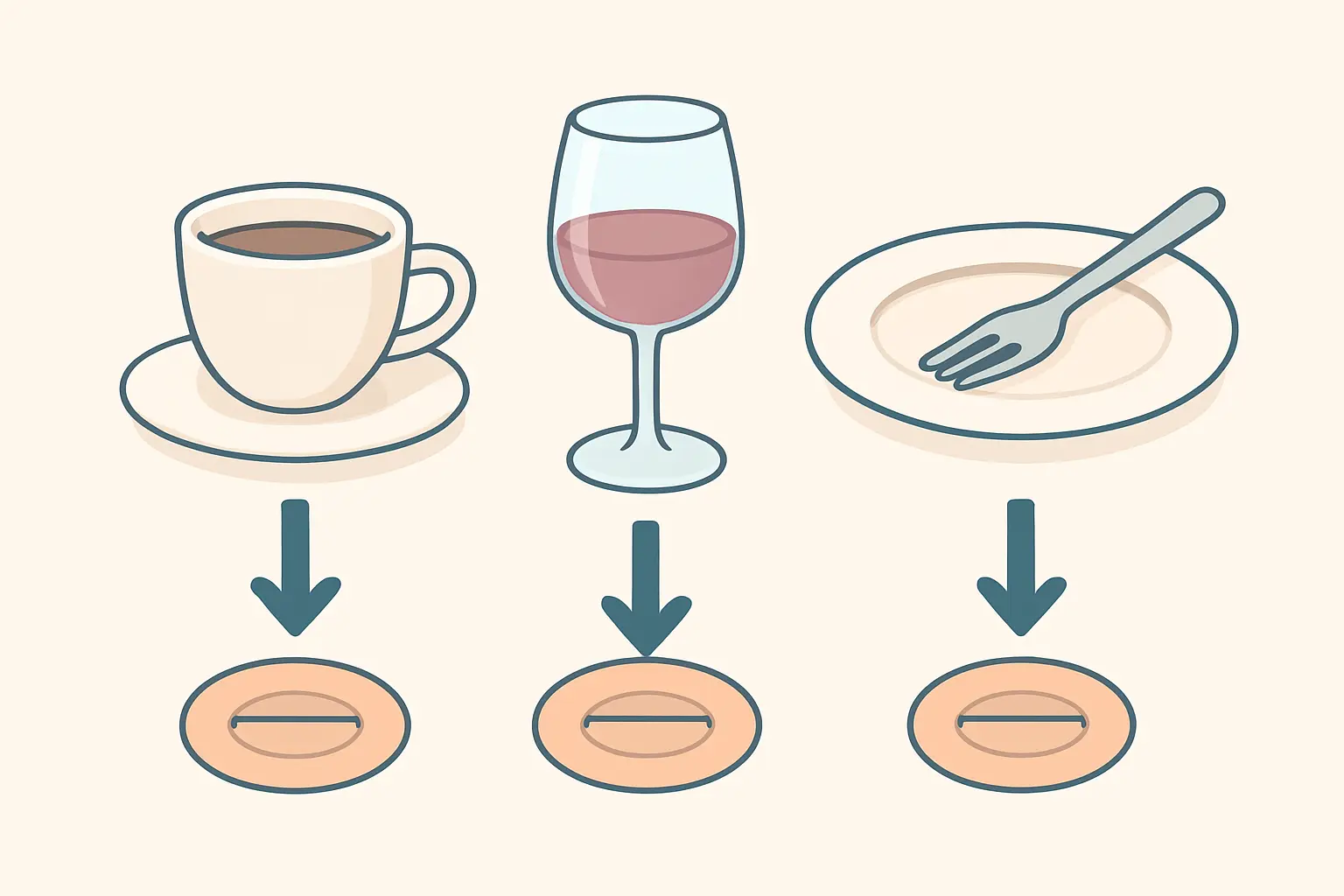
Coffee and alcohol both relax the same lower esophageal sphincter that nicotine does, through different mechanisms, and both are common substitutes people reach for during a quit attempt — which risks trading one reflux trigger for two others at exactly the wrong time. A few practical adjustments during the quit window specifically:
- Watch coffee volume, not just nicotine. If you’re drinking noticeably more coffee to manage cravings, you may be offsetting some of the reflux benefit of quitting.
- Be more cautious with alcohol than usual. Alcohol relaxes the LES directly and is also a common relapse trigger, so tightening up here serves two goals at once.
- Avoid eating within 2–3 hours of lying down, especially in the first few withdrawal weeks when sleep disruption already has you eating at unusual hours.
- Elevate the head of your bed slightly if nighttime reflux is a recurring problem — gravity helps keep stomach contents down while the sphincter is still recovering its baseline tone.
- Space out oral NRT and coffee where practical, rather than using them back-to-back, so you’re not stacking two sphincter-relaxing inputs in the same half hour.
None of these substitute for the underlying benefit of quitting itself — they’re just ways to avoid quietly canceling out some of that benefit with the habits that tend to fill the space cigarettes used to occupy.
When to see a doctor
Most reflux tied to smoking improves as the sphincter and saliva effects reverse, but some symptoms are never just “withdrawal” and warrant medical review regardless of your quit timeline:
- Reflux symptoms that persist or worsen for more than a few weeks despite quitting
- Difficulty or pain when swallowing
- Unexplained weight loss alongside reflux symptoms
- Vomiting blood or dark, coffee-ground-like material
- Reflux symptoms that wake you at night more than occasionally
These are standard GERD red flags regardless of smoking status, and quitting is never a reason to delay seeing a doctor if any of them apply to you.
Reflux and Quitting FAQ
Does quitting smoking actually help acid reflux?
Yes. A one-year study of 191 smokers found GERD improvement in 43.9% of successful quitters, compared with 18.2% of those who failed to quit — a significant difference (PLOS ONE, 2016, varenicline-assisted cessation).
How does smoking cause acid reflux in the first place?
Nicotine relaxes the lower esophageal sphincter, the valve that normally keeps stomach acid down, and smoking reduces bicarbonate-rich saliva that neutralizes acid, so more acid escapes upward and stays in contact with the esophagus for longer.
Does post-quit weight gain make reflux worse?
Not necessarily. The same 191-patient study found no significant association between increased body mass index after quitting and newly developed GERD, suggesting the sphincter and saliva benefits of quitting outweigh typical post-quit weight changes for most people.
Does nicotine gum or lozenges cause reflux?
Nicotine itself, in any form, can relax the lower esophageal sphincter, so oral NRT is not risk-free for reflux — but it delivers a fraction of the nicotine and none of the smoke-related saliva suppression of cigarettes, and avoids inhaled combustion products entirely.
How long does reflux take to improve after quitting?
There is no agreed week-by-week timeline. The mechanism starts reversing as soon as nicotine clears your system, but the study that measured symptom improvement did so at one year. Reflux with more than one driver, such as a hiatal hernia or late-night eating, will improve only partly from quitting alone.
Does quitting cure GERD completely?
No. In the PLOS ONE cohort, 43.9% of quitters reported improvement, which means a majority did not — reflux has several drivers and smoking is only one of them. Quitting removes a large, reversible contributor; it does not replace treatment for the rest.
What makes reflux worse for ex-smokers specifically?
Coffee, alcohol and eating close to bedtime all relax the same sphincter nicotine does, so they compound with any residual reflux tendency — worth tightening up during the same weeks you are managing withdrawal.
When should reflux after quitting be checked by a doctor?
See a doctor if reflux symptoms persist beyond a few weeks despite quitting, if you have difficulty or pain swallowing, unexplained weight loss, or vomiting blood or dark material — these are not typical withdrawal-related symptoms.
Log symptoms alongside your smoke-free streak
iQuit’s mood journal lets you note reflux days next to your smoke-free days, so you can see the trend for yourself instead of relying on memory. Free on Android; iOS is still on the way.