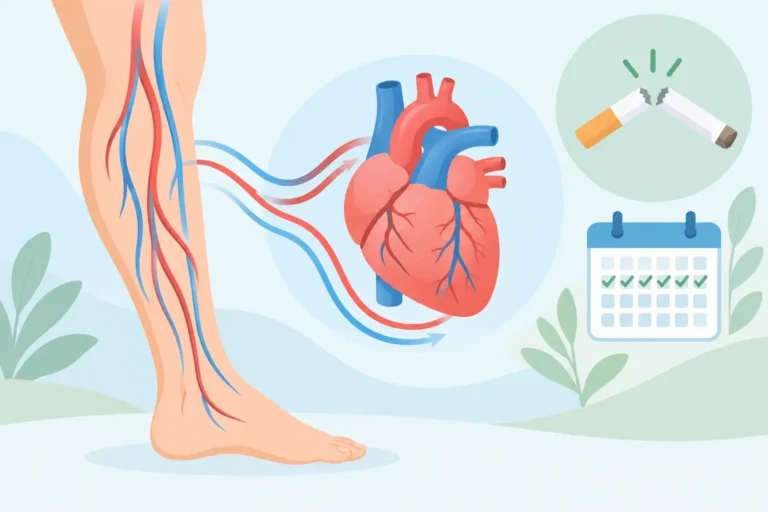
Gout arrives overnight, hurts more than seems reasonable, and sends people straight to a search box looking for anything they can change. Cigarettes are usually on that list. Does smoking cause gout, though, or is that just something everyone assumes because smoking is bad for everything? The honest answer is that the direct link to uric acid is weaker and messier than you would expect, the studies openly disagree with each other, and the strongest recent evidence still points to smoking raising gout risk rather than lowering it. Here is what each piece of that actually says.
The Short Answer
If you want one line: smoking is not the main thing driving your gout, but it is not neutral either, and the best evidence available says it pushes risk up rather than down.
The NHS gout page puts quitting smoking on its list of things that may stop or reduce further gout attacks, alongside losing weight, cutting alcohol, staying hydrated and exercising. It does not list smoking among the factors that raise your chance of getting gout in the first place, which is a distinction worth noticing.
What you will not find anywhere credible is a claim that smoking protects against gout. Some studies report no association, and a couple report point estimates below one that do not reach statistical significance. None of that adds up to a benefit, and the genetic work described below points firmly the other way.
What Gout Actually Is
Gout is a form of arthritis caused by having too much uric acid in your blood, which can form crystals around a joint. The NHS describes sudden severe pain, usually in the big toe but also in other joints in the feet, ankles, hands, wrists, elbows or knees, with hot, swollen, red skin over the joint. Redness may be harder to see on black or brown skin.
An untreated attack usually lasts one to two weeks, and leaving gout untreated can cause lasting joint damage. Repeated attacks over years can lead to tophi, kidney stones and chronic arthritis.
Get urgent help rather than waiting it out if you have sudden joint pain and swelling and any of these: the pain is getting worse, you have a very high temperature or feel hot, cold or shivery, or you feel sick or cannot eat. The NHS says those can mean an infection inside the joint, which is a different and more urgent problem. Arthritis UK, formerly Versus Arthritis, has a fuller patient guide to living with the condition.
The established risk factors are worth having in front of you, because smoking is not among them on the NHS list: being overweight, drinking alcohol, having been through the menopause, taking diuretics or blood pressure medicines such as ACE inhibitors, and having high cholesterol, high blood pressure, kidney problems, osteoarthritis or diabetes. Gout is more common in men, especially as they get older, and it sometimes runs in families.

Does Smoking Raise Uric Acid?
This is where the literature splits, and pretending otherwise would not help you.
A 2025 study looked at gout and smoking across three ancestral groups in Aotearoa New Zealand: Māori, Pacific and European cohorts. Current smoking was not significantly associated with gout in any of them. The adjusted odds ratios were 1.54 and 3.02 in the two Māori cohorts, 0.64 in the Pacific cohort and 0.92 in the European cohort, none of which reached significance. More striking, the researchers found no association between smoking status and serum urate concentrations in participants who did not have gout (Fanning et al., The Journal of Rheumatology, 2025).
They did find something odd: ex-smoker status was associated with higher gout prevalence in the two Māori cohorts, independently of age, sex, body mass index, alcohol, kidney function, blood pressure, diabetes, physical activity, sugary drinks, education and employment. The authors themselves said this raised uncertainties, because an association that appears only in former smokers is hard to explain biologically.
A different picture comes from Korea. Pooled data from three rounds of the Korea National Health and Nutrition Examination Survey covering 29,516 adults found that female current smokers had higher serum uric acid than never-smokers, by an adjusted mean difference of 0.16 mg/dL (95% confidence interval 0.08 to 0.24). The authors concluded that smoking was associated with raised uric acid, hyperuricaemia and gout in women but not in men (Kim, Tobacco Induced Diseases, 2026).
| Study | Design and size | What it found for smoking |
|---|---|---|
| Fanning et al., 2025 | Cross-sectional, Maori, Pacific and European cohorts in New Zealand | No significant association of current smoking with gout in any group; no association with serum urate in people without gout |
| Kim, 2026 | Pooled national survey, 29,516 adults in South Korea | Higher serum uric acid and more gout in women; no association in men |
| Wei et al., 2026 | 13,626 US survey participants plus genetic correlation and Mendelian randomization | Adjusted odds ratio 1.41 for gout; Mendelian randomization 1.55 for smoking initiation and 1.99 for lifetime smoking |
So: no association in one multi-ancestry study, an association in women only in another. If you have read a confident article on this topic, it was probably reading one of these and ignoring the other.
Mayo Clinic gives a short clinical overview of what gout is and how it is treated.
What the Genetic Evidence Adds
Observational studies struggle here because smokers differ from non-smokers in diet, alcohol, weight and income, all of which affect gout. Mendelian randomization gets around some of that by using genetic variants linked to smoking behavior as a stand-in for the exposure.
A 2026 paper combined three approaches. In 13,626 participants from the US National Health and Nutrition Examination Survey between 2013 and 2018, smoking was positively associated with gout, with an odds ratio of 1.94 (95% confidence interval 1.48 to 2.55), falling to 1.41 (1.04 to 1.91) after adjustment for confounders. Genetic correlation analysis then found positive correlations between smoking traits and gout. Finally, the Mendelian randomization gave an odds ratio of 1.55 (1.26 to 1.90) for genetically predicted smoking initiation and 1.99 (1.44 to 2.76) for a lifetime smoking index (Wei et al., Medicine, 2026).
The authors concluded that smoking is a causative factor for gout. That is a stronger claim than the cross-sectional studies support on their own, and it comes from a single research group, so treat it as the best current evidence rather than the final word. What it does settle, for practical purposes, is the direction. Nobody has produced credible evidence that smoking lowers gout risk.
The Indirect Routes That Matter More
Even if the direct urate link stays murky, smoking reaches gout through the conditions the NHS does list as risk factors.
Kidneys. Most uric acid leaves the body through the kidneys, and the NHS names kidney problems among the things that raise gout risk. A meta-analysis of 15 prospective cohort studies covering 65,064 new cases of chronic kidney disease found that, compared with never-smokers, the summary relative risk of developing chronic kidney disease was 1.34 for current smokers, 1.27 for ever-smokers and 1.15 for former smokers. For end-stage renal disease the figures were higher still, at 1.91 for current smokers (Xia et al., Nephrology Dialysis Transplantation, 2017). The reviewers noted considerable heterogeneity between studies.
Inflammation. A gout attack is an inflammatory response to crystals, and smoking is a systemic inflammatory exposure. That is mechanism rather than measurement, so it is a reason to expect an effect, not evidence of one. What happens to inflammation after you stop is covered in inflammation and immune recovery.
The company smoking keeps. Heavier drinking, higher blood pressure, diabetes and metabolic problems cluster with smoking and are all on the NHS risk list. Our guide to blood sugar after quitting covers one of those directly, and the broader map is in our risk profile across 11 conditions.
What Happens to Flares After You Quit
Here is the gap nobody admits to. We could not find a study that measured gout flare frequency in the same people before and after they stopped smoking. Not one. Everything above is about risk of having gout, not about what your next twelve months look like if you quit today.
That means anyone telling you your flares will drop by a specific amount after quitting has invented it. What can be said fairly:
- The NHS includes quitting in its list of lifestyle changes that may stop or reduce further attacks.
- The kidney evidence suggests former smokers sit between current and never-smokers on kidney risk, which is the direction you want.
- One study found ex-smokers had higher gout prevalence than current smokers in two Māori cohorts, which nobody has explained, and which could reflect people quitting because they were already unwell.
If you want a picture of what quitting does change on a known timescale, our page on the benefits timeline sticks to the things that have been measured. The same honesty problem shows up elsewhere in joint and bone health, which we cover in bone and joint effects and in what the evidence shows on back pain.
Weight Gain After Quitting: The Honest Caveat
Being overweight is on the NHS list of things that raise gout risk, and weight gain after stopping smoking is common. That is a real tension, and pretending it is not would be exactly the kind of tidy story this article is trying to avoid.
Two things keep it in proportion. First, it is manageable, and planning for it works better than being surprised: see managing weight gain after quitting. Second, where the question has been studied properly in another organ system, the weight gain did not cancel the benefit. A meta-analysis of nine cohort studies found that compared with people who kept smoking, cardiovascular risk fell for quitters who gained weight (relative risk 0.74) and for those who did not (0.86), with the benefit if anything larger in the group who gained (Wang et al., Nicotine and Tobacco Research, 2021).
That is cardiovascular disease, not gout, and it should not be transplanted. But it is a useful corrective to the idea that gaining a few kilos undoes everything.
The NHS is also specific about how to lose weight if you have gout: try to lose weight if you are overweight, but avoid crash diets. Rapid weight loss and fasting are well known to provoke attacks.
What to Change Alongside Quitting
If you are hunting for controllable factors, these are the ones the NHS actually names, and they carry more weight than the cigarette question.
- Alcohol. Have some alcohol-free days each week and try not to drink more than 14 units a week. Too much alcohol is also listed as an attack trigger.
- Fluids. Drink plenty to avoid dehydration, which is another named trigger.
- Sugary drinks and snacks. The NHS is blunt: do not have lots of them.
- Weight, carefully. Lose weight if you are overweight, without crash dieting.
- Exercise. Regularly, but avoid intense exercise or heavy loading of the joints.
- Your medicines. Diuretics and some blood pressure medicines are on the risk list. That is a conversation with your GP, not something to change yourself.
- Urate-lowering treatment. If you have frequent attacks or high uric acid, the NHS says it is important to take it regularly, even when you have no symptoms.
Quitting belongs on that list too, on the NHS’s own say-so, and it is the one that also moves your kidney risk, your blood pressure and your heart. If you want to see whether your own flares track anything, log them in iQuit’s craving and mood journal next to your smoke-free days. You will not get a research finding out of it, but you will get your own pattern, which is what your GP can actually use.
Frequently Asked Questions
Does smoking cause gout?
The evidence is mixed and smoking is not among the risk factors the NHS lists for gout. However, a 2026 study combining US survey data with genetic correlation and Mendelian randomization reported odds ratios of 1.55 for genetically predicted smoking initiation and 1.99 for a lifetime smoking index, and concluded smoking is a causative factor (Wei et al., Medicine, 2026).
Does smoking raise uric acid levels?
The studies disagree. A 2025 multi-ancestry New Zealand study found no association between smoking status and serum urate in people without gout. A pooled Korean survey analysis of 29,516 adults found female current smokers had higher uric acid than never-smokers, by 0.16 mg/dL, and concluded the association held in women but not men.
Does smoking protect against gout?
No. Some studies report no association and a couple report point estimates slightly below one that are not statistically significant, which is not the same as a protective effect. The genetic evidence points in the opposite direction, and the NHS lists quitting among the changes that may reduce further gout attacks.
Will my gout flares stop if I quit smoking?
Nobody can tell you that, because we could not find a single study measuring flare frequency in the same people before and after quitting. The NHS includes quitting in its prevention advice, and quitting clearly helps kidney risk, which is connected to gout. Any article quoting a percentage drop in flares after quitting has made it up.
How does smoking affect the kidneys and urate?
Most uric acid is cleared by the kidneys, and the NHS names kidney problems as a gout risk factor. A meta-analysis of 15 prospective cohorts covering 65,064 new cases found the summary relative risk of chronic kidney disease was 1.34 for current smokers and 1.15 for former smokers, compared with never-smokers (Xia et al., 2017).
Could weight gain after quitting make my gout worse?
It is a fair concern, because the NHS lists being overweight among the things that raise gout risk. Plan for it rather than avoiding quitting. The NHS also warns against crash diets if you have gout, since rapid weight loss can provoke attacks, so aim for steady change and talk to your GP about the approach.
What raises gout risk more than smoking?
The NHS names being overweight, drinking alcohol, having been through the menopause, taking diuretics or medicines such as ACE inhibitors, and having high cholesterol, high blood pressure, kidney problems, osteoarthritis or diabetes. Gout is more common in men and can run in families. Smoking does not appear on that list at all.
When should I get urgent help for a gout attack?
The NHS says ask for an urgent GP appointment or contact NHS 111 if you have sudden pain and swelling in a joint and the pain is getting worse, or you have a very high temperature or feel hot, cold or shivery, or you feel sick or cannot eat. Those symptoms could mean an infection inside the joint, which needs urgent medical help.
Log the Flares, Watch Your Own Pattern
iQuit counts your days smoke-free and lets you log cravings with their triggers and intensity, so you can note a flare on the same timeline and take a real record to your GP. SOS craving support is one tap away for the days when you are stuck on the sofa anyway. Free on Google Play and the App Store.
Download iQuit Free on Google Play Download on the App Store