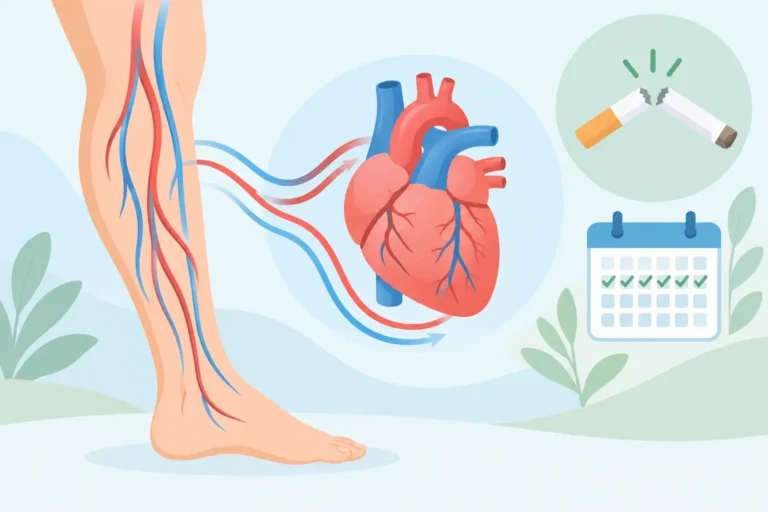
Distant disease risk rarely moves anyone. A back that hurts every morning does. So it is worth asking the question directly: does quitting smoking help back pain, or is that just another line in the standard lecture? The evidence is real but it is associational, and the honest version is more useful than the sales pitch. Smokers report more back pain than people who never smoked, the difference is fairly modest, and in one large spinal-care database the people who stopped mid-treatment improved while the people who kept smoking did not. Here is what each of those findings does and does not prove.
The Short Answer
Smoking is associated with more back pain, more disc degeneration and worse results from spinal treatment. Stopping is associated with better pain scores. But every one of those findings comes from observational research, and the researchers themselves are careful about what it means.
One of the largest analyses of spinal-care records puts the problem plainly: it is not clear whether smoking itself is a risk factor for back pain, or whether it is a marker for other lifestyle and socioeconomic traits that make back pain more likely (Behrend et al., Geriatric Orthopaedic Surgery and Rehabilitation, 2014). Nobody has run the trial that would settle it, because you cannot randomize people to smoke for twenty years.
That is not a reason to skip this article. It is a reason to read the numbers as they were actually reported rather than as a headline. The NHS back pain page does not list smoking among the causes it names, and its advice is built around staying active, painkillers and physiotherapy. Quitting belongs alongside that, not instead of it.
How Smoking Affects Spinal Discs
The discs between your vertebrae are cushions with almost no blood supply of their own. They depend on nutrients diffusing in from the bone above and below, which makes them unusually sensitive to anything that affects small blood vessels and tissue repair.
Research on disc tissue describes smoking as promoting oxidative stress, inflammation and impaired tissue repair. One 2025 study analysed disc tissue taken during surgery from 67 patients, 34 of whom smoked, and reported higher inflammatory activity and less anti-inflammatory protection in the smokers’ discs (Kocaoğlu et al., Clinical Spine Surgery, 2025).
Imaging studies point the same way. A 2025 review of MRI scans from 293 adults graded cervical disc degeneration and found it significantly worse in both smoking groups than in non-smokers. Interestingly, there was no significant difference between people who had smoked for ten years or less and those who had smoked for longer, at any level examined (Kiraz and Kina, Medical Science Monitor, 2025).
Bone is affected too, which is a related story rather than the same one. Our guide to bone density and smoking covers that side.
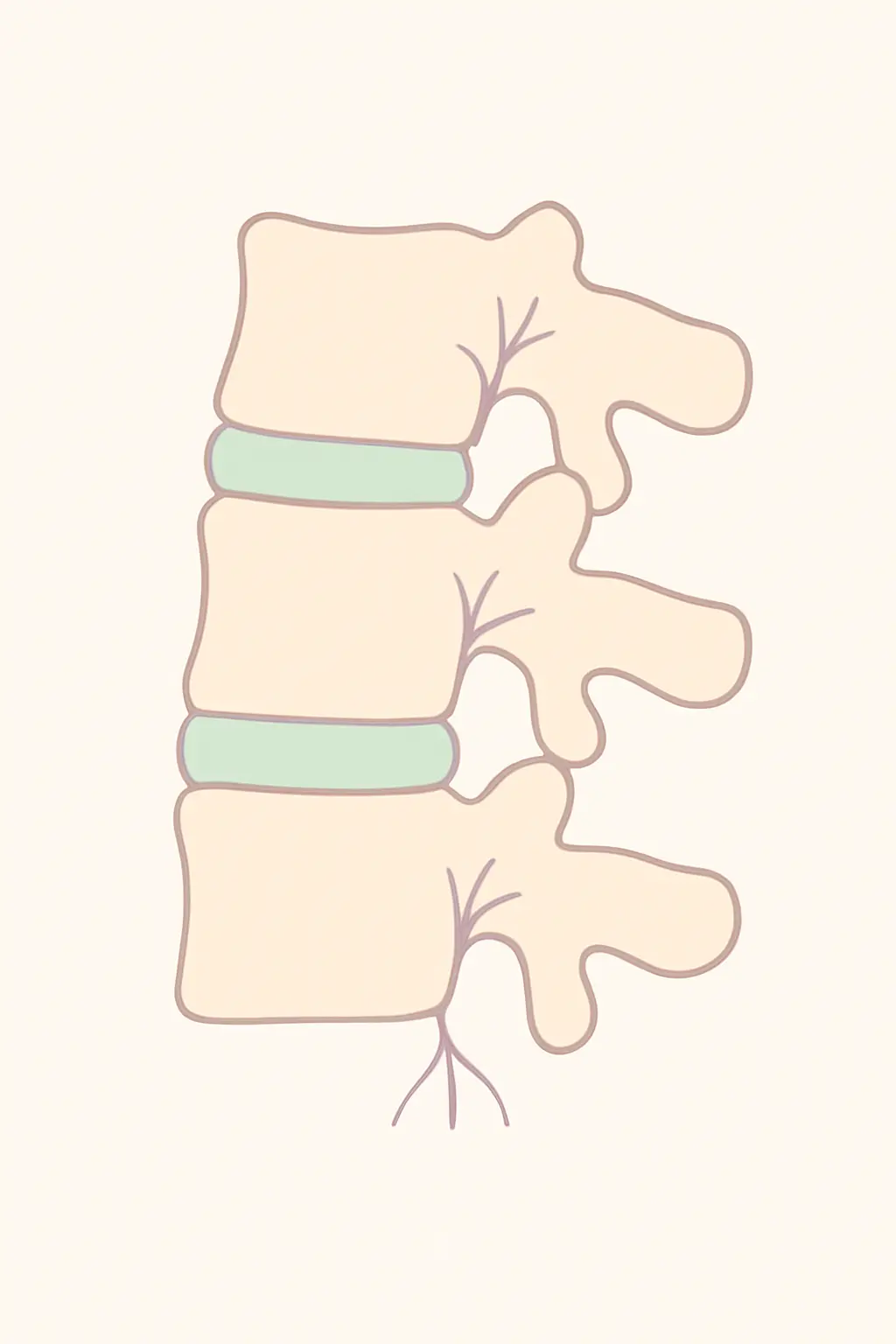
Mayo Clinic explains how a herniated disk produces pain, which is one of the disc problems that turns up more often in people who smoke.
What the Back Pain Evidence Actually Shows
The standard reference is a meta-analysis that reviewed 81 studies and pooled 40 of them, 27 cross-sectional and 13 following people over time (Shiri et al., The American Journal of Medicine, 2010). Its findings, compared with people who never smoked:
| Outcome | Pooled odds ratio | 95% confidence interval |
|---|---|---|
| Low back pain in the past month | 1.30 | 1.16 to 1.45 |
| Low back pain in the past 12 months | 1.33 | 1.26 to 1.41 |
| Seeking care for low back pain | 1.49 | 1.38 to 1.60 |
| Chronic low back pain | 1.79 | 1.27 to 2.50 |
| Disabling low back pain | 2.14 | 1.11 to 4.13 |
Two details matter more than the table. First, the pattern gets stronger as the pain gets more serious: the association with simply having had back pain last month is small, while the association with disabling back pain is roughly double. Second, the authors’ own verdict on all of it was that the association is fairly modest. They wrote that, not us.
The same analysis found former smokers sat between current smokers and never-smokers: more back pain than people who never smoked, less than people still smoking. In the studies that followed people over time, the increased incidence in former smokers (odds ratio 1.32) did not reach statistical significance, while it did in current smokers (1.31). That is a genuinely mixed result and we are not going to smooth it over.
What Happens to Pain Scores After Quitting
This is the most directly useful evidence, and it comes from a prospectively maintained database of patients being treated for painful spinal disorders. The 2014 analysis included 5,427 patients with complete smoking records and more than a month of follow-up, over a mean of eight months of care. Only 2.4% had surgery, so this is mostly ordinary conservative treatment.
Patients were split four ways: never smoked, quit before their first visit, still smoking at the last visit, and quit during the course of care. The measure was the change in worst pain on a visual analog scale between the first and last visit, so a bigger negative number means more improvement.
| Smoking status | Under 55 | Over 55 |
|---|---|---|
| Never smoked | -1.46 | -1.54 |
| Quit before first visit | -1.13 | -1.34 |
| Quit during care | -1.33 | -2.16 |
| Still smoking at last visit | -0.71 | -0.69 |
The authors reported that those who quit during care improved more than those who continued to smoke, for both worst pain and current pain, and in both age groups. The line worth pinning up is this one: as a group, the people who kept smoking during treatment had no clinically significant improvement in reported pain, regardless of age.
Keep the caveats attached. These are people already seeking spinal care, not the general population. Quitting was not randomly assigned, so the people who managed to quit may have differed in other ways. And the difference between quitting and not quitting was around half a point to one and a half points on a ten-point scale, which is meaningful but not transformative.
Healing After Back Surgery Is a Different Story
If spinal surgery is on the table, the evidence stops being modest.
A 2026 meta-analysis of 29 studies found the unadjusted incidence of pseudarthrosis, meaning the fusion failing to knit, was nearly twice as high in smokers as in non-smokers, with an odds ratio of 1.97 (95% confidence interval 1.55 to 2.52). The finding that should get your attention is the next one: former smokers who had stopped for at least a year before surgery showed no significant difference from non-smokers in either pseudarthrosis rate or pain scores (Arnold et al., Global Spine Journal, 2026).
A separate 2026 meta-analysis of 29 studies and 6,687 patients having instrumented spinal fusion reported fusion rates of 86.8% in smokers against 95.1% in non-smokers, with smaller percentage improvements in disability and pain scores (Shafi et al., PLoS ONE, 2026).
Bone healing generally follows the same pattern. A review of 122 studies covering 417,767 patients found the non-union rate after non-pathological fractures was substantially higher in smokers, with an odds ratio of 2.50 (1.73 to 3.61). The same review found that stopping at least four weeks before surgery significantly reduced the rate of wound infection compared with continuing to smoke, with an odds ratio of 0.37 (0.16 to 0.89) (Xu et al., EClinicalMedicine, 2021).
If you have a date in the diary, our guide to quitting before surgery covers the timing in detail, and immune and healing recovery covers what is happening underneath.
A Realistic Timeline
Nobody has published a week-by-week timeline for back pain after quitting, and anyone who gives you one has made it up. What the sourced evidence supports is roughly this shape.
- First two to four weeks. Expect nothing for your back, and possibly a rougher patch. This is the withdrawal window.
- Around eight months. This is the follow-up period in the spinal-care study where the difference between quitters and continuing smokers showed up. It was a course of treatment, not simply time passing.
- One year before surgery. The cessation interval at which former smokers matched non-smokers on fusion outcomes in the 2026 meta-analysis. Four weeks was enough to cut wound infection risk in the fracture-healing review.
- Long term. Former smokers in the meta-analysis still reported more back pain than never-smokers. Quitting shifts you toward that group, it does not reset you into it.
For everything else changing over the same months, see the first 12 weeks and the full benefits timeline.
Why the First Weeks Can Feel Worse
Two things are worth knowing before you conclude that quitting made your back worse.
The first is that nicotine has reported analgesic properties, probably through its effects at nicotinic acetylcholine receptors in the brain and body, a point the spinal-care researchers make explicitly. If a cigarette has been taking a small edge off your pain several times a day, removing it will be noticeable.
The second is that increased pain sensitivity during withdrawal has been studied, but mainly in animals. A 2026 rodent study reported that nicotine exposure induced hyperalgesia and lowered pain tolerance, and examined withdrawal effects in that model (Shrimali et al., Nicotine and Tobacco Research, 2026). We did not find a human study that quantifies this, so treat it as a plausible explanation for a rough fortnight rather than an established fact about you.
Practically: judge your back at three months, not at three days. Keep taking whatever your clinician has prescribed for the pain, and tell them you have quit.
What to Do Alongside Quitting
Quitting is one variable among several, and the others have better evidence behind them for back pain specifically. The NHS advice is the place to start.
- Stay active. The NHS is explicit that you should keep going with daily activities and not stay in bed for long periods.
- Use the right painkiller. The NHS notes that paracetamol on its own is not recommended for back pain, though it may be used with another painkiller, and that anti-inflammatories such as ibuprofen are not suitable for everyone. Ask a pharmacist.
- Get physiotherapy. In many areas you can self-refer to NHS community musculoskeletal services without seeing a GP first.
- Watch your weight during the quit. Weight gain after stopping is common and loads the spine, so plan for it rather than being surprised.
- Know the emergency signs. The NHS says call 999 or go to A&E for numbness, tingling or weakness in both legs, loss of feeling around the genitals or anus, changes in bladder or bowel control, chest pain, or back pain after a serious accident.
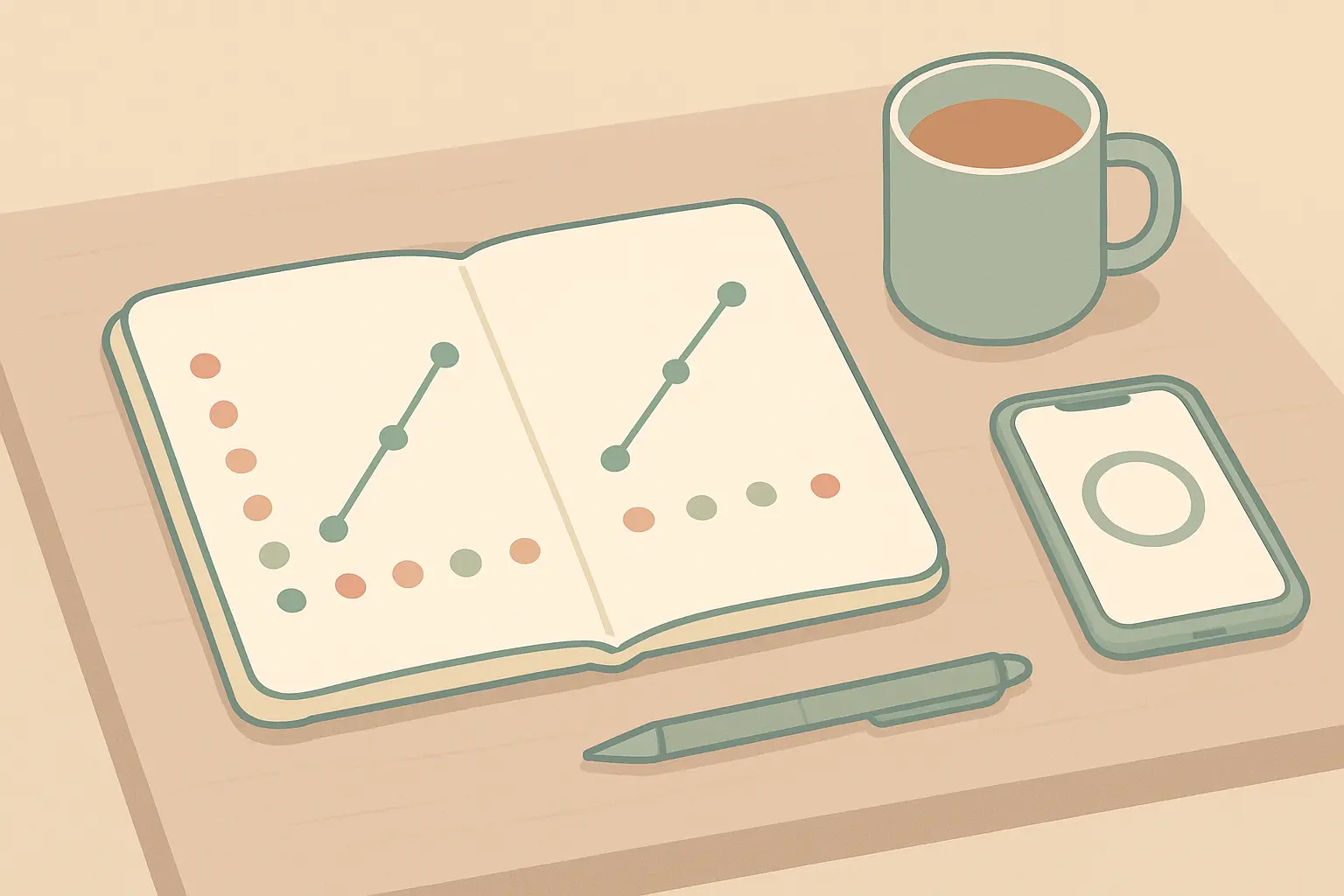
Tracking is what turns a vague impression into something you can act on. Log a daily pain score out of ten next to your smoke-free days in iQuit’s craving and mood journal, and look at the trend at twelve weeks rather than the number today. If the picture across your whole health is what you want, our risk profile across 11 conditions sets that out, and if you happen to be unwell right now, quitting while you are ill covers that timing question.
Frequently Asked Questions
Does quitting smoking actually reduce back pain?
The evidence is associational, not proof. In a database of 5,427 spinal-care patients followed for a mean of eight months, those who quit during care improved more on pain scores than those who kept smoking, and the continuing smokers showed no clinically significant improvement at all. Quitting was not randomly assigned, so this cannot establish cause and effect (Behrend et al., 2014).
How much more back pain do smokers have?
Modestly more. A meta-analysis pooling 40 studies found current smokers had pooled odds ratios of 1.30 for back pain in the past month, 1.49 for seeking care, 1.79 for chronic low back pain and 2.14 for disabling low back pain, compared with never-smokers. The authors described the overall association as fairly modest (Shiri et al., American Journal of Medicine, 2010).
Does smoking damage spinal discs?
Research on disc tissue describes smoking as promoting oxidative stress, inflammation and impaired repair, and a 2025 study of tissue from 67 surgical patients found more inflammatory activity in smokers’ discs. An MRI study of 293 adults found worse cervical disc degeneration in smokers, though with no significant difference between shorter and longer smoking histories (Kocaoğlu et al., 2025; Kiraz and Kina, 2025).
How long before spinal surgery should I stop smoking?
Ask your surgical team, because they set the plan. What the evidence shows is that in a 2026 meta-analysis of 29 studies, people who had stopped for at least a year before surgery showed no significant difference from non-smokers in fusion failure or pain scores. A separate review found stopping at least four weeks before surgery significantly reduced wound infection risk.
Why did my back hurt more after I quit?
Nicotine has reported analgesic effects through nicotinic acetylcholine receptors, so losing several small doses a day is noticeable. Increased pain sensitivity in withdrawal has been studied mainly in rodents, and we found no human study quantifying it. Judge your back at three months rather than three days, and tell your clinician you have stopped.
Do former smokers still get more back pain than never-smokers?
In the 2010 meta-analysis, yes. Former smokers had more back pain than people who had never smoked, but less than current smokers. In the studies that followed people over time, the raised incidence among former smokers did not reach statistical significance. Quitting appears to shift you toward the never-smoker group rather than into it.
When should I see a doctor about back pain?
The NHS says see a GP if the pain does not improve after a few weeks of home treatment, stops your daily activities, comes with unexplained weight loss, a lump or change in the shape of your back, or is worse at night. Call 999 for numbness or weakness in both legs, loss of feeling around the genitals or anus, or changes in bladder or bowel control.
Give the Trend Three Months to Show Up
iQuit counts your days smoke-free and your health milestones, logs cravings with triggers and intensity, and gives you a craving and mood journal where a daily pain score out of ten sits right next to the rest of your quit. Twelve weeks of that beats trying to remember how last month felt. Free on Google Play and the App Store.
Download iQuit Free on Google Play Download on the App Store