If your partner has started sleeping in another room, or you wake up at 6am feeling like you never slept at all, you have probably wondered whether cigarettes are part of it. Does quitting smoking help sleep apnea, or is that wishful thinking? The honest answer has two halves. Smoking is consistently linked to louder snoring and worse breathing during sleep, and stopping removes one real source of airway irritation. But quitting is not a cure for obstructive sleep apnea, and the research on what happens to measured apnea after people stop is thinner than most articles admit. This guide separates the two.
The Short Answer
Stopping smoking is part of the standard advice for both problems. The NHS page on snoring lists smoking among the things that make you more likely to snore, and its sleep apnoea guidance puts giving up smoking alongside losing weight and cutting alcohol as the lifestyle changes that can sometimes treat the condition. The US National Heart, Lung, and Blood Institute lists quitting smoking among the changes that may help prevent obstructive sleep apnea.
What none of those pages promise is a cure. Obstructive sleep apnea is often driven by anatomy, weight and age that quitting does not touch. The useful framing is this: quitting removes one contributing factor, usually the easiest one to remove, and it is not a substitute for being tested. For the wider picture, our page on smoking and sleep data collects the numbers.
How Smoking Narrows the Airway You Breathe Through at Night
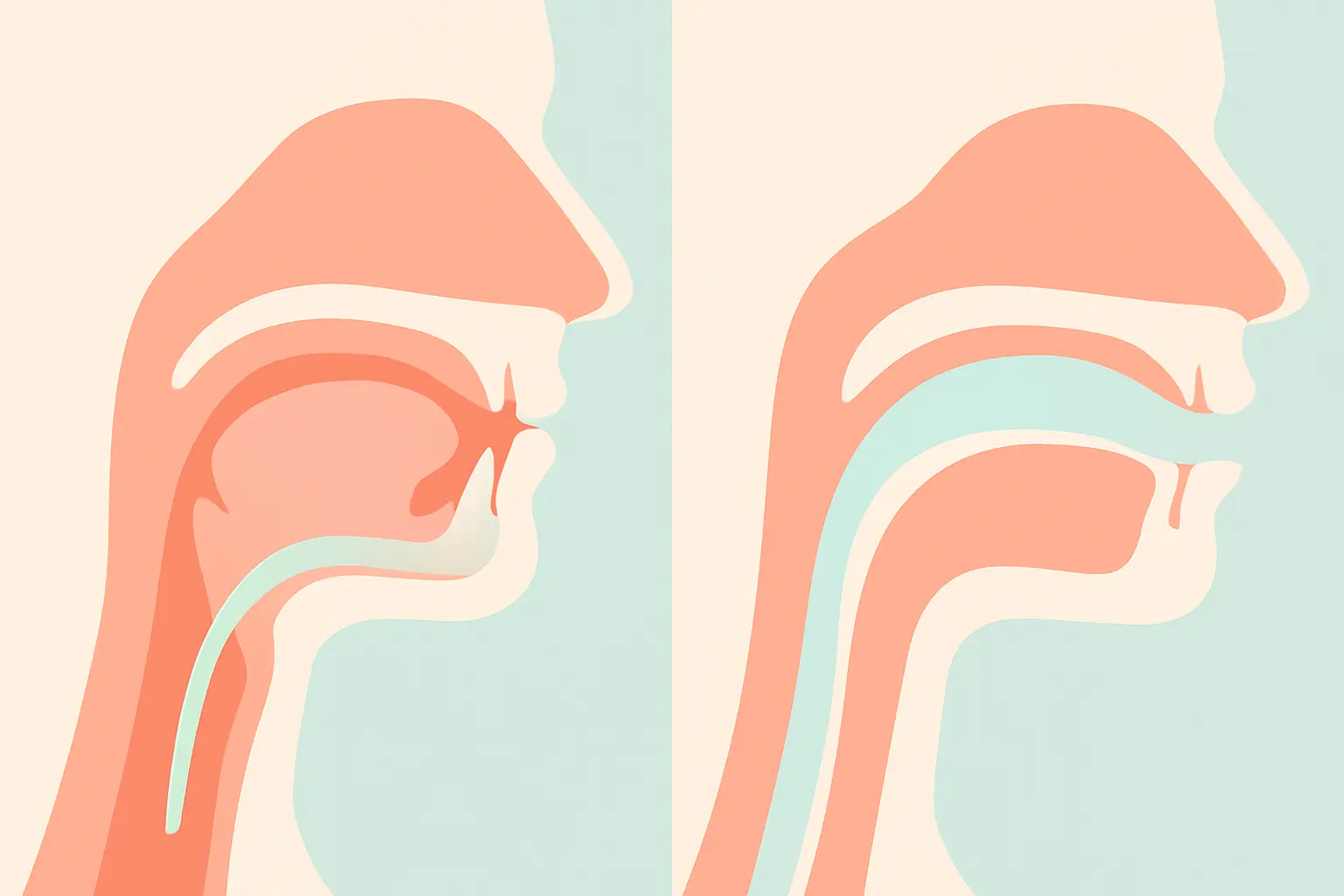
When you fall asleep, the muscles that hold your throat open relax. Air still has to pass through, so anything that makes that passage narrower or floppier makes noise and resistance worse. The NHS describes snoring as the tongue, mouth, throat or nasal airways vibrating as you breathe, because those parts relax and narrow while you are asleep.
Smoke adds to that in a few ways. The National Heart, Lung, and Blood Institute states plainly that smoking can cause inflammation in your upper airway, which affects breathing. A swollen airway is a smaller airway. On top of that, a 2014 review in Chest set out the proposed mechanisms in more detail: changes in sleep architecture, altered upper airway neuromuscular function, changed arousal thresholds, and upper airway inflammation (Krishnan, Dixon-Williams and Thornton, 2014).
The population data fits. The Wisconsin Sleep Cohort study put 811 adults through overnight polysomnography and compared smokers with people who had never smoked. Current smokers had roughly twice the odds of snoring (odds ratio 2.29) and over four times the odds of moderate or worse sleep-disordered breathing (odds ratio 4.44). Among people smoking 40 or more cigarettes a day, the odds of moderate or worse sleep-disordered breathing were far higher still (Wetter et al., Archives of Internal Medicine, 1994).
A pooled analysis of 13 studies, covering 3,654 smokers and 9,796 non-smokers, points the same way: smokers had significantly higher apnea-hypopnea index scores, higher daytime sleepiness scores and lower minimum blood oxygen levels. The oxygen desaturation index did not differ significantly (Zeng et al., Nicotine and Tobacco Research, 2023).
Snoring and Sleep Apnea Are Not the Same Problem
This is the distinction that decides what you should do next, and it gets blurred constantly. Snoring is noise. Sleep apnea is interrupted breathing.
The NHS calls snoring very common and not usually caused by anything serious. Obstructive sleep apnea is different: your breathing actually stops and starts while you sleep, and the NHS says it needs to be treated because it can lead to more serious problems. The signs it lists are gasping, snorting or choking noises, waking a lot, loud snoring, and then daytime symptoms such as feeling very tired, struggling to concentrate, mood swings and waking with a headache.
Severity is measured with the apnea-hypopnea index, the number of times your breathing stops or becomes very shallow per hour of sleep. The NHS grades it as follows.
| AHI score | Severity |
|---|---|
| 5 to 14 | Mild |
| 15 to 30 | Moderate |
| Over 30 | Severe |
You cannot work out your own score from how you feel, and neither can your partner. That is why the rest of this article separates “quitting will probably make you quieter” from “quitting will fix your apnea”. Those are different claims and only one of them is well supported.
This short explainer from Mayo Clinic Health System covers what sleep apnea is and why it is treated differently from ordinary snoring.
What Changes After You Quit, According to the Evidence
Here is where careful reading matters. Most of the strong evidence compares current smokers with never-smokers. Far less of it follows the same people through quitting and measures what happened.
The 2014 Chest review put it bluntly: smoking cessation should improve obstructive sleep apnea, but the evidence to support that is limited. The same review noted that while the association between smoking and apnea is plausible, the evidence overall is less than conclusive.
Two findings keep the picture honest in opposite directions.
The encouraging finding
A 2026 study in Tobacco Induced Diseases followed 117 people who successfully quit at a stop-smoking clinic and re-ran their screening questionnaires six months later. The number scored as high risk on the Berlin Questionnaire fell from 47 to 28. The proportion scored as high risk on STOP-BANG fell from 45.3% to 35.9%. The number reporting high daytime sleepiness on the Epworth scale fell from 36 to 30 (Betos Koçak and Aydin, 2026). Those are screening scores rather than sleep-lab measurements, so read them as “risk profile improved”, not “apnea resolved”.
The sobering finding
A 2026 analysis of 1,206 people from the population-based Study of Health in Pomerania, all with complete overnight polysomnography, compared current and former smokers with never-smokers after adjusting for age and body mass index. Current smokers had raised apnea severity, with an odds ratio of 1.75 (95% confidence interval 1.27 to 2.41). Former smokers had an almost identical odds ratio of 1.76 (95% confidence interval 1.27 to 2.43) (Krüger et al., Scientific Reports, 2026). In that sample, having quit did not bring people back to never-smoker levels.
The Wisconsin cohort found something related decades earlier: after adjustment, former smoking was not associated with snoring or sleep-disordered breathing at all. Cross-sectional studies like these cannot untangle who quit because they were already unwell, so neither result is the last word. What they do establish is that nobody should promise you your apnea will disappear.
The weight caveat nobody mentions
Weight is one of the strongest drivers of obstructive sleep apnea, and many people gain some weight after quitting. If that happens, it can pull against the airway benefit. This is a reason to plan for it, not a reason to keep smoking: our guide to managing weight gain after quitting covers what actually works. Tell your GP or sleep clinic that you have quit, so any weight change is watched alongside your apnea rather than separately.
Why Sleep Often Gets Worse Before It Gets Better
Many people quit expecting to sleep like a baby by the weekend, then panic in week one when the opposite happens. That dip is real and it is measurable.
A German study used overnight polysomnography on 33 smokers while they were smoking, again 24 to 36 hours after stopping, and again three months after quitting. During withdrawal, arousal index and wake time both increased compared with the smoking state. The people who later relapsed had less REM sleep, a longer delay before REM began and worse subjective sleep during that withdrawal window than those who stayed quit (Jaehne et al., Addiction Biology, 2015).
That matters practically, because poor sleep in the first weeks predicts going back to cigarettes. Researchers testing exercise as a sleep aid during acute withdrawal noted that sleep disturbances are common early withdrawal symptoms and increase the likelihood of relapse within the first four weeks of quitting, and that nicotine replacement and other medicines do not reliably fix withdrawal-driven sleep disruption (Soreca et al., Experimental and Clinical Psychopharmacology, 2022).
So expect a rough patch that is separate from your airway. If you are in it now, read why you cannot sleep in week one and our sleep recovery plan for the first month. For the longer arc, how sleep recovers after quitting sets out what usually settles and when.
Do You Still Need a Sleep Study?
If you have apnea symptoms, yes. Quitting does not replace being tested, and waiting to “see if quitting fixes it” can mean months of untreated apnea.
The NHS advises seeing a GP if your breathing stops and starts while you sleep, if you make gasping, snorting or choking noises, or if you always feel very tired during the day. It also suggests bringing the person who has seen you sleeping, because they can describe what you cannot.
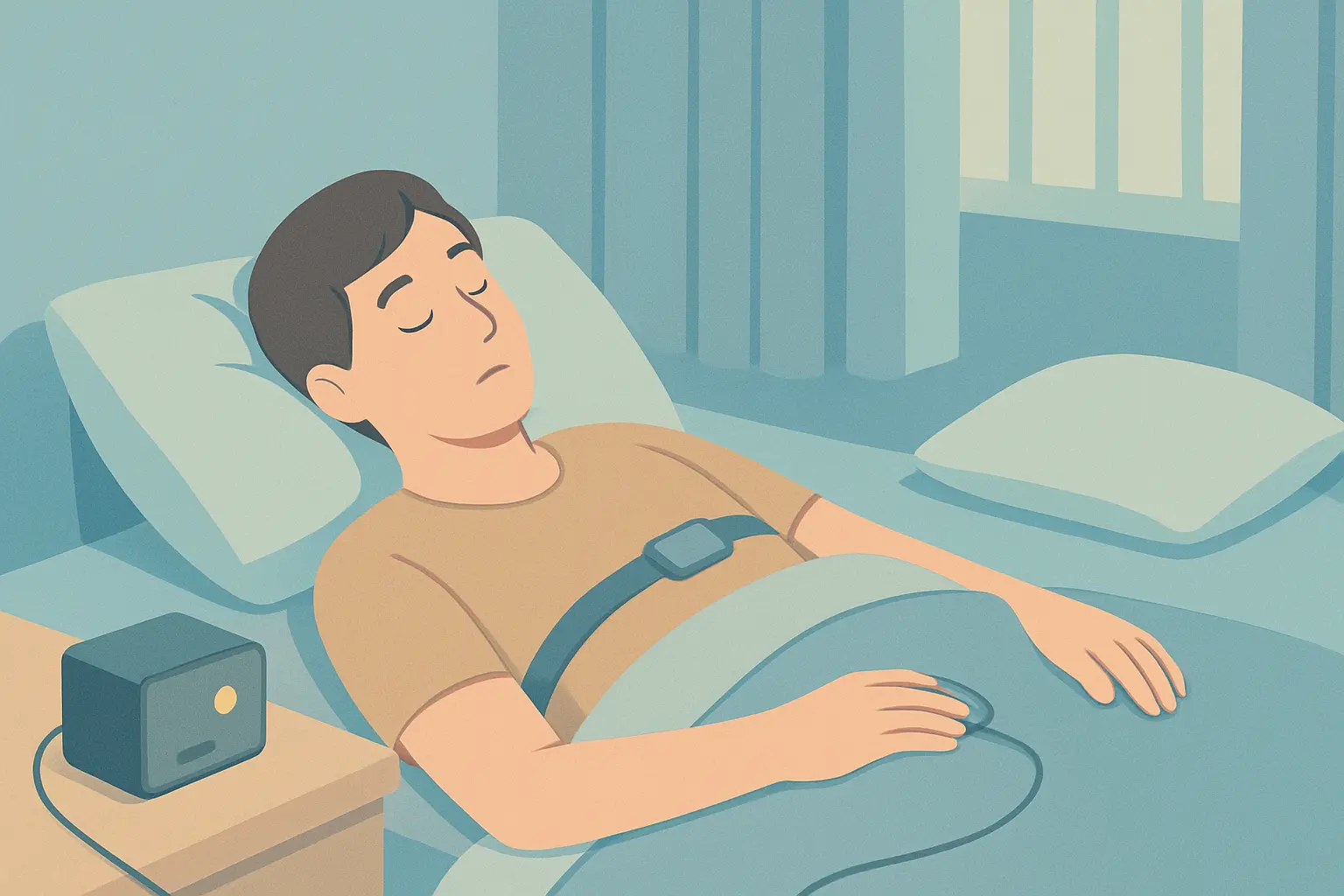
If the GP suspects apnea, they may refer you to a specialist sleep clinic. The NHS describes devices that record things like your breathing and heartbeat overnight, usually at home. The result gives you an AHI score and a severity grade, which treatment decisions are based on. Two things are worth knowing before you go.
- Say that you have quit, and when. Withdrawal-driven insomnia and apnea produce overlapping complaints, and the clinic needs to separate them.
- Driving. The NHS notes you may need to tell the DVLA about sleep apnea, and that if sleep apnea with excessive sleepiness is confirmed you must not drive until your symptoms are controlled. Do not let that put you off testing; untreated apnea is the bigger risk to your licence and to everyone else.
Untreated apnea is not a cosmetic problem. The NHS links it to high blood pressure, a higher chance of stroke, type 2 diabetes, heart disease, mood changes and accidents caused by tiredness. Several of those overlap with the damage smoking is already doing, which you can see mapped in our risk profile across 11 conditions.
Quitting and CPAP at the Same Time
People often assume they should do one thing at a time. In practice these two fit together well.
CPAP gently pumps air through a mask to stop your airway narrowing while you sleep. The NHS says it improves breathing and sleep quality, reduces tiredness, lowers the risk of related problems such as high blood pressure, and works best when used every night. It is provided free on the NHS for people who need it.
Quitting helps CPAP rather than competing with it. A less inflamed nose and throat generally means less congestion to push air through, and the nights are not spent waking for a cigarette. If you find the mask uncomfortable, the NHS advice is to tell your doctor rather than quietly stop using it; mask types, humidification and pressure settings can all be adjusted.
The NHS lists other options too: a mandibular advancement device worn like a gum shield, surgery such as removing large tonsils, mouth and facial muscle exercises, and hypoglossal nerve stimulation. None of them require you to sort out smoking first. One caution from the same guidance: do not take sleeping pills unless a doctor has recommended them, because they can make sleep apnea worse. That applies just as much mid-quit, when the temptation to reach for something is strongest.
What to Track Over the First Three Months
Because the honest answer here is “it depends”, the most useful thing you can do is collect your own before-and-after picture. Keep it simple and keep it consistent.
| What to record | How often | Why it helps |
|---|---|---|
| Your partner’s report of snoring, gasping or pauses | Weekly, one line | The symptoms that matter most are the ones you sleep through |
| Morning headache, dry mouth, how rested you feel out of 10 | Daily for the first month | Shows the withdrawal dip passing, separately from the airway |
| Daytime sleepiness, especially driving or after lunch | Weekly | This is what clinics score, and what changes treatment |
| Weight | Weekly, same day and time | The main factor that can work against you after quitting |
| Alcohol in the four hours before bed | Daily | A separate, fixable cause of both snoring and apnea |
Twelve weeks is a reasonable review point, because by then withdrawal effects on sleep have usually settled and what is left is closer to your real baseline. Our guide to the first 12 weeks week by week covers what else is changing.
If you already use iQuit, the craving and mood journal is an easy place to add a one-line note on how you slept, so your cravings and your nights sit on the same timeline. Taking that record to a sleep clinic appointment is far more useful than trying to remember.
Frequently Asked Questions
Will quitting smoking cure my sleep apnea?
There is no good evidence that it will. A 2014 review in Chest concluded that although quitting should improve obstructive sleep apnea, the evidence supporting that is limited. Quitting removes one contributing factor, airway inflammation, but weight, anatomy and age usually remain. Treat quitting as part of your management, not as a replacement for assessment or CPAP (Krishnan et al., Chest, 2014).
How much does smoking increase the risk of sleep apnea?
In the Wisconsin Sleep Cohort of 811 adults, current smokers had an odds ratio of 2.29 for snoring and 4.44 for moderate or worse sleep-disordered breathing compared with never-smokers, with much higher odds among the heaviest smokers. A more recent population study of 1,206 people found an odds ratio of 1.75 for raised apnea severity in current smokers (Wetter et al., 1994; Krüger et al., 2026).
Do former smokers still snore more than people who never smoked?
The evidence is split. The Wisconsin cohort found former smoking was unrelated to snoring or sleep-disordered breathing once confounders were accounted for. A 2026 population study with overnight polysomnography found former smokers still had raised apnea severity, with an odds ratio of 1.76 against never-smokers. Both were cross-sectional, so neither settles cause and effect (Wetter et al., 1994; Krüger et al., 2026).
How soon after quitting might my snoring improve?
No source we could verify gives a reliable timeline, so be wary of articles that quote one. Airway inflammation settles over weeks rather than days, and the withdrawal weeks can make sleep feel worse regardless. A fair approach is to ask whoever shares your room for a weekly one-line report and review it at 12 weeks, once withdrawal effects have passed.
Why is my sleep worse now that I have stopped?
That is nicotine withdrawal, not your airway. Polysomnography in 33 smokers found arousal index and wake time both rose during withdrawal compared with when they were smoking. Sleep disturbance in this window is also linked to relapse in the first four weeks, so it is worth treating as a priority rather than ignoring (Jaehne et al., Addiction Biology, 2015; Soreca et al., 2022).
Should I stop using CPAP once I have quit smoking?
No, not on your own. CPAP is prescribed on the basis of a measured AHI score, and quitting does not change that score for you. The NHS says CPAP works best when used every night. If you want to know whether anything has changed, ask your sleep clinic about a repeat assessment rather than stopping treatment and waiting to see (NHS sleep apnoea guidance).
When should I see a doctor about snoring?
The NHS advises seeing a GP if lifestyle changes are not helping, if snoring is having a big impact on your life or your partner’s, or if you feel sleepy during the day, your breathing stops and starts, or you make gasping or choking noises while asleep. That last group of symptoms points to sleep apnea, which needs treating (NHS snoring guidance).
Give Your Airway One Less Thing to Fight
iQuit tracks your days smoke-free and your health milestones, logs cravings with triggers and intensity, and gives you a craving and mood journal where a one-line note on how you slept sits right next to the rest of your quit. SOS craving support is one tap away on the nights that are hardest. Free on Google Play and the App Store.
Download iQuit Free on Google Play Download on the App Store