
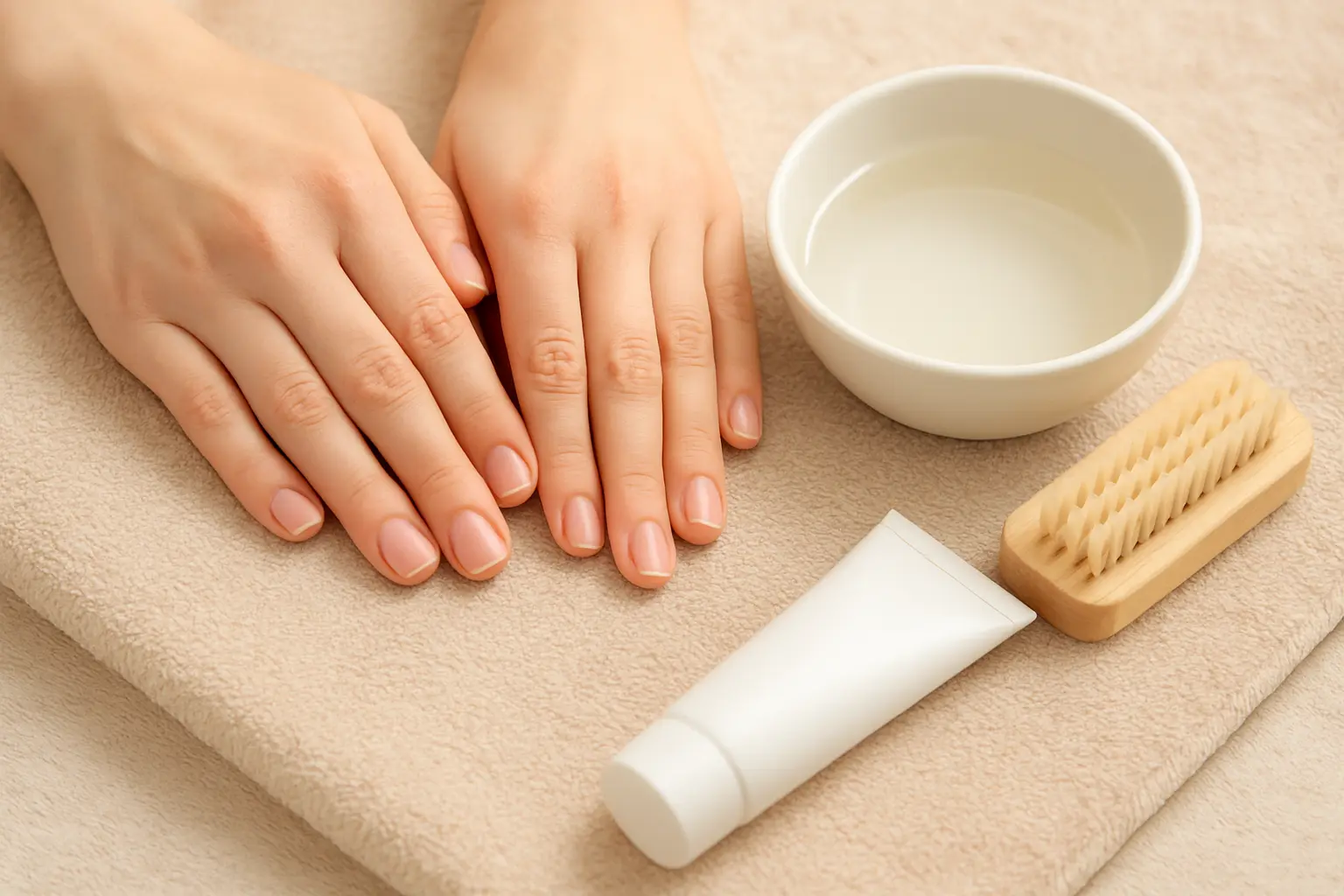
Yellow-brown marks on the fingers you hold a cigarette with are one of the most visible signs of smoking, and many people find them embarrassing. If you are wondering how to get rid of nicotine stains on fingers, the honest answer comes in two parts. You can lighten stains on your skin with gentle, safe cleaning, but stained nails only clear as they grow out, and the only permanent fix is to stop the smoke that causes them.
This guide explains what the stain actually is, the safe steps that help, the harsh “hacks” to avoid, how long nails take to grow out, and when yellow nails are a sign of something other than smoking.
Why fingers and nails turn yellow
The name “nicotine stain” is a bit misleading. Nicotine itself is a colorless to pale yellow liquid that turns brown when it’s exposed to air, but the stain on your fingers is really a build-up of tobacco smoke residue. Every time you hold a cigarette, smoke drifts over the same patch of skin and nail, leaving a sticky film of tar and other by-products that darkens over time.
Doctors have long recognized this. A report in the journal Chest described yellow pigmentation of the nail plate in smokers as the “nicotine sign”. The same 1990 report on the “harlequin nail” made an important point: a smoker’s nail stays discolored only because tobacco by-products keep restaining it. When smoking stops, new nail grows in clear.
That explains why the stain is always worst on the fingers you smoke with, usually the index and middle fingers of one hand, and why it keeps coming back no matter how hard you scrub. The same residue that settles on your fingers also clings to fabrics and furniture, which is why our guide to removing smoke smell uses similar principles.
| Stained skin | Stained nails | |
|---|---|---|
| What is stained | The outer layer of skin, which sheds naturally | The hard nail plate, which does not shed |
| Can cleaning help? | Yes, gradually | Only a little, on the surface |
| How it clears | Gentle washing and exfoliation plus no new smoke | Stained nail grows out and is trimmed away |
| Main risk of DIY | Irritation or burns from harsh products | Thinning the nail by over-filing or buffing |
Step 1: Wash and gently exfoliate
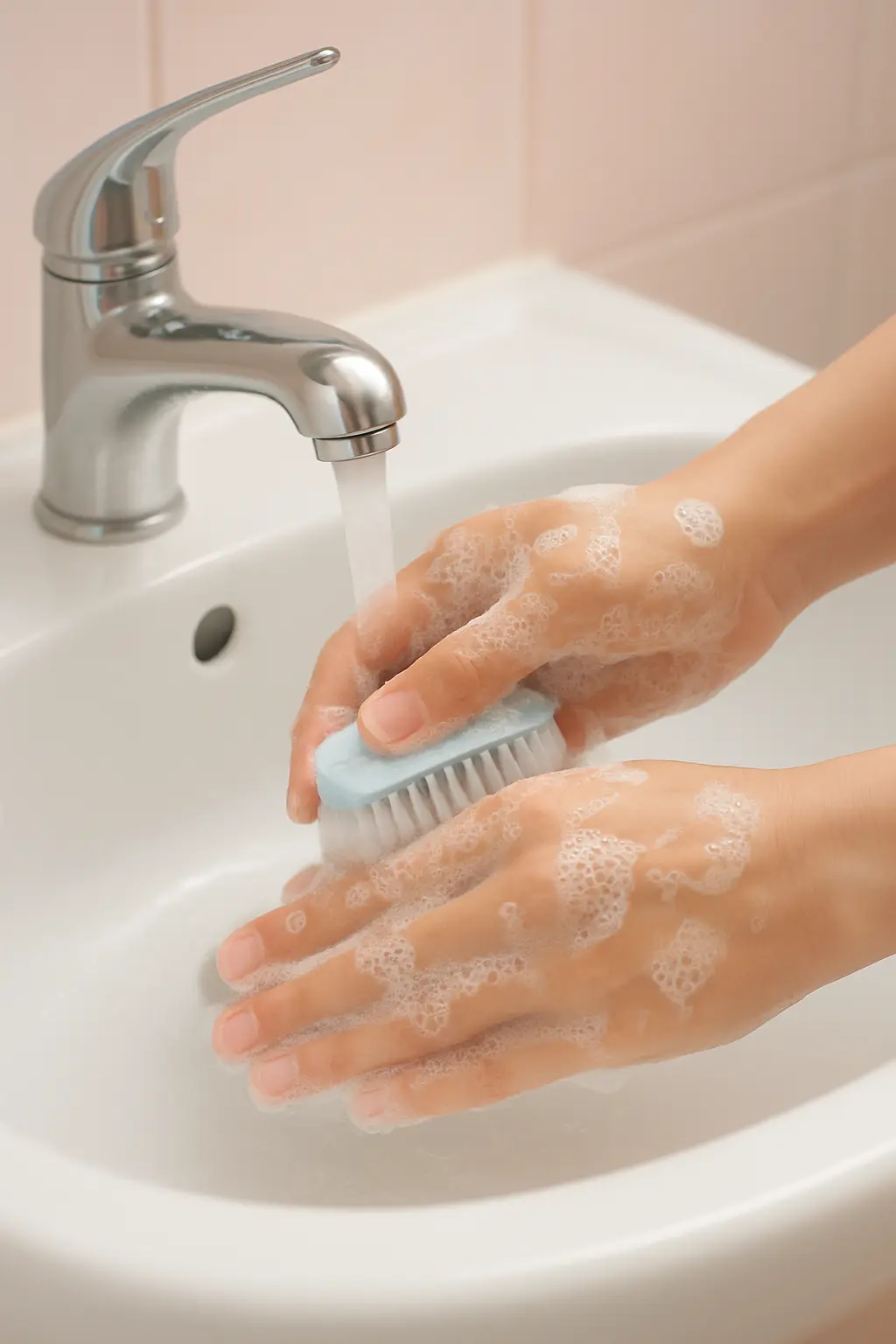
Start with the gentlest method. Most of the visible stain on skin sits on the surface layer, which your body sheds naturally. Regular, gentle cleaning helps that process along without damaging the skin underneath.
- Soak your fingertips in warm (not hot) soapy water for a few minutes to soften the residue.
- Scrub gently with a soft nail brush or an old soft toothbrush, working around the nail folds and the sides of your fingers.
- Exfoliate lightly with a mild scrub, such as a little sugar mixed with hand soap or oil, using small circles for 30 seconds or so. Stop if the skin feels sore.
- Rinse and dry thoroughly.
- Moisturize with a plain hand cream to protect the skin barrier.
- Repeat daily rather than scrubbing hard once. Stains fade gradually as the outer skin renews.
Be patient. If you are still smoking, a fresh layer of residue goes on every day, so the stain will come back. Cleaning works best alongside cutting down or quitting.
Step 2: Safe home methods that help
Search online and you’ll find plenty of “miracle” remedies for nicotine stains. There is very little research on any of them, so treat them as cosmetic tricks rather than proven treatments. These are the lower-risk options people commonly use:
- Baking soda paste: a little baking soda mixed with water makes a mild abrasive. Rub gently on the stained skin, rinse well and moisturize. Don’t use it on broken or irritated skin.
- Pumice or a gentle scrub: useful on the thicker skin at the sides of fingers. Keep pressure light and don’t use it on the nail itself.
- Oil-based cleansing: some people find a little oil rubbed in before washing loosens sticky residue.
- Whitening toothpaste on the nail surface: may slightly brighten the very top of the nail. It will not reach stains within the nail, and there is no good evidence it works.
- Hand cream afterwards: always, to keep skin comfortable after scrubbing.
If any method stings, burns, or leaves your skin red, stop and rinse with plenty of water.
Step 3: What not to use on your skin
Stubborn stains tempt people into harsh fixes. Some of the most common suggestions online can do real harm.
| Avoid | Why |
|---|---|
| Bleach | Can cause chemical burns on skin |
| Oven, toilet or drain cleaners | Household cleaning products can burn skin |
| Nail polish remover used as a skin scrub | Solvents can dry out and irritate skin |
| Lemon or lime juice before going in the sun | Citrus juice plus sunlight can cause a blistering skin reaction and dark marks |
| Heavy filing or buffing of nails | Thins and weakens the nail plate |
The NHS lists bleach and household cleaning products among the chemicals that can cause chemical burns. If one gets on your skin, rinse it under cool running water straight away.
Lemon juice deserves a special warning because it’s often called “natural”. Juice from limes and other citrus fruit can trigger phytophotodermatitis, according to DermNet. When the juice is on your skin and you go into sunlight, the area can become red and blistered, and the dark marks left behind may last for years. If you do use citrus, wash it off thoroughly and keep your hands out of the sun.
Step 4: Stained nails and how long they take to grow out
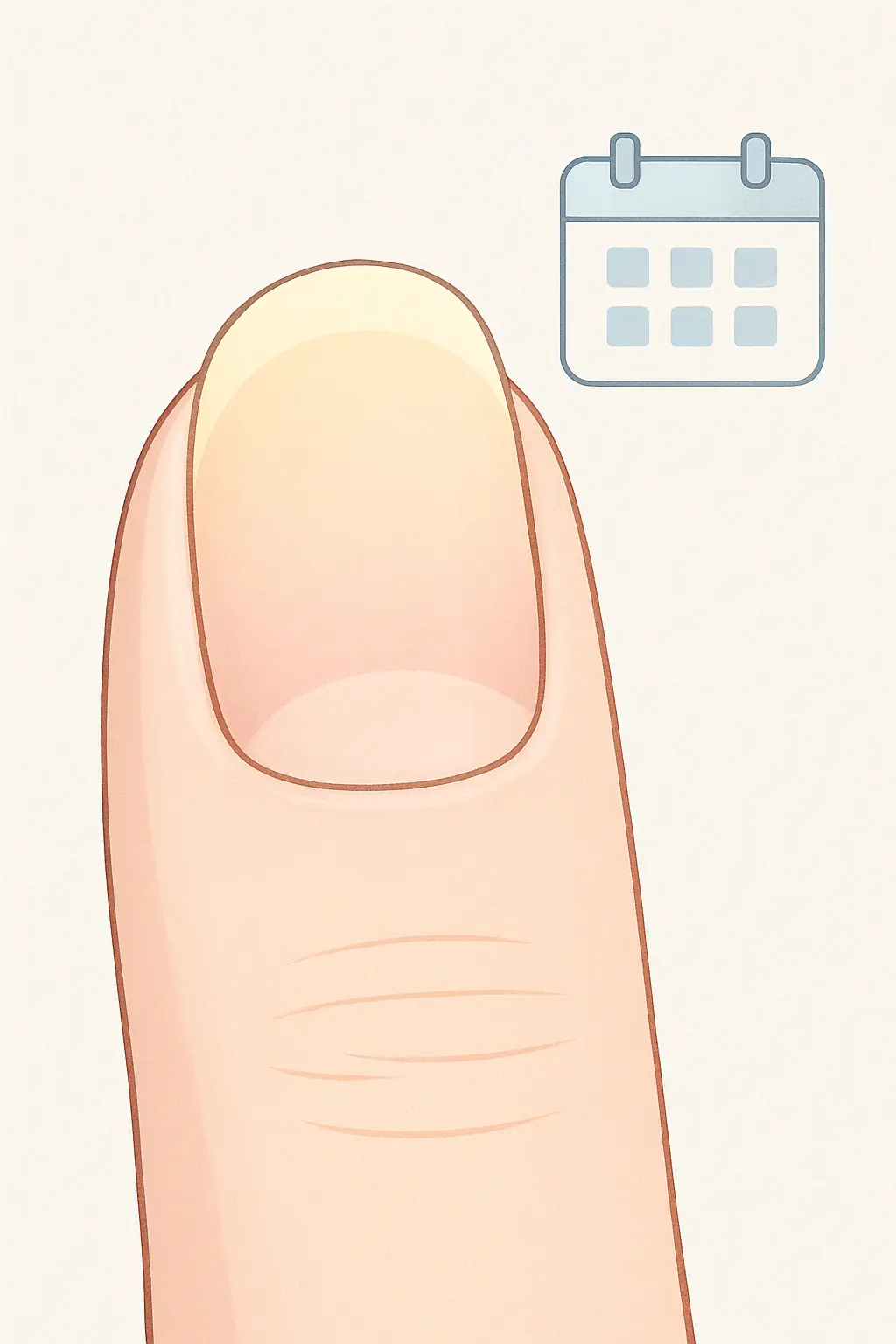
Nails are harder to clean than skin because the stain sits in the hard nail plate. Scrubbing lightens the surface a little at best. The reliable way to get rid of a stained nail is to let it grow out and trim it away.
How fast that happens depends on how quickly your nails grow. A study of healthy young adults in the US measured an average fingernail growth rate of 3.47 mm a month, more than twice as fast as toenails at 1.62 mm a month. Growth varies from person to person, so a fully stained fingernail usually takes several months to be completely replaced.
What you’ll see after you quit
Once you stop smoking, a clear boundary appears. New nail grows in from the base without staining, while the old yellow part is pushed toward the tip. Doctors call this the “harlequin nail”, and the 1990 report noted that measuring the distance to the line can even show roughly when someone stopped smoking. For many people, watching that line move up the nail is a surprisingly motivating sign of progress.
Nail care while it grows out
- Keep nails short and file the stained tips as they grow.
- Use a nail brush daily to keep residue off the surface.
- Moisturize your cuticles to keep the new nail healthy.
- If you want to hide stains in the meantime, a base coat and polish can help. Remove polish gently and take breaks between manicures.
Step 5: Stop new staining
Every step above is temporary if smoke keeps reaching your fingers. When people ask how to get rid of nicotine stains on fingers for good, the answer is always the same. The only way to stop nicotine stains coming back is to stop smoking. Filters don’t prevent it either, as our explainer on what filters really do shows.
Stained fingers are rarely the only cosmetic change smoking causes. The same habit affects your mouth and skin, which our guides to teeth and gums after quitting and the skin recovery timeline cover. If your fingers also feel cold and pale, read about circulation and cold hands.
A simple plan while you quit
- Pick a quit date and tell someone.
- Take a photo of your fingers and nails on day one.
- Clean gently every day using Step 1.
- Take another photo each month and compare the stain line.
- Use support for cravings, such as a stop smoking service, an app or NRT. Our guide on getting free nicotine patches shows where to find it cheaply.
Seeing progress helps you stick with it. iQuit shows days smoke-free, cigarettes avoided and money saved in real time, so you can match your monthly nail photos to your counter. Its health-recovery timeline and daily missions give you something to work toward, and SOS craving support helps when your hands miss the habit. iQuit is free on Google Play and the App Store.

When yellow nails are not from smoking
Not every yellow nail is a smoking stain. The American Academy of Dermatology notes that smoking or red nail polish worn without a base coat can turn nails yellow. But if nails turn yellow, thicken and seem to stop growing, it could be a sign of something going on inside your body. Lung disease and rheumatoid arthritis can cause yellow nails, and a nail infection can too. The AAD also lists a condition called yellow nail syndrome.
The NHS notes that a fungal nail infection can make a nail thicker and turn it white or yellow. See a doctor or dermatologist if:
- The yellowing is on fingers you don’t smoke with, or on your toenails.
- The nail is thickening, crumbling, lifting or painful.
- Your nails seem to have stopped growing.
- The discoloration doesn’t grow out months after you quit.
- You notice changes in nail shape, such as clubbing, or you have a cough or breathlessness.
Nicotine Stains FAQ
What removes nicotine stains from fingers?
Gentle, repeated cleaning works best: soak in warm soapy water, scrub with a soft nail brush, exfoliate lightly and moisturize every day. Stains on skin fade gradually as the outer layer renews. They come back if you keep smoking, so quitting is the only permanent fix.
Is it safe to use bleach on nicotine stains?
No. Bleach and other household cleaning products can cause chemical burns on skin. If bleach gets on your skin, rinse it under cool running water straight away. Stick to soap, water, gentle exfoliation and moisturizer instead (NHS).
Does lemon juice remove nicotine stains?
There’s no good evidence it does, and it carries a risk. Citrus juice on skin followed by sunlight can cause phytophotodermatitis, a reaction with redness, blisters and dark marks that may last for years. If you use it, wash it off well and keep out of the sun (DermNet).
How long do nicotine-stained nails take to grow out?
Fingernails grew an average of 3.47 mm a month in a study of healthy young adults, so a fully stained nail usually takes several months to be replaced. Toenails grow more slowly. After you quit, a clear line forms between old stained nail and new clear growth (JEADV, 2010).
Is the yellow stain nicotine or tar?
It’s mainly tobacco smoke residue, a sticky mix of tar and other by-products that builds up where smoke touches your skin. Nicotine itself is a colorless to pale yellow liquid that browns in air, so the name “nicotine stain” is shorthand for smoke residue in general.
Will my fingers go back to normal after I quit smoking?
For most people, yes. Skin stains fade with gentle cleaning once no new smoke reaches your fingers, and nails grow out clear. Doctors note a smoker’s nail stays discolored only because tobacco by-products keep restaining it (Chest, 1990).
When should I see a doctor about yellow nails?
See a doctor if nails turn yellow and thicken, seem to stop growing, crumble or lift, or if yellowing affects fingers you don’t smoke with or your toenails. Lung disease, rheumatoid arthritis, infection and yellow nail syndrome can all cause yellow nails (American Academy of Dermatology).
Stop the stains at the source
iQuit tracks your days smoke-free, the cigarettes you’ve avoided and the money you’ve saved, with SOS craving support for the moments your hands miss the habit. Free on Google Play and the App Store.
Download iQuit Free on Google Play
Download on the App Store


