
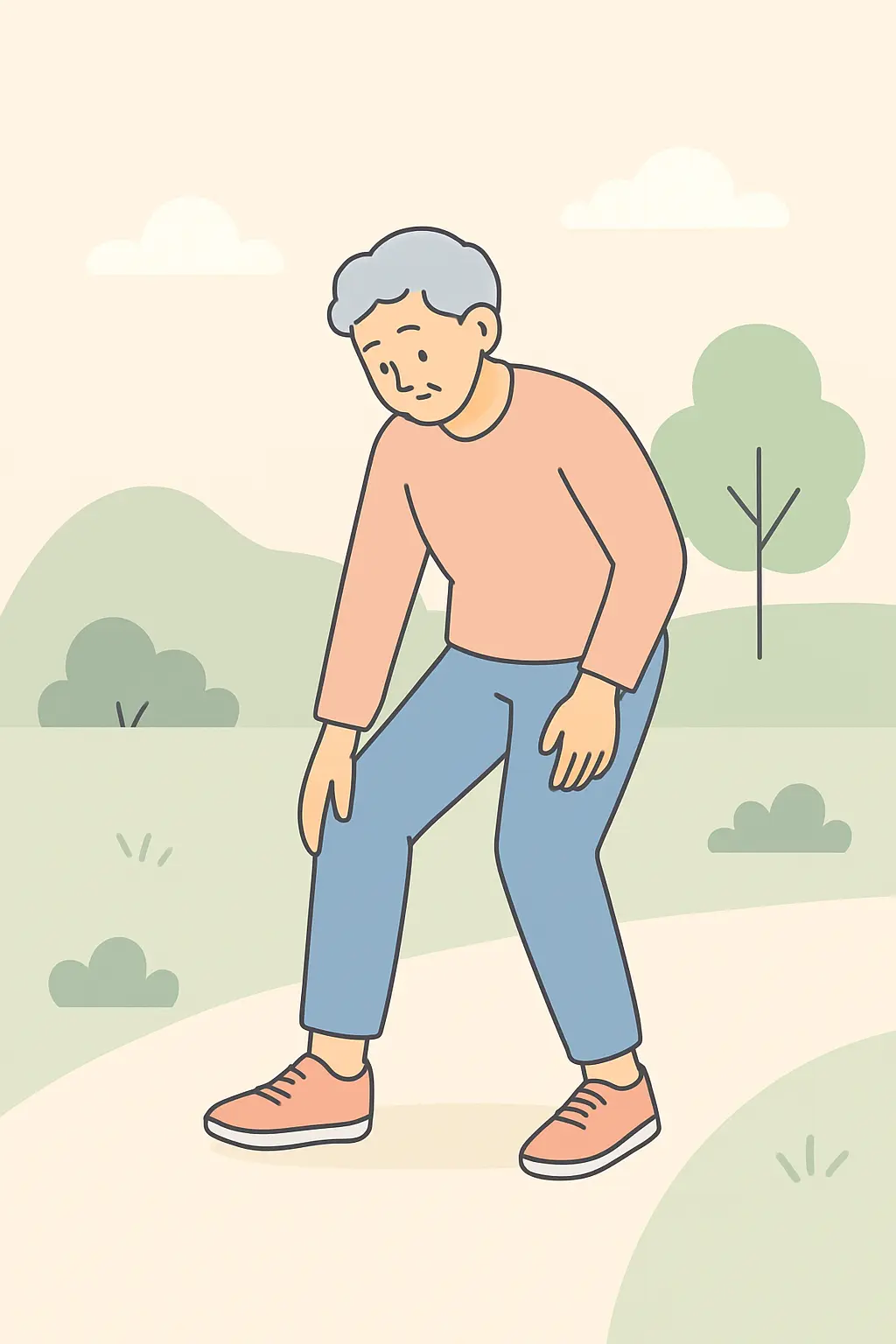
Smoking and peripheral artery disease are linked closely enough that doctors call smoking the single most significant risk factor for it. PAD narrows the arteries carrying blood to the legs, and the calf pain it causes when walking is often the first symptom smokers notice — and the first reason many finally decide to quit.
What Peripheral Artery Disease Is
The NHS describes peripheral arterial disease plainly: it’s a common condition where a build-up of fatty deposits in the arteries restricts blood supply to leg muscles. That restriction means the muscles in your calves, thighs, or buttocks aren’t getting enough oxygen-rich blood when they’re working, particularly during walking, which is exactly when the disease first makes itself known.
PAD sits in the same family of disease as coronary artery disease and stroke — the same fatty buildup (atherosclerosis) narrowing different arteries in different places. People diagnosed with PAD are at meaningfully higher risk for heart attack and stroke too, which is why the condition is treated as a whole-body warning sign, not just a leg problem.
Why Smoking Is the Dominant Risk Factor
Among all the modifiable causes of PAD — high blood pressure, high cholesterol, diabetes, inactivity — the NHS names smoking specifically as “the most significant risk factor” for developing the disease. That lines up with how PAD research describes it too: a 2026 study of smoking behavior in people with PAD calls smoking “the strongest modifiable risk factor” for the disease.
The mechanism is the same combination that damages arteries everywhere in the body — chemicals in cigarette smoke injure the lining of blood vessels, promote fatty plaque buildup, make blood more prone to clotting, and reduce the oxygen available to tissue. In the legs, where blood already has to travel furthest from the heart against gravity, that combination shows up earlier and more severely in smokers than almost anywhere else.
Claudication: The Symptom People Ignore
The hallmark symptom of PAD has a name — claudication — and a very specific pattern: a painful ache in the legs when walking, which usually disappears after a few minutes’ rest. It’s easy to dismiss as ordinary aging, being out of shape, or “bad legs,” especially because it comes and goes and doesn’t hurt at rest in the earlier stages.
That’s exactly why it gets ignored longer than it should. Claudication that reliably shows up after the same walking distance, and reliably eases with rest, is not a normal sign of aging — it’s blood supply that can’t keep up with demand, and it tends to get worse, not better, if the underlying cause (usually continued smoking) doesn’t change.
A few signs are worth treating as a reason to see a doctor sooner rather than later:
- Leg pain that now starts after a shorter walk than it used to — a sign the narrowing may be progressing.
- Pain that starts happening at rest, not just on walking — this can signal more advanced disease and deserves prompt medical attention.
- A leg or foot that feels cold, looks pale, or has a sore that won’t heal — these can indicate severely reduced blood flow.
- Any combination of leg pain with chest pain, shortness of breath, or a family history of heart disease — because PAD, heart disease, and stroke risk travel together.
How PAD Is Diagnosed
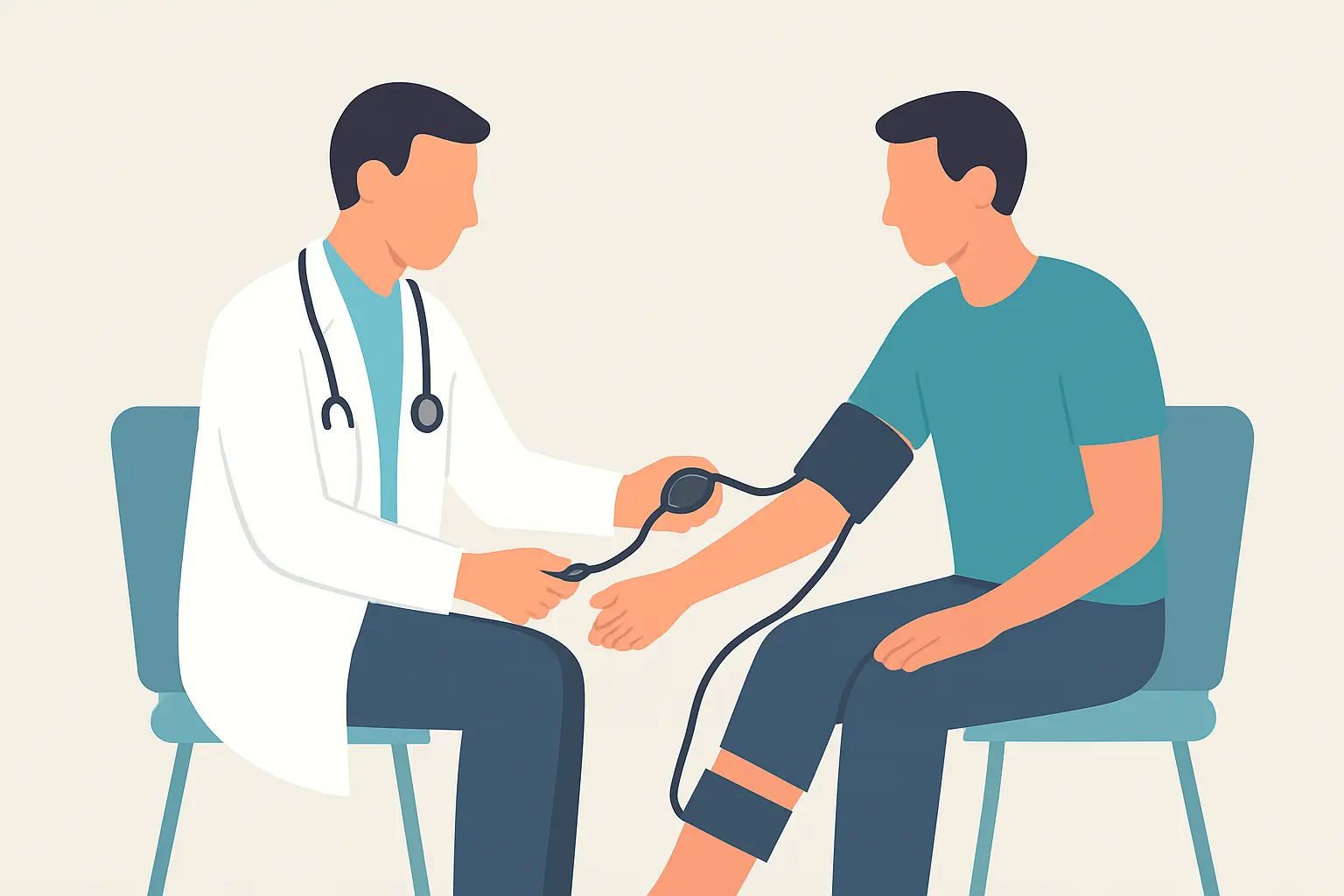
Diagnosis doesn’t require anything invasive to start. As the NHS explains, PAD is usually diagnosed through a physical examination and by comparing the blood pressure in your arm and your ankle — a simple, painless test called the ankle-brachial index (ABI). A lower blood pressure reading at the ankle than at the arm suggests the arteries supplying the leg are narrowed. If the result is unclear or more detail is needed, imaging such as an ultrasound can map exactly where and how severe the narrowing is.
If you’ve noticed calf, thigh, or buttock pain that follows the walk-then-rest pattern above, that ABI test is a reasonable, low-effort thing to ask your doctor for — it’s the same test used in the research on smoking cessation and PAD outcomes described next.
What Quitting Changes
This is the part worth being precise about, because the evidence draws a sharp line between quitting completely and merely cutting down. A large Korean cohort study followed 189,545 active smokers newly diagnosed with PAD and tracked what happened to those who quit entirely, cut back by at least 20%, or kept smoking at roughly the same rate. Compared with those who kept smoking, people who quit completely had significantly lower rates of major cardiovascular events (17.8 vs 20.2 per 1,000 person-years) and major limb events, including amputation and the need for limb-saving surgery (1.4 vs 1.8 per 1,000 person-years) (cohort study, 2026).
The people who only cut down — even by a meaningful 20% or more — saw no statistically significant benefit for either outcome. The researchers found the risk reduction only showed up with near-complete cessation, and concluded that complete cessation should be the primary treatment target for people with PAD, not gradual reduction.
| Group | Major cardiovascular events | Major limb events |
|---|---|---|
| Quit completely (20.6%) | 12% lower risk | 17% lower risk |
| Cut back ≥20% (20.4%) | No significant difference | No significant difference |
| Kept smoking (59.0%, reference) | Reference | Reference |
None of this means quitting reverses the arterial narrowing already present — the study measured outcomes like heart attack, stroke, amputation, and the need for revascularization surgery, not a shrinking of existing plaque. What it shows is that stopping smoking changes the trajectory of the disease going forward, in a way that cutting back does not.
It’s worth sitting with why cutting down doesn’t help here, because it runs against the intuition that “less smoking must be somewhat better than the same amount.” The researchers describe a dose-response relationship where risk reduction only appeared with near-complete cessation — suggesting that below some threshold of exposure, cigarette smoke keeps doing enough of the same vascular damage (clot-promoting effects, vessel-lining injury, reduced oxygen delivery) that a partial cut doesn’t meaningfully change the underlying disease process. For PAD specifically, “smoking less” and “not smoking” appear to sit in genuinely different risk categories, not two points on a smooth gradient.
Why NRT Is Still the Right Call With PAD
A reasonable worry with any vascular disease is whether nicotine itself — even without the thousands of other chemicals in cigarette smoke — is safe to use during a quit attempt. The best direct evidence comes from patients with active coronary heart disease, a closely related vascular condition: in a study of 27,459 smokers hospitalized for coronary heart disease, those who used nicotine replacement therapy in the first two days of their hospital stay showed no difference in mortality, length of stay, or one-month readmission compared with those who didn’t (JAHA study, 2018). The researchers concluded NRT is “a safe and reasonable treatment option” even in this high-risk group.
Set against that small, well-studied risk is the alternative of continuing to smoke, which the cohort study above shows carries a clearly higher risk of exactly the outcomes PAD patients most want to avoid. For most people with PAD, patches, gum, or lozenges remain a reasonable way to manage withdrawal while quitting — talk to your doctor about which form fits your specific health picture, particularly if you’re also managing other cardiovascular medications.
This is a common point of hesitation worth naming directly: some people assume that because nicotine narrows blood vessels in a lab setting, using NRT with an already-narrowed artery must be risky. The hospitalized-patient data above is exactly the kind of real-world evidence that addresses that worry — measuring actual outcomes in people with active vascular disease, not just a lab mechanism, and finding no meaningful difference in the outcomes that matter most.
Exercise and Medication Alongside Quitting
Quitting is the highest-leverage single change, but the NHS frames PAD management as combining lifestyle changes and medication, with exercise and not smoking named as the two main lifestyle levers. Supervised walking programs — walking to the point of claudication pain, resting, then continuing — are a standard part of PAD care and can measurably improve how far you can walk before pain sets in over time. Statins and blood-pressure or antiplatelet medications are commonly used alongside quitting to manage the broader cardiovascular risk PAD represents, since, as noted above, the same arterial damage often shows up in the heart and brain as well as the legs. For a related picture of how the heart specifically responds after quitting, see how blood pressure recovers after quitting smoking and, if you’ve already had a cardiac event, quitting smoking after a heart attack. Your walking distance is also a good marker of progress as you rebuild fitness after quitting, alongside the exercise program your doctor sets.
PAD is one of several conditions where smoking’s role is well established; the site’s disease-risk calculator covers 11 of them if you want to see how your other risk factors compare, and the broader evidence-based health benefits of quitting covers the full circulation and heart-health picture beyond the legs.
Frequently Asked Questions
What is peripheral artery disease?
A common condition where fatty deposits build up in the arteries and restrict blood supply to the leg muscles, most often causing calf, thigh, or buttock pain during walking that eases with rest.
Does cutting down on cigarettes help peripheral artery disease?
Not meaningfully. A study of 189,545 smokers with PAD found that cutting consumption by 20% or more showed no significant reduction in cardiovascular or limb events — only complete cessation was associated with lower risk.
Can quitting smoking prevent amputation in PAD?
Quitting is associated with a lower risk, not a guarantee. Complete smokers had a 17% lower rate of major limb events, including amputation, compared with those who kept smoking, in a large cohort study.
Is nicotine replacement therapy safe with peripheral artery disease?
Evidence from patients with active coronary heart disease, a closely related vascular condition, found NRT use was not linked to worse mortality, hospital stay, or readmission, supporting its use as a reasonable option — check with your doctor for your specific case.
What does claudication feel like?
A cramping or aching pain in the calf, thigh, or buttock that reliably starts after walking a certain distance and eases within a few minutes of resting.
How is peripheral artery disease diagnosed?
Usually with a physical exam and the ankle-brachial index test, which compares blood pressure at the ankle and the arm; imaging like ultrasound can follow if more detail is needed.
Protect Your Legs — Quit Completely
The data is clear: cutting down isn’t enough for PAD, but quitting fully changes your risk. iQuit tracks your smoke-free days and supports you through cravings on the way to complete cessation.
Download iQuit Free on Google Play
Download on the App Store