If you are checking smoking and throat cancer statistics, the clearest numbers come site by site. In the US, SEER estimates 12,290 new laryngeal cancer cases and 3,960 deaths in 2026, and Cancer Research UK attributes 64% of UK laryngeal cancers to smoking. This guide keeps the larynx, pharynx and esophagus separate, shows how alcohol multiplies the risk and how the risk falls after quitting.
Key findings in plain numbers
- In the US in 2026, SEER estimates 12,290 new cases of laryngeal cancer and 3,960 deaths. The 5-year relative survival is 62.5%. Source: SEER Cancer Stat Facts: Laryngeal Cancer.
- In the UK, head and neck cancer is the 7th most common cancer, with around 13,800 new cases a year. Cancer Research UK attributes 64% of laryngeal and 37% of pharyngeal cancers to smoking. Source: CRUK incidence and CRUK risk factors.
- People who smoke heavily and drink heavily have about 30 times the risk of head and neck cancers of people who do neither, according to the American Cancer Society.
- Risk begins to fall within a few years of quitting. For the larynx it is 30% lower after 1 to 4 years than in people who keep smoking, and 64% lower after 10 to 19 years.
For the wider picture across cancer types, see smoking and cancer statistics for 2026 and what cancers smoking causes.
What counts as “throat cancer”
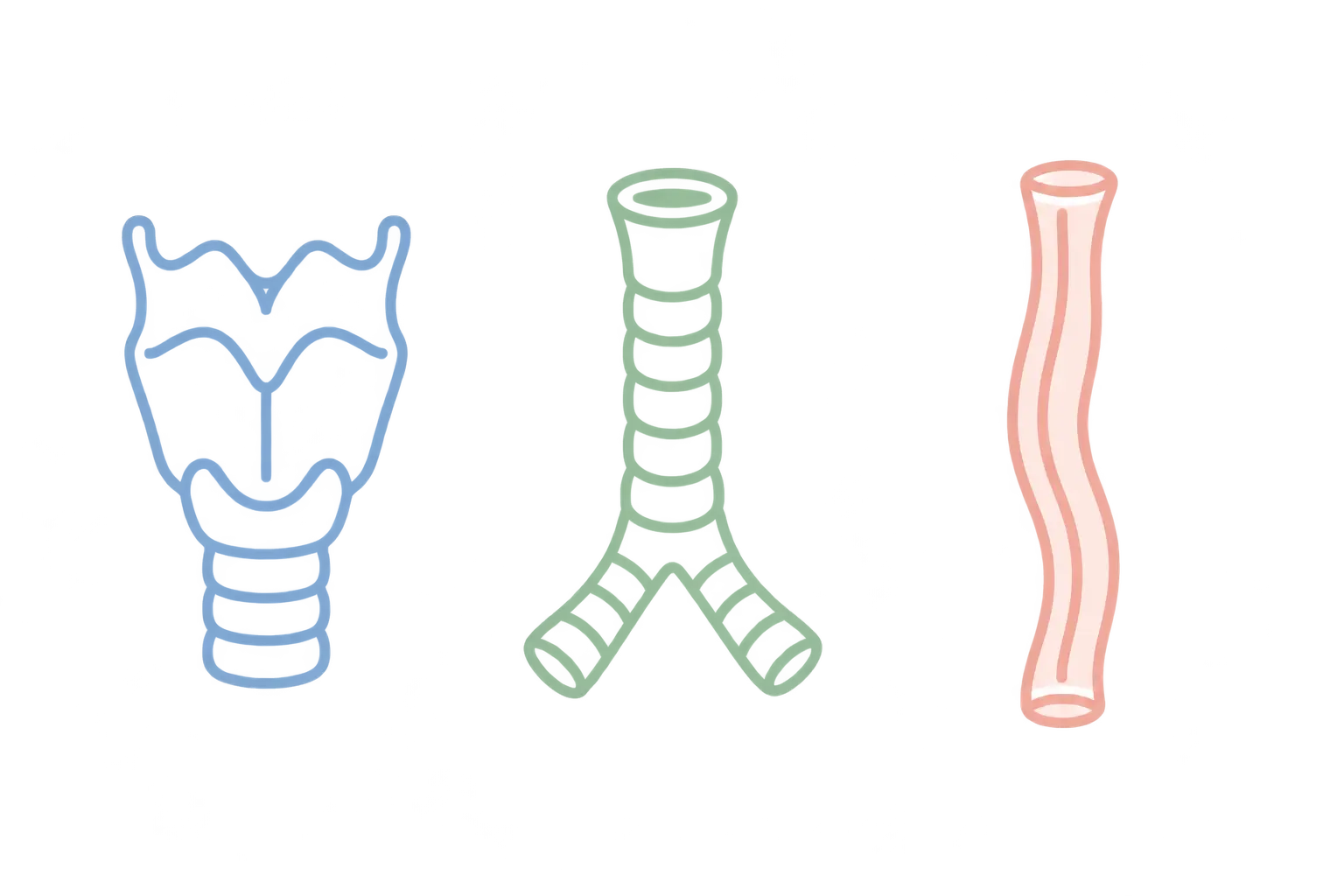
“Throat cancer” is not one disease and has no single statistic. In medical statistics it usually means cancers of the larynx (voice box), the pharynx (the throat itself, divided into the nasopharynx, oropharynx and hypopharynx) and sometimes the esophagus (food pipe). Each is counted separately, so this article keeps every number labeled by site and never merges them into one “1 in X” figure.
One more grouping to keep in mind: the US cancer registry SEER reports “oral cavity and pharynx” together, which includes the mouth and tongue as well as the throat. That is a different, larger group from the larynx, and we show it only as a labeled line.
Mayo Clinic explains the basics of throat cancer in a short video, including the main types and warning signs.
New cases and deaths each year in the US and UK
The table below uses the cancer estimates SEER publishes for 2026 for the three sites. The sites are separate, and the oral cavity and pharynx row includes the mouth and tongue.
| Site (as SEER defines it) | New cases 2026 | Deaths 2026 | 5-year relative survival | New-case rate per 100,000 |
|---|---|---|---|---|
| Larynx (voice box) | 12,290 | 3,960 | 62.5% (2016-2022) | 2.5 (2019-2023) |
| Oral cavity and pharynx (grouped by SEER) | 60,480 | 13,150 | 69.9% (2016-2022) | 11.7 (2019-2023) |
| Esophagus | 22,530 | 16,290 | 22.2% (2016-2022) | 4.2 (2019-2023) |
The larynx figures are the closest match to “throat cancer” in the narrow sense. The American Cancer Society breaks the 12,290 cases down as about 9,730 in men and 2,560 in women, with 3,180 male and 780 female deaths. Most people diagnosed are 55 or older, and the average age at diagnosis is about 66. The lifetime risk is about 1 in 200 for men and 1 in 840 for women (ACS, key statistics). Hypopharyngeal cancer, the part of the throat nearest the larynx, is rare, with only about 2,000 to 4,000 US cases a year.
The UK figure is for head and neck cancer as a whole, which Cancer Research UK reports as around 13,800 new cases every year in 2019 and 2021 to 2022, about 9,500 in males and 4,300 in females. That group includes the mouth, throat and larynx, so it is not comparable with the larynx-only US row above.
How much of throat cancer is caused by smoking
The share depends on the site. Cancer Research UK reports that 64% of laryngeal cancer cases, 37% of pharyngeal cancer cases, 25% of nasopharyngeal and 17% of oral cavity cancer cases in the UK are caused by smoking (section last reviewed 1 October 2018).
| Site | Share of cases caused by smoking | Risk in people who smoke |
|---|---|---|
| Larynx | 64% | 8.3 times higher in ever-smokers than never-smokers |
| Pharynx | 37% | 3 times higher in current smokers than never-smokers |
| Nasopharynx | 25% | 59% higher in current smokers |
| Oral cavity | 17% | 91% higher in current smokers |
Cigars and pipes are not a safer option. The same CRUK pages report that head and neck cancer risk is 3.5 times higher in cigar-only smokers than in never-smokers, and nearly 4 times higher in pipe-only smokers.
For the esophagus, the American Cancer Society calls tobacco use, including cigarettes, cigars, pipes and, to a lesser extent, chewing tobacco, a major risk factor, and notes that the more a person uses tobacco and the longer it is used, the higher the risk (ACS, esophageal cancer risk factors). We do not quote a share for the esophagus because we did not find a current figure from a fetched source.
The US trend tells the same story. SEER reports the age-adjusted rate of new laryngeal cancer cases fell from 4.66 per 100,000 in 1975 to 1.82 in 2023 (SEER 8 registries, observed), and the death rate from 1.68 to 0.88 over 1975 to 2024. The American Cancer Society says the rate of new cases is falling by about 2% to 3% a year, “most likely because fewer people are smoking”.
Smoking plus alcohol: the risks multiply
Smoking and heavy drinking each raise the risk of head and neck cancers, and together they multiply it. The American Cancer Society reports that the risk in people who drink and smoke heavily is about 30 times higher than in people who do not smoke or drink. It explains that alcohol helps many DNA-damaging chemicals get into cells more easily. The same pattern holds for the esophagus: smoking combined with drinking alcohol raises the risk of esophageal cancer much more than either alone.
This is why quitting smoking helps even if you are not ready to change your drinking, and why dentists and doctors ask about both. We do not set drinking guidelines here. If you drink heavily, tell your doctor.
How risk falls after you quit
The good news in the data is the shape of the curve. Cancer Research UK summarizes pooled analyses of case-control studies (section last reviewed 17 April 2019).
| Site | Risk compared with people who keep smoking | Compared with never-smokers |
|---|---|---|
| Larynx | 30% lower after 1 to 4 years; 64% lower after 10 to 19 years | Still higher for up to 20 years after quitting |
| Oropharynx and hypopharynx | 49% lower after 5 to 9 years | No higher after 20 or more years |
| Oral cavity | 35% lower after 1 to 4 years | No higher after 20 or more years |
Larynx risk is higher in ex-smokers than in never-smokers for up to 20 years after quitting, so the benefit builds slowly and does not erase earlier exposure. Even so, the American Cancer Society says that quitting tobacco “greatly lowers” the risk, even after many years of use. Our pages on quit smoking success rates by method and quit smoking success rates show what works.
Symptoms that need a doctor
The NHS lists the most common symptoms of laryngeal cancer as a hoarse voice or change in your voice that does not go away, a lump or swelling in your neck, pain or difficulty when swallowing, and shortness of breath or difficulty breathing. Less common symptoms include an earache that does not go away, bad breath and losing weight without trying.
The NHS advises seeing a GP for a hoarse voice or voice change that does not go away, a lump or swelling in the throat, or pain or difficulty swallowing, contacting NHS 111 for difficulty breathing and calling 999 or going to A&E for severe difficulty breathing. It also stresses that these symptoms are very common and can be caused by other conditions, so having them does not definitely mean cancer. See the NHS symptoms page for details. This article cannot diagnose anything; if a symptom lasts, get it checked.
Using the numbers to quit
Risk data do not scare everyone into quitting, and guilt rarely works. What helps is a plan for the moments when cravings hit. iQuit logs cravings with triggers and intensity, offers SOS support with breathing exercises and craving surfing, and has a health-recovery timeline that shows milestones up to 15 years. The app includes disease-risk insights for 11 conditions. It is a support tool, not a diagnostic one, and it is free on Google Play and the App Store.
Methodology: what each number is
- US figures are SEER Cancer Stat Facts estimates for 2026 and rates for 2019 to 2023 cases and 2020 to 2024 deaths. SEER groups oral cavity and pharynx together; we did not split it.
- UK figures are Cancer Research UK pages. The attributable shares and relative risks are from sections last reviewed in 2018 and 2019, so they predate 2026.
- Not combined: larynx, pharynx and esophagus numbers are shown separately. We did not create a single “throat cancer” rate.
- Alcohol and HPV: alcohol is covered where the American Cancer Society states a multiplier. HPV is a separate cause of some throat cancers that this article does not quantify.
The 2026 in the title refers to the SEER 2026 estimates. Rates and survival use older data years, which are labeled.
Frequently Asked Questions
Does smoking cause throat cancer?
Yes. Cancer Research UK attributes 64% of UK laryngeal cancers and 37% of pharyngeal cancers to smoking, and the American Cancer Society names tobacco as a major risk factor for these and for esophageal cancer (CRUK risk factors; ACS risk factors).
How many people get throat cancer each year?
Throat cancer covers several sites. SEER estimates 12,290 new US cases of laryngeal cancer in 2026 and 22,530 of esophageal cancer, and groups oral cavity and pharynx at 60,480. In the UK, head and neck cancer is about 13,800 cases a year (SEER; Cancer Research UK).
How much higher is the risk of laryngeal cancer for smokers?
Cancer Research UK reports laryngeal cancer risk is 8.3 times higher in people who have ever smoked cigarettes than in people who never have, based on a pooled analysis of case-control studies (Cancer Research UK, head and neck cancers risk factors).
Does drinking alcohol make the risk higher?
Yes. The American Cancer Society says the risk of head and neck cancers in people who drink and smoke heavily is about 30 times higher than in people who do neither (American Cancer Society, risk factors for laryngeal and hypopharyngeal cancer).
Does the risk go down if I quit smoking?
Yes. Laryngeal cancer risk is 30% lower 1 to 4 years after quitting and 64% lower after 10 to 19 years than in people who keep smoking, though still above never-smokers for up to 20 years (Cancer Research UK, pooled analysis).
What are the first signs of throat or laryngeal cancer?
The NHS lists a hoarse voice or voice change that does not go away, a lump or swelling in the neck, pain or difficulty swallowing and shortness of breath. These are common and often not cancer, but see a GP if they persist (NHS, symptoms of laryngeal cancer).
What is the survival rate for laryngeal cancer?
SEER reports a 5-year relative survival of 62.5% for laryngeal cancer in the US, based on 2016 to 2022 data. For the esophagus it is 22.2% and for oral cavity and pharynx combined 69.9% (SEER Cancer Stat Facts).
Make a plan for the next craving
Support while you work on quitting
iQuit gives you craving logging, SOS tools, streak shields with slip recovery, craving forecasts and an AI coach with free daily messages, plus a health-recovery timeline. It is a support tool and does not diagnose or treat any condition. Free on Google Play and the App Store.
Download iQuit Free on Google Play
Download on the App Store