Eight weeks in, quitting has stopped being an emergency and started being a routine. The worst withdrawal is behind most people, yet the odd craving still lands out of nowhere. So what is actually going on in your body at this point? Being 2 months smoke free puts you in a quiet but important recovery window: circulation is improving, lung function is starting to pick up, and for many people mood is lifting. It is also a stage where confidence can outrun caution. This guide walks through weeks six to ten, what to expect, what is normal, and when to check in with a doctor.
What Happens at Two Months Smoke-Free?
Two months sits in the middle of what health bodies describe as the early repair phase. The NHS timeline says that between 2 and 12 weeks, blood pumps through to your heart and muscles much better because your circulation has improved. The American Lung Association puts it similarly: from two weeks to three months after quitting, your risk of a heart attack begins to drop and your lung function begins to improve.
You are also past the peak of withdrawal. According to the NHS, symptoms are strongest in the first week and last three to four weeks on average, although some people feel them for a few months. If you remember the rawness of the two weeks smoke-free stage, week eight usually feels very different.
| Area | What sources say about this stage | Source |
|---|---|---|
| Circulation | Improving between 2 and 12 weeks | NHS |
| Lungs | Lung function begins to improve (2 weeks to 3 months); cough and breathlessness ease over 1 to 9 months | American Lung Association |
| Heart attack risk | Begins to drop (2 weeks to 3 months) | American Lung Association |
| Withdrawal | Average 3 to 4 weeks; some people longer | NHS |
| Mental health | Benefits can start in as little as 6 weeks | NHS |
| Stop-smoking treatment | NRT usually about 12 weeks; varenicline a full 12-week course | NHS |
These are ranges, not deadlines. How fast you recover depends on how long and how much you smoked, your age, your fitness and any existing lung or heart condition.
Your Lungs and Breathing at Eight Weeks
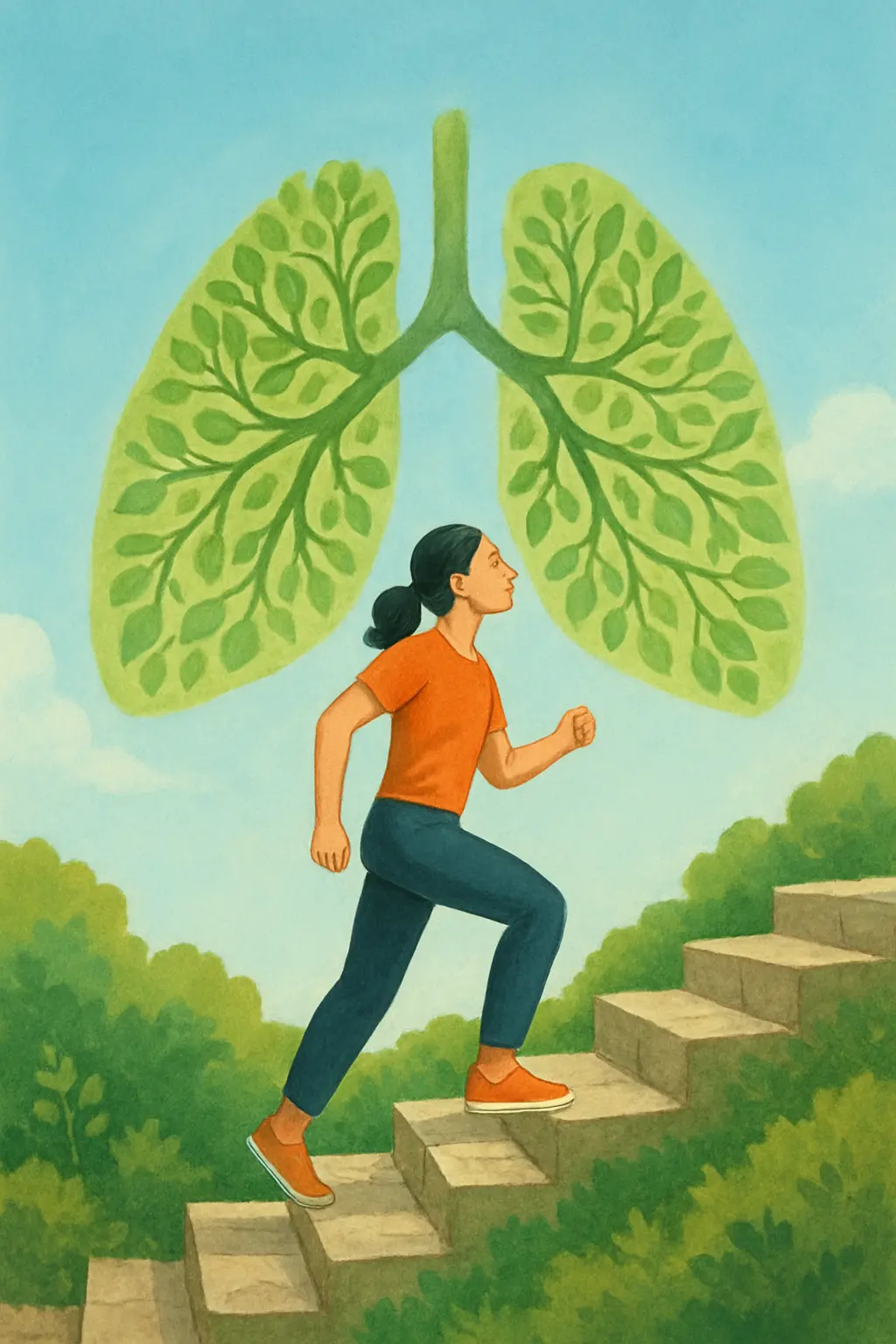
Many people notice that stairs and hills feel a little easier by now. The American Lung Association says lung function begins to improve in the first three months, and that coughing and shortness of breath decrease between one and nine months after quitting. The NHS adds that by three to nine months, lung function can increase by up to 10%.
That means two months is often the start of the breathing improvement, not the end of it. Some people still cough, and some cough more than they did when smoking. The NHS explains that an increase in coughing or phlegm can be a sign that your lungs are clearing out mucus built up from smoking, and that it is a short-term process. Our guide to the lung recovery timeline covers the longer arc.
When a cough needs checking
A clearing cough is common, but do not assume every symptom is recovery. The NHS cough guidance says to see a GP if you have had a cough for more than three weeks or you are losing weight for no reason. Ask for an urgent appointment, or call NHS 111, if you are coughing up blood, find it hard to breathe or have chest pain. Outside the UK, contact your doctor or urgent care service.
Circulation, Energy and Exercise
Better circulation is one of the most tangible changes in this window. The NHS benefits page says quitters notice they breathe more easily and have more energy within days or weeks, and its timeline places improved circulation between 2 and 12 weeks.
This is a good time to build on it. If you started walking during the early weeks to handle cravings, you may be able to add distance or pace now. Physical activity also gives you something to track besides the days you have not smoked.
The American Lung Association explains the main health benefits of quitting over time in this short video.
How Cravings Change by Week Eight
By two months, most people notice cravings come less often. The NHS says a single craving lasts up to about 15 minutes, and the constant background pull of the first weeks has usually faded. Look back at the withdrawal timeline and you will likely see how far you have come.
What changes less is the reaction to cues. In a study published in Biological Psychiatry, researchers paid 86 smokers to stay abstinent for 7, 14 or 35 days and then showed them smoking cues. Cue-triggered craving was greater at 35 days than at 7 days and did not decrease on any measure, even as general craving and withdrawal eased (Bedi et al., 2011).
In everyday terms, the cravings you get at two months tend to be less frequent but can be surprisingly sharp when something familiar sets them off:
- A first night out after weeks of avoiding one
- A stressful phone call or argument
- Smelling smoke outside a pub, office or bus stop
- Holidays, weddings or any event where you always used to smoke
That is normal, and it is not a sign that quitting is failing. It is a sign to keep your coping moves ready. Logging each craving with its trigger and intensity, as you can in iQuit, shows which situations still bite so you can plan for them rather than be ambushed.
Sleep, Mood, Concentration and Appetite
Mood
This window is where many people start to feel mentally better. The NHS says it can take as little as six weeks to start feeling the mental health benefits of stopping smoking. A BMJ meta-analysis of 26 studies found that anxiety, depression and stress fell in people who quit compared with people who kept smoking, with follow-up from seven weeks to nine years (Taylor et al., BMJ, 2014).
Sleep and concentration
Insomnia is a recognized nicotine withdrawal symptom, and the NHS lists trouble sleeping and difficulty concentrating among the common effects of quitting. For most people these settle as withdrawal passes. The NHS insomnia page says to see a GP if changing your sleep habits has not helped, if you have had trouble sleeping for months, or if it is making daily life hard to cope with.
Appetite and weight
The NHS notes that appetite often increases after quitting and food can taste better. In a BMJ meta-analysis, people who quit without treatment had gained an average of 2.26 kg at two months and 2.85 kg at three months, with wide variation between individuals (Aubin et al., BMJ, 2012). The NHS says the health benefits of quitting are far greater than the risks of gaining some weight.
If your mood drops sharply or you feel hopeless, do not wait it out. Speak to a GP or your stop-smoking adviser.

The Two-Month Complacency Trap
The danger at eight weeks is not usually withdrawal. It is the feeling that you have beaten it. That can lead to thoughts like “one would not hurt now”, or to dropping the routines and treatment that got you here.
The numbers argue for staying careful. A large US survey analysis found that people who had been smoke-free for 12 months or less had a risk of relapse above 50% by the follow-up interview, and that the first year after quitting is the highest-risk period (García-Rodríguez et al., Drug and Alcohol Dependence, 2013). The NHS is blunt on the one-cigarette question: even one cigarette can pull you back into the cycle of cravings and withdrawal.
Practical ways to stay out of the trap:
- Rewrite your reasons. The reasons that got you started may feel stale. Add new ones you have noticed, such as easier breathing or more money.
- Plan the first-time events. Two months often brings your first big social event, trip or work deadline without cigarettes. Decide in advance what you will do instead.
- Keep a fast-acting option. If you are still on treatment, carry your short-acting NRT or other product for sudden cue cravings.
- Treat a slip as data. If you do smoke, it is not a reset to zero. Work out what triggered it and get back on plan the same day.
If this stage feels flat rather than risky, our article on the three-month plateau looks at why motivation dips and how to refresh it.
Stepping Down NRT and Medicines Around Now
Two months is when many people start to wonder whether they still need their patches, gum or tablets. The answer depends on what you are using.
Nicotine replacement therapy
The NHS NRT guidance says NRT is recommended for about 12 weeks, or for as long as needed to stop you smoking again. When you feel ready, you can reduce the dose gradually and eventually stop. At eight weeks, that usually means stepping down, not stopping abruptly. Follow the step-down schedule on your product’s label or from your pharmacist. If a patch is irritating your skin, our guide to nicotine patch side effects explains what is normal.
Varenicline
The NHS says to finish the full 12-week course of varenicline even if you have already stopped smoking, because completing it increases the chance of stopping for good. If your doctor thinks you need it, they may prescribe a second 12-week course. At two months, you should still be taking it unless your doctor has told you otherwise.
| If you use | At about 8 weeks | Ask your pharmacist or doctor if |
|---|---|---|
| Patch plus fast-acting NRT | Often mid-way; step down gradually when ready | Cravings return when you reduce |
| Varenicline | Keep going to complete 12 weeks | You are unsure about side effects or a second course |
| No treatment | Keep a craving plan ready | Strong cue cravings keep catching you out |
What Comes Next at Three Months
Month three brings the next group of changes. The NHS says coughs, wheezing and breathing problems improve between three and nine months, as lung function rises by up to 10%. The American Lung Association says that after one year, your added risk of coronary heart disease is half that of someone who smokes. Read our guide to three months benefits for the full picture.
It also helps to see how far you have come. Compare today with one month smoke-free: fewer cravings, better circulation and more energy. iQuit’s health milestones timeline and cigarettes-avoided counter make that progress visible every day, which is useful on the days motivation dips.
Frequently Asked Questions
What happens to your body after 2 months without smoking?
Your circulation is improving, which the NHS places between 2 and 12 weeks. The American Lung Association says lung function begins to improve and heart attack risk begins to drop between two weeks and three months. Most withdrawal symptoms have faded by now, though some people still notice them (NHS; American Lung Association).
Is it normal to still have cravings after 2 months?
Yes. Background cravings usually become less frequent, but cue-triggered cravings can stay strong. A 2011 study found craving in response to smoking cues was greater at 35 days than at 7 days of abstinence. Plan for triggers such as social events, stress and the smell of smoke (Bedi et al., Biological Psychiatry, 2011).
Why am I still coughing two months after quitting smoking?
The NHS says extra coughing or phlegm can be a short-term sign your lungs are clearing mucus, and the American Lung Association says cough decreases over one to nine months. See a GP if a cough lasts more than three weeks, and get urgent help if you cough up blood or struggle to breathe (NHS).
Does mood improve two months after quitting smoking?
For many people, yes. The NHS says mental health benefits can start in as little as six weeks. A BMJ meta-analysis of 26 studies found anxiety, depression and stress fell in quitters compared with people who kept smoking. If low mood is severe or lasting, talk to a GP (Taylor et al., BMJ, 2014).
Should I stop using nicotine patches at 8 weeks?
Not usually all at once. The NHS recommends using NRT for about 12 weeks, or as long as needed to stop you smoking again, and reducing the dose gradually when you feel ready. Follow your product’s step-down schedule or ask a pharmacist if cravings return as you cut down (NHS Better Health).
How much weight do people gain in the first two months after quitting?
On average, a little over 2 kg. A BMJ meta-analysis found untreated quitters gained a mean of 2.26 kg at two months and 2.85 kg at three months, with wide individual variation. The NHS says the health benefits of quitting far outweigh the risks of some weight gain (Aubin et al., BMJ, 2012).
Can one cigarette at two months ruin my quit?
It raises the risk. The NHS says even one cigarette can get you stuck in the cycle of cravings and withdrawal again. A large US survey found relapse risk above 50% among people smoke-free for a year or less. If you slip, avoid a second cigarette, note the trigger and return to your plan straight away (NHS; García-Rodríguez et al., 2013).
Two Months Down: Keep Your Progress in View
iQuit tracks your days smoke-free, cigarettes avoided and money saved, shows your health milestones timeline, and logs cravings with triggers so you can see which cues still catch you. Free on Google Play and the App Store.
Download iQuit Free on Google Play Download on the App Store