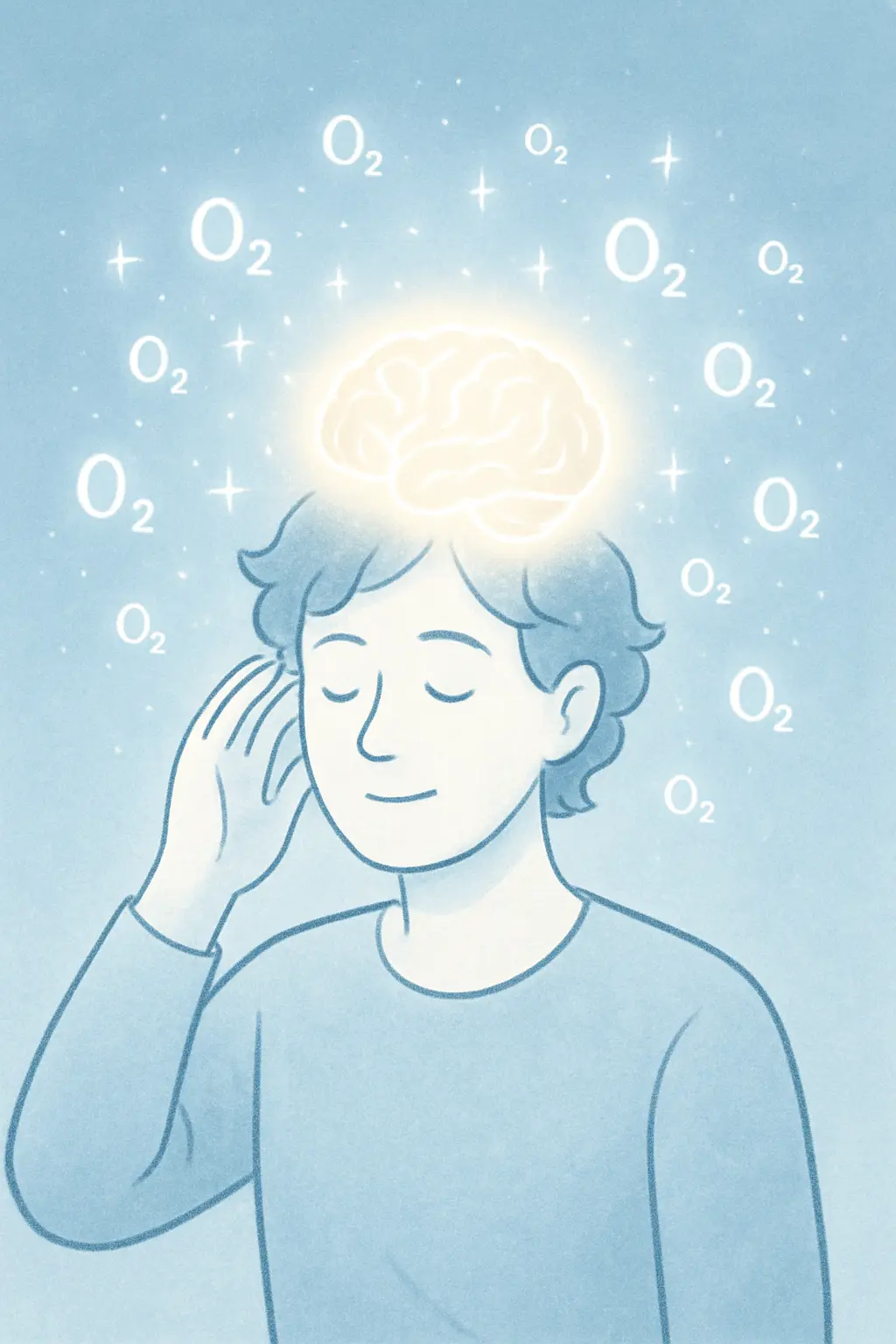
Here’s the pleasant irony of early-quit dizziness: it’s often caused by getting better. Within 24 hours of your last cigarette, carbon monoxide clears and your blood’s oxygen capacity jumps back to normal — a richer mix than your brain has calibrated to in years. The result, for many quitters, is occasional light-headedness in the first days: brief, mild, and essentially your body re-learning to run on full oxygen. Here’s the full picture — plus the honest red-flag list, because dizziness always deserves triage.
The three usual causes
- The oxygen rebound. A pack-a-day smoker ran 5–10% of their hemoglobin loaded with CO; the body compensated for chronic mild hypoxia. Quit, and within a day the CO clears — suddenly the brain receives oxygen levels it hasn’t seen in years, and the recalibration can feel like brief head-rushes. Divers and altitude climbers know the sensation; yours is the healthy direction.
- Blood-pressure re-regulation. Nicotine propped up vascular tone all day; its exit shifts pressure dynamics for a week or two. Standing up fast may briefly swim — classic orthostatic wobble while the system retunes.
- Withdrawal breathing. Anxiety runs shallow, fast breathing; deliberate deep-breathing exercises, done too enthusiastically, can over-ventilate. Both nudge blood CO₂ enough to feel woozy. (If you get light-headed during breathing exercises: slow down, fewer cycles — the technique works at gentle pace.)
What helps
- Stand up slower for the first two weeks — count two beats before rising from bed or a chair.
- Eat and drink on schedule. Withdrawal-week appetite chaos plus dehydration is a dizziness multiplier all by itself — the appetite guide covers the eating side.
- Keep breathing exercises gentle. Six easy cycles beat ten forced ones; the goal is calm, not maximum oxygen.
- Give it days, not months. Typical arc: noticeable in days 1–5, fading through week two as calibration completes. Each episode: seconds to a couple of minutes.
The red-flag list (dizziness earns real triage)
See a doctor promptly for: fainting or near-fainting, true spinning vertigo, dizziness with chest pain or palpitations, severe sudden headache, slurred speech, weakness or numbness on one side — or ordinary dizziness that persists beyond two to three weeks. None of those are standard quit recalibration, and all deserve evaluation on their own merits. Quitting can also unmask conditions (blood pressure shifts, blood sugar changes) that smoking’s chemistry was papering over — a check-up early in a quit is never wasted.
Log it and watch it fade
Like most withdrawal effects, dizziness responds well to being tracked: a one-line note in the free iQuit app journal (“brief head-rush after lunch, gone in a minute”) typically shows the classic fading arc within ten days — reassurance in your own handwriting, or the precise record your doctor wants if the arc misbehaves. Meanwhile the milestone screen shows what the wooziness actually is: oxygen delivery restored, heart rate normalizing, a body renegotiating with health.
FAQ
Why am I dizzy after quitting?
Mostly oxygen rebound — CO cleared and your brain is recalibrating to full oxygen — plus blood-pressure retuning and breathing changes.
How long does it last?
Typically fades within one to two weeks; individual episodes last seconds to minutes.
Is it dangerous?
Usually benign — but fainting, vertigo, chest pain, or persistence past 2–3 weeks means see a doctor.
Can breathing exercises cause it?
Over-enthusiastic ones, yes — slow down and shorten the session; gentle pacing works better anyway.
Track the recalibration: download iQuit free on Google Play — journal, milestones and gentle guided breathing included.