
Does nicotine help you focus? Partly, and the honest answer has two halves. In lab studies, nicotine produces small but real improvements in some measures of attention, memory and motor speed. But for someone who smokes every day, going without nicotine also makes concentration worse, so the lift from a cigarette is tangled up with the relief of ending a dip. Understanding both halves explains why quitting can feel like a fog, and why that fog is temporary.
The Short Answer: A Small Real Effect, Plus Withdrawal Fog
The question has been studied for decades. The most useful summary is a 2010 meta-analysis in Psychopharmacology by researchers at the National Institute on Drug Abuse. It pooled 41 double-blind, placebo-controlled laboratory studies and concluded that nicotine “likely represent[s] true performance enhancement because [it is] not confounded by withdrawal relief” (Heishman et al., 2010). So it is wrong to say nicotine has no effect on focus.
But that is only half the story. A separate laboratory study found that after just 12 hours without a cigarette, difficulty concentrating was among the largest effects of abstinence. For a daily smoker, a cigarette after a few hours without one probably feels like a focus boost partly because it ends a concentration problem that nicotine dependence created. That second point is an interpretation of the two studies together, not a finding either study states on its own.
For related pharmacology, see our guide to whether nicotine is a stimulant or depressant and our explainer on the nicotine, brain and dopamine craving loop.
What Lab Studies Found About Nicotine and Performance
The meta-analysis looked at performance in healthy adult non-smokers, and in smokers who were not tobacco-deprived or only minimally deprived (two hours or less). That design matters, because it tries to separate a true nicotine effect from the relief of withdrawal.
The authors report: “We found significant positive effects of nicotine or smoking on six domains: fine motor, alerting attention-accuracy and response time (RT), orienting attention-RT, short-term episodic memory-accuracy, and working memory-RT (effect size range = 0.16 to 0.44).”
| Domain | What it covers |
|---|---|
| Fine motor | Precise hand movements |
| Alerting attention (accuracy and response time) | Staying ready to respond |
| Orienting attention (response time) | Shifting attention to a target |
| Short-term episodic memory (accuracy) | Remembering recent items |
| Working memory (response time) | Holding information in mind while you work |
Three cautions apply. The effect sizes are modest rather than dramatic. The tasks are laboratory tasks, not a full workday. And the review itself says these cognitive effects have implications for “initiation of smoking and maintenance of tobacco dependence.” In other words, the same effect that feels helpful is part of what keeps people smoking.

Why Going Without Makes Focus Worse
A 2010 study in Addictive Behaviors asked 203 smokers (15 or more cigarettes a day) to attend two laboratory sessions, one after 12 hours of abstinence and one after smoking as usual. The authors report: “Abstinence effects were largest for craving, subjective attentional bias, negative affect, overall withdrawal severity, concentration difficulty, hunger, and heart rate.” Effects on performance tasks were smaller: “Effects were small, but reliable, for psychomotor speed, sustained attention, and somatic symptoms” (Leventhal et al., 2010).
That distinction is useful. Smokers strongly feel that concentration is harder when they abstain, even though measured task performance changes by less. Feeling unable to focus is real as an experience. Knowing that it is a recognized withdrawal symptom, rather than a sign that you can no longer think, makes it easier to wait out.
To see the full picture of the first days and weeks, our guides to the nicotine withdrawal timeline hour by hour and the stages of nicotine withdrawal cover each symptom.
Brain Fog After Quitting: How Long It Lasts
A useful review of timing is by John Hughes in Nicotine & Tobacco Research, which used 120 studies. The author notes that data collection and interpretation were based solely on his subjective judgments, and that the review does not evaluate craving, hunger or performance as withdrawal symptoms. It concludes that “Anger, anxiety, depression, difficulty concentrating, impatience, insomnia, and restlessness are valid withdrawal symptoms that peak within the first week and last 2-4 weeks” (Hughes, 2007).
The US government’s Smokefree.gov gives a slightly more optimistic view of the worst of it: “The good news is that the worst withdrawal symptoms usually last less than two weeks, but that time can be really tough” (Smokefree.gov).
| Source | What it says |
|---|---|
| Hughes, 2007 (review of 120 studies) | Difficulty concentrating peaks within the first week and lasts 2 to 4 weeks |
| Smokefree.gov | The worst withdrawal symptoms usually last less than two weeks |
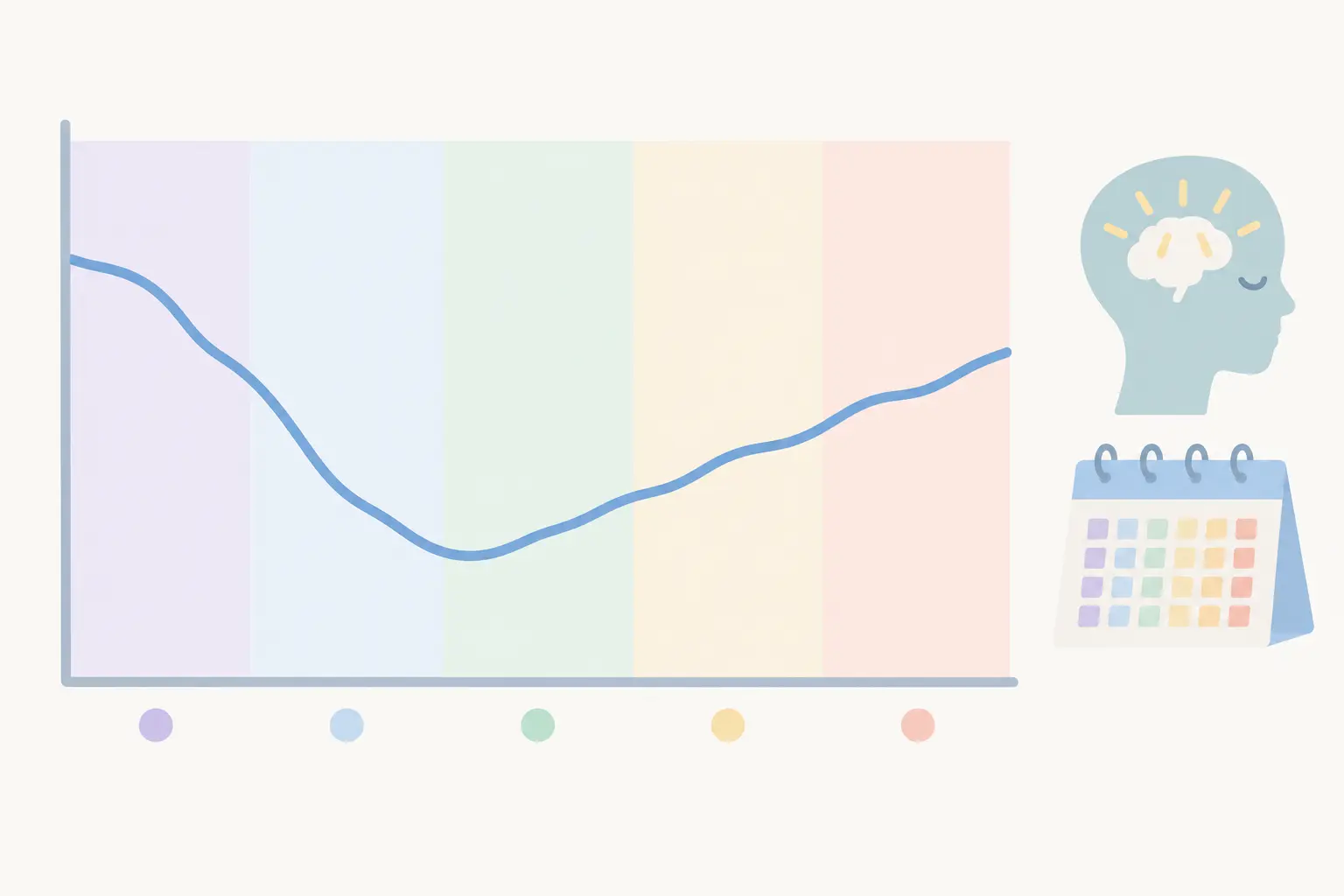
Put together, a reasonable expectation from these two sources is that focus is hardest in the first week and improves over the following weeks, with symptoms of this kind lasting 2 to 4 weeks in the Hughes review. Individual experience varies, and the sources we read do not follow concentration beyond those first weeks, so we do not give a longer-term figure. If your focus problems last well beyond a month, or you have a condition that affects attention, talk to a clinician.
Four Myths About Nicotine and Focus
Both extremes you hear online, that nicotine is a focus drug and that nicotine does nothing, fail against the evidence we read. Here is how common beliefs hold up.
| Belief | What the evidence says |
|---|---|
| Nicotine does nothing for concentration | False. The 2010 meta-analysis found significant positive effects on six performance domains in lab studies. |
| Nicotine is a powerful focus booster | Overstated. Effect sizes ranged from 0.16 to 0.44, and the tasks were laboratory tasks. |
| If I quit I will never concentrate properly again | Not supported. Difficulty concentrating is a withdrawal symptom that peaks in the first week and lasts 2 to 4 weeks in the Hughes review. |
| Feeling foggy means my quit attempt is failing | No. Smokefree.gov describes withdrawal as challenging for most smokers, and difficulty concentrating is on the recognized symptom list. |
The practical point is that the fog is a predictable, time-limited symptom and not a sign that something is wrong with you or that you made the wrong choice. Planning for it in advance is more useful than being surprised by it on day three.
What This Research Cannot Tell You
It is worth being clear about the limits of what we read, because the topic attracts strong claims.
- Lab tasks are not your job. The meta-analysis pooled controlled laboratory tasks. It cannot tell you how much nicotine changes your output on a real working day.
- Averages hide individuals. Effect sizes describe group averages. Some people notice more change than others.
- Long-term outcomes are not covered. The withdrawal reviews follow symptoms over the first weeks. They do not tell you about focus months or years later.
- No cost-benefit claim. A small performance effect in the lab does not outweigh the health risks of smoking, and none of the sources we read suggests it does.
If You Have ADHD or Another Attention Condition
People with attention conditions are often told they smoke to concentrate, and that can make quitting feel riskier. The evidence in this guide is about general laboratory performance and withdrawal, not about any specific condition, so it cannot tell you what to expect if you have one. Our article on nicotine and ADHD: why quitting is harder covers that situation in more detail. Talk to your prescriber before and during a quit attempt, because they can adjust your care plan.
Focus Tactics for the First Month
These are practical steps, not medical treatment. They are designed to protect your attention while the fog clears.
- Shorten your work blocks. Aim for focused stretches that match your current energy, with short breaks between them, and expect to need breaks more often in week one.
- Plan the hard part of the day. If you used to smoke to get started on a task, decide in advance what will start it instead, such as a glass of water, a short walk or a two-minute timer.
- Handle the craving first. A craving competes for attention. Using a breathing exercise or a craving timer for a few minutes can clear space for the task.
- Consider medication support. NHS inform says nicotine replacement therapy “should reduce cravings and other withdrawal symptoms” (NHS inform, from an archived copy of the page dated February 2025). Ask a pharmacist or clinician what suits you.
- Tell people. A colleague who knows you are quitting will understand a short temper or a slow afternoon.
| Stage | What to expect | What to try |
|---|---|---|
| Week 1 | Concentration difficulty peaks, according to the Hughes review | Lower your expectations for deep work, schedule routine tasks for harder hours and take short breaks |
| Weeks 2 to 3 | Symptoms usually ease, though they can last 2 to 4 weeks | Gradually lengthen focused blocks and keep the replacement routines going |
| Week 4 onward | Symptoms of this kind have usually passed in the Hughes review | Return to normal work patterns and watch for cravings at old smoking times |

For the complete picture of methods and support, see our how to quit smoking in 2026 complete evidence-based guide. Appetite changes are another common early worry, covered in our article on whether smoking makes you lose weight.
Using iQuit Through the Focus Dip
iQuit is free on Google Play and the App Store. Daily missions give you morning, afternoon and evening routines so the hours when you used to smoke have something else in them, which is useful for the afternoon slump. The craving timer helps you ride out a craving without losing the thread of your work, and SOS support offers breathing and grounding exercises. Logging cravings with their triggers and intensity shows when your concentration dips so you can plan around it. iQuit does not diagnose or treat any condition, including attention conditions, and it does not replace advice from a clinician.
Frequently Asked Questions
Does nicotine help you focus?
Modestly, in lab studies. A meta-analysis of 41 placebo-controlled studies found significant positive effects of nicotine or smoking on fine motor skills, attention, short-term memory and working memory, with effect sizes from 0.16 to 0.44 (Heishman et al., 2010).
Is the focus boost from smoking just withdrawal relief?
Not entirely. The meta-analysis says the effects likely represent true enhancement because they are not confounded by withdrawal relief. But concentration difficulty is also among the largest effects of 12 hours of abstinence, so both can be at work for a daily smoker (Heishman et al., 2010; Leventhal et al., 2010).
How long does brain fog last after quitting smoking?
A review of 120 studies found difficulty concentrating is a valid withdrawal symptom that peaks within the first week and lasts 2 to 4 weeks. Smokefree.gov says the worst symptoms usually last less than two weeks (Hughes, 2007; Smokefree.gov).
Why can I not concentrate after I stop smoking?
Difficulty concentrating is a recognized nicotine withdrawal symptom. In one laboratory study of 203 smokers, concentration difficulty was among the largest effects of 12 hours without smoking, alongside craving and negative mood (Leventhal et al., 2010).
Will my concentration go back to normal?
In the Hughes review, difficulty concentrating peaked within the first week and lasted 2 to 4 weeks, which suggests the fog should fade within about a month. The sources we read do not track concentration beyond that, so ask a clinician if problems persist (Hughes, 2007).
Can nicotine replacement help with focus while quitting?
NHS inform says nicotine replacement therapy should reduce cravings and other withdrawal symptoms. The sources we read do not test its effect on concentration specifically, so ask a pharmacist or clinician which option suits you (NHS inform).
What if I have ADHD and want to quit smoking?
The studies in this guide do not address ADHD, so they cannot predict your experience. Speak with your prescriber before and during a quit attempt so your care plan can be adjusted, and see our article on nicotine and ADHD for background (iQuit product features).
How can I stay focused at work in the first weeks of quitting?
Use shorter work blocks, plan what replaces your old smoking break, treat cravings with breathing or a timer before returning to the task, and consider medication support. A quit app with daily missions and a craving timer can help structure the day (NHS inform; iQuit product features).
Get Through the Focus Dip With iQuit
Plan for the Afternoon Slump
iQuit gives you daily missions with morning, afternoon and evening routines, a craving timer and SOS support, so a hard focus day has a plan. Log cravings with their triggers to see when your concentration dips. Free on Google Play and the App Store.
Download iQuit Free on Google Play
Download on the App Store