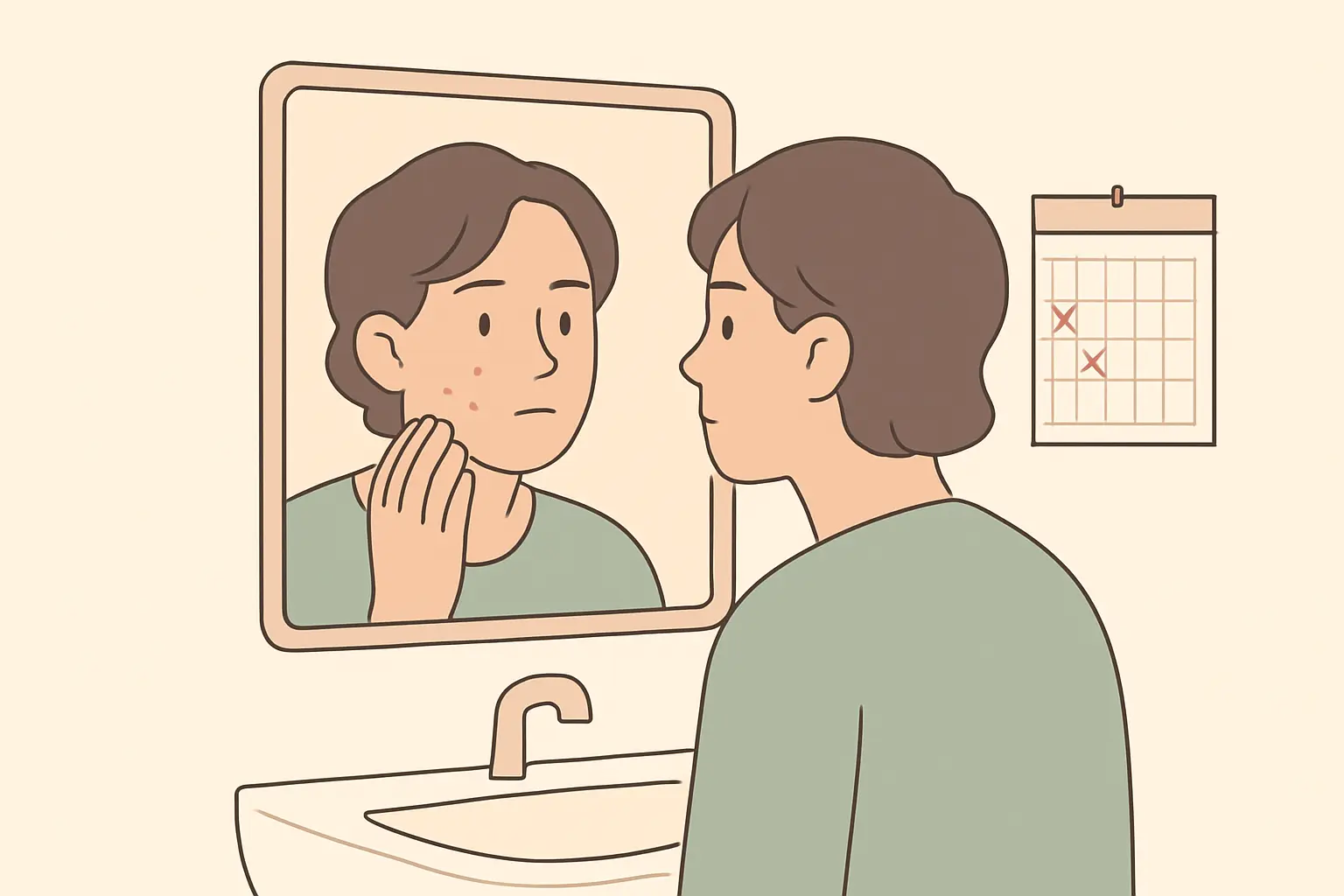
Probably not, at least not directly. When people ask does quitting smoking cause acne, they are usually two or three weeks into a quit and watching spots appear. We looked for studies on skin after cessation and found none that measured it. What the research does cover is smoking and acne, and there the findings point the other way: smoking is associated with more adult acne, not less.
That leaves a real question, because the breakouts are real. This guide separates what the evidence supports, what is almost certainly happening instead, and what to do about it without abandoning your quit.
The short answer
There is no published evidence that quitting smoking causes acne. We are stating that as an absence, not as a proven negative, because the studies simply have not been done. Nobody has followed a cohort of people through a quit attempt and counted their spots.
What we can say with sources is narrower and more useful: smoking is linked to adult acne, the strength of that link is disputed, and the ordinary stresses of the first weeks of a quit are independently linked to acne severity. That combination explains most of what people experience without needing a mechanism that does not exist.
What the evidence actually shows
The smoking and acne literature is genuinely contradictory, and anyone who tells you otherwise has read one paper.
The most careful summary is a 2021 systematic review and meta-analysis in the Chinese Medical Journal. Pooling seventeen observational studies, it found a pooled odds ratio of 1.21 for smoking in people with acne compared with people without, with a 95% confidence interval of 0.93 to 1.57. That interval crosses 1, so the overall result is not statistically significant, and the authors note significant heterogeneity between studies.
Underneath that flat headline are studies pulling hard in both directions.
| Study | Who was studied | Finding | Direction |
|---|---|---|---|
| Capitanio et al., Dermato-endocrinology, 2009 | 1,046 women aged 25 to 50 | 74.6% had atypical post-adolescent acne, with a strong correlation with smoking (p < 0.0001) and increased sebum peroxidation | Smoking linked to more acne |
| Chinese Medical Journal meta-analysis, 2021 | Pooled observational studies | Adults: odds ratio 1.43 (95% CI 1.10 to 1.87). Adolescents: 1.04 (95% CI 0.79 to 1.38) | More acne in adults only |
| Firooz et al., BMC Dermatology, 2005 | 293 acne patients, 301 controls, Tehran | After adjusting for sex, odds ratio 0.61 (95% CI 0.30 to 1.26), not significant | No association |
| Klaz et al., Journal of Investigative Dermatology, 2006 | 27,083 young men | Severe acne in 0.71% of smokers vs 1.01% of non-smokers (p = 0.0078), inverse dose relationship | Less severe acne in smokers |
| Wolkenstein et al., Dermatology, 2015 | French survey, ages 15 to 24 | Smoking more than 10 a day associated with no acne, odds ratio 0.44 (95% CI 0.30 to 0.66) | Less acne in heavy smokers |
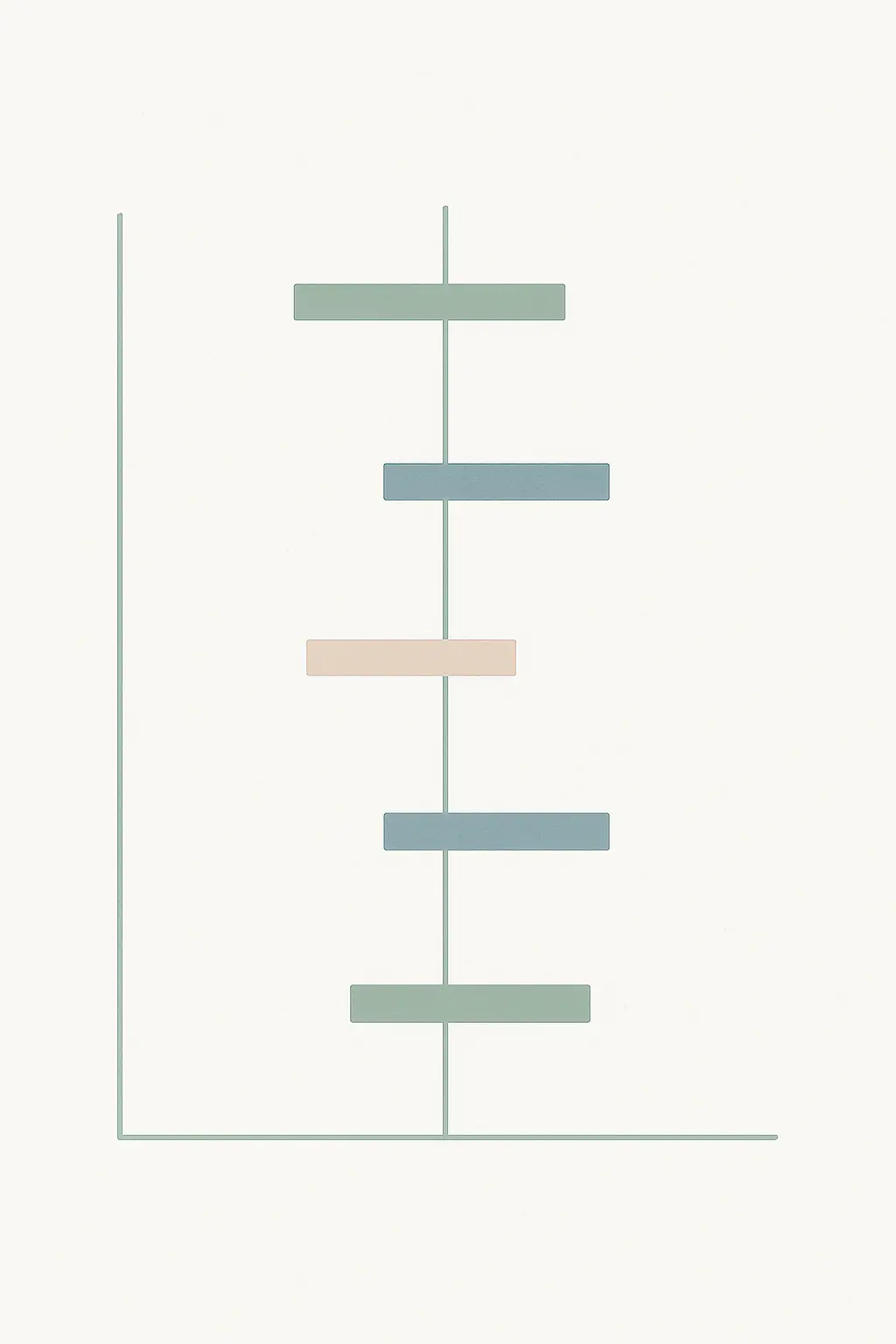
The study of 27,083 young men and the French survey are the source of the persistent internet claim that smoking protects against acne. They are real findings in adolescents and young adults, and they sit alongside the 2009 study of women aged 25 to 50 that found the opposite in an older group.
Why adults and teenagers get opposite answers
The meta-analysis is the key to reading that table, because it split the results by age. In adults the pooled odds ratio was 1.43, with a confidence interval of 1.10 to 1.87 that does not cross 1. In adolescents it was 1.04, with an interval of 0.79 to 1.38 that comfortably does.
In plain terms: among adults, smokers are somewhat more likely to have acne. Among teenagers, whose acne is driven overwhelmingly by puberty, smoking makes no detectable difference either way.
The national health bodies land in the same place. The NHS says smoking can contribute to acne in older people. The American Academy of Dermatology says smoking may play a role for some women with acne, and that in the research it discusses, the more cigarettes a woman smoked, the more severe her acne was.
One detail from the meta-analysis is worth flagging for anyone quitting. Its definition of non-smokers included both people who had never smoked and people who had quit. Former smokers were counted on the low-acne side of the comparison, not the high one.
This short film from Mayo Clinic covers adult acne, which is the version of the condition most relevant to anyone quitting in their twenties or later.
Why your skin might break out in week two
So if quitting does not cause acne, what is happening? Almost certainly this: the first fortnight of a quit brings three things that are separately associated with worse acne.
- Stress. The AAD’s position is precise and worth quoting: while stress cannot cause acne, stress may worsen existing acne, and it notes studies linking higher stress with greater severity. A 2026 study of 819 college students found a total stress score odds ratio of 1.187 for acne.
- Broken sleep. The same study found poor sleep quality associated with acne at an odds ratio of 1.109, and the AAD lists getting too little sleep among the things that can make acne worse. Disturbed sleep is a documented part of early withdrawal, and our guide to the stages of nicotine withdrawal covers when it peaks.
- More sugar. Appetite rises when you stop, and sweets are one of the most consistently reported dietary associations. A French survey found daily chocolate and sweets associated with acne at an odds ratio of 2.38, and a 2026 study in Jordan found frequent sweets at 1.51 and fast food at 1.56.
None of those three is a reason to start smoking again. All three are things you can influence in a fortnight, which is more than can be said for most causes of acne.
The detox myth, and why it will not go away
You will read that quitting pushes toxins out through your skin, and that the spots are the poison leaving. It is a satisfying story and there is nothing behind it.
Acne has a well-described mechanism, and it is not excretion. The NHS describes it as hair follicles becoming blocked when sebum combines with dead skin cells, after which normally harmless skin bacteria contaminate and infect the plugged follicle. The AAD puts it as pores becoming clogged, with hormones driving oil production. Skin is a barrier, not a filter, and nothing in either description involves clearing chemicals out of the bloodstream.
The reason the myth survives is that it makes a frightening thing feel purposeful. You can get the same reassurance from the real explanation, which is that your skin is responding to stress, sleep and diet, all of which settle.
How long it lasts, and why nobody can tell you
We are not going to give you a number, because there is no study to take one from. Any article that tells you post-quit acne lasts exactly four weeks has invented that figure.
What you can reason from is the timeline of the things actually driving it. Withdrawal symptoms and disrupted sleep are front-loaded in the first two to four weeks and ease after that, which is the same window in which most people report their skin settling. Our hour-by-hour withdrawal timeline and our week-by-week guide to the first 12 weeks set out that arc.
If spots are still worsening after two or three months, stop attributing them to the quit and see a doctor or dermatologist. Adult acne has its own causes and its own treatments, and waiting it out is not a plan.
What actually helps
Treat the acne as acne and the quit as a quit. They need different things.
- Protect sleep first. It is the lever that moves stress and skin at the same time, and it is the one most people abandon in week one.
- Watch the sugar substitution. Swapping cigarettes for sweets is close to universal. Plan the replacement rather than letting it happen.
- Do not start a new aggressive skincare routine on day three. The AAD warns that oily makeup and skin care products can make acne worse, and scrubbing harder is the classic early mistake.
- Leave the spots alone. The NHS explicitly lists squeezing spots among the acne myths, noting it does not help.
- See a pharmacist or doctor if it is moderate or worse. Adult acne responds to treatment, and there is no reason to be stoic about it.
Tracking helps more than it sounds. If you log cravings with their triggers and intensity alongside how you slept, a week of entries usually shows whether your skin tracks your worst nights or your worst cravings. iQuit, free on Google Play and the App Store, has craving logging and a mood journal that make that pattern visible, plus a health-recovery timeline showing where you are from your quit date.
What your skin looks like later
Here is where the evidence gets easier. The adult-acne association points one way, and so does everything about how smoking affects skin over years rather than weeks. Our guide to the skin recovery timeline after quitting covers what changes and when.
The broader repairs run on the same clock. Immune recovery after quitting is a slow process that keeps going long after the cravings fade, what happens in your brain explains why the first month feels the way it does, and our one month smoke-free guide is a reasonable place to check in.
We will not promise you clear skin. Acne has many causes and quitting addresses only one of the possible contributors. What we will say is that the published association between smoking and adult acne runs in the direction of quitting helping, and that a few weeks of spots is a poor reason to undo it.
Quitting Smoking and Acne FAQ
Does quitting smoking cause acne?
There is no published study showing that stopping smoking causes acne. The research covers smoking rather than cessation, and a 2021 meta-analysis found smoking associated with more acne in adults, with a pooled odds ratio of 1.43 (95% CI 1.10 to 1.87) in that group (Chinese Medical Journal, 2021).
Why is my skin breaking out since I stopped smoking?
Most likely because of what comes with quitting rather than the quit itself. Stress, poor sleep and higher sugar intake are each independently associated with acne, and all three peak in the first weeks. The American Academy of Dermatology says stress cannot cause acne but can worsen existing acne.
Is post-quit acne your skin detoxing?
No. Acne forms when hair follicles become blocked by sebum and dead skin cells and normally harmless skin bacteria infect the plug (NHS). That mechanism has nothing to do with excreting toxins. Skin is a barrier, not a filter, and no source supports the detox explanation.
How long does acne last after quitting smoking?
No study has measured it, so any specific number you read is invented. The stress and sleep disruption that plausibly drive it are heaviest in the first two to four weeks. If spots are still worsening after two or three months, see a doctor rather than waiting.
Does smoking actually protect against acne?
Two studies in young people found less acne among smokers: severe acne in 0.71% of smokers versus 1.01% of non-smokers in 27,083 young men, and an odds ratio of 0.44 for smoking over 10 a day in a French survey. In adults the pooled evidence points the other way.
Who gets post-quit breakouts worst?
There is no cessation study to answer this, so treat any confident profile with suspicion. What is documented is that adult acne is more common in women, and that a 2009 study of 1,046 women aged 25 to 50 found a strong correlation between smoking and atypical post-adolescent acne.
Should I change my skincare when I quit?
Not aggressively, and not all at once. The AAD lists oily makeup and skin care products among the things that can make acne worse, and the NHS lists squeezing spots as a myth that does not help. Change one thing at a time so you can tell what is working.
Will my skin get better if I stay quit?
We cannot promise that, because acne has many causes and no study has tracked skin through cessation. What the evidence supports is that smoking is associated with more acne in adults, so the association runs in the direction of quitting helping rather than hurting.
A few weeks of spots is a poor reason to start again
Log cravings with their triggers, keep a mood journal, and follow a health-recovery timeline from your quit date. iQuit is free on Google Play and the App Store.
Download iQuit Free on Google Play
Download on the App Store