If you’ve noticed blood in your urine, or a relative was just diagnosed, you want a straight answer: does smoking cause bladder cancer? Yes — smoking is the single biggest risk factor for bladder cancer, and it’s one you can act on today, whether that means calling your doctor about a symptom or setting a quit date.
Does smoking cause bladder cancer?
Yes. Smoking tobacco, especially cigarettes, is described by the National Cancer Institute (NCI) as “a major risk factor for bladder cancer” (NCI, Bladder Cancer Causes and Risk Factors, updated May 2025). It is not the only cause — workplace chemical exposure, certain genetic changes, and long-term bladder irritation all play a role — but among everything doctors can point to, smoking is the largest single contributor, and it is also one of the many cancers smoking is linked to across the body.
The American Cancer Society (ACS) puts a number on it: “People who smoke are at least 3 times as likely to get bladder cancer as people who don’t” (ACS, Bladder Cancer Risk Factors). In the UK, Cancer Research UK gives a similar range, stating that smoking raises bladder cancer risk “up to 4 times that of someone who has never smoked” (Cancer Research UK, Risks and Causes of Bladder Cancer).
Bladder cancer rarely gets the same attention as lung cancer in quit-smoking conversations, but the underlying exposure is the same: every cigarette adds to the load of the roughly 7,000 chemicals in cigarette smoke that your body has to process and, eventually, filter out through urine.
Why the bladder: how tobacco carcinogens concentrate in urine
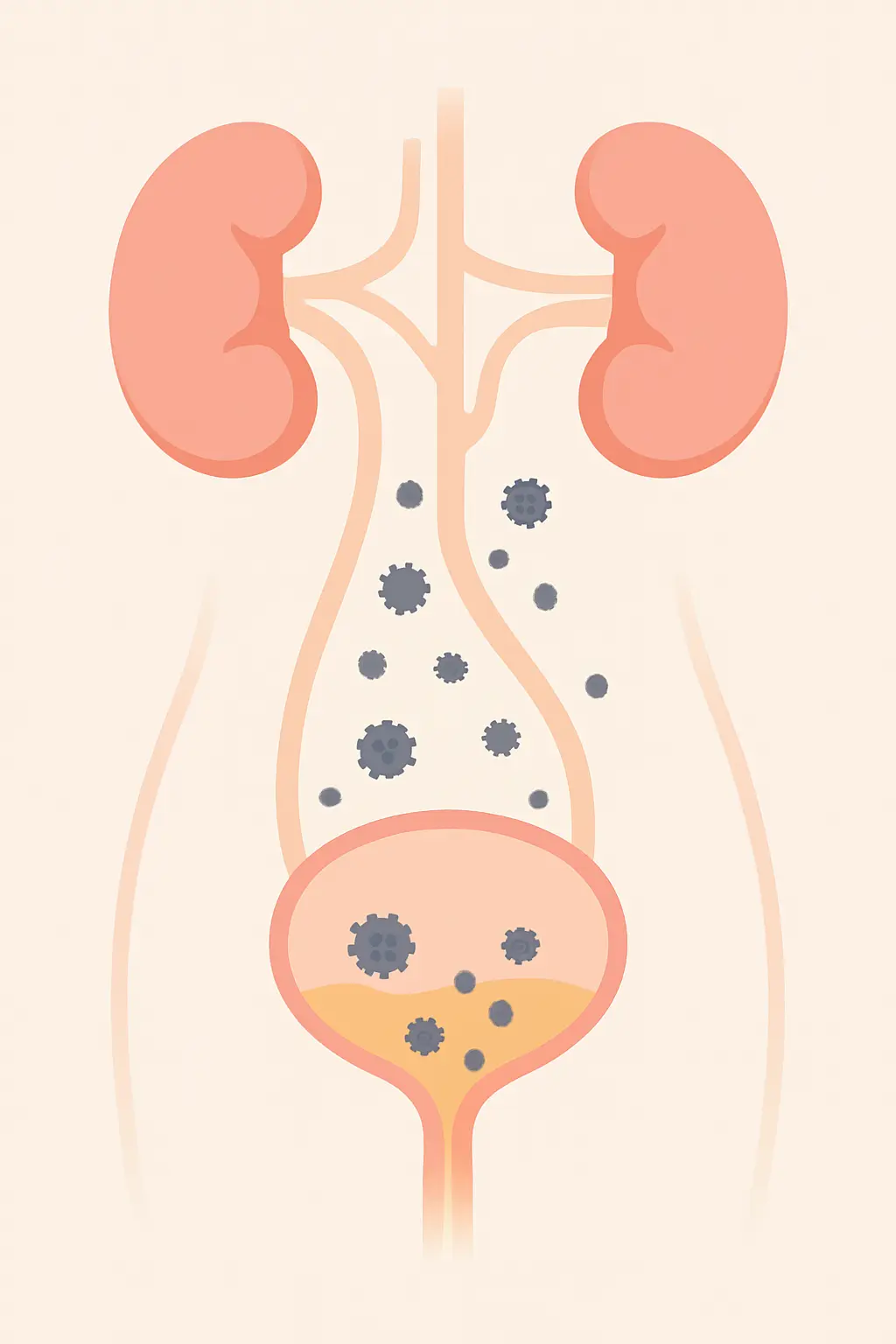
It can seem strange that smoke you inhale into your lungs ends up damaging your bladder. The NCI explains the mechanism plainly: “When you use tobacco, these chemicals get absorbed into the bloodstream, are filtered by the kidneys, and then collect in the urine. This exposes your bladder to high levels of these chemicals, which can damage the DNA in the cells lining your bladder” (NCI, Bladder Cancer Causes and Risk Factors).
In other words, the bladder acts like a holding tank for whatever your kidneys have filtered out of your blood — including tobacco carcinogens. The longer that urine sits in the bladder between trips to the bathroom, the longer those chemicals are in contact with the cells lining it. Over years, that repeated DNA damage is what raises cancer risk.
How much risk does smoking actually add?
| Source | Relative risk for smokers | Share of bladder cancers attributed to smoking |
|---|---|---|
| American Cancer Society (US) | At least 3 times that of non-smokers | About half |
| Cancer Research UK (UK) | Up to 4 times that of non-smokers | Around half |
Both major cancer charities land in the same place even though they measured different populations: smoking roughly triples to quadruples your personal risk, and it explains something like half of all bladder cancer diagnoses at a population level. The ACS also notes that smoking and workplace chemical exposure “can act together to cause bladder cancer,” so people who smoke and also work with industrial dyes, paints, or petroleum products carry a combined risk that’s higher than either factor alone.
Cigars and pipes are not a loophole — Cancer Research UK notes that “smoking other types of tobacco products, such as cigars and pipes, also increases your risk.”
Warning signs that need a same-week appointment
You do not need to wait for a routine physical if you notice these signs. The NCI lists the most common bladder cancer symptom as blood in the urine (hematuria), which it describes as “often slightly rusty to bright red in color,” and notes that “you may see blood in your urine at one point, then not see it again for a while” — an intermittent pattern that makes it easy to dismiss (NCI, Bladder Cancer Symptoms).
- Blood in the urine, even a single episode that clears up
- Frequent urination
- Pain or burning during urination
- Feeling like you need to urinate even when your bladder isn’t full
- Urinating often during the night
If cancer has grown larger or spread, the NCI lists additional symptoms: being unable to urinate, lower back pain on one side of the body, abdominal pain, bone pain or tenderness, unintended weight loss and loss of appetite, swelling in the feet, and fatigue.
Importantly, the NCI is direct that these symptoms are usually something else entirely: “urinary tract infections, kidney or bladder stones, or other problems related to the kidney could be the cause, not cancer.” A single symptom does not mean you have bladder cancer — but it does mean you should see a doctor and give a urine sample, especially if you smoke or have smoked. The same principle applies broadly: your body sends signals long before a serious diagnosis, and the same repair capacity that lets lungs heal after quitting is part of why doctors push so hard for early testing and early quitting alike.
This short explainer from the Bladder Cancer Advocacy Network walks through the biology behind the smoking-bladder cancer link in plain language.
Does quitting lower your risk, and how fast?
Cancer Research UK is direct on this point: “Stopping smoking can reduce your risk of bladder cancer, compared with your risk if you continue to smoke.” Neither charity’s public risk-factor page attaches a precise year-by-year curve for bladder cancer specifically the way some sources do for lung cancer or heart disease, so it’s honest to say the direction is clear — quitting lowers your risk relative to continuing to smoke — without inventing a percentage or a timeline that isn’t backed by a citable source.
What is well established is that bladder cancer risk is dose- and duration-related: the NCI’s framing of risk factors as things that “increase the chance of DNA damage” implies that every year without new tobacco exposure is a year that stops adding to that damage. If you’ve already quit, that matters. If you haven’t yet, the evidence on how your body recovers after quitting shows measurable improvements start within days, not years.
It’s worth being honest about what this means in practice: quitting does not erase bladder cancer risk overnight, and it does not undo damage that has already happened. What it does is stop adding new exposure, which is the only variable smoking-cessation research can actually measure and report on with confidence. That’s a meaningfully different claim from “quitting cures bladder cancer risk,” and it’s the one the fetched sources for this article actually support.

Smoking after a bladder cancer diagnosis
If you or someone you love has already been diagnosed with bladder cancer, the honest answer is that no major cancer body’s public page gives a specific recurrence-percentage tied to continued smoking that we can cite here — so we won’t invent one. What the American Cancer Society does say clearly is that smoking remains the top modifiable risk factor for bladder cancer at every stage, and its prevention guidance is unambiguous: don’t smoke, and if you do, quitting is the single biggest change you can make. This is a conversation to have directly with the treating oncologist or urologist, who can speak to the specific case.
An honest conversation with your doctor about quitting is a reasonable next step whether you’re managing a diagnosis or trying to prevent one.
What to do next
- See a doctor promptly if you notice blood in your urine or any of the symptoms above — don’t wait for it to happen twice.
- Mention your smoking history at the appointment, including if you quit years ago; it affects screening decisions.
- If you still smoke, set a quit date. Every cigarette not smoked is tobacco carcinogen exposure your bladder doesn’t have to filter.
- Check your risk across other conditions too — bladder cancer is one of several smoking-linked diseases, and seeing your risk across 11 conditions can be a clearer motivator than any single statistic.
Apps like iQuit won’t replace your doctor, but the disease-risk insights and craving-management tools inside it are built for exactly this moment — when someone has a concrete medical reason to quit and needs daily support to follow through.
Frequently Asked Questions
Does smoking cause bladder cancer?
Yes. The American Cancer Society states that people who smoke are at least 3 times as likely to develop bladder cancer as people who don’t, and smoking causes about half of all bladder cancer cases in the US. Cancer Research UK reports a similar pattern in the UK, with smoking raising risk up to 4 times (ACS; Cancer Research UK).
What percentage of bladder cancer is caused by smoking?
Roughly half. The American Cancer Society says smoking causes about half of all bladder cancers, and Cancer Research UK reports that around half of UK bladder cancers are caused by smoking (ACS; Cancer Research UK).
Why does smoking affect the bladder specifically?
Tobacco carcinogens are absorbed into the bloodstream, filtered out by the kidneys, and then collected in urine, which sits in the bladder until you urinate. That prolonged contact with the bladder lining can damage the DNA in those cells over time (National Cancer Institute).
What are the warning signs of bladder cancer?
The most common symptom is blood in the urine, which can appear once and then not again for a while. Other signs include frequent urination, pain or burning when urinating, feeling like your bladder isn’t empty, and needing to urinate often at night (National Cancer Institute).
Does blood in the urine always mean bladder cancer?
No. The National Cancer Institute notes that urinary tract infections, kidney or bladder stones, and other kidney-related problems can all cause blood in the urine. It’s still important to see a doctor for any episode of blood in the urine, since only testing can rule out cancer.
Does quitting smoking lower bladder cancer risk?
Yes, directionally. Cancer Research UK states that stopping smoking can reduce your risk of bladder cancer compared with continuing to smoke. Neither major cancer charity publishes a precise bladder-specific timeline for how fast that risk falls, so it’s accurate to say the benefit is real without citing an unverified percentage.
Are vapes or cigars safer for bladder cancer risk than cigarettes?
Cancer Research UK specifically notes that smoking other tobacco products, including cigars and pipes, also increases bladder cancer risk — it is not a cigarette-only effect. Fetched sources for this article did not include data on vaping and bladder cancer risk specifically, so no claim is made here either way.
Can workplace chemicals cause bladder cancer even in non-smokers?
Yes. Cancer Research UK attributes around 5% of UK bladder cancer cases to workplace chemical exposure, such as certain dyes, paints, metals, and petroleum products, and notes that smoking and workplace exposure together raise risk more than either alone.
A medical reason to quit is still the best reason
iQuit gives you disease-risk insights, craving tools, and daily support to help you act on what you just read — free on Google Play and the App Store.
Download iQuit Free on Google Play
Download on the App Store