If you vape and you have started to wonder about cancer, you are asking the right question at the right time. Does vaping cause cancer? The honest answer in 2026 is that nobody can say yes or no with certainty yet. The aerosol from an e-cigarette contains some cancer-causing chemicals, but vaping has not been around long enough for cancer rates to show up in the data, and the best reviews so far find it carries a fraction of the risk of smoking, not zero risk.
The short answer: unknown, not safe
Cancer Research UK puts it plainly: “There is no good evidence that vaping causes cancer. But e-cigarettes are not risk-free.” The American Cancer Society says something that sounds different but is really the same message from the other side: “Scientists are still learning about how e-cigarettes affect health when they are used for long periods of time. It’s important to know that the aerosol (“vapor”) from an e-cigarette has some cancer-causing chemicals.”
Put those together and the picture is consistent. Vaping is not proven to cause cancer, and it is not proven safe. The honest summary is “lower exposure than smoking, long-term cancer risk unknown.” If you are looking for a headline you can repeat without being wrong, that is the one.
It is also worth being clear about what this article is not saying. It is not saying vaping causes cancer, because no study has yet followed vapers long enough to show it. And it is not saying vaping is harmless, because it plainly is not. For most readers the useful question is not “is it cancer yet?” but “what does it cost me to wait and see?”
What cancer-causing chemicals are in vape aerosol
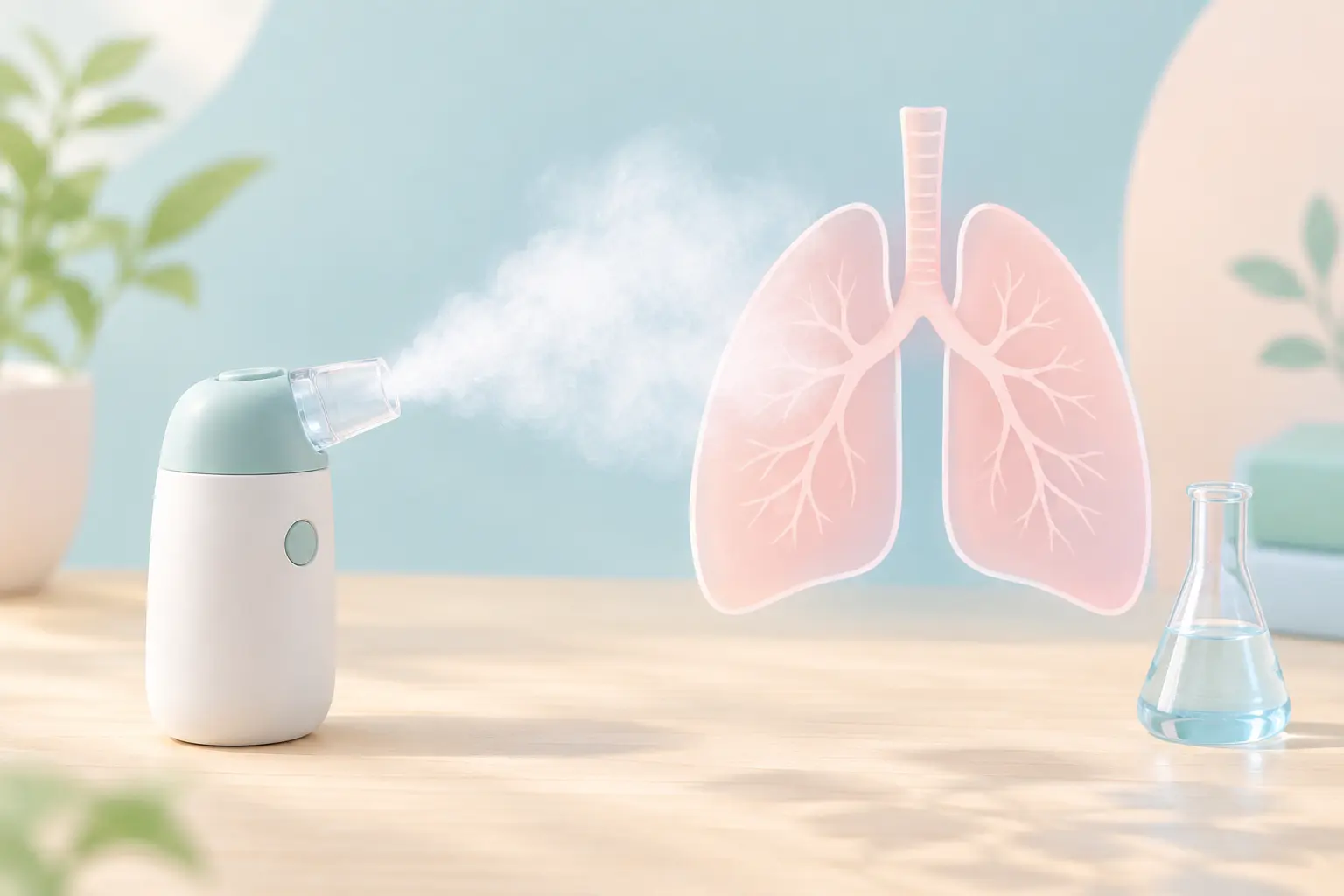
E-cigarettes work by heating a liquid into an aerosol that you breathe in. The American Cancer Society notes that the term “vapor” can sound harmless, but “the aerosol that comes out of an e-cigarette is not water vapor, and it can be harmful.”
The ACS highlights several ingredients and by-products of concern:
- Volatile organic compounds. One of them is formaldehyde, which, in the ACS’s words, “is known to cause cancer. Formaldehyde can form if e-liquid overheats, or if not enough liquid reaches the heating element (known as a “dry-puff”).”
- Propylene glycol and vegetable glycerin. These base liquids are considered safe to eat or put on skin, but “they have not been rated as safe to breathe in,” and “in some situations, they may turn into cancer-causing chemicals.”
- Flavoring chemicals. Some flavorings are more harmful than others. The ACS links one, diacetyl, to a serious lung disease called popcorn lung, a topic we cover in popcorn lung and vaping evidence explained.
The ACS also points out that it is hard to know exactly what is in a given product because most do not list everything and some are labeled incorrectly. That uncertainty is part of the risk, because two devices that look the same can behave differently.
Cancer Research UK adds an important counterweight: e-cigarettes “can contain some potentially harmful chemicals. But levels are usually low and generally far lower than in tobacco cigarettes.” Its explanation is that e-cigarettes “don’t contain cancer-causing tobacco or most of the toxic chemicals found in cigarettes.” Both statements can be true at once. Some carcinogens are present, and the total exposure is usually lower than from smoking.
Why there is no long-term cancer data yet
Cancer takes a long time to show up. Smoking-related lung cancers typically appear decades after people start smoking. Vapes, by comparison, are a recent product. Cancer Research UK says: “Vapes haven’t been around for long enough to be sure.”
The UK government’s independent evidence review makes the same point in research terms. The 2022 evidence update from the Office for Health Improvement and Disparities, led by academics at King’s College London, concluded that “evidence is mostly limited to short and medium term effects and studies assessing longer term vaping (for more than 12 months) are necessary.”
In the short clip below, a Dana-Farber Cancer Institute physician explains why this gap matters. According to the video’s description, he points to the typical 30-year lag between a change in behavior and the cancer rates that follow, and says that while it is too early to say definitively, concerns are rising because of the potential carcinogens in vape aerosol.
The practical lesson is that “no evidence of harm yet” is not the same as “evidence of no harm.” When the follow-up time is short, the absence of a cancer signal tells you less than it seems to.
What biomarker studies show
Because cancer outcomes are not available yet, researchers measure biomarkers, which are traces of toxic substances in urine or blood that indicate how much exposure a person has had. This is the most useful evidence we have right now.
A study in JAMA Network Open (Goniewicz and colleagues, 2018) analyzed urine from 5,105 adults in a US national cohort, including 247 exclusive e-cigarette users, 2,411 exclusive cigarette smokers, 792 dual users and 1,655 people who never used tobacco. The authors found that “exclusive e-cigarette users showed 10% to 98% significantly lower concentrations of biomarkers of exposure, including TSNAs, PAHs, most VOCs, and nicotine, compared with exclusive cigarette smokers; concentrations were comparable for metals and 3 VOCs.” TSNAs, PAHs and VOCs are all families of chemicals that include known carcinogens.
The same study found the other side of the coin: compared with exclusive e-cigarette users, never users had 19% to 81% significantly lower concentrations of biomarkers for nicotine, TSNAs, some metals and some VOCs. In plain terms, vapers were exposed to less than smokers, but more than people who use nothing.
The UK review reached the same conclusion from a larger body of evidence. It found “significantly lower exposure to harmful substances from vaping compared with smoking, as shown by biomarkers associated with the risk of cancer, respiratory and cardiovascular conditions” and “similar or higher exposure to harmful substances from vaping compared with not using nicotine products.” Its overall conclusion was that “in the short and medium term, vaping poses a small fraction of the risks of smoking” and that “vaping is not risk-free, particularly for people who have never smoked.”
Smoking, vaping or neither: how the risks compare
Here is how the evidence above lines up. This table is a summary of the sources quoted in this article, not a numerical risk calculator.
| Behavior | Toxicant exposure | Cancer evidence |
|---|---|---|
| Smoking cigarettes | Highest of the three | Smoking causes at least 16 types of cancer (Cancer Research UK) |
| Vaping only | Lower than smoking, higher than using nothing | No good evidence of causing cancer yet; long-term data missing |
| Smoking and vaping (dual use) | Frequency of smoking tracked with exposure in the 2018 study | ACS: recent research suggests a higher lung cancer risk than smoking alone |
| Neither | Lowest | Baseline |
Dual use: smoking and vaping together
This is the pattern the evidence is clearest about, and it is not a reassuring one. Many people keep smoking some cigarettes while also vaping, which is called dual use. The American Cancer Society states that “recent research indicates that people who use both cigarettes and e-cigarettes have a higher risk of getting lung cancer than people who only use cigarettes.” It adds: “People should not use both products at the same time and are strongly encouraged to completely stop using all tobacco products.”
The biomarker study points the same way, finding that among dual users the frequency of cigarette use was positively correlated with nicotine and toxicant exposure. In other words, vaping on top of smoking does not subtract from your exposure. Whatever you smoke is still the main driver.
The ACS also gives a warning to people who have already switched completely: “People who have switched completely from cigarettes to e-cigarettes should not switch back to smoking cigarettes (either solely or along with e-cigarettes). This could expose them to even worse health effects.”
If you vape to stay off cigarettes
If you smoked for years and vaping is what keeps you off cigarettes, this article is not an argument to go back. Cancer Research UK is direct about that: smoking causes at least 16 different types of cancer, and “the most important thing is not smoking, and vaping can help with staying off tobacco.” It describes e-cigarettes as “far less harmful than smoking” and advises that once you have fully stopped smoking and feel confident, “you may choose to stop vaping too.”
The UK evidence update also reports that vaping products remain the most common aid used by people to stop smoking in stop smoking services, and that in 2020 to 2021 quit attempts involving a vaping product were associated with the highest success rates (64.9% compared with 58.6% for attempts not involving a vaping product).
The same sources also say vaping should be used to stop smoking or stay smoke-free, and that people who have never smoked should not start. If you are in the middle group, former smokers who now vape, the question is not “should I go back?” but “when do I want to stop vaping as well?”
If you want to stop vaping
Many people reach this topic because they would like to stop, and cancer worry is one more reason to do it. Nicotine itself is not the cancer-causing part: Cancer Research UK states that “nicotine itself doesn’t cause cancer,” a point we unpack in does nicotine cause cancer. But nicotine is what keeps you reaching for the device, so the work of quitting is mostly about handling cravings and habit.
A few ideas that work across most plans:
- Pick a date, or a step-down schedule, and write it down.
- Notice your triggers: after meals, with coffee, when bored, in stressful moments.
- Decide in advance what you will do instead for the first two minutes of a craving.
- Tell one person, and ask a clinician or quitline about nicotine replacement if you need it.
For a full walkthrough, use our guide on how to quit vaping step by step. And if you are comparing tools, best quit smoking apps in 2026 shows how the options differ. If you are also thinking about the wider benefits of stopping nicotine, what happens to your body when you stop smoking describes the recovery timeline.
Support for the first weeks off the vape
Gradual reduction is a legitimate way to quit, and it is the kind of plan an app can help you keep honest. iQuit supports quit-your-way plans, including cold turkey and gradual reduction, and its craving log lets you record each urge with its trigger and intensity. People who vape often have no idea how many times a day they reach for the device, and logging each puff-urge for a few days gives you a baseline to reduce from.
Log your cravings and plan your step-down
iQuit helps you track cravings, choose a quit-your-way plan and see your progress day by day. Free on Google Play and the App Store.
Download iQuit Free on Google Play
Download on the App Store
Frequently Asked Questions
Does vaping cause cancer?
There is no good evidence yet that vaping causes cancer, but that is partly because long-term data does not exist. E-cigarette aerosol contains some cancer-causing chemicals, usually at lower levels than cigarette smoke, and vaping is not risk-free (Cancer Research UK; American Cancer Society).
Is vaping safer than smoking when it comes to cancer?
Exposure to toxic substances is lower from vaping than from smoking. The UK evidence update concluded that in the short and medium term vaping poses a small fraction of the risks of smoking, but it is not risk-free and longer-term studies are needed (OHID, 2022).
What cancer-causing chemicals are in e-cigarette aerosol?
The American Cancer Society cites formaldehyde, which can form when e-liquid overheats or during a dry puff, and notes that propylene glycol and vegetable glycerin may in some situations turn into cancer-causing chemicals. Products vary and many do not list every ingredient (American Cancer Society).
Why is there no long-term data on vaping and cancer?
Vapes have not been used for long enough for cancers, which typically take decades to appear, to show up in studies. The UK evidence review says studies assessing vaping for more than 12 months are necessary (Cancer Research UK; OHID, 2022).
Is it worse to smoke and vape at the same time?
Yes, the evidence points that way. The American Cancer Society says recent research indicates people who use both have a higher risk of lung cancer than people who only smoke, and urges people not to use both at the same time (American Cancer Society).
Should I keep vaping if it helps me stay off cigarettes?
Staying off cigarettes is the priority. Cancer Research UK says the most important thing is not smoking and that vaping can help with that, and that you may choose to stop vaping too once you are confident you can stay smoke-free (Cancer Research UK).
Does nicotine itself cause cancer?
Cancer Research UK states that nicotine itself does not cause cancer, though it makes cigarettes and vapes addictive and is why people keep using them. The cancer risk comes from other substances in smoke and, to a lesser degree, in vape aerosol (Cancer Research UK).