If a recent blood test came back with a flagged high white blood cell count and you smoke, your doctor may have already mentioned the two are connected. It is one of the most common, and most overlooked, reasons a routine full blood count comes back outside the normal range in otherwise healthy smokers.
Why smokers often have a high white blood cell count
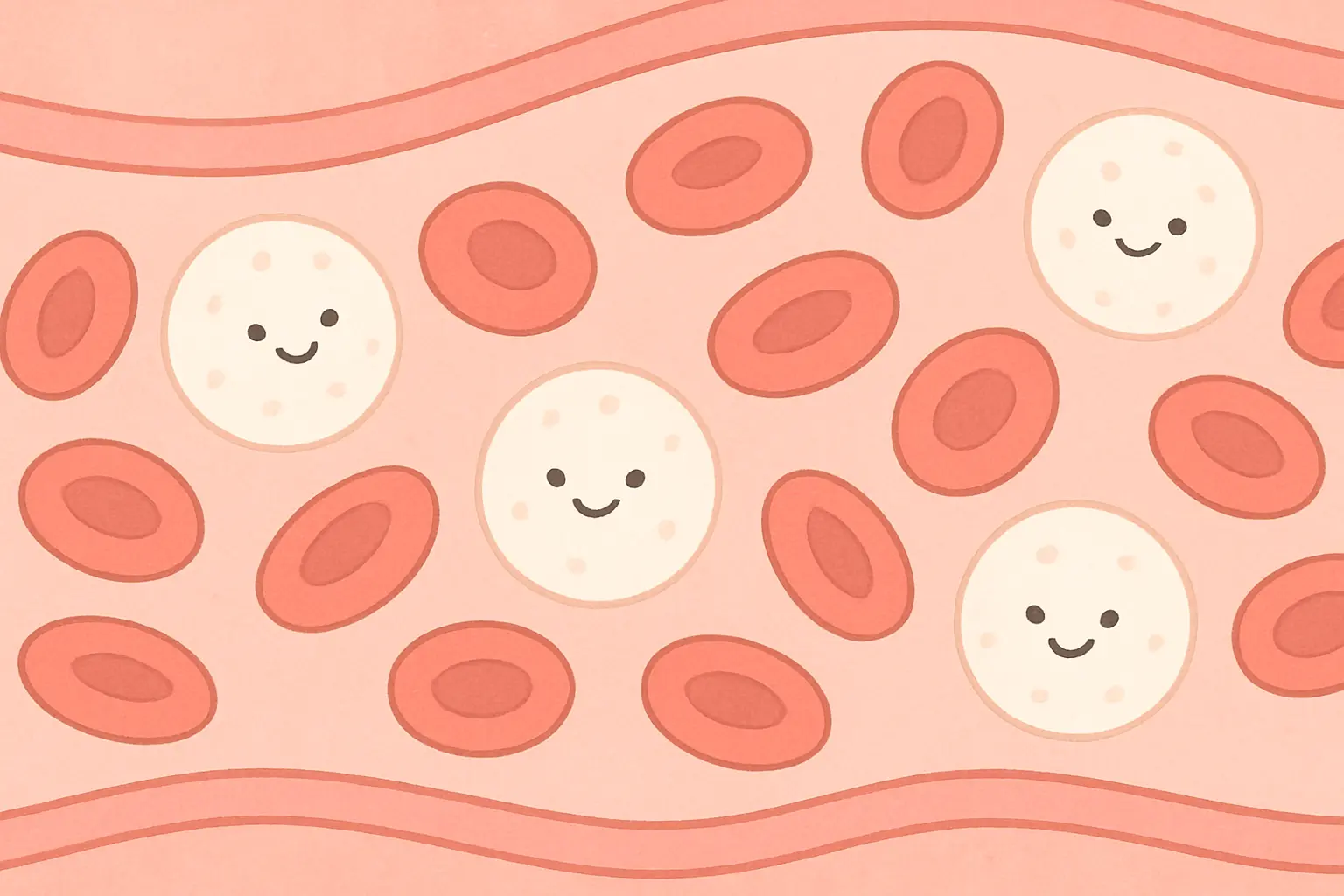
A full blood count measures several types of cells, and white blood cells (leukocytes) are your immune system’s first responders. For adults, the typical reference range is roughly 4.0 to 11.0 x10⁹ cells per litre of blood, and a count above about 11 x10⁹/L is generally classed as leucocytosis — clinical shorthand for a raised white cell count.
Clinical guidance used by NHS haematology services lists smoking directly alongside acute infection, certain medicines such as steroids, and blood disorders as an established cause of leucocytosis. In other words, a raised count in a smoker is not automatically a mystery — it is a recognized, reproducible finding tied to the act of inhaling combusted tobacco smoke thousands of times a day.
The mechanism is inflammation. Cigarette smoke irritates the airways and blood vessel lining with every puff, and your bone marrow responds the way it would to any ongoing irritant: it releases more white cells, especially neutrophils, into circulation to manage it.

How much higher, and which cell lines rise
A 2026 analysis combining the UK Biobank (nearly 500,000 participants) and the US National Health and Nutrition Examination Survey (almost 67,000 participants) found that ever-smokers had measurably elevated white blood cell and neutrophil counts compared with people who had never smoked. Current smokers showed an even larger increase than former smokers, alongside a lower percentage of lymphocytes and monocytes — the immune cells more involved in longer-term, targeted defence.
So it is not that “white cells go up” in a generic sense; smoking specifically pushes up the neutrophil-heavy, acute-inflammation side of your immune system while nudging down the proportion of cells tied to antibody production and long-term immune memory. That same research used genetic analysis (Mendelian randomization) to show smoking behaviors — including quitting — causally influence dozens of distinct immune cell types, which is one of the stronger pieces of evidence that this is cause and effect, not coincidence.
Is a high count dangerous by itself?
Smoking-related leucocytosis is usually mild and, on its own, is not a diagnosis of anything. It is a marker — evidence that your immune system is dealing with ongoing irritation — rather than proof of disease. Doctors interpret it alongside your symptoms, your smoking history, and other blood values, not as a standalone red flag.
That said, a persistently high count is one of the reasons clinicians take smoking-related inflammation seriously: the same low-grade inflammatory state linked to a raised white cell count is implicated in the long-term cardiovascular and respiratory harm of smoking. It is a visible number attached to a process that is otherwise invisible day to day.
It also helps to think about direction rather than a single snapshot. One raised result, seen once, tells you far less than a pattern across two or three full blood counts over time. If your GP has flagged a rising trend rather than a one-off reading, that is the context in which smoking cessation becomes a genuinely relevant, actionable variable — something you and your doctor can actually track against a quit date, rather than a number you simply have to live with.
Other things that raise white cells
Smoking is far from the only cause, and your doctor will usually consider these alongside it:
- Acute infection — the most common cause of a short-term spike
- An acute inflammatory response of any kind, including recent illness or tissue injury
- Certain medicines, particularly steroids and drugs used to boost white cell production (e.g. G-CSF)
- Stress, recent intense exercise, or even a recent meal, which can cause temporary, minor increases
- Less commonly, blood or bone marrow conditions, which is why doctors investigate persistently very high counts rather than assuming smoking explains everything
If your count is only modestly elevated and you smoke, smoking is a reasonable working explanation — but it is your doctor’s job, not an internet article’s, to rule out the other items on that list for your specific result.
Treat smoking as context, never as a diagnosis you give yourself. See your doctor promptly, rather than assuming smoking is the whole story, if the count is very high, keeps rising on repeat tests, or comes with other symptoms such as unexplained fever, night sweats, unusual bruising or bleeding, unintentional weight loss, or persistent fatigue — none of those are typical of smoking-related leucocytosis and all warrant proper evaluation.
How long after quitting the count falls
This is the part most people searching this topic actually want to know, and the honest answer is: gradually, not immediately. A 2026 systematic review pooling ten studies and 2,750 participants who quit smoking found that biomarker recovery happens in stages. Oxidative stress markers start improving within one to two weeks. Inflammatory biomarkers decline over roughly two to twelve weeks. Lipid and hematologic parameters — including white cell counts — improve more gradually, over about three to eight months.
That timeline matters because it explains a common source of frustration: people quit, feel noticeably better within weeks, then get a follow-up blood test at six weeks and see little change in their white cell count. That is expected, not a sign that quitting “didn’t work.” The white cell line is one of the slower-moving markers to normalize.
| Biomarker type | Typical time to improve |
|---|---|
| Oxidative stress markers | About 1–2 weeks |
| General inflammatory biomarkers | Roughly 2–12 weeks |
| Lipid and hematologic parameters (including white cell counts) | About 3–8 months |
Source: systematic review of 10 cessation studies, 2,750 participants (Cureus, 2026). Individual results vary and this table describes group-level averages, not a guarantee for any one person.

What to ask your doctor
If a raised white cell count came up on your results, a short, direct conversation covers most of what matters:
- “Is this consistent with smoking, or do you want to investigate other causes?”
- “How high above the normal range am I, and does that change anything right now?”
- “When should I repeat the test if I quit smoking — six weeks, three months, six months?”
- “Are there other symptoms I should watch for in the meantime?”
Bringing a specific quit date to that conversation — rather than a vague “I’m thinking about it” — tends to change how a doctor frames the retest, because it gives them an actual timeline to measure against. It also gives you a clear, dated reason to quit that goes beyond a general sense that smoking is “bad for you” — you have an actual number on a lab report that you can watch move.
Other blood markers that change after quitting
A white cell count rarely moves alone. If you are already having blood drawn, it is worth knowing what else tends to shift on the same recovery curve described above: inflammatory markers, cholesterol and other lipid values, and, more broadly, indicators tied to your lung age test results if you have had one. None of these normalize instantly, and none of them require you to quit “perfectly” — they respond to sustained time smoke-free, including recovery from lapses.
It is also worth understanding how smoking affects your broader immune defences, since a raised white cell count is just one visible piece of a wider pattern of altered immune function that smoking produces and quitting gradually reverses.
If your job or insurer has ever raised the topic, it is a separate but related question worth knowing the facts on: how employers and insurers test for nicotine works very differently from a white cell count and is not something a blood count result alone reveals.
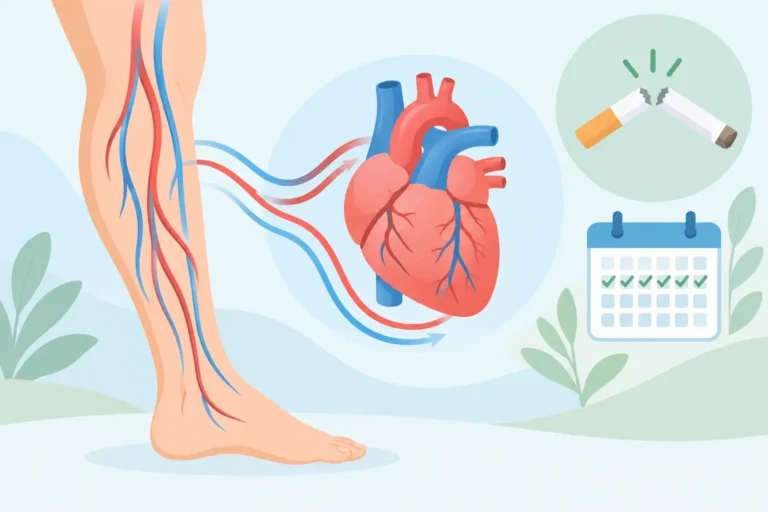
Smoking’s inflammatory footprint also shows up outside the bloodstream — for example in circulation problems like peripheral artery disease, which shares the same underlying vascular inflammation this blood marker reflects.
For the fuller picture of what actually improves and when, the quit-smoking benefits timeline and a broader look at the evidence-based health benefits of quitting put this one blood marker in context alongside everything else that starts to recover once you stop.
Frequently Asked Questions
Does smoking definitely cause a high white blood cell count?
Smoking is a well-documented, clinically recognized cause of a raised white cell count (leucocytosis), listed alongside infection and certain medicines in NHS haematology guidance. It does not mean it is the only possible cause for any individual result — your doctor will still consider your full history (NHS clinical guidance, Right Decisions Scotland; UK Biobank/NHANES analysis, Nicotine and Tobacco Research, 2026).
Which white blood cells go up the most in smokers?
Neutrophils show the clearest increase in smokers, while the percentage of lymphocytes and monocytes tends to fall. Current smokers show a larger shift than former smokers, based on a large 2026 observational and genetic study of nearly 570,000 combined participants (Nicotine and Tobacco Research, 2026).
Is a high white blood cell count from smoking dangerous?
On its own, a mild rise tied to smoking is not a diagnosis of disease — it is a marker of ongoing low-grade inflammation. It becomes something to investigate further if it is very high, rising over time, or paired with other symptoms, which is a conversation for your doctor rather than a fixed number online.
How long after I quit smoking will my white blood cell count go back to normal?
Hematologic markers, including white cell counts, tend to improve gradually over roughly three to eight months of sustained abstinence, based on a 2026 systematic review of ten cessation studies. This is slower than markers like oxidative stress, which start improving within one to two weeks (Cureus, 2026).
Should I get retested after quitting smoking?
Ask your doctor when a repeat full blood count would actually be informative given your original result — often somewhere between three and eight months of sustained smoke-free time is a more meaningful checkpoint than a six-week retest, based on the staged recovery pattern seen in cessation research.
Can vaping cause the same blood test result?
This article is about combustible cigarette smoking specifically, where the evidence on white blood cell changes is well established. Evidence on vaping’s effect on white cell counts is a separate and less settled question — do not assume switching automatically resolves this marker.
What other blood tests are affected by smoking?
Alongside white cell counts, inflammatory markers and lipid (cholesterol-related) values follow a similar staged recovery after quitting, per the same 2026 systematic review. None of these normalize overnight, and all respond to sustained time smoke-free rather than a single quit attempt alone.
Give your blood markers a real chance to recover
iQuit tracks every smoke-free day, so you and your doctor have an accurate timeline the next time you talk about a retest — not just a rough guess.
Download iQuit Free on Google Play
Download on the App Store