

If you’re asking how long after quitting smoking do teeth whiten, the honest answer starts with a correction: quitting does not whiten teeth on its own. It stops new staining from building up, which is a real and valuable change, but the yellow-brown discoloration already there needs a hygienist visit or a whitening treatment to actually lift.
Do Teeth Get Whiter After You Quit?
Not automatically, and this is the single most common misunderstanding people bring to a quit attempt. Tar and nicotine from cigarettes bond to the porous outer layer of tooth enamel, and every cigarette adds another thin layer of yellow-brown residue. Quitting removes the source of that ongoing staining — but the residue that has already built up over months or years of smoking stays put until it’s physically removed, either by a professional cleaning or a whitening treatment.
The Oral Health Foundation is direct about this: smoking, along with tea, coffee and red wine, causes staining to return more quickly, which only makes sense if quitting is understood as stopping new staining rather than reversing old staining. Think of it less like a self-cleaning process and more like turning off a tap that was filling a stained sink — the sink still needs a scrub.
That framing matters because a lot of people quit expecting a visible cosmetic reward within days, get discouraged when their smile looks the same in the mirror a week later, and treat that as evidence quitting “isn’t working.” It’s working exactly as expected — you’ve stopped adding stain. The visible reward comes from a separate, deliberate step: booking the cleaning or whitening treatment you were putting off while you were still smoking through the money that would have paid for it.
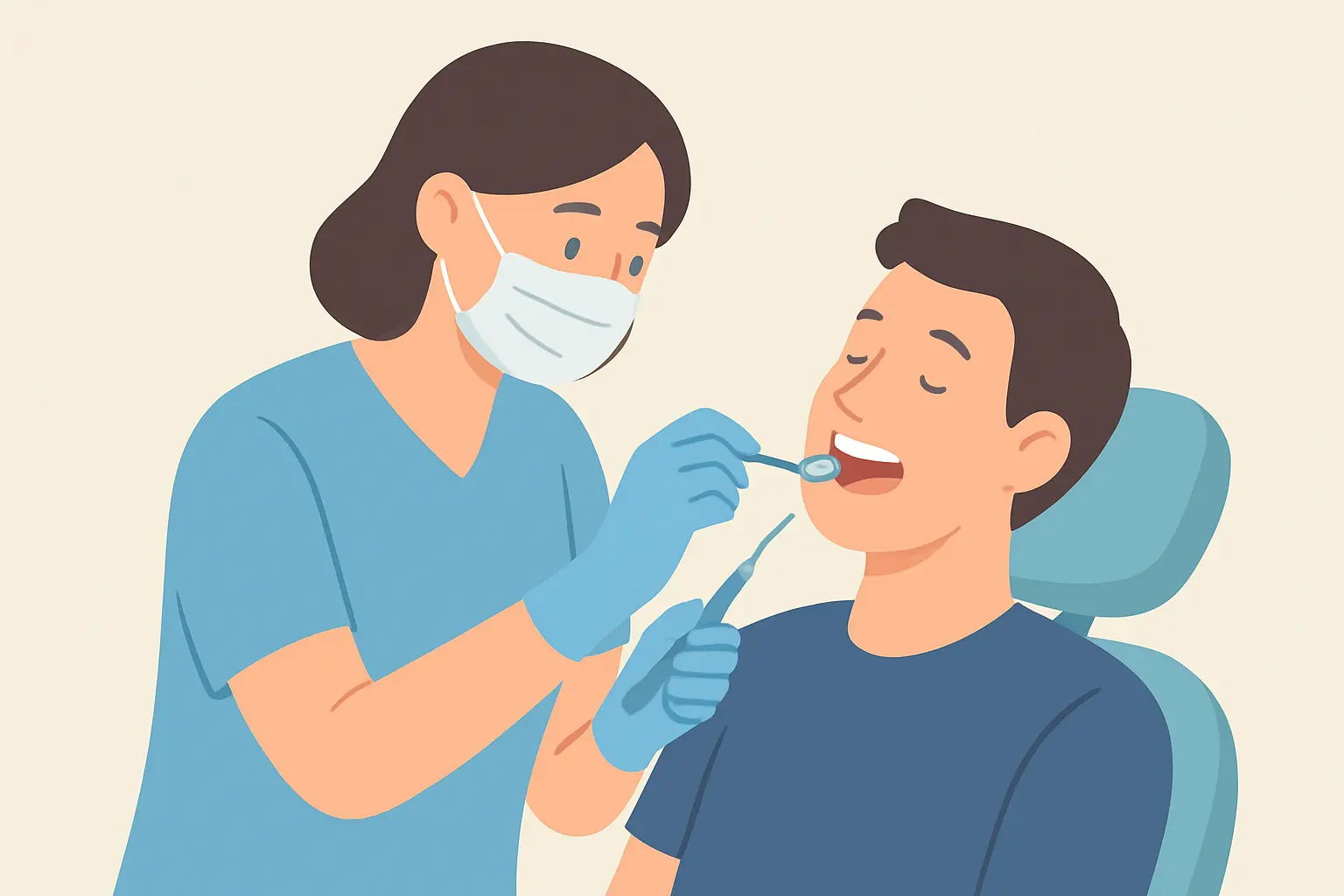
Extrinsic vs Intrinsic Staining
Dentists split tooth discoloration into two categories, and the distinction matters for what quitting can and can’t fix. Extrinsic stains sit on the outer enamel surface — this is what tobacco tar mostly causes, along with coffee, tea, and red wine. Extrinsic stains can usually be polished or lifted off. Intrinsic stains live inside the tooth structure itself, caused by things like long-term tetracycline exposure, some fluorosis, aging, or trauma to the tooth. Intrinsic stains don’t respond to surface cleaning and generally need bleaching or restorative work to change.
Most smoking-related discoloration is extrinsic, which is the good news — it’s treatable. But heavy, long-term smoking can also contribute to some deeper yellowing over years, which is one more reason the earlier you quit, the less staining you’re managing overall.
It’s also worth knowing that not all discoloration in a smoker’s mouth is tooth staining at all. Some of what people notice is actually gum pigmentation or the general look of teeth against gum tissue that hasn’t fully recovered its color yet — a separate process covered in the mouth-recovery section further down. Getting the two straight matters, because a whitening product won’t touch a gum-tissue change, and a hygienist can tell you which one you’re actually looking at.
What a Hygienist Can Remove — and What They Can’t
A standard scale-and-polish appointment is built specifically to lift extrinsic surface stains, tobacco included, and most people see a visible difference in a single visit. What a hygienist’s polish cannot do is change the natural underlying shade of your enamel — that requires an actual whitening (bleaching) treatment, which is a separate service. The Oral Health Foundation notes that professional whitening “can safely lighten the natural colour of your teeth when performed by a dental professional,” distinguishing it clearly from a cleaning appointment. It’s also worth knowing that whitening will not work on fillings, crowns, or veneers, so any restorations will keep their original color even after your natural teeth lighten.
Whitening While Still Smoking: Why It’s Wasted Money
Spending on a whitening kit or in-office treatment while still smoking is close to pouring money away. New tar and staining compounds start bonding to teeth again almost immediately after each cigarette, so a paid whitening treatment can visibly regress within weeks if smoking continues at the same rate. This is exactly what the Oral Health Foundation means when it says smoking causes staining to return more quickly — the whitening isn’t undone by anything wrong with the treatment; it’s undone by a fresh, ongoing source of stain.
If a treatment cycle or an event is motivating you to whiten, quitting first — or at minimum going through the treatment smoke-free — is the only way to make the result last more than a few weeks.
There’s a similar logic problem with switching to vaping rather than quitting nicotine outright while trying to protect a whitening result. Vaping avoids the tar that causes most tobacco staining, so it removes that specific cosmetic mechanism, but it doesn’t address the broader reason you may be spending on dental care in the first place. Nicotine pouches involve no smoke or vapor passing over the teeth at all, which removes the tar-staining mechanism entirely — though switching products rather than quitting nicotine altogether still leaves the underlying habit, and its cost, in place.
Realistic Timeline After Quitting
There’s no single verified “day X your teeth start whitening” milestone, because quitting itself doesn’t whiten teeth — it removes new staining, and any actual color change comes from a separate cleaning or bleaching step you choose to take. With that framing, a realistic sequence looks like this:
| When | What changes |
|---|---|
| Day 1 of quitting | New staining stops accumulating; existing stain remains |
| First hygienist visit | Most surface (extrinsic) stain removed in one appointment |
| ~2 weeks of consistent home care | Stain-control toothpaste measurably reduces staining, based on clinical study data |
| A dedicated whitening treatment | Natural tooth shade actually lightens, tracked by a dental professional |
The clinical evidence for that two-week figure comes from a controlled study of 100 adults, half smokers and half non-smokers, using a hydroxyapatite stain-control toothpaste. Smokers started with noticeably more surface stain than non-smokers at baseline, but after two weeks of use, both groups showed a statistically significant reduction in staining — and the reduction was actually larger in the smoker group (clinical study, 2025). That’s encouraging: even without professional treatment, consistent home care measurably moves the needle within about two weeks.
Home Care That Actually Helps
Between hygienist visits, a few habits make a real difference to staining:
- Brush and rinse soon after your last cigarette while you’re still quitting, then settle into a habit of brushing right after meals once you’ve stopped for good.
- Use a stain-control or whitening toothpaste consistently. The clinical study above found a measurable reduction in stain in as little as two weeks of regular use.
- Rinse with water after coffee, tea, or red wine — the same substances the Oral Health Foundation names alongside smoking as staining accelerants.
- Book the hygienist appointment you’ve been putting off. This is often the single fastest visible change, and it’s a natural first thing to fund with the money you’re no longer spending on cigarettes.
- Be patient with a whitening toothpaste’s limits. These products work on surface stain through mild abrasives or stain-dissolving ingredients; they are not the same strength as a professional or dentist-dispensed bleaching kit, and the Oral Health Foundation is explicit that shop-bought products “usually do not change the natural colour of your teeth much.”
None of these steps require quitting to already be “finished.” Booking a cleaning during the first hard weeks of quitting can even work as a milestone to aim for — a concrete, visible reward that isn’t tied to the number of days smoke-free, which is useful on the days that number doesn’t feel like enough on its own.
What Else Changes in Your Mouth
Teeth are only part of the picture. For the fuller mouth-recovery timeline — bad breath, taste and smell returning, and gum tissue healing — see teeth and gums after quitting smoking. Smoking is also one of the strongest risk factors for gum disease specifically; the gum disease risk data covers how much that risk falls after you stop. And if a dental implant is part of your future plans, note that implant success has its own smoking-related requirements — see how long to stop smoking before a dental implant. If you’ve recently had a tooth removed instead, the timing works differently — how long after a tooth extraction you can safely smoke covers the healing risk in the other direction.
Whitening and staining are a small, visible part of a much larger set of changes covered in the evidence-based health benefits of quitting, most of which matter more for long-term health than they do for appearance.
Frequently Asked Questions
How long after quitting smoking do teeth whiten?
Quitting alone does not whiten teeth — it only stops new staining. A hygienist visit removes most surface stain in one appointment, and stain-control toothpaste has shown a measurable reduction in staining after about two weeks of consistent use.
Will my teeth whiten on their own if I just stop smoking?
No. Existing stain does not fade on its own; quitting only prevents new staining from building up. Removing existing stain requires a professional cleaning or a whitening treatment.
Is it worth whitening my teeth while I still smoke?
Generally not. New staining bonds to teeth again almost immediately with continued smoking, and the Oral Health Foundation notes smoking causes staining to return more quickly, so a whitening treatment can visibly fade within weeks.
What’s the difference between extrinsic and intrinsic tooth stains?
Extrinsic stains sit on the enamel surface, which is what most tobacco staining is, and can usually be polished off. Intrinsic stains live inside the tooth structure and need bleaching or restorative treatment instead of a cleaning.
Do smokers get more tooth staining than non-smokers?
Yes. A clinical study of 100 adults found smokers had a notably higher baseline stain index than non-smokers, and smoking-induced stains have been described as more stubborn to remove than stains from other sources.
Can a whitening toothpaste remove smoking stains?
It can help with surface stain — a 2025 clinical study found a hydroxyapatite stain-control toothpaste measurably reduced staining in smokers within two weeks — but it will not change your teeth’s underlying natural shade the way a bleaching treatment can.
Put Cigarette Money Toward Your Smile
Every cigarette not smoked is one less layer of stain on your teeth — and money that could fund the hygienist visit that actually shows results. iQuit tracks your smoke-free days and the money you’re saving along the way.
Download iQuit Free on Google Play
Download on the App Store


