
If you are asking how long it takes to break the habit of smoking, the honest answer is that you are really asking about two different things. One is nicotine withdrawal, which fades relatively quickly. The other is the habit itself, the routines and cues that tell your hand to reach for a cigarette, and that can take months. This guide separates the two, corrects the popular 21-day myth and ends with a plan.
The short answer: two clocks
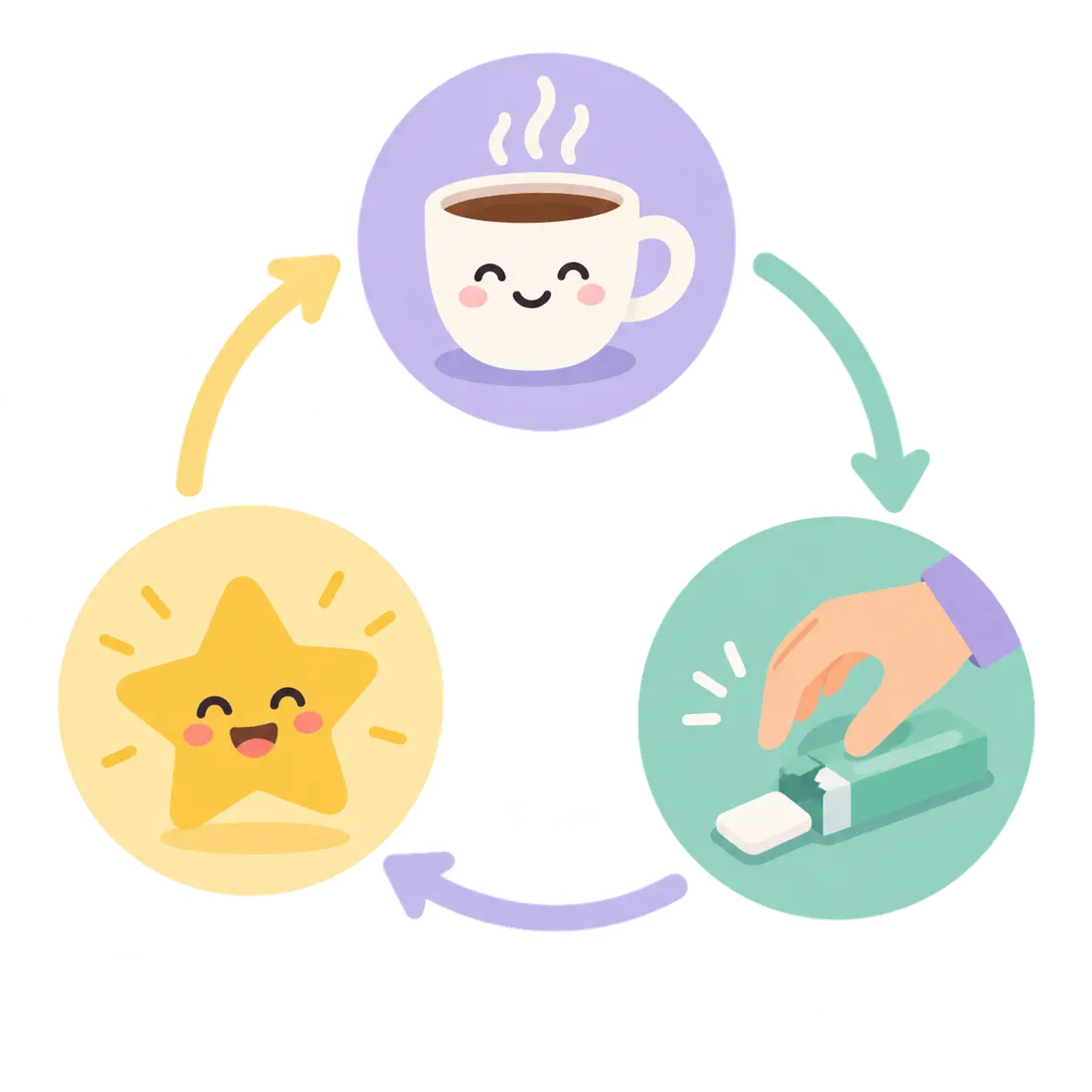
Think of quitting as running on two clocks. The withdrawal clock is chemical: your body adjusts to having no nicotine. The habit clock is behavioral: your brain learns that a cue, such as a morning coffee, no longer leads to a cigarette. Both matter, and they run at different speeds.
That is why many people feel physically better within weeks but still get surprised by an urge at the end of a meal months later. It does not mean you failed. It means the habit clock is still running. For a felt, week-by-week view of how the difficulty changes, see our guide on when quitting smoking gets easier.
The withdrawal clock
Smokefree.gov explains that when you quit, your body has to get used to not having nicotine, and that lack of nicotine causes withdrawal symptoms. It says the worst withdrawal symptoms usually last less than two weeks, though it adds that this time can be really tough. For the symptom-by-symptom picture, our guide to the stages of nicotine withdrawal goes into detail.
The NHS puts the longer view this way: quitting smoking improves physical and mental health within 6 weeks (see NHS Better Health: staying smoke free). It also says that if you can reach 28 days smoke free you are 5 times more likely to quit for good (see the NHS quit smoking page). Those are good early targets, but they are not the finish line for the habit.
This Mayo Clinic video explains how nicotine changes the brain and why urges and withdrawal make quitting so hard, which helps explain why habit and chemistry work together.
The habit clock: what the research found
The most-cited study on how long habits take is by Lally and colleagues, published in the European Journal of Social Psychology in 2009 (see the abstract; the publisher blocks automated link checks, so open it in a browser). They asked 96 volunteers to choose an eating, drinking or activity behavior and carry it out daily in the same context, such as after breakfast, for 12 weeks. They tracked how automatic it felt each day. Of the 82 people who provided enough data, the model fit 62.
- The range was wide. Among the 62 participants whose data fit the model, the time it took to reach 95% of their own plateau of automaticity ranged from 18 to 254 days.
- It can take a long time. The authors say this highlights that it can take a very long time.
- One miss did not matter much. Missing one opportunity to perform the behavior did not materially affect the habit formation process.
A later review by Benjamin Gardner in the British Journal of General Practice summarizes the same work, saying habit strength rose and then slowed to a plateau after an average of 66 days (see the Gardner article on PubMed Central). Gardner suggests that it may be helpful to tell patients to expect habit formation, based on daily repetition, to take around 10 weeks.
One important caveat: these were everyday behaviors like eating fruit or going for a walk, not quitting smoking. A smoking habit is tied to nicotine dependence as well, so your own timeline may differ. Treat 66 days as an average for building a new routine, not a guarantee for ending an old one.
The 21-day myth
You have probably heard that habits take 21 days. Gardner addresses this directly, writing that the myth appears to have originated from anecdotal evidence of patients who had received plastic surgery and typically adjusted psychologically to their new appearance within 21 days. It was never a finding about everyday habits or about quitting smoking.
The risk of the myth is practical. If you expect to be done at three weeks and a craving surprises you at week five, you may decide you are failing. Gardner makes the same point, noting that unrealistic expectations of how long habit formation takes can lead people to give up during the learning phase. Treat three weeks as an early checkpoint, not a finish line.
What a smoking habit is made of
A habit is a cue, a routine and a reward. Smokefree.gov groups smoking triggers into four types, and each one maps to a cue your brain has learned.
| Trigger type | Examples | What you can try |
|---|---|---|
| Emotional | Anxious, stressed, bored, lonely, angry, excited | Talk about your feelings, take slow deep breaths, exercise, listen to calming music |
| Pattern | Waking up, coffee, driving, after a meal, a work break, a phone call | Chew gum, eat sugar-free candy, keep your hands busy, go for a walk, change the routine |
| Social | Friends who smoke, a bar, a party, a concert | Avoid places where people smoke, ask friends not to smoke around you, tell them you quit |
| Withdrawal | Restlessness, needing something for your hands or mouth, the smell of smoke | Distract yourself, and ask whether nicotine replacement therapy is right for you |
The page says one way to beat pattern triggers is to break the association with the trigger and transfer the feeling to another activity. That is the habit-breaking move in a sentence. Our guide to telling nicotine cravings from habit shows how to work out which one you are dealing with.
Why breaking a habit is harder than making one
Gardner makes two points that matter for quitting. First, it is not possible to form a habit for not doing something, so you need a new behavior to attach to the cue. Second, breaking existing habits requires different and altogether more effortful strategies than making new habits. In other words, simply trying not to smoke leaves the cue with nothing to trigger.
That is why replacing the routine works better than resisting it. Take the coffee cue: drink your coffee in a different place, or brush your teeth straight after a meal, as Smokefree.gov suggests. The cue is the same, but the behavior that follows is new, and repetition does the rest.
Ways to speed it up
Nobody can promise to shortcut the habit clock, but the research and the health bodies point to a few moves that help.
- Name your cues. Write down the five moments you smoked most. Smokefree.gov says knowing your triggers helps you control cravings.
- Decide the replacement in advance. A plan such as if it is my morning coffee, then I will drink it on the balcony with gum is easier to follow than deciding on the spot. Our guide to if-then plans for quitting smoking explains how.
- Repeat it consistently. Consistency is the point of the Lally design. Missing one opportunity did not materially affect habit formation, so a slip is not the end of the plan.
- Ease withdrawal if it gets in the way. Smokefree.gov says nicotine replacement therapy can reduce withdrawal symptoms. Ask a pharmacist or doctor whether it is right for you.
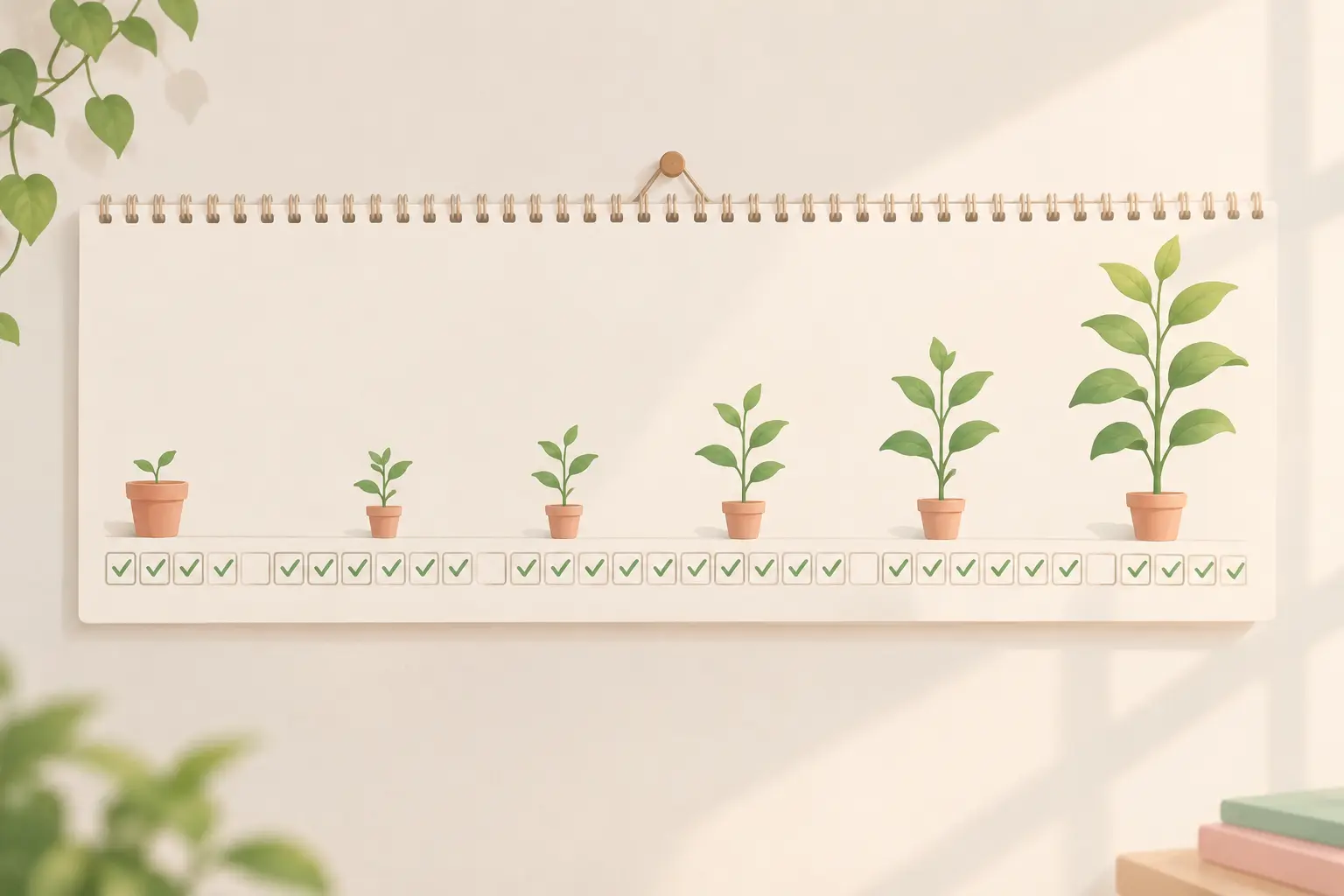
- Track your days. Seeing a streak makes the invisible habit clock visible. Try our 30-day quit smoking calendar for the first month.
A realistic timeline
| Stage | What the sources say | What to focus on |
|---|---|---|
| First 2 weeks | Smokefree.gov: the worst withdrawal symptoms usually last less than two weeks | Comfort, distraction, support |
| Up to 28 days | NHS: reaching 28 days makes you 5 times more likely to quit for good | Protect the first month |
| By 6 weeks | NHS: physical and mental health improve within 6 weeks | Notice what is better |
| About 10 weeks | Gardner: around 10 weeks suggested as a guide for daily repetition; Lally range 18 to 254 days | Keep repeating the new routines |
| After that | Smokefree.gov: triggers can bring cravings back even after a while | Keep your plan for known triggers |
If you hit a flat patch around the three-month mark, our piece on the three-month quit plateau and how to stay motivated is a good next read. For the bigger picture, start with our quit smoking motivation complete guide staying strong.
Where iQuit fits
iQuit is a free app on Google Play and the App Store that makes the habit clock visible. Its dashboard shows days smoke-free, cigarettes avoided and money saved, and you can log cravings with their triggers to see which cues matter most. The SOS tools, including breathing exercises, grounding and craving surfing, give you something to do in place of smoking. Streak shields and slip recovery treat a slip as data, not defeat. Premium includes challenges such as the 7-Day Shield and the 21-Day Habit Breaker. These are product names, not scientific claims about how long habits take. iQuit does not replace medication or professional advice.
Frequently Asked Questions
How long does it take to break the habit of smoking?
There is no single number. Smokefree.gov says the worst withdrawal symptoms usually last less than two weeks, but habits form on a different clock. In Lally and colleagues’ study of everyday behaviors, reaching 95% of a person’s own plateau of automaticity took from 18 to 254 days, and Gardner’s review reports an average of 66 days. Smoking habits are likely to vary just as widely.
Is it true that a habit takes 21 days to break?
No. Gardner’s British Journal of General Practice article says the 21-day idea appears to have come from anecdotal reports of patients adjusting to a new appearance after plastic surgery. The more relevant research found that automaticity plateaued after an average of 66 days, with large differences between people and behaviors.
Why do I still crave a cigarette after weeks of not smoking?
Cravings are a normal part of quitting. Smokefree.gov says that even if you have been smokefree for a while, certain triggers may bring cravings back. Those triggers can be emotions, routines such as coffee or a break, social settings or withdrawal. Spotting your triggers and planning a replacement makes them easier to handle.
Does one slip reset the habit-breaking process?
Not necessarily. In the Lally study, missing one opportunity to perform a behavior did not materially affect the habit formation process. That study was about everyday healthy behaviors rather than smoking, so treat it as encouragement, not a promise. Learn from the slip, review the trigger and carry on.
Why is breaking a habit harder than starting one?
Gardner notes that it is not possible to form a habit for not doing something, and that breaking existing habits requires different and altogether more effortful strategies than making new habits. For smoking, that means replacing the old routine with a new one at the same cue, not simply relying on willpower.
When do I start to feel better after quitting?
The NHS says quitting smoking improves physical and mental health within 6 weeks. It also says reaching 28 days smoke free makes you 5 times more likely to quit for good. Those milestones come well before a habit is fully automatic, so keep using your plan after you start to feel better.
Can nicotine replacement help me break the habit?
Smokefree.gov says nicotine replacement therapy may reduce withdrawal symptoms, which can make it easier to work on routines and triggers. It does not remove the habit part, so pair it with a plan for your cues. Teens, pregnant women and people with severe medical conditions should talk to a doctor before using it.
What is the iQuit 21-Day Habit Breaker?
It is a Premium challenge inside the iQuit app. It is a product feature, not a scientific claim about how long habits take. iQuit is free on Google Play and the App Store, and Premium has a 7-day free trial.
Build the new routine
Log your triggers, watch your streak grow and give the new habit time. iQuit is free on Google Play and the App Store.