
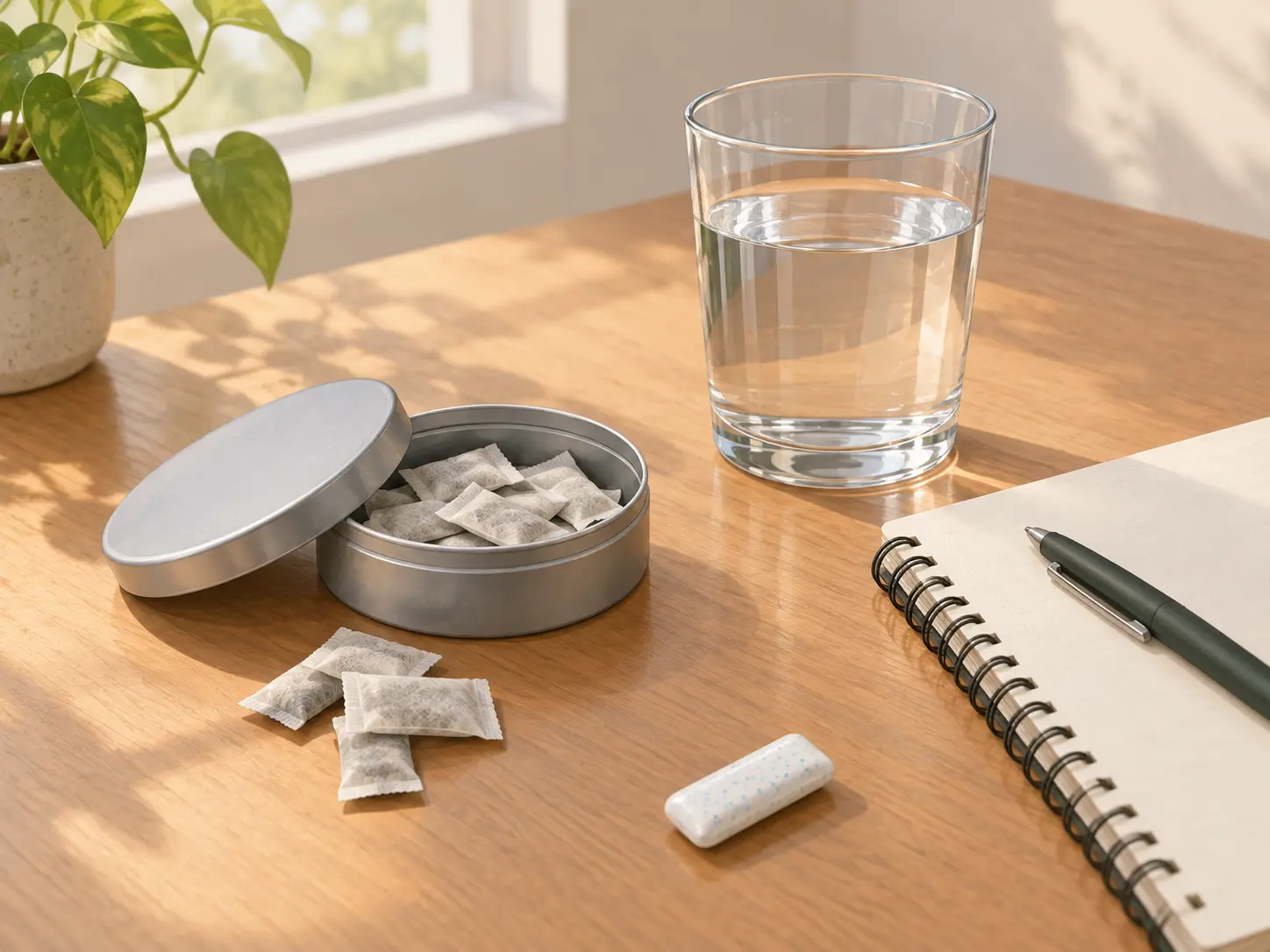
If you are looking for how to quit snus, you probably already know the hard part is not the first day. It is the fiftieth pouch of the week, the habit your lip and hands have learned, and the nicotine level you have trained your body to expect. This guide gives you a plain step-down plan, shows what the research says about quitting smokeless tobacco, and is honest about where the evidence is thin.
One note first: snus is tobacco, and the sources we use below are clear that there is no safe level of smokeless tobacco use. If you are weighing snus against other products, our explainer on whether snus is safer than smoking covers the comparison. This article is for the moment you have decided to stop.
How much nicotine you are really getting
Snus is a form of moist snuff. The FDA describes it this way: Moist snuff and snus are cut tobacco that can be loose or pouched and placed in the mouth
. Because you are not inhaling anything, it can feel gentler than smoking. The blood levels say otherwise.
According to the National Cancer Institute (NCI), users of smokeless tobacco and users of cigarettes have comparable levels of nicotine in the blood
. The NCI adds that the nicotine stays in the blood longer for users of smokeless tobacco than for smokers
. Nicotine keeps entering your bloodstream even after you take the pouch out. That is why many people who use snus all day find the dependence stronger than they expected.
The amount varies a lot between products. The NCI cites a Centers for Disease Control and Prevention study of 40 popular moist snuff brands, in which the amount of nicotine per gram of tobacco ranged from 4.4 milligrams to 25.0 milligrams
. We are not giving milligrams per pouch, because that depends on the product, and the only reliable figure is on your own tin. Read it, and use your own brand as your starting point. More detail is on the NCI smokeless tobacco fact sheet.
Cold turkey or step-down?
The honest answer is that we could not find a trial in the sources we checked that compares stopping suddenly with tapering for snus users specifically. So the choice is partly about you. If you use a handful of pouches a day, stopping on a set date can work. If you use a pouch every hour or two, a few weeks of stepping down may make the first days easier.
What the research does show is what helps. A 2025 Cochrane review pooled 43 trials with 20,346 people who used smokeless tobacco. Here is what its abstract reports.
| Approach | Risk ratio (95% CI) | Certainty |
|---|---|---|
| Counseling versus minimal support | 1.76 (1.44 to 2.16) | Moderate |
| Brief advice versus no support | 1.24 (1.03 to 1.48) | Moderate |
| Varenicline versus placebo (2 studies) | 1.35 (1.08 to 1.68) | Moderate |
| Nicotine replacement versus placebo or nothing | 1.18 (1.05 to 1.33) | Low |
| Bupropion versus placebo | 0.89 (0.54 to 1.44) | Low, no benefit shown |
The authors conclude that cessation counselling, brief advice, and varenicline each probably help more people to quit smokeless tobacco use than minimal or no support, or placebo
, and that NRT may help more people to quit smokeless tobacco use than placebo or no medication
. Most of the trials were in North America, and the review notes it found insufficient data
on whether the type of smokeless tobacco changes what works. The full abstract is on PubMed.
A four-week step-down plan
This framework is common-sense planning, not a protocol from a trial. Adjust the pace to your own use, and see a pharmacist or your doctor if you want medication alongside it.
Before day one: count
For three to five days, write down every pouch you use, with the time and what you were doing. Nobody can reduce a number they do not know. Your highest-use moments, perhaps first thing in the morning, after meals, at work or when driving, are the ones to plan around.
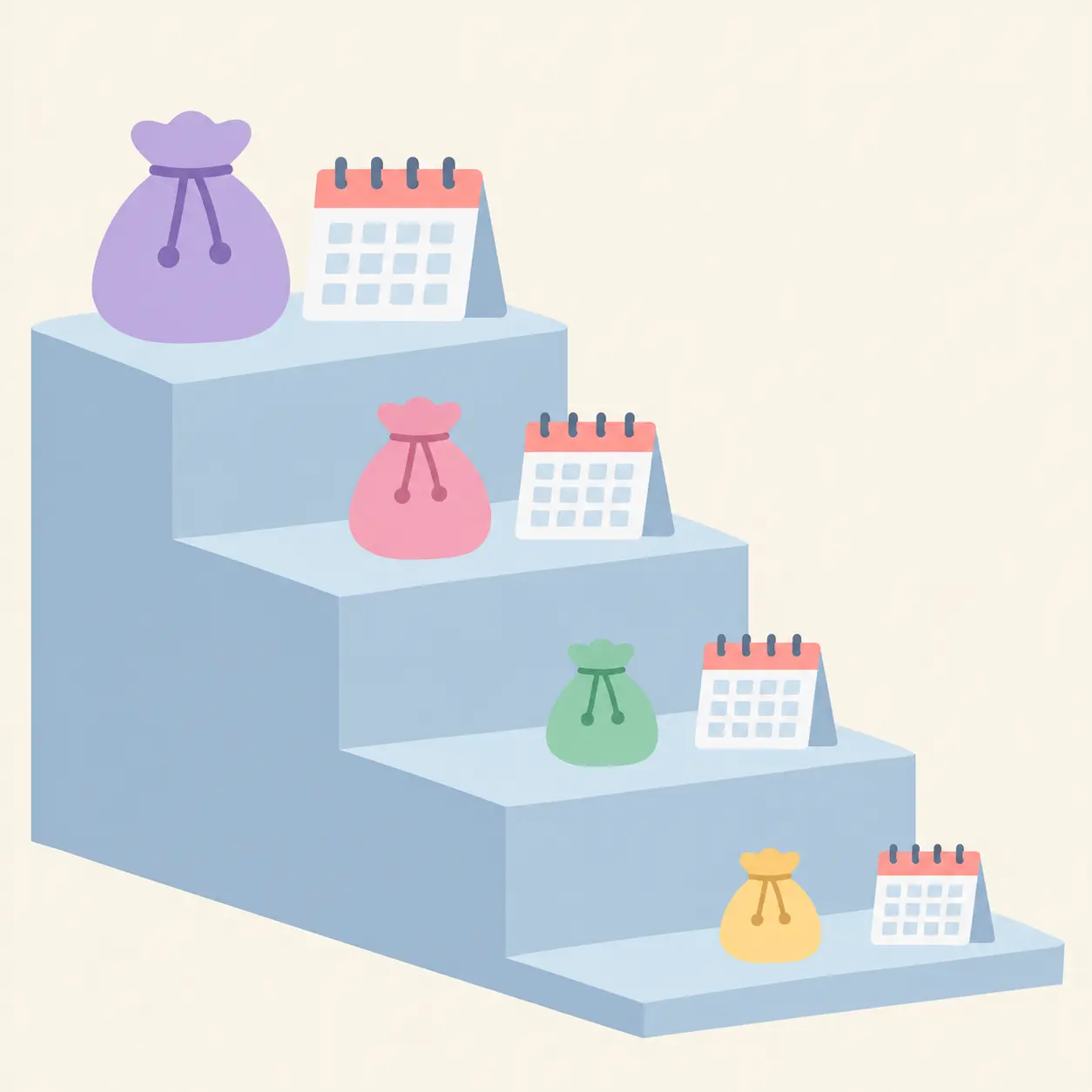
| Week | What to do |
|---|---|
| Week 1 | Count only. Pick your lowest-value pouches (the automatic ones) and decide in advance which two or three to drop first. |
| Week 2 | Cut about a quarter of your daily pouches, starting with the automatic ones. Delay the first pouch of the day by an hour. |
| Week 3 | Cut to about half your starting number. Keep the pouches you still use for your hardest moments. |
| Week 4 | Drop to a few a day, then set a stop date inside this week and stick to it. |
If you also use a stronger product
If you use a strong product, switching to a regular-strength one for a week or two is one way to take the first step. Check the numbers on your tin rather than guessing. Do not move to a weaker product and then use more pouches to make up for it, because that undoes the step.
Swapping to nicotine replacement (gum or lozenge)
Nicotine replacement therapy (NRT) can give you nicotine without the tobacco. The Cochrane abstract above lists it as low-certainty evidence of benefit for smokeless users (risk ratio 1.18 across 11 studies). That is encouraging but not strong.
The catch is on the label. A standard US nicotine lozenge label on DailyMed says its use is to reduce withdrawal symptoms, including nicotine craving, associated with quitting smoking
, and that this product is only for those who want to stop smoking
. Its dosing is set by cigarette habits: if you smoke your first cigarette within 30 minutes of waking up, use 4 mg nicotine lozenge
. There is no equivalent rule for snus. So if you want to use gum or a lozenge to quit snus, ask a pharmacist or doctor how to choose a strength, because the box instructions do not cover your situation. We are not suggesting doses.
The same label stresses finishing the course: it is important to complete treatment
. If you try NRT, plan to use it for weeks, not days, and taper it too. Our pouch taper plan shows the same logic for white pouches, and our guide to quitting chewing tobacco and dip covers loose tobacco.
Replacing the pouch habit
Many people say the hardest thing to lose is not the nicotine but the feel of something in the mouth. We do not have a trial to cite for this, so treat the following as practical ideas, not proven treatments.
- Give your mouth a job. Sugar-free gum, mints, sunflower seeds or a cinnamon stick can fill the gap.
- Match the moment. If your pouch went in after coffee, change the coffee ritual. If it went in while driving, keep gum in the car.
- Keep your hands busy. A stress ball or a pen can help in the first weeks.
- Move the tin. Take the tin out of your pocket, car and desk. Distance makes the automatic reach harder.
- Tell one person. Someone who knows your stop date can check in when a craving hits.

The first week off
Expect irritability, restlessness, trouble concentrating and strong cravings in the early days. Those are the usual signs of nicotine withdrawal, and they ease with time. Our guide to the stages of nicotine withdrawal walks through what to expect, without promising a particular day when it ends, because it differs from person to person.
Practical steps for the first week: carry your replacement (gum, mints or NRT if you are using it), keep your list of high-risk moments, and use a delay rule. When a craving comes, wait ten minutes and do something else with your mouth and hands. Cravings rise and fall, and many pass if you do not act on them.
If you are in the US and want to talk to someone, the NCI says you can call NCI’s Smoking Quitline at 1-877-44U-QUIT (1-877-448-7848)
to talk with a cessation counselor about quitting smokeless tobacco, and counseling is the best-supported approach in the table above.
Slips and restarts
A slip is information, not failure. Note what the trigger was, what you were feeling and what you could change next time, then go back to your plan the same day. The review above looked at quit attempts that were measured over six months or longer, which is a reminder that quitting is a process.
What to avoid is the all-or-nothing thought that one pouch means you are back to the start. It does not. Return to your step-down, tighten the plan around the trigger, and consider adding counseling or a pharmacist visit if you slip more than once.
What the law and the regulators say
Rules differ by country, and they affect where people get snus. In the EU, Directive 2014/40/EU says Member States shall prohibit the placing on the market of tobacco for oral use, without prejudice to Article 151 of the Act of Accession of Austria, Finland and Sweden
. In plain terms, selling snus is prohibited in the EU apart from the Swedish derogation, as set out in the Directive text on EUR-Lex. If you are an expat or a traveler who relied on snus from abroad, that can make supply and quitting messy.
In the US, the FDA says there is no safe level of smokeless tobacco use
. It also notes that it granted modified risk granted orders for some snus smokeless tobacco products
, which means these specific products may be advertised with information about their lower risks of certain health effects when compared to smoking cigarettes
. That wording is about comparison with cigarettes, not a statement that snus is safe, and it does not mean quitting is unnecessary. See the FDA smokeless tobacco page.
Where iQuit fits
iQuit is a quit-smoking app, free on Google Play and the App Store. It is built around cigarettes and has no snus-specific mode, so be realistic about that. Still, its gradual-reduction approach and craving log, where you record each craving with its trigger and intensity, work well for a step-down: you can log the moments you reach for a pouch and see your riskiest hours. For a tracker built for pouches, see our review of an app to quit nicotine pouches.
Frequently Asked Questions
Is it better to quit snus cold turkey or taper?
We found no trial comparing the two for snus users. Stopping on a set date can suit lighter use, while a step-down over about four weeks may make the first days easier if you use many pouches. Counseling is the best-supported addition. (Cochrane 2025 review of smokeless tobacco cessation)
Does nicotine replacement help you quit snus?
Possibly. The Cochrane review found low-certainty evidence that NRT increases quit rates for smokeless tobacco (risk ratio 1.18, 11 studies). US lozenge labels are written for people who smoke, so ask a pharmacist how to choose a product and strength. (Cochrane 2025; DailyMed label)
What helps most with quitting smokeless tobacco?
Counseling had the strongest effect in the Cochrane abstract (risk ratio 1.76 versus minimal support), and brief advice and varenicline also probably help. Bupropion showed no benefit. In the US, the NCI offers a smokeless quitline at 1-877-44U-QUIT. (Cochrane 2025; NCI)
Is snus as addictive as cigarettes?
The NCI reports that smokeless tobacco users and cigarette users have comparable levels of nicotine in the blood, and that nicotine stays in the blood longer for smokeless users. The nicotine content of products varies widely, so check your tin. (NCI)
Is snus legal in the EU?
Directive 2014/40/EU requires member states to prohibit the sale of tobacco for oral use, without prejudice to Article 151 of the Act of Accession of Austria, Finland and Sweden. In practice that means Sweden is the exception. Check your own country law before buying. (EUR-Lex)
Does the FDA say snus is safer than cigarettes?
The FDA says there is no safe level of smokeless tobacco use. It has granted modified risk orders for some snus products, which means they may be advertised with information on lower risks of certain health effects compared with cigarettes. That is not an approval of safety. (FDA)
How long do snus cravings last?
There is no exact day, and it differs between people. Cravings usually come in waves that rise and fall, so a ten-minute delay with gum or a distraction can get you through many of them. Withdrawal is a normal part of quitting. (general guidance; see our withdrawal guide)
Track Your Step-Down With iQuit
A step-down is easier when you can see your pattern. iQuit supports gradual reduction and has a craving log for triggers and intensity, craving forecasts that show your risky hours, SOS tools such as breathing exercises and craving surfing, and streak shields that help you recover from a slip. It is free on Google Play and the App Store. It has no snus-specific mode and does not replace counseling or medicine.


