
Every quit-smoking savings counter stops at the same place: a running total of the money you did not hand over. That total is real, but it is also the least interesting version of the number. What happens if you invest your cigarette money instead of letting it drift back into the weekly shop? This page shows the arithmetic in full, with the pack price stated, the growth rate stated, and every figure you can check yourself. It is an illustration, not advice, and the caveats are not buried at the bottom.
The Number Nobody Shows You
A savings counter answers one question: how much have I not spent? It is a good question, and our savings calculator and the real numbers behind it both answer it well. But money that sits in a current account tends to get spent, and a total that only ever goes up in a straight line stops being motivating somewhere around week six.
The second question is the one this page is about: what could that money become if you moved it out of reach and left it alone? The answer depends entirely on two inputs you control and one you do not, so all three are stated in the open below rather than hidden inside a calculator.
One piece of housekeeping first, because it matters. Nothing here is financial advice, and no product, fund, platform or provider is recommended anywhere on this page. It is arithmetic. If you are carrying expensive debt, paying that down first is almost always the better use of the money, and if you want a recommendation rather than a sum, that is a conversation with a regulated adviser in your own country.
What a Pack a Day Actually Costs per Year
The worked examples use a pack price of £16.60. That is not a guess. It is the last figure published in the Office for National Statistics series for the average price of 20 king size filter cigarettes, recorded for January 2025 in series CZMP of the consumer price inflation dataset. The series has no observations after that date, so treat it as a recent anchor rather than today’s shelf price.
The same series shows how fast that anchor has been moving. The annual averages ran £11.52 in 2021, £12.61 in 2022, £14.25 in 2023 and £15.85 in 2024. In three years the average pack went up by more than £4.
| Habit | Per day | Per year (365 days) | Per month |
|---|---|---|---|
| 10 a day | £8.30 | £3,030 | £252.46 |
| 20 a day | £16.60 | £6,059 | £504.92 |
| 40 a day | £33.20 | £12,118 | £1,009.83 |
If you are reading this outside the UK, substitute your own price before you go any further, because the pack price is the single biggest lever in every figure that follows. Prices vary enormously by country and, within a single country, by region and by state: state and federal tobacco taxes in the US alone differ by several dollars a pack depending on where you live. Our breakdown of the annual cost by country and the savings by country give you a closer starting point.
This short Health Canada explainer makes the same point in ninety seconds.
The Compounding Arithmetic, Stated Honestly
Compounding is one formula, and it is worth seeing rather than trusting. For a fixed amount paid in every month, the future value is:
Future value = M × (((1 + i) n − 1) ÷ i), where M is the monthly amount, i is the assumed annual growth rate divided by 12, and n is the number of months.
Three assumptions are baked into every figure on this page, and you should know all three:
- The pack price stays at £16.60. In reality it has been rising, so the contributions would rise too. Holding it flat makes the numbers conservative.
- You pay in every month without fail. Real life includes months where you do not.
- The money grows at a steady annual rate. Nothing grows at a steady rate. Markets go up and down, sometimes for years at a time, and a smooth curve is a convenience of arithmetic rather than a description of reality.
The headline scenarios use 5% a year. That is an assumption chosen to be plausible rather than flattering, and the next section shows what happens when it is wrong in both directions. You can rerun any of it in the US Securities and Exchange Commission’s free compound interest calculator, which sells nothing.
Five, Ten and Twenty-Year Scenarios
Here are the three habits, at three growth rates, over three horizons. The paid in column is your own money, and it is the only column that is not an assumption.
| Habit | Years | Paid in | At 3% | At 5% | At 7% |
|---|---|---|---|---|---|
| 10 a day | 5 | £15,148 | £16,321 | £17,169 | £18,074 |
| 10 a day | 10 | £30,295 | £35,279 | £39,203 | £43,697 |
| 10 a day | 20 | £60,590 | £82,883 | £103,770 | £131,513 |
| 20 a day | 5 | £30,295 | £32,641 | £34,338 | £36,149 |
| 20 a day | 10 | £60,590 | £70,558 | £78,405 | £87,394 |
| 20 a day | 20 | £121,181 | £165,766 | £207,539 | £263,026 |
| 40 a day | 20 | £242,359 | £331,529 | £415,074 | £526,047 |
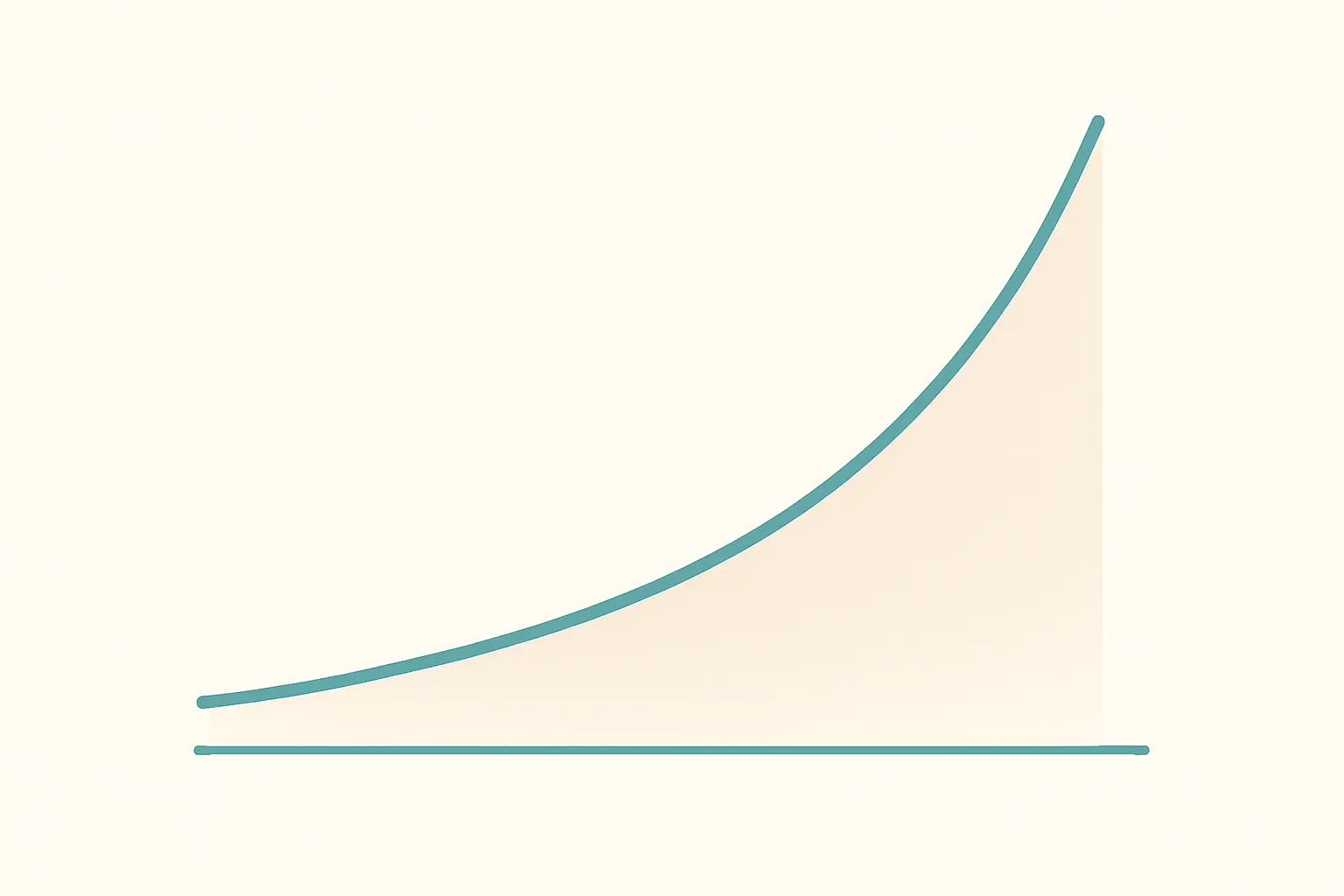
Read the twenty-a-day, twenty-year row carefully, because it is the one that changes how the habit looks. You would pay in £121,181 of your own money. At an assumed 5% you would end up with roughly £207,539, of which about £86,000 is growth rather than contributions. That growth is the part you never see in a savings counter, and it is also the part that is not guaranteed.
At a lower pack price the shape is identical and the numbers shrink proportionally. At £8.00 a pack, twenty a day costs £2,920 a year, or £243.33 a month. Paid in for twenty years that is £58,400, reaching roughly £100,018 at an assumed 5%. If you want to see how much you have already spent before any of this starts, our piece on your lifetime cigarette count is a bracing read.
Why the Assumptions Matter More Than the Headline
Compare the twenty-year, twenty-a-day row at 3% and at 7%: £165,766 against £263,026. Nearly £100,000 of difference, from the same habit and the same contributions, produced entirely by a number nobody can know in advance. Anyone who quotes you a single confident figure for two decades out is guessing with more conviction than the evidence allows.
Four things deserve to be said plainly:
- Investments can fall as well as rise. You may get back less than you put in, and that is true over short horizons and occasionally over long ones.
- Past returns do not predict future returns. The historical average is a description of what happened, not a promise about what will.
- Inflation eats the headline. £207,539 in twenty years will not buy what £207,539 buys today, so the real gain is smaller than the number looks.
- Money you might need soon does not belong in investments at all. Cash savings pay less and lose value to inflation, but they do not fall 30% in a bad quarter.
None of this makes the exercise pointless. It makes the honest version of it more useful than the version with one big number and a rocket emoji.
Want the running total that feeds all of this? iQuit counts days smoke-free, cigarettes avoided and money saved from the pack price and currency you enter, and lets you set a savings goal to aim at. It does not hold, move or invest your money. Free on Google Play and the App Store.
Tax Wrappers and Where the Money Actually Goes
Where you hold the money changes what you keep, and most countries have some kind of tax-advantaged account. Two examples, quoted from the authorities that set them rather than from anybody selling a product.
In the UK, gov.uk states that in the 2026 to 2027 tax year the maximum you can save across Individual Savings Accounts is £20,000, and lists four types: cash, stocks and shares, innovative finance and Lifetime ISAs. You must be 18 or over and UK resident, and under 40 to open a Lifetime ISA. A pack-a-day habit at £6,059 a year fits inside that allowance roughly three times over, so the limit is unlikely to be your constraint.
In the US, the IRS states that for 2026 total contributions across all traditional and Roth IRAs cannot be more than $7,500, or $8,600 if you are 50 or older. Workplace plans sit under separate limits.
Everywhere else, check your own tax authority rather than a blog. The general principle holds: the same contributions in a tax-advantaged account end up further ahead than the same contributions in a taxable one, and that difference compounds alongside everything else.
What That Money Buys in Real Terms
Abstract totals are easy to ignore, which is why the savings-goal feature in most quit apps exists at all. Anchoring the number to something you would actually buy makes it harder to quietly spend.
| Roughly | Time to fund it from cigarette money alone |
|---|---|
| £500 | 1 month |
| £1,500 | 3 months |
| £3,000 | 6 months |
| £6,000 | 1 year |
| £30,000 | 5 years, before any growth |
The first row is the one that changes behavior. Most people do not believe the annual figure, but they do believe that four weeks of not smoking pays for the thing they have been putting off. Start there, and the twenty-year number can look after itself. Our guide to saving money by quitting covers the shorter-horizon version of this.
Setting the Habit Up the Day You Quit
None of the above happens on its own. Money that stays in a current account gets absorbed by ordinary life within about a fortnight, and you will never notice it going.
- Work out your real daily spend. Your pack price, your cigarettes a day. Not a national average.
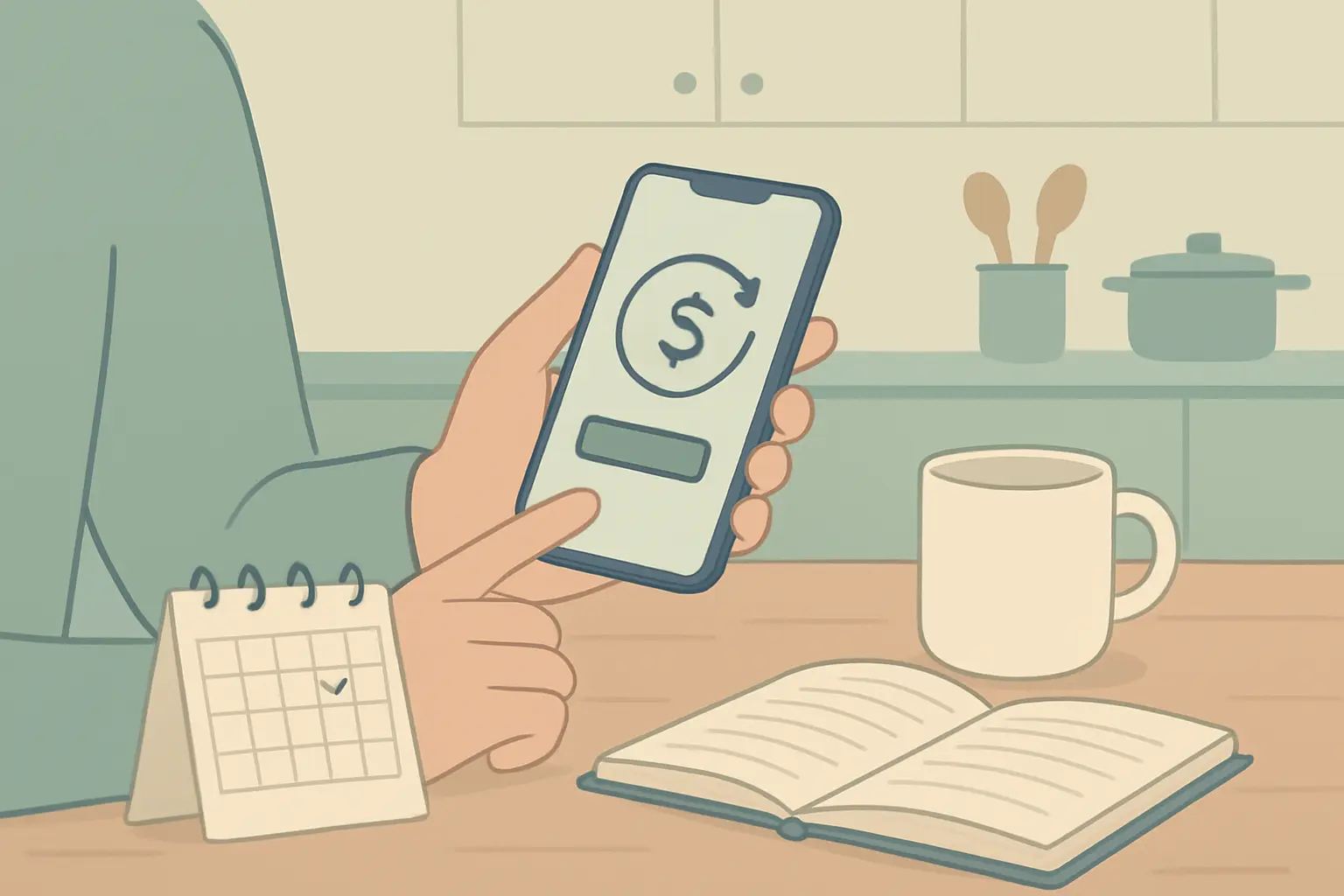
- Set up an automatic transfer for that monthly amount, dated the day after you are paid, not the day before.
- Send it somewhere slightly inconvenient. A separate account beats the one your card is attached to.
- Start smaller if the full amount would hurt. Half the daily spend, transferred reliably, beats the whole amount transferred twice and then abandoned.
- Mirror it in your quit app. Set the same pack price and currency so the counter and the account tell the same story.
- Leave it alone. Check it quarterly at most. The arithmetic above only works if you do nothing for a long time.
If you are quitting on an iPhone, the setup for the counter side of this takes about ten minutes and is covered in our guide to iQuit for iPhone. The transfer takes about five.
Cigarette Money and Compounding FAQ
How much does a pack-a-day habit cost per year?
At £16.60 a pack, twenty a day costs about £6,059 a year, or £504.92 a month. That price is the last value published in the ONS series for 20 king size filter cigarettes, recorded for January 2025. Substitute your own pack price, because it is the biggest lever in the whole calculation (ONS series CZMP).
What growth rate did you assume, and why?
The headline scenarios assume 5% a year, compounded monthly, and the tables also show 3% and 7% so you can see how much the assumption drives the answer. It is an assumption chosen to be plausible, not a forecast, and no rate of return is promised anywhere on this page.
Is this financial advice?
No. This page is arithmetic with its assumptions written down. It does not recommend any product, fund, platform or provider. Investments can fall as well as rise and you may get back less than you put in. For advice about your own circumstances, speak to a regulated financial adviser in your country.
Should I pay off debt before investing cigarette money?
If you are carrying high-interest debt, clearing it is usually the better use of the money, because the interest you avoid is certain while investment growth is not. The freed-up cigarette money works just as well against a credit card balance as it does in an account.
How much of the twenty-year total is growth rather than my own money?
For a twenty-a-day habit at £16.60 a pack, you would pay in £121,181 over twenty years. At an assumed 5% the total would be roughly £207,539, so about £86,000 would be growth. At 3% the growth portion falls to about £45,000, which shows how sensitive that figure is.
What is the ISA allowance for cigarette money in the UK?
gov.uk states that in the 2026 to 2027 tax year you can save up to £20,000 across your ISAs, in cash, stocks and shares, innovative finance or Lifetime ISAs. A pack-a-day habit at UK prices comes to roughly £6,059 a year, so the allowance is not the constraint for most people.
Does iQuit invest the money for me?
No. iQuit tracks what you have not spent, in your own currency, from the pack price you enter, and lets you set a savings goal. It does not hold, move or invest money and has no financial products of any kind. Moving the money is something you set up with your own bank.
Does the rising price of cigarettes change these numbers?
Yes, in your favor. ONS annual averages for a pack of 20 went from £11.52 in 2021 to £15.85 in 2024. The scenarios here hold the price flat at £16.60, so a smoker whose pack keeps getting more expensive is avoiding more each year than the tables assume.
Start the Counter, Then Start the Transfer
iQuit tracks days smoke-free, cigarettes avoided and money saved in your own currency, built from the pack price you enter, with savings goals to aim at. The investing part is yours to set up. Free on Google Play and the App Store.
Download iQuit Free on Google Play
Download on the App Store