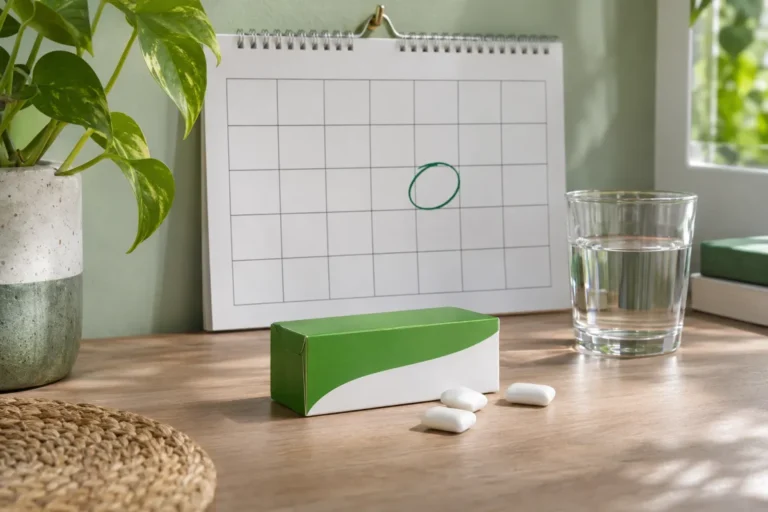
Nicotine free pouches are small oral pouches sold without nicotine, usually flavored or caffeinated, and some Zyn users reach for them hoping to keep the pouch habit while ending the nicotine. They can make a useful step-down prop for the ritual. They are not a proven way to quit, no trial has tested them for that purpose, and some products labeled nicotine-free have turned out to contain other nicotine-like compounds.
What Nicotine Free Pouches Are
A nicotine pouch is a small porous bag that sits between your lip and gum. In a standard nicotine pouch, nicotine is released through the lining of your mouth. A nicotine-free pouch keeps the format and drops the nicotine. What fills the bag varies by brand, and you have to read the label to find out. The most common types are:
- Flavor-only pouches. Plant fibers with flavoring and sweetener, intended as a pure habit substitute.
- Herbal or tea-style pouches. Marketed on botanical ingredients.
- Caffeine pouches. A different category aimed at energy. They are sometimes confused with nicotine-free pouches, and they carry their own cautions (see below).
Zyn is a nicotine product. In June 2026 the FDA issued modified risk orders for 20 Zyn products: ten flavors, each in 3 mg and 6 mg strengths. The agency’s statement on the claim also says “There is no safe tobacco product,” and that for adults who smoke, “fully quitting the use of all forms of tobacco products would most benefit their health” (FDA, June 30, 2026). That page describes switching from cigarettes, not quitting nicotine, and it does not present Zyn as a cessation aid.
That point is easy to lose. If you smoked, switched to Zyn and now want to stop, you are doing a second quit. A nicotine-free pouch is one possible tool for that second quit. Our guide to a Zyn taper plan covers the whole route.
Nicotine Free Pouches vs Zyn vs Nicotine Gum
The options a Zyn user is weighing differ on three things: whether they contain nicotine, who regulates them, and what evidence exists for quitting.
| Option | Nicotine | Status in the US | Evidence for quitting |
|---|---|---|---|
| Nicotine-free pouch | None on the label (verify the label) | Consumer product | No cessation trial found |
| Zyn (3 mg or 6 mg) | Yes | Authorized for sale; modified risk orders compare it with cigarettes | Not an approved quit aid |
| Nicotine gum or lozenge | Yes, dosed for cessation | FDA-approved over the counter for adults | Strong in smokers; thin in pouch users |
| Taper plan with an app | Falls over time | Not applicable | No pouch-specific trial |
Nicotine gum and lozenges are on the FDA’s list of approved over-the-counter cessation products, along with patches. Nicotine pouches are not on it (FDA, “Want to Quit Smoking? FDA-Approved and FDA-Cleared Cessation Products Can Help”). Those approvals rest on trials in people who smoke. People who use pouches were not the study population, so a pharmacist or doctor is the right person to ask how to apply them to your case. If you are choosing between brands, Zyn vs Velo vs On compared explains the nicotine products themselves.
Do They Help You Quit? What the Evidence Shows
Short answer: there is no trial of nicotine-free pouches as a way to stop using nicotine pouches. A Europe PMC search for nicotine-free and caffeine pouches returns lab studies, product analyses and marketing research, and no randomized trial of cessation. A 2026 paper in Tobacco Control even asks, in its title, whether marketing nicotine pouches as smoking cessation aids is illegal.
What exists is indirect.
A small lab study on craving
In a 2024 crossover study, 15 regular cigarette smokers used tobacco-free nicotine pouches with 6, 20 and 30 mg of nicotine, plus nicotine-free pouches and their usual cigarettes as comparators. The authors report that “Use of all products has reduced acute cigarette craving, even the nicotine-free pouch.” They also found that all the pouches caused mouth irritation, and that the 30 mg pouch delivered more nicotine than a cigarette (Frontiers in Pharmacology, 2024).
That is a useful hint that part of what a pouch does is behavioral and sensory. It is not evidence of quitting: 15 people, a single test period, cigarette craving as the outcome, not pouch craving.
What happens to people who use pouches alongside other tobacco
A 2026 Tobacco Control survey analysis of US adults who used tobacco found that among those who combined nicotine pouches with another product in 2023, none had switched to exclusive pouch use by 2024, and nicotine pouch use “was also not associated with increased probabilities of quitting tobacco product use.” That is about nicotine pouches in general, not nicotine-free ones, but it is a reminder that a pouch swap is not the same as quitting.
The honest reading
- A nicotine-free pouch can plausibly cover the oral and hand ritual.
- It will not treat nicotine withdrawal, because it has none.
- Nobody has shown it raises the odds of getting off nicotine.
Caffeine Pouches: The Hidden Stimulant
Some pouches that are sold as nicotine-free contain caffeine, and the FDA’s guidance on caffeine is the best reference point. For most adults, the agency has cited 400 milligrams a day as an amount not generally associated with negative effects. It warns that “Too much caffeine can cause a variety of symptoms,” including a faster heartbeat, heart palpitations, high blood pressure, sleep disruption, anxiety, jitters, upset stomach, nausea and headache. It also notes that “The amount of caffeine in specific products, and container sizes, can vary” (FDA, Spilling the Beans).
Why this matters for someone quitting nicotine:
- Caffeine stacks. A caffeine pouch on top of coffee, tea and energy drinks can push you past 400 mg without noticing.
- Withdrawal and caffeine overlap. Irritability, poor sleep and a racing feeling are common in nicotine withdrawal. Caffeine can make all three feel worse.
- You may swap one dependence for another. A habit of pouch-after-pouch can turn into a caffeine habit.
Read the milligrams on the label and add them to the rest of your day. If the label does not state the caffeine content, that is a reason to pick a different product. Pregnant people, people with heart conditions, and people on medicines that interact with caffeine should talk to a doctor first.
A Step-Down Plan From Zyn to Nicotine-Free
There is no trial of a pouch taper, so the steps below are an example to adapt, not a prescription. The goal is to lower the nicotine exposure while keeping the ritual until you no longer need it.

- Measure first. For three days, log how many pouches you use and when. Many people find they use the most when they are bored, driving, or working.
- Step down the strength. The 20 Zyn products covered by the FDA’s June 2026 orders come in 3 mg and 6 mg, so if you use 6 mg, the next step on the same line is 3 mg. Check your own can, because strengths differ between products and countries. Hold each step until it feels easy, not until a deadline.
- Cut the number of pouches. Remove the least important ones first, such as the one you use out of habit after a meal.
- Swap in a nicotine-free pouch for some of the remaining ones. Use it at the habit moments rather than the craving moments.
- Set a stop date. When you are down to the smallest strength and a few pouches, pick a day and stop. Keep the nicotine-free pouch for the first weeks if it helps, then fade it too.
- Plan for the dip. Cravings tend to come in waves. Have a short list of what you will do for ten minutes when one hits.
If withdrawal is strong, ask a pharmacist or doctor about FDA-approved nicotine replacement or prescription options. Do not guess at doses.
iQuit is free on Google Play and the App Store, and it fits the logging and tracking part of this plan. You can log cravings with triggers and intensity, set up gradual reduction, use the SOS tools (breathing exercises, grounding, distraction tips and craving timers) and see your nicotine-free days and money saved on the dashboard. It is a tracker, not a treatment, and it makes no clinical claims. Our page on an app to track quitting Zyn shows what that looks like in practice.
Safety, Labels and Who Should Avoid Them
The nicotine-free label is only as reliable as the maker behind it.

Check the label
Analysts testing pouches sold in Europe as “NoNIC,” marketed as tobacco- and nicotine-free, found that they contained no nicotine but did contain the synthetic nicotine homolog 6-methyl nicotine, up to 20 mg per pouch. The authors describe it as a “novel molecule for which limited to no clinical effects are known” and note that these products were aimed at a younger audience with youth-appealing packaging and flavors (Drug Testing and Analysis, 2025). That study was about the European market, but the lesson travels: “nicotine-free” on a package does not tell you what is in it.
A short checklist before you buy:
- Is there a full ingredient list, and a named maker with contact details?
- Does it state the caffeine content in milligrams, if any?
- Does it avoid cessation or medical claims it cannot support?
- Does a clear ingredient list, or independent lab testing, rule out nicotine analogs?
Who should be careful or avoid them
- Anyone under 21 or who has never used nicotine. Do not start.
- People who are pregnant or breastfeeding.
- People with heart rhythm problems or high blood pressure, especially with caffeine pouches.
- Anyone who notices mouth sores, gum recession or persistent irritation.
The FDA’s modified risk language for Zyn says the products carry lower risk than cigarettes, but also that “There is no safe tobacco product, and those who do not use tobacco products should not start.” For more on what is known about Zyn itself, see the health risks of Zyn, and if you are also thinking about vapes, the evidence on nicotine-free vapes raises many of the same questions.
Frequently Asked Questions
Can nicotine free pouches help you quit Zyn?
They may help with the habit of having a pouch in your lip, but no trial has tested them for quitting. Zyn itself is not an FDA-approved cessation aid (FDA). Use them as a prop inside a taper plan.
Do nicotine free pouches reduce cravings?
Possibly for a short time. In a 2024 crossover study of 15 smokers, all products including a nicotine-free pouch reduced acute cigarette craving (Frontiers in Pharmacology, 2024). That does not show they help you quit.
Are nicotine free pouches really nicotine-free?
Not always. Analysts found pouches sold in Europe as nicotine-free contained no nicotine but did contain 6-methyl nicotine, up to 20 mg per pouch (Drug Testing and Analysis, 2025). Check labels and makers.
How much caffeine is too much in caffeine pouches?
The FDA has cited 400 milligrams a day as an amount not generally associated with negative effects for most adults. Caffeine content varies by product, so read the label and count your coffee too (FDA).
Is Zyn an FDA-approved way to quit smoking?
No. The FDA authorized Zyn for sale and issued modified risk orders in June 2026 comparing it with cigarettes, but nicotine pouches are not on its list of approved cessation products (FDA).
What is a good way to taper off Zyn?
There is no pouch-specific trial. A common approach is to log use, lower the strength, cut the number of pouches, then set a stop date. Ask a pharmacist about nicotine replacement if withdrawal is strong.
Track Your Step-Down With iQuit
iQuit is free on Google Play and the App Store. Log cravings with triggers and intensity, open the SOS tools when an urge hits, and watch your nicotine-free days and money saved add up.
Download iQuit Free on Google Play
Download on the App Store