
You quit smoking expecting to feel proud, maybe a little rough for a few days, and then better. Instead, three weeks in, food tastes flat, your favorite show is boring, and even good news barely registers. If nothing feels good after quitting smoking, you’re not broken and you didn’t make a mistake — you’re describing a real, documented withdrawal symptom with a name: anhedonia.
Why the World Goes Flat When You Quit
Anhedonia is the clinical term for a reduced ability to feel pleasure from things that normally deliver it — food, music, hobbies, company, achievement. A 2025 analysis of a smoking cessation trial involving 1,084 participants concluded that anhedonia follows the classic inverted-U pattern of a withdrawal symptom, rising after the quit day and then falling back, which supports treating it as a core part of nicotine withdrawal rather than an offshoot of feeling irritable or tired (Journal of Psychopathology and Clinical Science, 2025). It happens because your brain’s reward system spent years calibrated around regular nicotine hits, and removing that input leaves a temporary gap before the system recalibrates on its own.
This is different from missing the ritual of smoking, which is covered separately in why you might still miss smoking months later. Anhedonia isn’t about wanting a cigarette specifically — it’s about everything else losing its color at the same time, which is often more disorienting precisely because it doesn’t feel connected to smoking at all.
This short video from Public Health Scotland’s Quit Your Way service explains the link between smoking, mental health and the low mood many people feel after quitting.
The Dopamine Explanation, in Plain Language
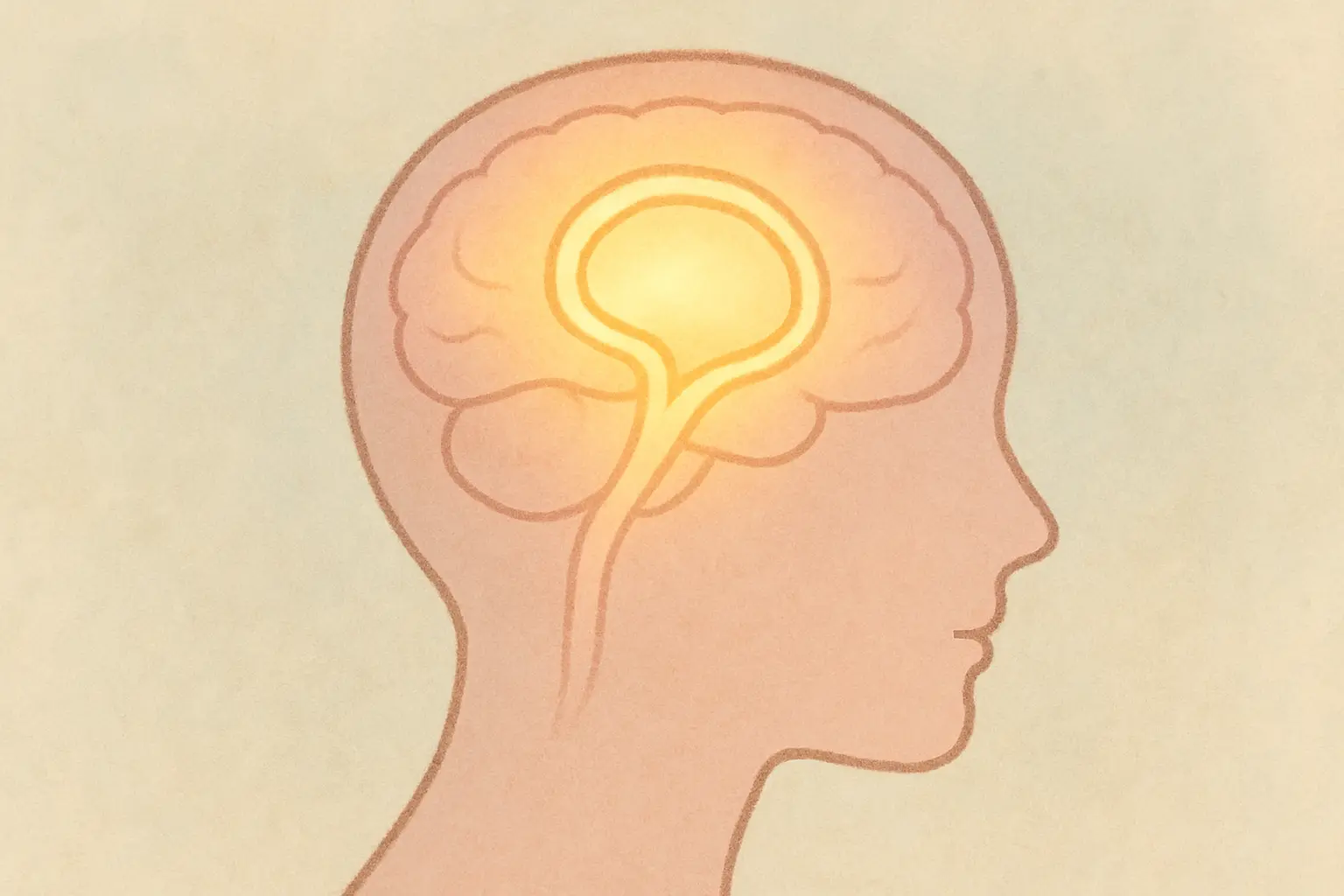
Nicotine reliably triggers dopamine release in the brain’s reward pathway, and years of regular use recalibrate that system to expect it. When nicotine stops, the threshold for feeling reward temporarily rises. In animal models, withdrawal from chronic nicotine measurably raises brain reward thresholds — the amount of stimulation needed before something registers as rewarding at all — and that effect depends on specific nicotinic receptor subunits (European Journal of Pharmacology, 2015). In practice, that means the same activities that used to register as pleasurable now require more input to feel like anything at all.
This mechanism is closely related to the craving loop described in what nicotine does to your brain: the same reward system driving cravings for a cigarette is also, temporarily, driving the sense that nothing else is very rewarding either.
How Long Anhedonia Usually Lasts
Nicotine withdrawal symptoms, anhedonia included, typically begin 4 to 24 hours after your last cigarette, peak around day 3, and taper substantially over the following three to four weeks (Current Topics in Behavioral Neurosciences, 2015). By around a month smoke-free, most people find their capacity for pleasure returning close to baseline, though the exact timeline varies with how heavily and how long you smoked.
| Timeframe | What’s typical |
|---|---|
| Day 1–3 | Flatness builds alongside other withdrawal symptoms, peaks around day 3 |
| Week 1–2 | Physical symptoms (irritability, cravings) start easing; flatness can still be prominent |
| Week 2–4 | Often the hardest stretch for mood specifically, even as other symptoms fade |
| Month 1+ | Reward response typically approaches pre-quit baseline for most quitters |
Anhedonia or Something Else? Sorting the Symptoms
Withdrawal arrives as a bundle, and people often lump every uncomfortable feeling of the first month under “cravings.” Separating them matters, because the responses are different: a craving needs a technique in the moment, while anhedonia needs structure across a week. Use this rough sorting guide when you can’t name what you’re feeling.
| What it feels like | Most likely | What actually helps |
|---|---|---|
| A sharp, specific pull toward a cigarette that rises and falls in minutes | Craving | Delay, urge surfing, NRT, changing the cue |
| Snapping at people, restlessness, trouble concentrating | Irritability and cognitive withdrawal | Short walks, food and hydration, protecting sleep |
| Nothing is enjoyable — not food, not music, not company — but you don’t specifically want a cigarette | Anhedonia | Scheduled pleasant activity, exercise, daylight, social contact |
| Sadness plus hopelessness, guilt, or thoughts that life is not worth it, lasting past a month | Possible depression | Talk to a doctor; do not wait it out alone |
If the sorting exercise leaves you unsure whether an urge is chemical or simply a habit cue firing in a low-mood moment, telling a genuine chemical craving apart from a cued habit urge gives you a quick two-question test for exactly that. Anhedonia tends to make ordinary habit cues feel sharper than usual, so the two get confused often in weeks two and three.
Why It Peaks Around Week 2–4
This is the part that catches people off guard. The most obvious withdrawal symptoms — the cravings, the irritability, the restlessness — usually ease within the first one to two weeks. Reward-system recovery lags behind that timeline, so precisely when you expect to feel noticeably better, the flatness can still be sitting there, unexplained and disheartening.
This mismatch is part of why the three-month quit plateau catches so many people off guard — the early wins fade, the obvious symptoms are gone, and what’s left feels less like progress and more like stalling, even though underneath it, recovery is still happening.
What Genuinely Helps

None of the following are instant fixes, but each has real support for lifting mood and restoring reward sensitivity during withdrawal:
- Exercise — reliably boosts mood and is one of the best-evidenced tools for supporting the reward system during a quit attempt.
- Daylight and time outdoors — supports mood regulation broadly, and pairs well with a walk that also functions as a craving break.
- Protecting sleep — withdrawal already disrupts sleep for many people, and poor sleep compounds low mood on top of it.
- Staying socially connected — isolating during this stretch removes one of the few remaining reliable sources of positive input while your brain’s own reward system is temporarily muted, and a hard quitting stretch is also easier with support, as covered in quitting smoking during grief, stress or a breakup.
Small, deliberately chosen pleasant activities — even ones that don’t feel very rewarding right now — still matter. Behavioral activation (doing the thing before the motivation shows up, rather than waiting to feel like it) is a well-established approach precisely because motivation and pleasure both lag behind action during a low-reward stretch like this one.
A Two-Week Behavioral Activation Plan
Behavioral activation only works if it is scheduled rather than left to how you feel on the day, because “how you feel on the day” is exactly the thing that is temporarily broken. Here is a concrete version you can run through the worst two weeks without needing motivation to start it.
Week one — rebuild the floor. The goal is not enjoyment yet; it is showing up.
- Book one 20-minute walk outdoors at the same time each day, ideally in morning light. Put it in your calendar like an appointment.
- Pick three activities you used to enjoy and schedule one per day. Rate each 0–10 for enjoyment immediately afterward, and write the number down.
- Set a fixed wake time and protect it, even on a bad night. Sleep timing steadies mood faster than sleep length does.
- Arrange one piece of real social contact every second day — a call counts, a message thread does not.
Week two — look for the slope, not the level. Compare this week’s enjoyment ratings with last week’s. Almost nobody jumps from 2 to 8; what recovery actually looks like is a scatter of 2s and 3s becoming a scatter of 3s and 5s.
- Keep the walk and add one session of harder exercise, enough to raise your heart rate for 15 minutes.
- Repeat the activity that scored highest last week, even if it only scored a 4. A 4 is data, and it is the direction the number moves that matters.
- Add one small novel thing — a route you have not walked, a food you have not cooked. Novelty engages the reward system with less baggage than familiar pleasures do.
- Reread your day-one ratings at the end of the week. Recovery is far easier to see in a written record than from inside a flat mood.
If two weeks of this produces no upward slope at all, that is worth taking seriously as a signal rather than a personal failing — see the section on depression below.
What Makes It Worse
A few common responses tend to deepen anhedonia rather than ease it:
- Isolating — withdrawing from people removes a reliable source of reward exactly when your internal supply is running low.
- Alcohol — depresses mood further once the initial effect wears off, and undermines the sleep it also seems to help with short-term.
- “Just one” reasoning — smoking again to “feel normal” resets the whole withdrawal clock rather than fixing anything, and reinforces the belief that only nicotine can restore pleasure.
Boredom in particular deserves attention here, since boredom as a smoking trigger often overlaps directly with anhedonia — an activity that used to be a break from boredom (a cigarette) is gone, and nothing has obviously replaced it yet.
When Flatness Is Depression, Not Withdrawal
Withdrawal-related anhedonia is expected to ease over three to four weeks. If low mood persists well beyond that window, deepens instead of lifting, or comes with hopelessness, major sleep disruption, or a loss of interest in everything rather than just the specific pleasures smoking used to interrupt, it’s worth talking to a doctor. This is especially true if you have a history of depression, since nicotine withdrawal can also unmask or worsen an existing mood disorder rather than simply causing a temporary dip.
None of this is a reason to go back to smoking. In the 2025 trial analysis above, greater postquit anhedonia was associated with modestly lower odds of confirmed abstinence at 4, 12 and 26 weeks after the quit day, even after accounting for other withdrawal symptoms — which is exactly why naming what’s happening, as a real, temporary, treatable symptom, matters more than pushing through silently.
Anhedonia FAQ
Why does nothing feel enjoyable after I quit smoking?
This flat, joyless feeling is called anhedonia, a recognized nicotine withdrawal symptom caused by a temporary drop in reward signaling in the brain. It is a real physiological response, not a sign that quitting was the wrong decision (Journal of Psychopathology and Clinical Science, 2025).
How long does anhedonia last after quitting smoking?
Nicotine withdrawal symptoms, including anhedonia, typically begin 4 to 24 hours after the last cigarette, peak around day 3 and taper substantially over the following three to four weeks. Some flatness can linger longer for people who smoked heavily or for many years, but it does ease (Current Topics in Behavioral Neurosciences, 2015).
Why does anhedonia feel worse around week 2 to 4?
By this point the initial physical withdrawal symptoms like irritability and cravings have often eased, but reward-system recovery lags behind, so the absence of pleasure can feel more noticeable precisely when you expected to feel better.
What actually helps with anhedonia during a quit attempt?
Exercise, natural light exposure, maintaining social contact, and protecting sleep are the interventions with the most consistent evidence for lifting mood during withdrawal. Scheduling pleasant activities in advance, rather than waiting to feel like doing them, is the core of behavioral activation and works well here.
Can anhedonia make relapse more likely?
Yes. In a 2025 analysis of a cessation trial with 1,084 participants, greater postquit anhedonia was associated with modestly lower odds of biochemically confirmed abstinence at 4, 12 and 26 weeks, which is why naming it as a temporary, expected symptom rather than a permanent state matters for staying quit.
How do I tell anhedonia apart from an ordinary craving?
A craving is a sharp, specific pull toward a cigarette that rises and falls within minutes. Anhedonia is broader and flatter: nothing is enjoyable, including things that have nothing to do with smoking, and it persists across whole days rather than arriving in waves.
When does flatness stop being withdrawal and become depression?
If low mood persists well beyond four to six weeks, deepens rather than easing, or comes with hopelessness, sleep disruption, or loss of interest in everything rather than just smoking-linked pleasures, it is worth talking to a doctor rather than assuming it is only nicotine withdrawal.
Watch the Flat Phase Turn Into a Curve, Not a Wall
iQuit’s mood journal tracks how you’re feeling day by day, so the anhedonia stretch becomes a visible, finite curve instead of an open-ended fog. Pair it with daily missions and milestone tracking to give your brain small, structured wins while its own reward system recovers. It’s free on Android, with iOS still to come.