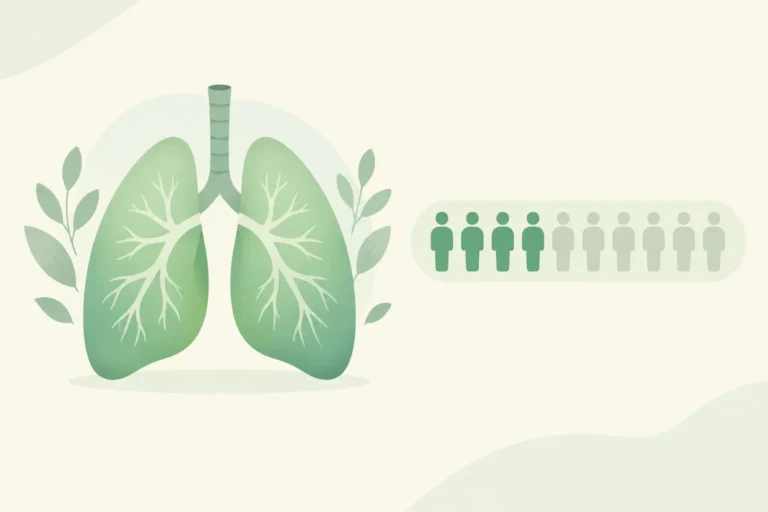
Six months smoke-free, and you catch yourself missing a cigarette the way you’d miss an old friend — not the coughing, not the smell, not the money you burned through, just a specific, wistful ache for something that is gone. Why do I still miss smoking months after quitting, when the physical withdrawal ended weeks ago? The honest answer is that you are not broken, backsliding, or secretly still addicted in some shameful way. You are grieving a relationship, and your brain has quietly filed away the good parts of it while discarding the rest.
It’s Not a Character Flaw — It’s Grief
Clinicians who work with long-term quitters describe this feeling less as addiction and more as loss. Smoking was rarely just nicotine — it was a ten-minute break that was unquestionably yours, a ritual that punctuated stress, a prop in your hands during awkward silences, and for many people, a piece of identity built up over years. When that goes, something real goes with it, even though the thing itself was slowly killing you.
This is why the feeling can persist well past the point where nicotine has left your body. You are not craving a chemical anymore in the way you were in week one. You are missing a relationship — and relationships, even harmful ones, leave a hole shaped exactly like themselves. Naming it that way, instead of as a personal failing, is often the first thing that makes it bearable. If the loss ever tips into thoughts of relapse, the guide to why people relapse and how to break the cycle covers the mechanics of that slide in more detail.
The Brain Science: Why Memory Keeps the Good Parts
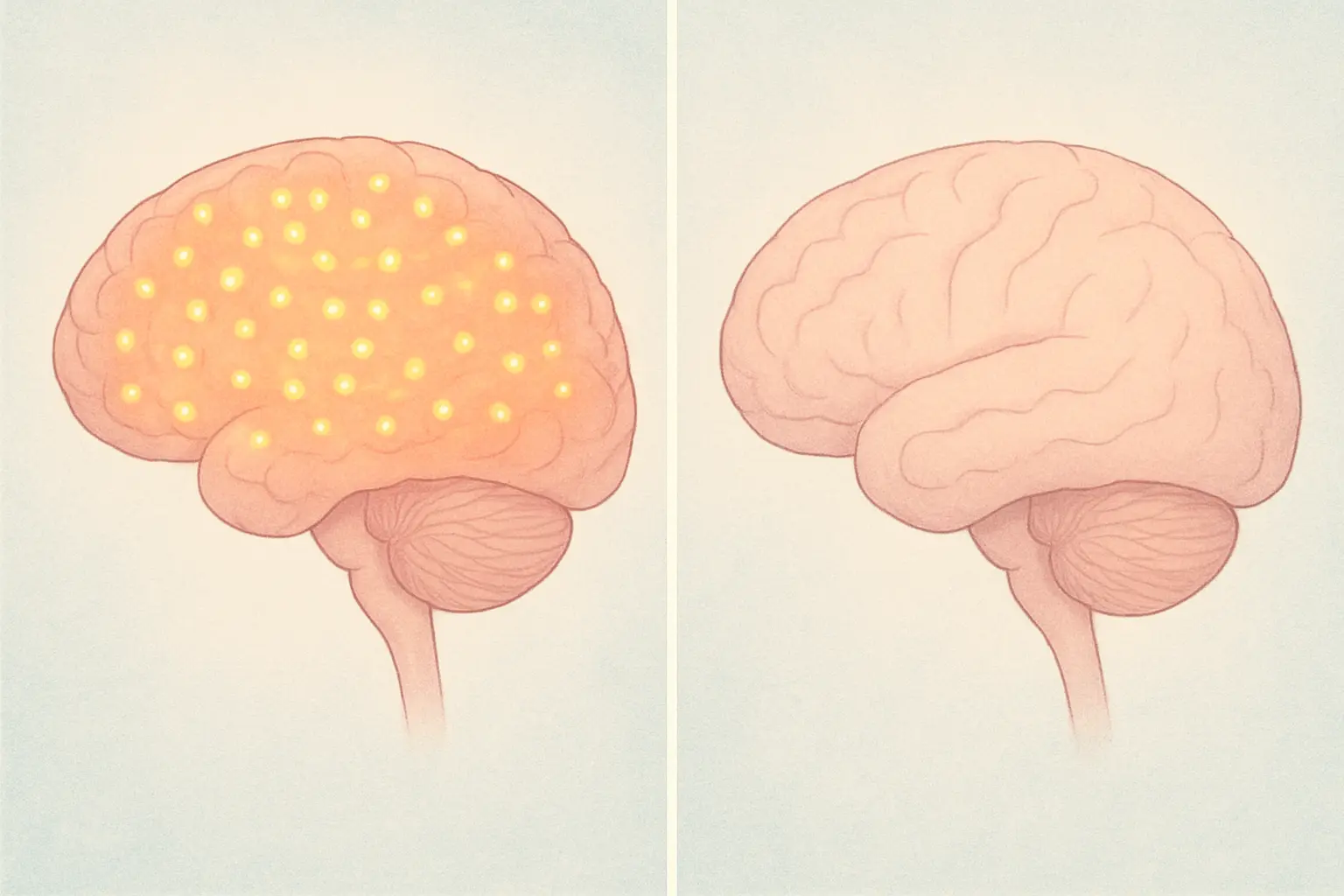
Two separate biological processes explain why the pull can outlast the physical need. The first is receptor recovery. Nicotine floods the brain with extra binding sites for acetylcholine (nicotinic receptors), and brain-imaging research has found these receptors stay elevated for roughly a month of abstinence and don’t normalize to nonsmoker levels until six to twelve weeks — well past the point most people assume withdrawal is “over” (Cosgrove et al., Archives of General Psychiatry, 2009).
The second is memory, and it is the more stubborn one. Every cigarette you ever smoked paired a cue — coffee, a phone call, a stressful email, the drive home — with a hit of dopamine in the brain’s reward pathway. Those cue-reward pairings get consolidated into long-term memory through associative learning, and the research on cue-induced craving shows those associations can be triggered by the same cues years later, long after any physical dependence has resolved. Your brain isn’t malfunctioning when a specific smell or situation produces a sudden pull — it’s doing exactly what conditioned memory is built to do. The dopamine and craving loop explains this reward circuitry in more depth.
Layered on top of both is a cognitive bias called euphoric recall: the tendency for memory to amplify the pleasurable parts of a habit — the relief, the ritual, the social connection — while quietly editing out the coughing, the smell, the money, and the shame. It’s not that you’re lying to yourself. It’s that unpleasant memories fade faster than emotionally rewarding ones, a well-documented pattern in addiction recovery research, and cigarettes were engineered, quite literally, to be emotionally rewarding. Set against that, the physical repair work continues on its own schedule: the CDC’s timeline of the benefits of quitting is worth rereading on the days memory tries to argue the other way.
What “Romanticizing the Cigarette” Looks Like
Romanticizing rarely announces itself as a decision to relapse. It shows up in smaller, sneakier thoughts:
- “I was more relaxed when I smoked” (you were relaxed because the cigarette relieved the withdrawal it had itself created).
- “One wouldn’t hurt now, I’ve proven I can quit” (the proof is the reason not to test it).
- Picturing a specific cigarette in vivid, sensory detail — the first drag on a patio, a cigarette after a meal — while the surrounding memories (the smell on your clothes, the 6 a.m. cough) stay blank.
- Feeling nostalgic for the identity of “someone who smokes” rather than the cigarette itself — the rebel, the person who steps outside, the one with a five-minute excuse to leave a bad conversation.
Catching the thought and finishing it honestly — “I was relaxed because I’d just fed a withdrawal symptom” — is usually enough to deflate it. Writing the balanced version down, even briefly, interrupts the one-sided replay before it turns into a plan.
The High-Risk Moments That Bring It Back
Missing smoking rarely stays at a constant, low simmer. It spikes around specific life events, and research on stress and cue-induced craving shows these spikes are predictable enough to prepare for.
| Trigger | Why it hits so hard | What helps |
|---|---|---|
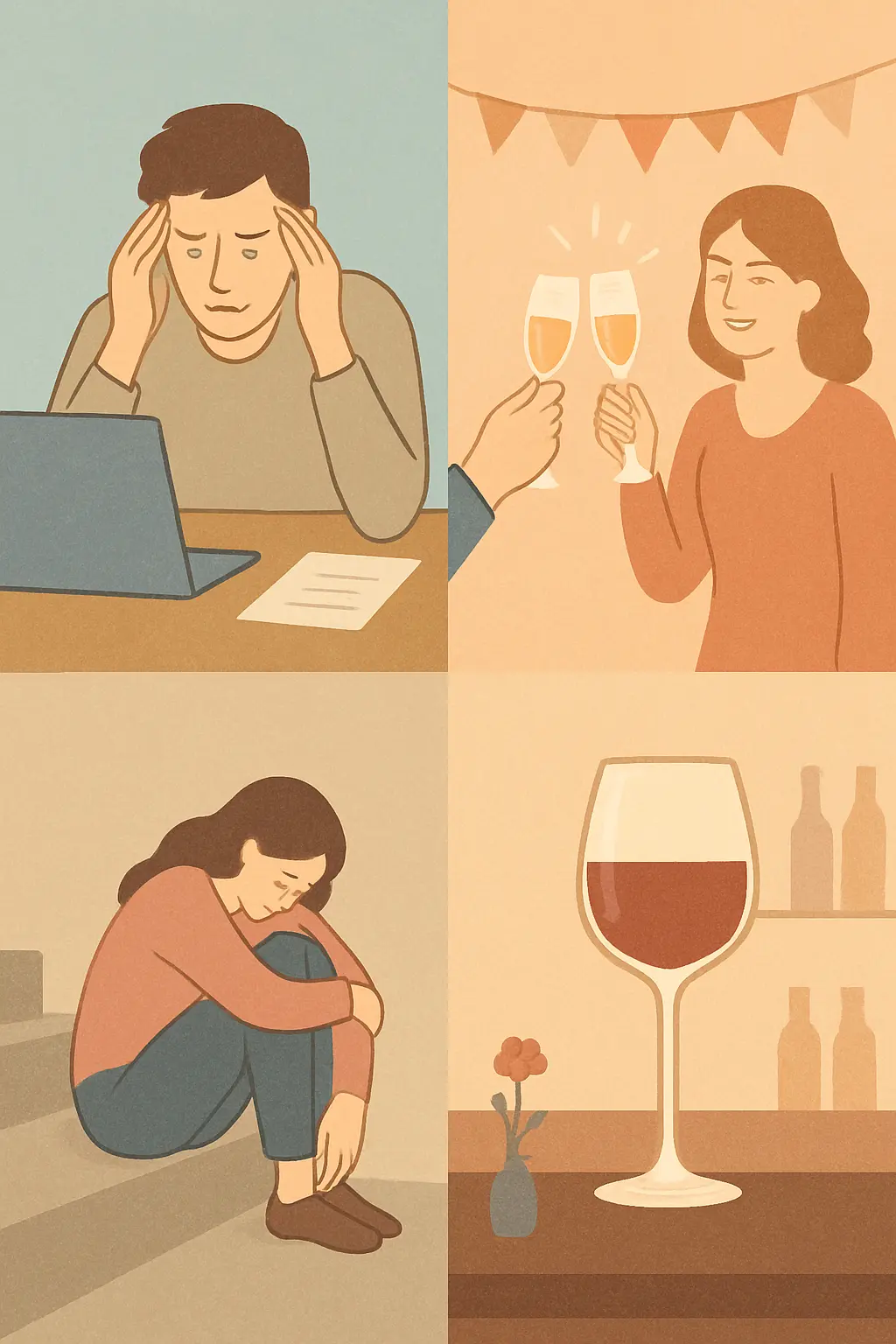
| Acute stress (deadline, argument, bad news) | Stress activates the same neural circuits as smoking cues, and laboratory studies show it measurably amplifies cue-reactivity | A pre-decided grounding technique, not a decision made in the moment |
| Grief or loss | Smoking was often a coping ritual during past hard moments; the brain reaches for the old tool under new pain | Naming the urge as grief for smoking layered on top of the real grief, not a signal to smoke |
| Celebration or a milestone | Cigarettes were paired with reward and relief, not just stress — good news is a cue too | Planning an alternative “treat” ritual in advance for wins |
| Alcohol | Alcohol lowers inhibition and is one of the most consistently reported relapse triggers in long-abstinent smokers | Deciding your drink limit and smoke-free boundary before the first drink, not during it |
None of these moments mean the process is failing. They mean you’ve reached the part of quitting where the test isn’t willpower on an ordinary Tuesday — it’s whether you have a plan for the day everything goes sideways.
Watch: How Nicotine Rewires the Brain
For a deeper look at how nicotine hijacks the brain’s dopamine and reward pathways — and why that makes cravings outlast physical withdrawal — this explainer is a useful primer before the coping strategies below.
How Missing It Changes Shape: Month 1 to Year 2
The feeling doesn’t stay the same intensity or the same shape. It evolves, and knowing what’s normal at each stage can stop a wave of nostalgia from feeling like proof something has gone wrong.
| Stage | What it usually feels like |
|---|---|
| Weeks 1–4 | Frequent, sharp, physically uncomfortable urges tied to nicotine withdrawal and receptor changes |
| Months 2–3 | Physical urges fade; cue-triggered cravings (coffee, driving, a specific friend) become the dominant pattern |
| Months 4–6 | Urges are shorter and less frequent, but novelty has worn off and the effort of staying vigilant can itself feel tiring — a documented pattern called cessation fatigue |
| Months 6–12 | Occasional wistful nostalgia around specific triggers (stress, alcohol, a smoking friend); relapse risk from complacency rather than withdrawal |
| Year 1–2 | Rare, brief, low-intensity pulls, usually during major life stress; the identity shift to “non-smoker” is largely complete |
Follow-up studies of people who stay quit for a year or more consistently find that an occasional desire for a cigarette is still reported at that stage — it’s the norm, not a red flag, and it tends to keep shrinking the longer you stay quit.
What to Do Instead of White-Knuckling It
Gritting your teeth through the feeling works for a few minutes, not for months. What holds up better:
- Reconnect with your own reasons. Research on autonomous motivation in quitting consistently finds that people who quit for reasons that are personally meaningful to them — not because a doctor told them to — sustain abstinence longer. Revisit your original “why,” in your own words, not a generic health warning.
- Make an if-then plan before the moment arrives. “If I’m at a party and offered a cigarette, then I’ll hold a drink in my hand and say I’m taking a break” removes the need to improvise willpower under pressure.
- Let the craving pass instead of fighting it. Craving-surfing techniques treat the urge as a wave that peaks and recedes on its own, usually within minutes, rather than a fire that has to be put out immediately.
- Use a substitute ritual, not a substitute vice. If it’s the ten-minute break you miss, take the ten-minute break — a walk, tea, a call to a friend — without the cigarette attached to it.
- Get free expert backup when you want it. Long-running national services such as the NHS stop-smoking guidance and local services exist for exactly the stretch where friends have stopped asking how it’s going.
- Track the pattern. A craving log that notes the time, place, and trigger turns a vague “I keep missing it” into a specific, solvable pattern. iQuit’s craving log and mood journal do this automatically, and its predictive craving forecasts learn your risky hours and nudge you with a coping tool minutes before the urge typically peaks — useful precisely because these urges are so predictable by month three.
When a moment does slip — a single cigarette at a wedding, a puff at a bar — it’s worth treating it as data rather than a verdict on your willpower. iQuit’s slip-recovery flow is built around exactly that idea: a slip resets the day, not the whole quit, and its streak shields protect the progress you’ve already made from one hard night undoing months of work.
Missing It vs. Genuine Relapse Risk
Most wistful nostalgia is harmless background noise. It’s worth paying closer attention when missing smoking starts to come with active bargaining (“just one, just this once”), secrecy about the thoughts you’re having, or a string of high-risk situations stacking up without a plan. At that point, the move isn’t to fight it alone — it’s to lean on structure: revisit a full relapse-prevention guide, use the craving toolkit below, or reach out to a support community. If you’re also noticing smoking dreams during this stretch, that’s a separate and equally normal phenomenon — see why you dream about smoking after quitting for what that means.
It’s also worth checking your progress against where most people are at this stage. Missing smoking at the three-month plateau is one of the most common times for motivation to dip, precisely because the physical crisis has passed and the psychological work is what’s left. And if you’re much earlier in the process and this article found you too soon, the hardest single day for most quitters is covered in why day 3 is the hardest day of quitting.
The full craving toolkit is worth bookmarking for exactly these moments — it collects the SOS techniques (box breathing, grounding, urge surfing) in one place so you’re not searching for them mid-craving. It also helps to keep the scale of what you’ve already stepped away from in view: the WHO’s tobacco fact sheet is a blunt but useful counterweight to a memory that only keeps the good parts.
Frequently Asked Questions
Is it normal to still miss smoking after 6 months or a year?
Yes. Follow-up research on people who stay abstinent for a year or more finds that an occasional desire for a cigarette is still commonly reported at that stage, usually tied to specific cues like stress or alcohol rather than constant physical need.
Why do I only remember the good parts of smoking?
This is called euphoric recall, a well-documented bias in addiction recovery where the brain amplifies pleasurable memories of a habit while minimizing the negative ones, making the past feel more appealing than it actually was.
How long do nicotine cravings last after quitting?
Acute physical withdrawal typically peaks in the first week and eases within two to four weeks. Nicotinic receptors in the brain take longer, usually six to twelve weeks, to normalize to nonsmoker levels, and cue-triggered psychological cravings can recur occasionally for months or years (Cosgrove et al., Archives of General Psychiatry, 2009).
Does missing a cigarette mean I’m about to relapse?
No. A passing wave of nostalgia is common and usually harmless. It becomes a warning sign only when it’s paired with active bargaining, secrecy, or a stack of high-risk situations without a coping plan — that combination is worth addressing directly.
Why is month 3 or 4 harder than the first two weeks?
By this point the acute physical crisis has passed, external encouragement often fades, and the ongoing mental effort of staying vigilant — sometimes called cessation fatigue — can wear down motivation even without strong withdrawal symptoms.
What triggers cravings months after quitting?
The most commonly reported triggers in long-abstinent smokers are stress, alcohol, seeing someone else smoke, and being in a place previously associated with smoking — all classic conditioned cues rather than physical need.
Can I ever stop missing smoking completely?
For most people the feeling shrinks in frequency and intensity for years rather than disappearing on a fixed date. Occasional, brief nostalgia even after a decade smoke-free is common and does not indicate ongoing addiction.
Is quitting harder for people who smoked for many years?
Longer smoking histories can mean deeper identity attachment and more cue-reward pairings built up over time, which can make the psychological missing-it phase more pronounced — but receptor recovery and quit success are not fixed by smoking history alone, and the WHO notes that quitting brings health benefits at any age.
Missing It Doesn’t Mean You’re Failing
iQuit tracks your patterns, predicts your riskiest hours before they hit, and gives you streak shields and slip recovery so one hard moment never erases months of progress.