Australia gives quitters more free support than most countries — a free national counselling line, subsidized medicines for some options, and a genuinely serious approach to vaping regulation. A quit smoking app Australia readers actually need pairs with that free government support rather than replacing it, tracking your own numbers in AUD alongside the calls and prescriptions. This guide covers what’s free, what a Quitline call involves, and how to set up tracking on day one.
What Australia Gives You Free
Every Australian state and territory has access to Quitline at no cost, described as “confidential and free support” with counselors providing personalized quit plans. Nicotine replacement therapy (patches, gum, lozenges, mouth sprays, inhalers) is available over the counter at any pharmacy without a prescription, and prescription medicines exist for those who need them. None of this requires signing up for a paid program first — the free national layer is the starting point, not a fallback after paid options fail.
What makes the Australian setup distinctive compared with many other countries is that the free layer and the paid layer aren’t really competing — Quitline, OTC NRT, and a free tracking app all work in parallel rather than one replacing the need for another. A reader weighing a paid subscription app or an expensive vape kit is often better served checking what the free national services cover first, since the gap between “free” and “paid” in Australia’s cessation landscape is narrower than the marketing for many commercial products suggests.
Quitline and What a Call Involves
Quitline (13 7848, or the Aboriginal Quitline on the same number) connects you with a trained quit specialist who provides “immediate support, personalised quit plans, and answer[s] all your questions,” according to Quit.org.au. The service also points callers toward the My QuitBuddy app, and offers specialized support lines for First Nations peoples and LGBTIQA+ communities. A first call typically covers your smoking history, triggers, and what kind of support (NRT, prescription medicine, or neither) might suit you — it’s a conversation, not a lecture, and you can call more than once as your quit progresses.
One thing worth knowing before the first call: you don’t need a firm quit date to ring Quitline. Counsellors work with people who are still deciding whether to quit, not only those who’ve already committed, and a first conversation can simply be about weighing options. Follow-up calls are also available — the service isn’t structured as a single intake conversation followed by silence, and returning callers can adjust their plan based on what did or didn’t work in the weeks since the last call.
NRT in Australia: What Is Subsidized
NRT is available over the counter at pharmacies without a prescription — but according to healthdirect.gov.au, nicotine patches specifically are “also available on the Pharmaceutical Benefits Scheme (PBS) with a doctor’s prescription,” meaning a prescription route can reduce the cost of patches for eligible patients, even though OTC purchase remains the simpler default. Two prescription-only medicines exist beyond NRT: varenicline (a first-line oral tablet treatment, taken for about 12 weeks) and bupropion (an antidepressant used to reduce cravings, taken for at least 7 weeks) — both restricted to adults 18+ and “not usually taken at the same time” as each other. Ask your GP or pharmacist which route (OTC NRT, PBS-subsidized patches, or a prescription medicine) fits your situation; this is a clinical decision, not one this guide can make for you.
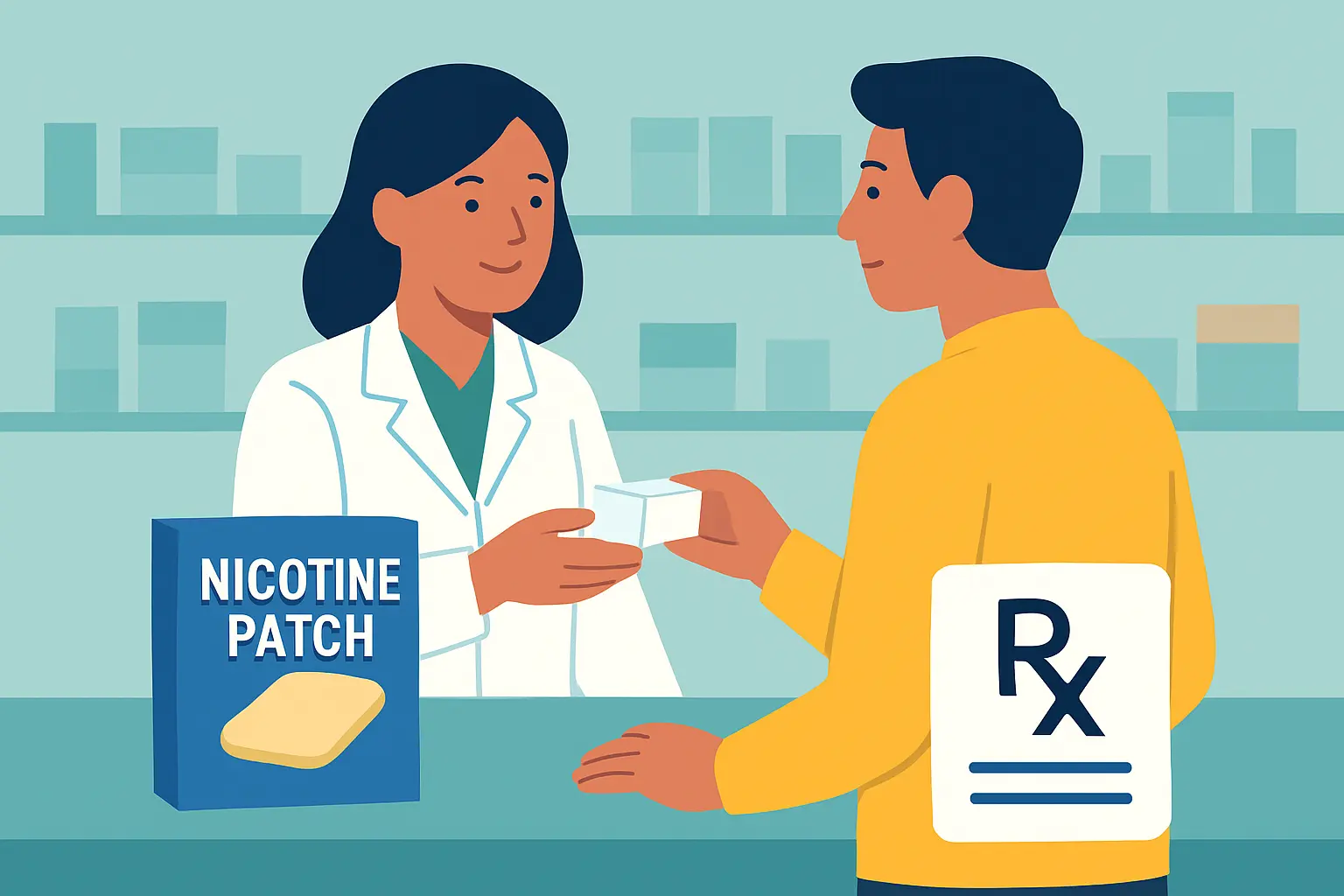
Whether the PBS route is worth pursuing depends mostly on how many weeks of patches you expect to need and your own eligibility for PBS subsidy generally (which varies by concession status and other factors a pharmacist can check quickly). For a short course, the OTC price difference may be small enough that the extra step of getting a prescription isn’t worth the delay; for a longer course, or if you’re already seeing a GP for another reason, asking about the PBS listing while you’re there costs nothing to check.
Vaping Rules in 2026 and What Changed
Australia’s vaping rules are set by the Therapeutic Goods Administration (TGA) and have shifted more than once in recent years, so treat any specific purchase rule as something to verify rather than assume. What a government health page confirms directly: healthdirect.gov.au states plainly that “the safety of vapes for anyone’s use has not been assessed by the Therapeutic Goods Administration (TGA)” and that vapes “are not first-line treatments to help you to quit smoking.” Beyond that, the exact rule for buying a vape — whether a prescription is required, and at what nicotine strength — is a TGA setting that has changed more than once and varies by state and territory; check the TGA’s current vaping guidance directly rather than relying on a figure here that could be out of date by the time you read it.
Because vaping policy in Australia is centrally regulated and reassessed periodically, a rule that applied last year — or that applies where you’re traveling from — may not apply now. A vape bought overseas or from a non-pharmacy source may not meet Australia’s current product standards even if it was legal where you bought it, so a reader relocating to Australia or returning from travel should check current import and possession rules directly with the TGA rather than assuming an existing device is compliant.
Using an App Alongside Quitline
Quitline gives you a person; an app gives you the daily structure between calls. iQuit‘s craving logging, SOS breathing exercises, and daily missions cover the moment-to-moment part of quitting that a monthly or occasional Quitline call can’t be there for in real time. Neither replaces the other — Quitline’s counselor can adjust your plan based on how a week actually went, using the same numbers (cravings logged, slips, streaks) the app has been tracking. For a fuller comparison of using an app together with a formal stop-smoking service, see using a quit app with your stop smoking service.
Tracking Spend in AUD
Cigarette prices in Australia are among the highest in the world due to tobacco excise, with 2026 pricing coverage putting a standard 20-pack somewhere in the AUD $40–$50 range depending on brand and state — though this figure moves with each excise indexation and varies enough by brand that your own receipt is more reliable than any national average. Rather than rely on a single figure, enter your own actual pack price into a tracker so the money-saved number reflects what you’re really paying, not a generic AUD estimate that could be off by $10 or more per pack. Here’s Quitline explaining what a call actually involves, direct from the Australian Department of Health:
What to Set Up on Day One
Three things on your first day: call Quitline (13 7848) to talk through a plan even if you’re not ready to set a firm date yet; set your currency to AUD and enter your real per-pack (or per-vape) price in whatever app you’re using, rather than leaving a default figure in place; and decide whether NRT, a PBS-subsidized route, or a prescription medicine fits your situation by asking a pharmacist or GP rather than guessing. None of these require money up front, and doing all three on day one means your tracking, your medical support, and your Quitline plan are working from the same starting point rather than drifting apart over the following weeks.
It’s worth resisting the urge to set up everything perfectly before you start. A rough AUD figure entered today and corrected next week once you’ve checked a receipt is more useful than delaying tracking altogether while you look for an exact number. The same goes for Quitline — calling before you’ve fully decided on a quit date is normal, not premature, and a counselor can help you work out the date itself rather than requiring you to arrive with one already chosen.
For device-specific app comparisons, see the best quit smoking app for Android and the best quit smoking app for iPhone, and for a general walkthrough of setting up any quit app, how to use a quit smoking app step by step covers the basics. If prescription vaping as a switch from cigarettes is something you’re weighing against NRT, prescription vape versus NRT in Australia compares the two directly, and for the national data behind why AU is such a high-priority quit market, smoking statistics Australia 2026 has the current rates and trends.
Frequently Asked Questions
Is Quitline free in Australia?
Yes. Quitline (13 7848) is described by Quit.org.au as “confidential and free support,” available across all Australian states and territories, with trained counselors providing personalized quit plans and answering questions about NRT and other options.
Is NRT subsidized in Australia?
NRT is available over the counter at pharmacies without a prescription. Nicotine patches specifically are also available on the PBS with a doctor’s prescription, which can reduce their cost for eligible patients. Prescription medicines varenicline and bupropion are separate, prescription-only options.
Do I need a prescription to buy a vape in Australia in 2026?
This guide won’t state a specific threshold, because Australia’s exact vape-purchase rule is a TGA setting that has changed more than once and varies by state and territory. What healthdirect.gov.au confirms directly is that the TGA has not assessed the safety of vapes for any use and that vapes are not a first-line quit-smoking treatment. Check the TGA’s current vaping guidance before you buy.
How much does a pack of cigarettes cost in Australia?
2026 pricing coverage puts a standard 20-pack somewhere in the AUD $40-$50 range depending on brand and state, among the highest cigarette prices in the world due to tobacco excise. Prices vary enough by brand that checking your own receipt is more accurate than any single national figure.
Can I use an app together with Quitline?
Yes, and they cover different gaps. Quitline gives you a counselor and a plan you revisit periodically; an app like iQuit gives you daily craving logging, SOS tools and tracking between calls. Using both means your counselor can see the same data (cravings, slips, streaks) the app has been recording.
Is iQuit available in Australia?
Yes — iQuit is free on both Google Play and the App Store in Australia, and its money-saved dashboard can be set to AUD so your tracked savings reflect your own real pack or vape price rather than a US or generic default.
Track Your Quit in AUD Alongside Quitline
iQuit’s free dashboard tracks money saved in your own currency, pairs with craving support and milestones, and works alongside Quitline — free on Google Play and the App Store.
Download iQuit Free on Google Play
Download on the App Store