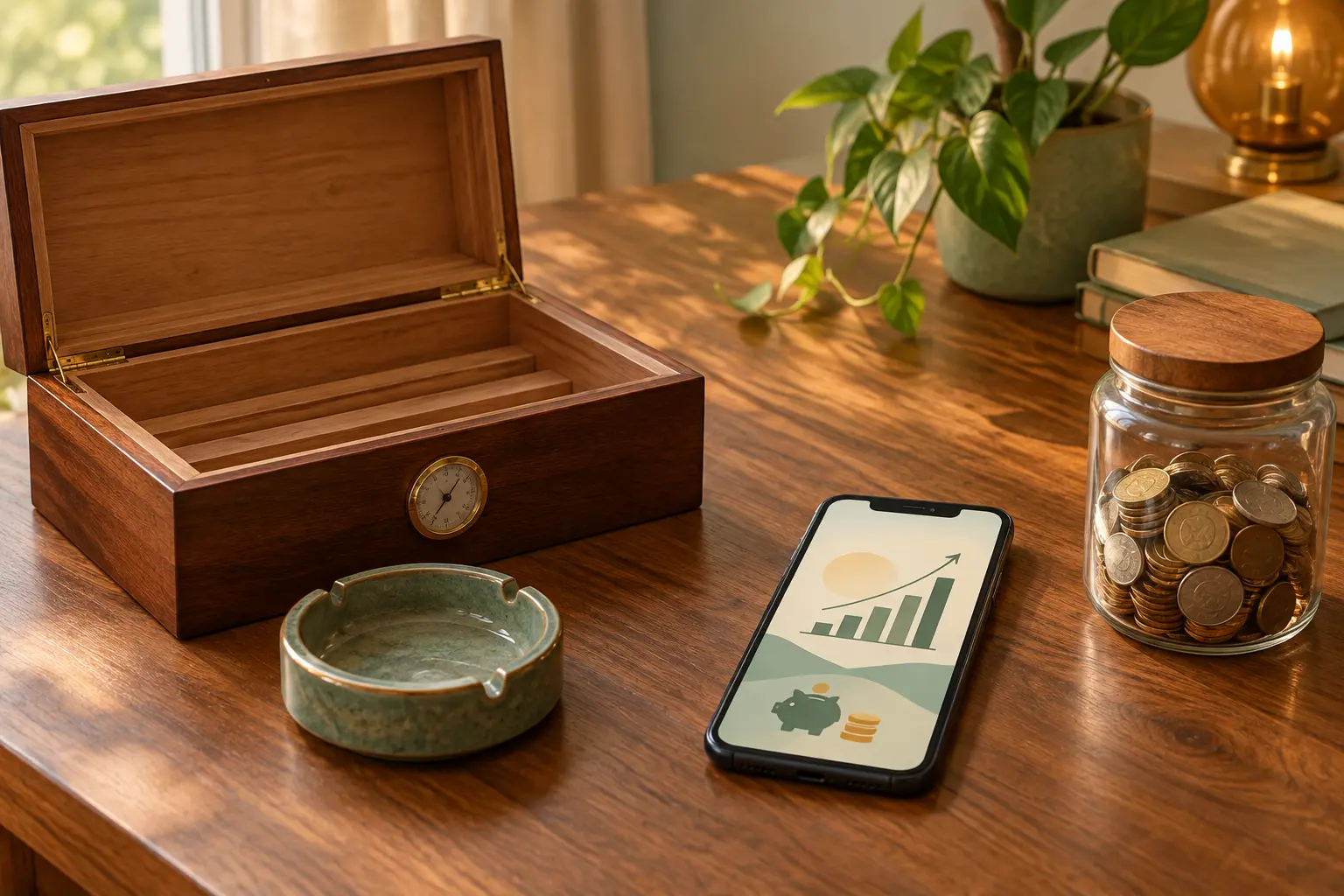
An app to quit cigars is usually a general quit app that you pair with your own notes on price, count and rituals. This guide explains why cigars need a different plan, how to set up tracking, how to taper, and how to count the money you save, using guidance from the NCI, FDA, NHS and Smokefree.gov.
The Short Answer
Most quit apps assume a pack-a-day cigarette habit. If you smoke cigars or cigarillos, you can still use a general app, but you need to plan around your own product: your own price per cigar, your own count per day or week, and your own smoking rituals. iQuit does not have a cigar-specific mode, and you should check any app’s own description before assuming it does.
The National Cancer Institute cigar fact sheet (last reviewed in 2010) says “There is no safe level of tobacco use,” and the FDA page on cigars, cigarillos and little filtered cigars says “Cigars are not a safe alternative to cigarettes.” For a step-by-step plan that does not depend on an app, see our guide on how to quit cigars.
Why Cigar Smokers Need a Different Plan
Cigar smoking differs from cigarette smoking in ways that matter for quitting. The NCI fact sheet notes that “Unlike nearly all cigarette smokers, most cigar smokers do not inhale,” and that although cigar smokers have lower rates of lung cancer, coronary heart disease and lung disease than cigarette smokers, they “have higher rates of these diseases than those who do not smoke cigars.” If you are asking are cigars safer, the short answer is that they are not safe.
Nicotine is the second reason. The same fact sheet says “Even if the smoke is not inhaled, high levels of nicotine (the chemical that causes addiction) can still be absorbed into the body,” through the lining of the mouth. It adds that “A single cigar can potentially provide as much nicotine as a pack of cigarettes.”
The FDA page adds that “Large cigars can deliver as much as 10 times the nicotine, two times the tar, and more than five times the carbon monoxide of a filtered cigarette.” That is why a cigar habit can be harder to leave than the count suggests.
Sizes and smoking times
| Product | Tobacco | Time to smoke |
|---|---|---|
| Large cigar | “between 5 and 20 grams of tobacco” | “between 1 and 2 hours” |
| Cigarillo | “about 3 grams of tobacco” | Not stated on the page |
| Little cigar | “about 1 gram of tobacco” | Not stated on the page |
The page also says “Some premium cigars contain the tobacco equivalent of an entire pack of cigarettes.” If Black and Milds are your product, our comparison of Black and Milds vs cigarettes covers them.
What an App to Quit Cigars Needs to Do
Because a cigar habit rarely fits a cigarette-style pack counter, treat the choice as a short checklist. A good app to quit cigars should let you:
- Handle your real price. A cigar can cost anything from a dollar to many dollars, so a fixed “pack price” field is no use. If an app cannot take your real numbers, keep them in your own notes.
- Log cravings with triggers. Cigar smokers often smoke at set moments: after dinner, on the porch, at a lounge. A log shows which ones matter.
- Support gradual reduction as well as stopping at once. Many people taper cigars because the habit is weekly, not hourly.
- Stay free to start. You should not have to pay to find out whether the app suits you.
The Smokefree.gov quit plan builder is built around cigarettes: it says “Enter how many cigarettes you smoke and how much a pack of cigarettes costs.” That is a reminder to translate its steps rather than copy them. If you smoke roll-ups instead, see our page on a quit app for roll-ups, and for a wider comparison of general apps, the best quit smoking apps ranked.
Setting Up Tracking in a General App
A general app works best when you know three numbers first. Work them out before you open it.
- Cigars per week. Count honestly for two weeks. Many people find the real number is higher than their guess.
- Average price per cigar. Include the occasional premium one in the average.
- Your usual moments. Write down when and where you smoke: after meals, with a drink, on weekends.
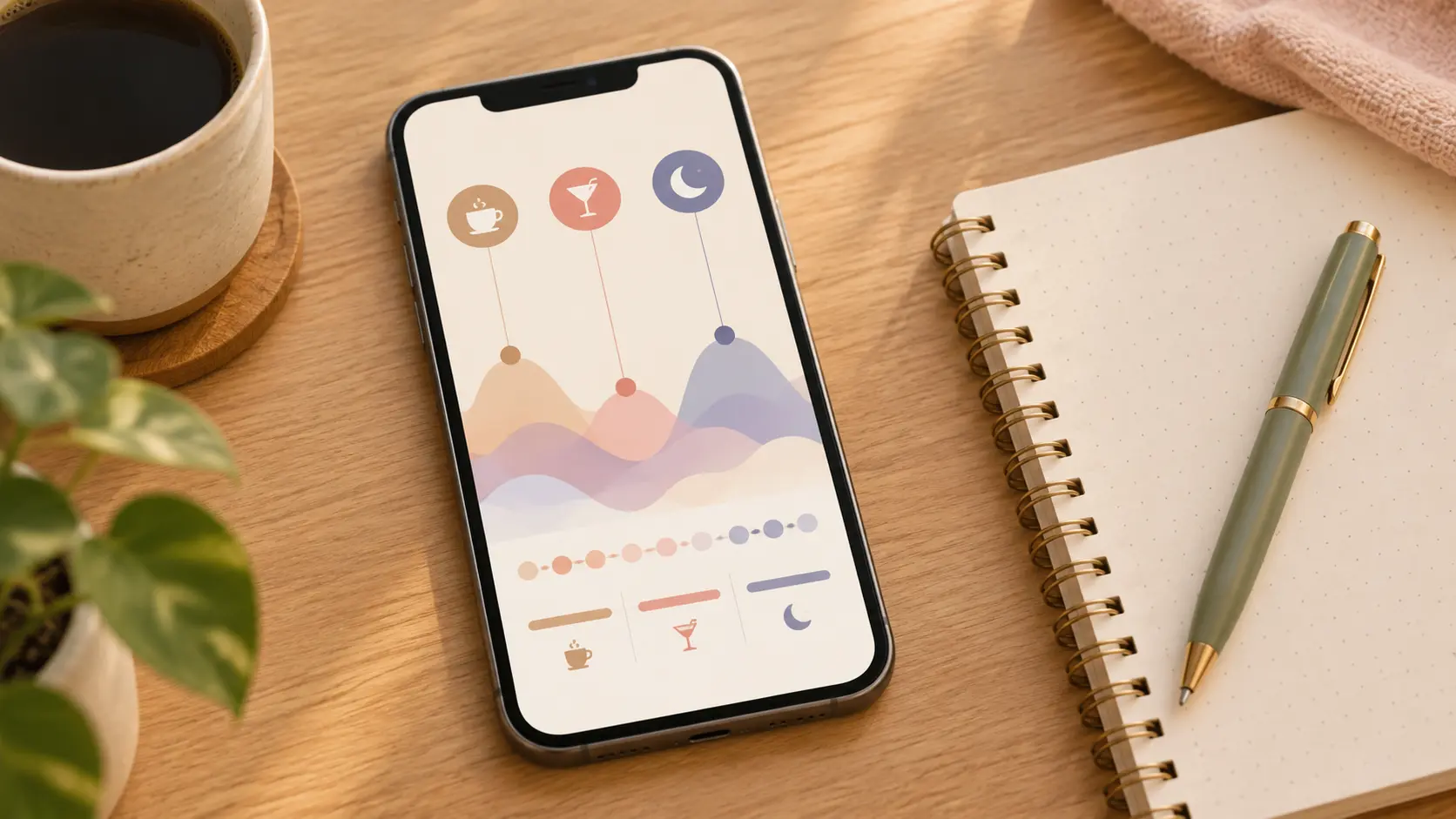
In iQuit you can log each craving with its trigger and intensity. Its dashboard is built around cigarettes, showing days smoke-free, cigarettes avoided and money saved, and there is no cigar mode. So keep your cigar count and per-cigar price in your own notes, and use the app for the craving log, the day count and the support tools.
Tapering Cigars Step by Step
The NHS Better Health page notes that “Many people try to quit smoking cold turkey using only willpower, but nicotine addiction can make it tough.” If a clean stop feels like too much, a planned taper is a reasonable alternative. This is our practical suggestion, not a medical protocol, and it does not replace advice from your doctor or pharmacist.
- Week 1: keep your usual count and log every cigar with the time and trigger. No changes yet.
- Week 2: drop your least important cigar of the week, the one you barely taste.
- Week 3: drop another and keep logging the trigger for each one that remains.
- Week 4 onward: keep reducing toward a stop date you choose.
The NCI says “For help with quitting cigar smoking, ask your doctor or pharmacist about NRT, as well as about individual or group counseling, telephone quitlines, or other methods.” It also admits “Limited research has been completed to determine the usefulness of NRT for people who smoke cigars,” so a clinician is the right person to ask.
Cravings and Rituals
For many cigar smokers the ritual is as strong as the nicotine: the cutting, the lighting, the slow hour on the porch. Smokefree.gov’s advice is to “Think about the activities that make you want to smoke and make a plan to change them.” One of its examples is “taking a walk around the block instead of a smoking break.”
- Replace the hour with something that also fills an hour: a walk, a podcast, a project.
- Keep your hands busy where you used to hold the cigar.
- Change the place. Sit somewhere else with your drink.
- Tell the people you smoke with. If they do not want to quit, Smokefree.gov suggests asking them to respect your decision and not smoke around you.
The same Smokefree.gov page says “Rewarding yourself by doing something positive or enjoyable can help you cope with tough times or setbacks.” A good dinner out funded by your cigar money counts.

Where Cigar Smokers Slip, and How to Prepare
Cigars tend to be tied to occasions: a celebration, a night out, a round of golf, a lounge with friends. The Smokefree.gov quit plan builder describes triggers as “the feelings and situations that may give you the urge to smoke” and says “Planning ahead for these difficult situations can help you stay on track.”
Before your first occasion without a cigar, decide the plan in advance.
- Know the date. Check your calendar for the next event where cigars will be offered.
- Prepare a line. “I’m not smoking these days” is enough. You do not owe a longer explanation.
- Bring a swap. Hold a drink, chew gum, or step away when the cigars come out.
- Ask for company. Smokefree.gov suggests you “Consider talking to your friends or family who smoke to see if they want to quit with you.”
If you do have a cigar, log it as a slip and look at the trigger. One slip tells you what to plan for next time; it is not proof that the plan failed.
Counting the Money You Save
Cigars are often the expensive end of tobacco, so the savings can be large. Here is an example with made-up round numbers that you should replace with your own: three cigars a week at $6 each is $18 a week, which is $936 over 52 weeks. Two a day at the same price would be $12 a day, or $4,380 a year. This is our arithmetic, not a statistic.
Put the monthly number somewhere visible. Our guide on what to put in a quit kit has ideas for keeping the reminder in front of you. iQuit’s money-saved view is multi-currency, which helps if you buy in a currency other than dollars, but remember it counts in cigarettes, so your own cigar figure is the one to trust.

Where iQuit Fits
iQuit is free on Google Play and the App Store. For cigar smokers the useful free parts are: a craving log with triggers and intensity, SOS craving support with breathing exercises, grounding and distraction tips, daily missions, a dashboard of days smoke-free and money saved, and support for both cold turkey and gradual reduction.
It does not have a cigar mode or cigar counter, and it does not treat nicotine dependence. Use it as a support tool next to the plan above.
Frequently Asked Questions
Is there a quit smoking app made for cigar smokers?
Check each app’s own description, because many are built around cigarettes. A general app can still help with craving logs and support tools if you keep your own record of cigar price and count. iQuit is free on Google Play and the App Store but has no cigar-specific mode.
Are cigars as addictive as cigarettes?
The National Cancer Institute says even if the smoke is not inhaled, nicotine can still be absorbed through the lining of the mouth, and a single cigar can potentially provide as much nicotine as a pack of cigarettes.
Are cigars safer than cigarettes?
No. The FDA says cigars are not a safe alternative to cigarettes, and the National Cancer Institute says there is no safe level of tobacco use. The NCI says cigar smokers have lower rates of lung cancer, coronary heart disease and lung disease than cigarette smokers, but higher rates than people who do not smoke cigars.
Does nicotine replacement help cigar smokers quit?
The National Cancer Institute says limited research has been done on NRT for cigar smokers. It advises asking your doctor or pharmacist about NRT, counseling, telephone quitlines or other methods. Do not guess at doses.
Should I taper cigars or quit cold turkey?
Both are used. NHS Better Health notes many people try cold turkey using only willpower, but nicotine addiction can make it tough. A taper can suit a weekly habit. Pick the one you can stick to and ask a clinician for help.
How do I track money saved when I smoke cigars?
Work out cigars per week and your average price per cigar, multiply them, then multiply by 52 for a yearly figure. Keep that number in your own notes, since many quit apps, iQuit included, count in cigarettes rather than cigars.
What helps with the cigar ritual?
Smokefree.gov suggests making a plan to change the activities that make you want to smoke, such as taking a walk around the block instead of a smoking break, and rewarding yourself with something positive or enjoyable.
Try a Free Quit App Alongside Your Plan
iQuit is free on Google Play and the App Store. Log cravings with triggers, use SOS craving support when the ritual calls, and watch your smoke-free days add up.
Download iQuit Free on Google Play
Download on the App Store