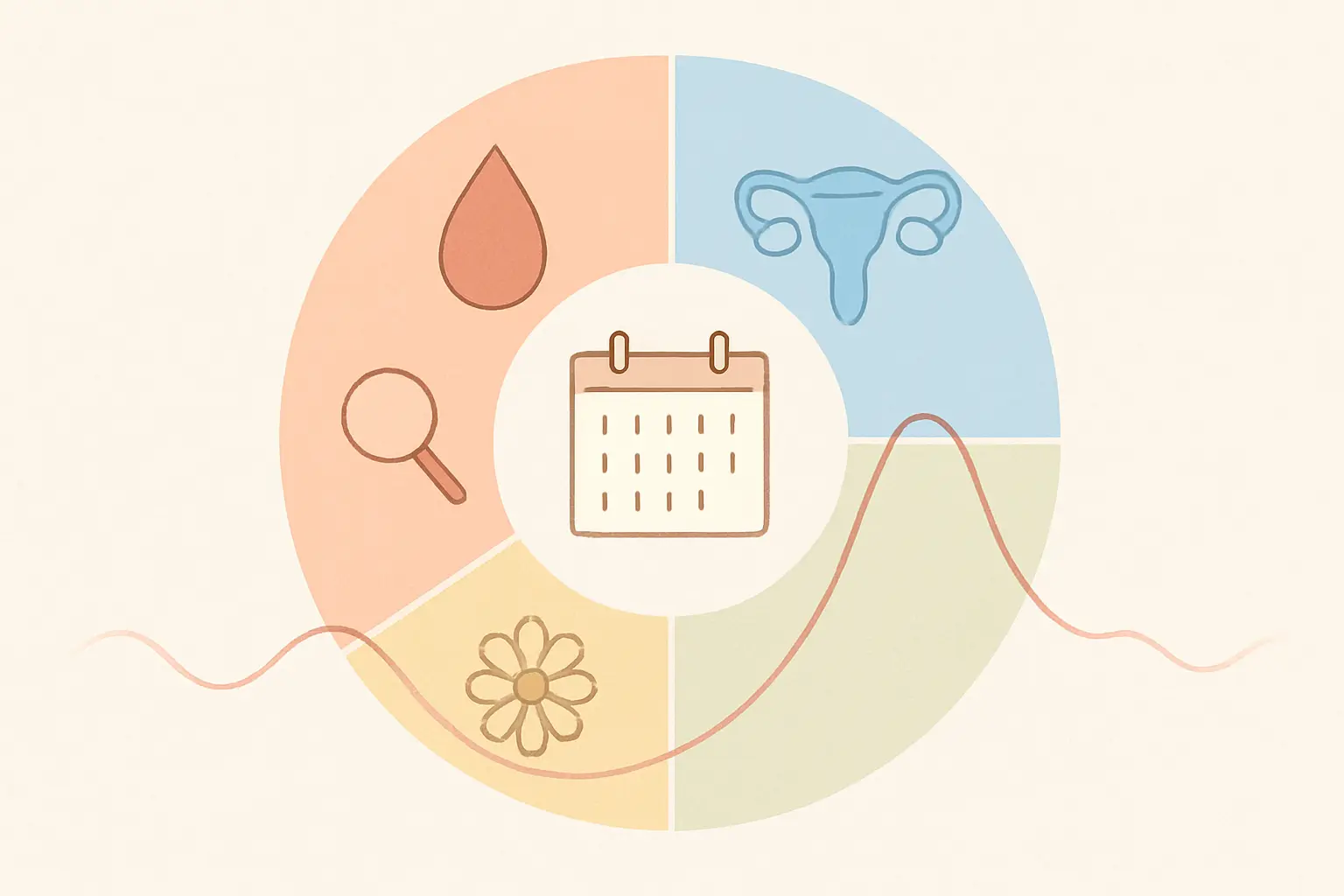
If you’ve ever noticed your cravings feel sharper the week before your period, you’re not imagining it, and you’re not alone in wondering why nobody talks about this. Quitting smoking and your menstrual cycle are more connected than most cessation advice acknowledges: hormonal shifts across the cycle genuinely affect withdrawal severity, yet almost no mainstream quitting guide mentions it. This guide covers what the research actually shows, whether timing your quit date to your cycle helps, and how smoking and quitting interact with your periods and hormonal contraception.
Why Your Cycle Matters When You Quit
Nicotine withdrawal doesn’t happen in a hormonal vacuum. Estrogen and progesterone fluctuate predictably across roughly a monthly cycle, and both hormones interact with the same brain reward pathways that nicotine acts on. That means the intensity of cravings and mood symptoms during a quit attempt can genuinely shift depending on where you are in your cycle — information that’s directly useful for planning, yet is almost entirely absent from mainstream withdrawal symptom guides, which are written as if every quitter’s biology is identical.
None of this is a reason to delay quitting, and it isn’t meant to suggest quitting is fundamentally harder for women — it’s simply useful, practical information. If you know a certain week in your cycle tends to hit harder, you can meet it with a plan instead of being surprised by it and reading the difficulty as a personal failing.
What the Research Shows: Luteal vs Follicular Withdrawal
The most rigorous evidence comes from a 2015 systematic and meta-analytic review published in Nicotine & Tobacco Research (Weinberger et al.), which pooled data across studies on menstrual cycle phase and smoking. Its key finding: women reported greater withdrawal during the luteal phase — the second half of the cycle, after ovulation and before your period — than during the follicular phase, the first half. There was also a nonsignificant trend toward greater persistent (tonic) craving in the luteal phase. Separately, the review found that progesterone administration was associated with decreased positive and increased negative subjective effects of nicotine, a mechanistic clue pointing to why the luteal phase, when progesterone is naturally higher, tends to feel harder.
The Late-Luteal Relapse Window
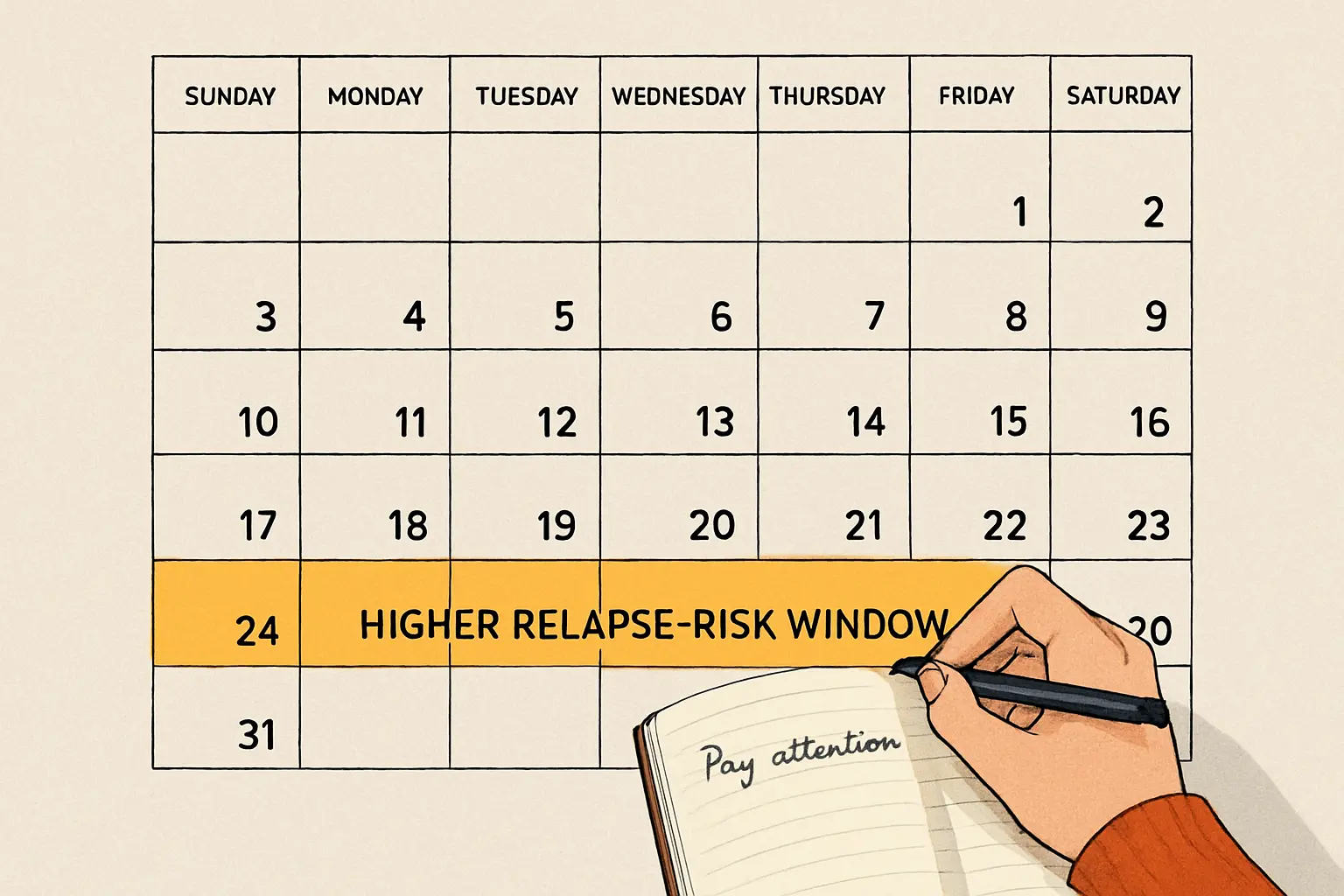
The late-luteal phase — roughly the week before your period, when both estrogen and progesterone are dropping sharply — is where PMS-type mood symptoms typically peak, and many women describe it landing on top of already-elevated withdrawal severity. It’s the same hormonal drop responsible for PMS irritability and low mood in many women, now happening alongside nicotine withdrawal rather than instead of it. Worth saying plainly: the review above measured withdrawal severity by phase, not relapse rates by phase, so treat this as a well-grounded expectation rather than a proven relapse statistic. Recognizing the window in advance — rather than being blindsided by it — is one of the most practical things you can do, and it maps directly onto predicting when cravings will hit based on your own patterns rather than generic advice.
Should You Time Your Quit Date to Your Cycle?
Here’s the honest answer: the evidence is genuinely mixed. The Weinberger et al. review found that studies of menstrual phase effects on cessation and relapse outcomes — as opposed to withdrawal symptom severity, which is better studied — were either small in number or yielded mixed results. Some smaller studies have explored quitting in the follicular phase on the theory that lower background withdrawal might make the first days easier, but this hasn’t been established as a reliable, broadly effective strategy. The more defensible takeaway: don’t build your entire quit plan around cycle timing, but do use your cycle awareness to load extra support — more check-ins, more craving tools, more patience with yourself — into whichever week tends to be hardest for you personally, informed by the broader guide to setting a quit date that actually sticks.
How Smoking and Quitting Affect Your Cycle and PMS
The relationship runs both ways. Ongoing smoking itself appears to raise PMS risk: a large prospective study published in the American Journal of Epidemiology (Bertone-Johnson et al., 2008) found current smokers were about 2.1 times as likely as never-smokers to develop moderate-to-severe PMS over a 2–4 year follow-up, with a relative risk of 2.53 among women who started smoking before age 15. The study’s authors specifically noted this as an added reason for young women to avoid starting smoking. What it does not directly show is how quickly PMS eases after quitting — that hasn’t been measured the same way — so treat improvement as plausible rather than guaranteed, alongside the many benefits covered in the full withdrawal symptoms guide.
Smoking has also been linked to disruptions in normal ovarian hormone patterns and is a well-established factor in earlier onset of menopause. If you’re trying to conceive, or simply want the wider picture, the hormonal and reproductive effects are covered in more detail in the guides to quitting smoking and reproductive health and smoking, fertility and conception. Sex-specific hormonal effects of quitting run in both directions — men experience their own version of this, covered in quitting smoking and erectile dysfunction recovery — which is a reminder that “withdrawal” is rarely one-size-fits-all.
Hormonal Contraception, Smoking and Age 35+
This is a genuine safety note, not just a cycle-tracking tip. Combined hormonal contraception — the combined pill, patch, or vaginal ring — already carries a small increased risk of blood clots, and smoking adds to that risk substantially, particularly for women aged 35 and over and heavier smokers. This is why UK and US medical eligibility criteria generally advise against combined hormonal contraceptives for smokers in this age group, recommending progestogen-only or non-hormonal alternatives instead. If you’re over 35, smoke, and use combined hormonal contraception, this is worth raising with your prescriber regardless of your quit-date plans — and quitting removes this specific risk factor entirely, on top of every other benefit. Free help is available: NHS stop-smoking support can talk through both the quit plan and the contraception question with you.
Practical Strategies by Phase
| Phase | What research suggests | Practical approach |
|---|---|---|
| Follicular (after period, before ovulation) | Generally lower withdrawal severity reported | A reasonable window to consider setting a quit date if timing is flexible |
| Ovulation | Transition point; less specifically studied | Maintain your existing coping routine |
| Early-mid luteal | Withdrawal and tonic craving trend higher | Increase check-ins with your support system or app tools |
| Late luteal (pre-period) | PMS symptoms and withdrawal symptoms can compound | Plan extra SOS coping tools and lower other stressors where possible |
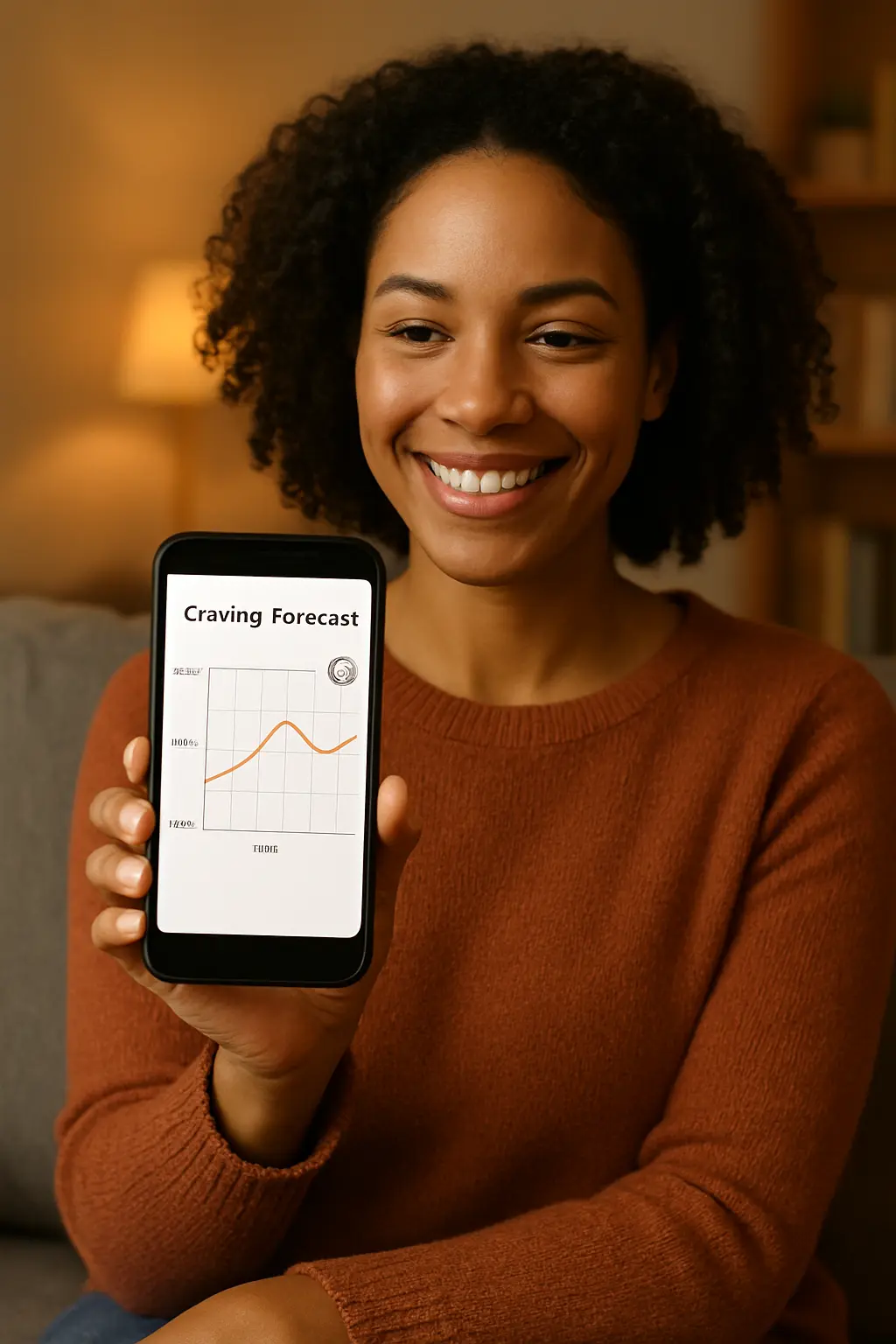
Because these patterns are personal, not universal, the most useful tool isn’t a generic calendar — it’s tracking your own cravings against your own cycle for a cycle or two. This is precisely the kind of pattern iQuit’s craving forecasts feature is built to learn from: it flags your personal risky hours and days based on your own logged data, which naturally captures cycle-linked patterns even without you labeling them as such, and pairs well with SOS breathing tools for the sharper days.
Two weeks smoke-free is a milestone worth celebrating regardless of cycle timing, and the physical wins described in what happens by two weeks smoke-free apply exactly the same whether that milestone lands during a hard week or an easy one.
When to See a Doctor
Talk to a doctor if PMS or withdrawal-related mood symptoms are severe enough to disrupt daily functioning or relationships, if you experience thoughts of self-harm at any point in your cycle, if you use combined hormonal contraception and are 35 or older and still smoking, or if your periods become significantly irregular, unusually heavy, or stop altogether during a quit attempt. These deserve a proper clinical conversation rather than being written off as “just hormones” or “just withdrawal.” A small number of women experience premenstrual dysphoric disorder (PMDD), a more severe form of premenstrual mood disturbance and a recognized clinical diagnosis, which is worth raising directly if your symptoms go well beyond typical PMS.
Frequently Asked Questions
Does quitting smoking really feel harder before my period?
For many women, yes. A 2015 systematic review in Nicotine & Tobacco Research found women reported greater withdrawal during the luteal phase, the second half of the cycle before a period, than during the follicular phase, alongside a trend toward greater persistent craving.
Should I pick my quit date based on my cycle?
You can, but the evidence for this specifically improving quit success is limited and mixed, according to the same 2015 review. It’s more reliable to use cycle awareness to plan extra support around your harder week than to build your whole strategy around timing.
Does smoking make PMS worse?
Research suggests it can. A 2008 study in the American Journal of Epidemiology found current smokers were about 2.1 times as likely as never-smokers to develop moderate-to-severe PMS, with a relative risk of 2.53 among those who started smoking before age 15.
Will my periods change after I quit smoking?
Some women notice PMS symptoms ease over time, which would be consistent with research linking current smoking to higher PMS risk, though the recovery side hasn’t been directly measured. Cycles may also become more regular for some people, since smoking has been linked to hormonal disruption. Individual experiences vary widely.
Is it safe to use the combined pill if I smoke?
Smoking increases blood clot risk on top of the small baseline risk from combined hormonal contraception, and clinical guidelines generally advise against this combination for women 35 and older who smoke. Speak with your prescriber about alternatives, and know that quitting removes this risk factor.
Why is the week before my period the hardest for cravings?
This late-luteal window is when estrogen and progesterone both drop sharply, the same shift responsible for PMS mood symptoms in many women, layered on top of the elevated withdrawal severity that research reports during the luteal phase generally.
Does progesterone affect how nicotine feels?
Research reviewed in Nicotine & Tobacco Research (2015) found progesterone administration was associated with decreased positive and increased negative subjective effects of nicotine, a mechanistic clue that may help explain why the higher-progesterone luteal phase tends to feel harder.
Can tracking my cycle actually help me quit?
It can help you plan, even if it can’t guarantee an easier quit date. Knowing your personal pattern lets you line up extra coping tools and support for your predictably harder days rather than being caught off guard by them.
Let iQuit Learn Your Pattern
iQuit’s craving forecasts learn your personal risky hours and days from your own logged cravings — including cycle-linked patterns you might not have connected yourself — and pair with SOS breathing tools for exactly the harder days this guide describes.