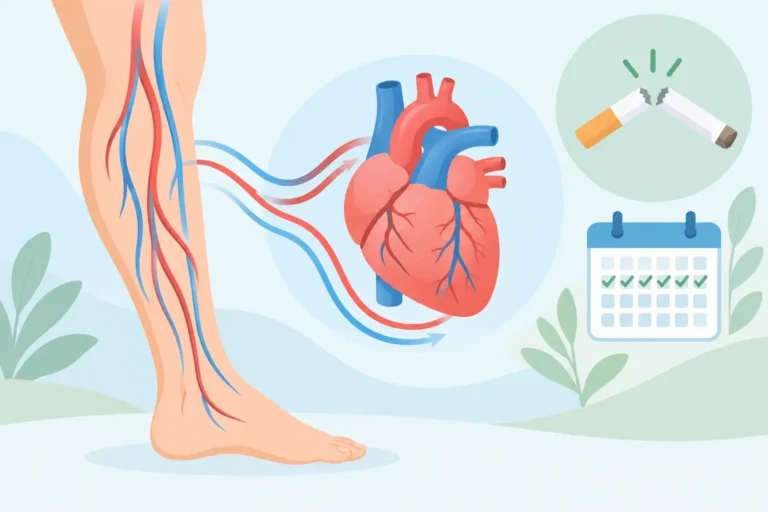
If you have ulcerative colitis, you may have heard something that sounds like a trap: smoking and ulcerative colitis are linked in an unusual way, because smokers get the condition less often than non-smokers. So is quitting a bad idea for your gut? This article explains the paradox, what studies actually show about flares after quitting, why doctors still advise against smoking, and how to stop with your gastroenterology team on your side. It does not replace advice from your own clinician.
Smoking and ulcerative colitis: the “smoking protects” paradox
The NHS describes ulcerative colitis as “a condition where parts of your large bowel (colon) and rectum become inflamed (swollen).” It is a lifelong condition that affects everyone differently, and it comes and goes: you may have no symptoms or mild symptoms for a period (remission) and then an episode of very bad symptoms, called a flare-up.
Here is the odd part. In ulcerative colitis, being a current smoker has been associated with a lower chance of developing the disease in the first place. Two of the studies discussed below open with that same observation. The NHS list of things that make UC more likely even includes a line that surprises people: “you used to smoke.”
That pattern is real in the data, but it has been misread many times. It does not mean cigarettes treat the condition, and it does not mean a smoker with a UC diagnosis should keep smoking. The rest of this guide separates three different questions: who gets UC, how UC behaves in people who already have it, and what happens to the rest of the body when you smoke. The third is where the answer to “should you quit?” comes from.
What the data show for UC versus Crohn’s
Ulcerative colitis and Crohn’s disease are both inflammatory bowel diseases, but smoking behaves differently in each. In Crohn’s disease, smoking is linked to a worse course, which is why quitting is a clear recommendation; our guide to smoking Crohn’s disease quitting benefits covers that. In UC the signals are mixed, and that is why readers with UC feel stuck.
The best evidence on how UC behaves in people who already have it is a 2016 systematic review and meta-analysis in Alimentary Pharmacology and Therapeutics. It pooled 16 observational studies and compared smokers with non-smokers. For colectomy the odds ratio was 0.89 (95% CI 0.62 to 1.26), for flare of disease activity 1.26 (0.65 to 2.44), for proximal extension 0.57 (0.20 to 1.66) and for pouchitis 0.57 (0.21 to 1.53). None of these differences was statistically significant. The authors wrote: “Smoking may not improve the natural history of ulcerative colitis. Given the health benefits of smoking cessation and the lack of clear benefit in ulcerative colitis, smoking cessation advice should be incorporated into guidance on the management of ulcerative colitis.”
In other words, once you have UC, the studies do not show that smoking keeps the disease milder in a way that outweighs its harms. The same paper notes that a high proportion of UC patients believe smoking helps them, which is part of why the myth persists.
| Study | Design | Finding |
|---|---|---|
| Aliment Pharmacol Ther, 2016 | Meta-analysis of 16 observational studies | No significant benefit of smoking on colectomy, flares or extension |
| Aliment Pharmacol Ther, 2019 | 6,754 newly diagnosed UC patients | Quitting after diagnosis not associated with a worse course |
| Am J Gastroenterol, 2001 | 32 patients who quit, matched comparison groups | Disease activity and treatment needs rose after quitting |
| Cochrane review, 2004 | Randomized trials of nicotine patches in active UC | Better than placebo for remission, no advantage over standard medicines, significant side effects |
This Mayo Clinic video explains what ulcerative colitis is and how it is treated.
Flare risk after quitting
This is the fear behind most searches, so it deserves a careful answer. Two studies point in different directions.
The 2001 study that raised the alarm
A study in the American Journal of Gastroenterology followed 32 patients with UC who stopped smoking after diagnosis and compared the years after stopping (a mean of 7 years) with the years before (a mean of 9 years). Cessation was followed by more years with active disease, more years with hospitalization and more years needing major medical therapy such as steroids or azathioprine. The authors concluded that “the severity of the disease increases after smoking cessation.” It was a small group, studied in a single institution, and the design compared each person with their own earlier years.
The larger 2019 study
A nationwide study published in Alimentary Pharmacology and Therapeutics in 2019 used a representative clinical database covering 6,754 people with newly diagnosed UC, of whom 878 were smokers at diagnosis. Smokers and never-smokers had similar rates of corticosteroid-requiring flares, thiopurine use, steroid dependency, hospitalization and colectomy. The study also compared persistent smokers with those who quit within two years of diagnosis, and found no significant difference in flares, thiopurine use, steroid dependency, hospitalization or colectomy. Its conclusions were that smoking cessation was not associated with a worse disease course, that the risks associated with smoking outweigh any benefits, and that UC patients should be counseled against smoking.
So the honest summary is that the evidence on flares after quitting is mixed. A small older study saw worsening, while a much larger and more recent one did not. Neither can tell you what will happen to you. UC also flares for reasons unrelated to smoking: the NHS lists stress, infections, changes in medicines, taking NSAIDs such as ibuprofen or aspirin, and certain foods, and says that sometimes there is no obvious trigger. That means a flare in the months after you quit does not automatically prove that quitting caused it, and it is not a reason to restart.
Nicotine patches for ulcerative colitis: what the trials showed
Because smokers seemed to have milder UC, researchers once tested nicotine itself as a treatment. The Cochrane review, “Transdermal nicotine for induction of remission in ulcerative colitis”, dates from 2004 and is still the current version of that review. It included randomized trials of patients with active mild to moderate UC given transdermal nicotine (15 to 25 mg/day) or a comparator. In a meta-analysis of two trials with 71 patients on nicotine and 70 on placebo, 19 of 71 were in clinical remission after four to six weeks, compared with 9 of 70 on placebo (odds ratio 2.56, 95% CI 1.02 to 6.45). Against standard medicines (oral prednisone or mesalamine), the difference was not significant: 34 of 63 in remission on standard therapy versus 33 of 66 on nicotine.
The reviewers’ conclusions, quoted exactly: “The results of this review provide evidence that transdermal nicotine is superior to placebo for the induction of remission in patient’s with ulcerative colitis. The review did not identify any significant advantage for transdermal nicotine therapy compared to standard medical therapy. Adverse events associated with transdermal nicotine are significant and limit its use in some patients.”
A later 2010 meta-analysis in Clinical Therapeutics, covering placebo-controlled trials in 233 patients and two trials against corticosteroids, reached a more cautious verdict: “The findings from this meta-analysis do not support the efficacy or tolerability of nicotine preparations in inducing remission in UC.”
Two points matter for you. First, these were short trials of a prescribed or supervised treatment in people with active UC, not studies of cigarettes. Second, the NHS treatment page for UC lists aminosalicylates, steroids, immunosuppressants, biologics and other medicines, and nicotine is not among them. If you are thinking about using nicotine replacement to help you stop smoking, that is a different purpose; ask your GI team, and see our best NRT options compared for the general options. No published guidance names one NRT form as safest for people with UC, so the choice belongs with your care team.
How to quit safely with ulcerative colitis
You do not have to choose between your gut and your lungs. A plan that involves your care team removes most of the risk of guessing.
- Tell your gastroenterologist or IBD nurse first. They can note your plan, time it around any flare or medicine change, and watch for changes.
- Pick a calm window if you can. A flare-up is a bad time to add a stressor. If you are in remission, that may be the better moment, though cravings do not wait for a perfect week.
- Keep taking your UC medicines. Changes in medicines are on the NHS list of flare triggers, so do not adjust them without advice. Quit smoking in addition to your treatment, not instead of it.
- Consider gradual reduction. If you prefer to cut down step by step rather than stop at once, discuss it with your care team.
- Watch your symptoms and report changes. Keep a short daily note of bowel habits, pain and stress alongside your cravings, and bring it to appointments.
- Plan for the stress. Stress is a listed flare trigger, so build calming habits before the quit date.
Our guide to why smoking makes you poop explains one link between cigarettes and bowel habits. If you have UC and notice new bowel symptoms after quitting, report them to your care team rather than assuming they are harmless.

When to get medical help
Ulcerative colitis symptoms can become urgent. The NHS gives clear thresholds, and they apply whether or not you have recently quit smoking.
- Ask for an urgent GP appointment or get help from NHS 111 if you have symptoms of ulcerative colitis and: very bad diarrhea or bloody diarrhea, a high temperature (or you feel hot, cold or shivery), a fast heartbeat, you cannot fart or poo, or you are worried about them. If you have been diagnosed with ulcerative colitis and are having a severe flare-up, you can also contact your care team.
- Call 999 or go to A&E if you have severe tummy pain, you are bleeding non-stop from your bottom, there is a lot of blood or you see large blood clots when you poo, or you are vomiting blood or poo, or your sick looks like coffee grounds or soil.
The NHS adds: do not drive to A&E. Ask someone to drive you or call 999 and ask for an ambulance, and bring any medicines you take with you. If you live outside the UK, use your local emergency number and your own care team’s flare plan.
Where an app can help
Quitting while managing a chronic condition is a lot to hold in your head. The free iQuit app lets you choose cold turkey or gradual reduction, log cravings with their triggers and intensity, use SOS tools when an urge hits, and track smoke-free days and money saved. It does not diagnose, monitor or treat ulcerative colitis, so it works alongside your GI team and never replaces them. To compare it with other tools, see our best quit smoking apps feature comparison rankings. For the wider picture of what changes in your body over time, read the what happens when you quit smoking complete health recovery guide.
If you have another skin or gut condition that smoking touches, our piece on smoking stomach ulcers healing after quitting and the companion article on hidradenitis suppurativa and smoking follow the same careful approach to evidence.
Frequently Asked Questions
Does smoking protect against ulcerative colitis?
Smokers are less likely to develop UC in the first place, as both a 2016 meta-analysis and a 2019 nationwide study note. That does not mean smoking is safe or advised once you have UC. The 2016 meta-analysis found smoking may not improve the course of the disease, and advised cessation (Aliment Pharmacol Ther, 2016 and 2019).
Will quitting smoking cause a UC flare?
The evidence is mixed. A small 2001 study of 32 patients saw more disease activity after quitting, while a 2019 study of 6,754 newly diagnosed patients found cessation was not associated with a worse disease course. UC also flares for other reasons, so tell your care team before you quit (Am J Gastroenterol, 2001; Aliment Pharmacol Ther, 2019).
Should I keep smoking to control my ulcerative colitis?
No. A 2019 study concluded that the risks associated with smoking outweigh any benefits, and that UC patients should be counseled against smoking. A 2016 meta-analysis said smoking cessation advice should be part of UC management (Aliment Pharmacol Ther, 2019 and 2016).
Do nicotine patches treat ulcerative colitis?
A 2004 Cochrane review found transdermal nicotine superior to placebo for inducing remission but with no significant advantage over standard medical therapy, and noted that adverse events are significant. A 2010 meta-analysis did not support nicotine preparations for inducing remission. Neither makes patches a standard UC treatment (Cochrane, 2004; Clin Ther, 2010).
Is it safe to use nicotine replacement to quit if I have UC?
No published guidance names one NRT form as safest for people with UC. Ask your gastroenterologist or pharmacist before choosing a product, because trials of nicotine patches in UC reported significant adverse events in some patients (Cochrane, 2004).
What triggers an ulcerative colitis flare-up?
The NHS lists stress, infections, changes in medicines, taking NSAIDs such as ibuprofen or aspirin, and certain foods, and says sometimes there is no obvious trigger. A flare-up can last anywhere from a few days to several months (NHS).
When should I get urgent help with ulcerative colitis?
The NHS says to call 999 or go to A&E for severe tummy pain, non-stop bleeding from your bottom, a lot of blood or large clots when you poo, or vomiting blood or poo, or sick that looks like coffee grounds or soil. For very bad or bloody diarrhea, a high temperature or a fast heartbeat, ask for an urgent GP appointment or get help from NHS 111 (NHS).
Quit With Your GI Team Behind You
Stopping smoking is easier with a plan and support. iQuit is free on Google Play and the App Store and helps you log cravings and triggers, use SOS tools when urges hit and track smoke-free days alongside the care you get from your clinic.