A pack labeled “100% nicotine-free” and “tobacco-free” sounds like the safer choice, so are herbal cigarettes safer than the ones they replaced? The honest answer, backed by peer-reviewed research, is no: herbal cigarettes are still burned plant material, and burning plant material — tobacco or not — is what produces most of the harm. Removing nicotine removes the addictive chemical, not the smoke.
What herbal cigarettes are
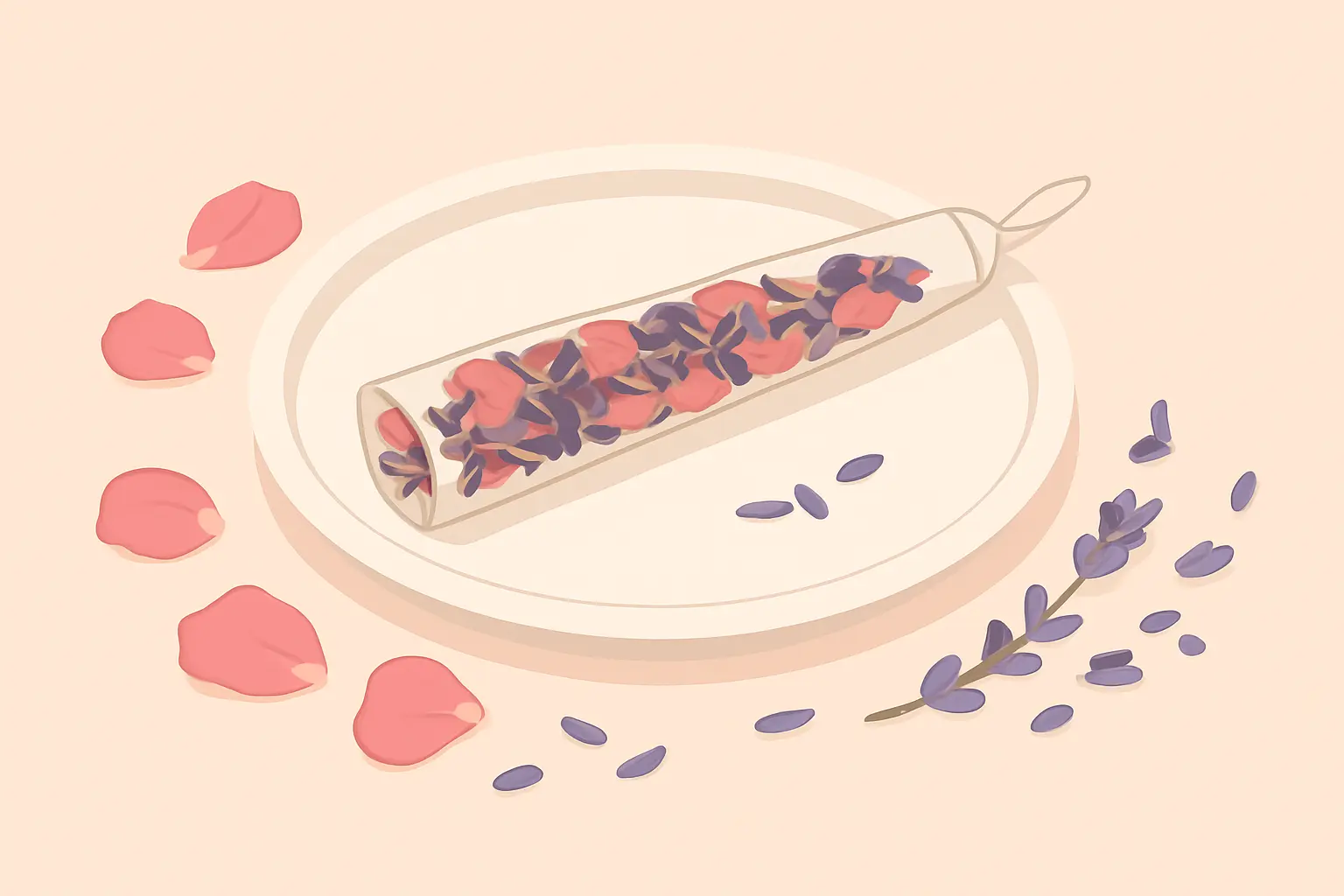
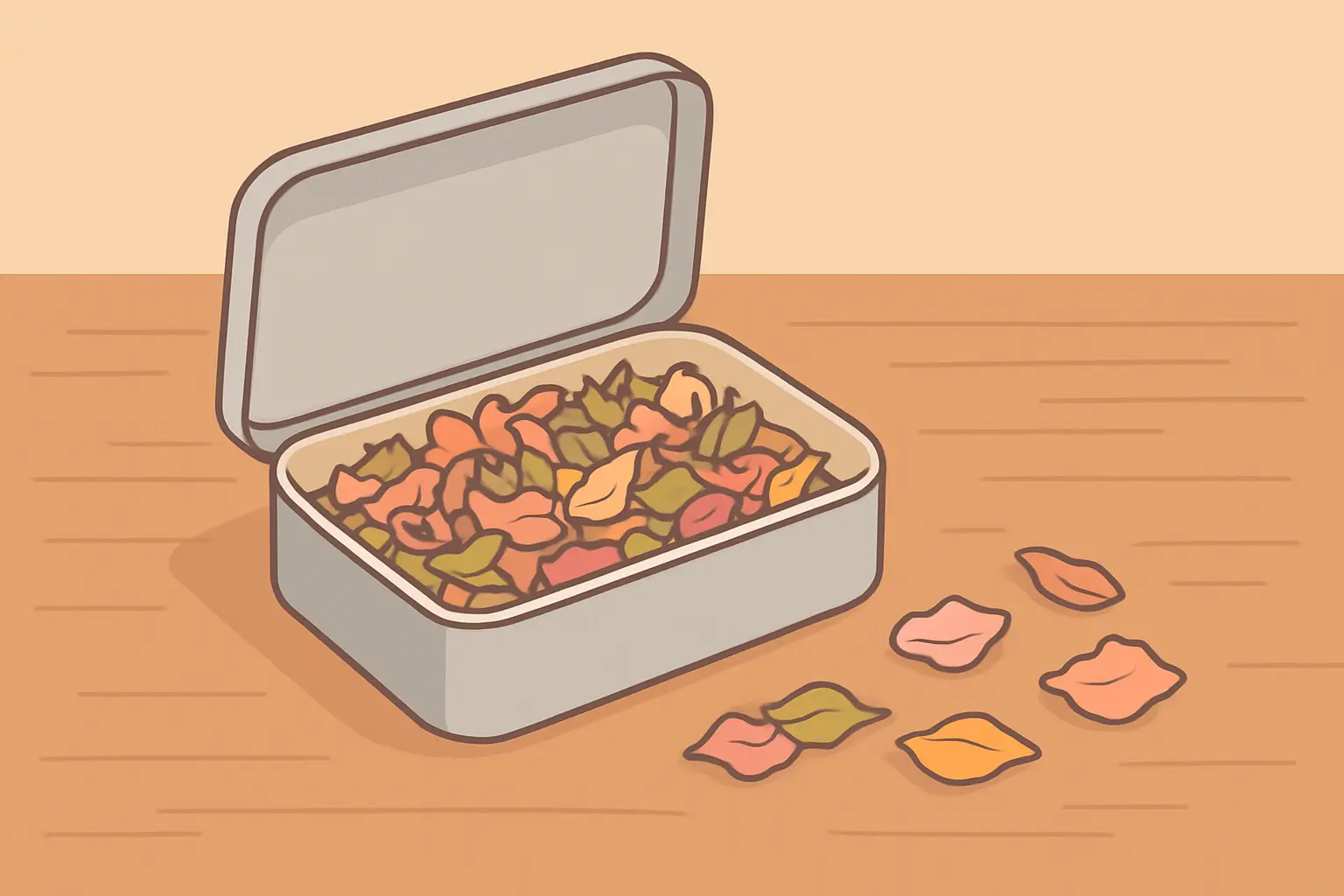
Herbal cigarettes contain no tobacco and no nicotine. Instead, they are a mixture of dried herbs and plant material — rose petals, raspberry leaves, chamomile, mullein, lavender, blue lotus, peppermint, or mugwort are all commonly used, rolled and smoked exactly like a tobacco cigarette (Khorasani & Chadi, Paediatrics & Child Health, 2022). A related product, herbal shisha, replaces tobacco-based molasses with a tobacco-free, nicotine-free sugarcane base, still smoked by burning charcoal in a waterpipe.
Both are frequently marketed toward people who want to quit smoking, quit vaping, or simply believe a plant-based product must be gentler than a manufactured one. Neither claim holds up once you look at what actually happens when the product is lit.
Researchers reviewing the category note that herbal cigarettes are “often viewed as a healthier alternative to cigarettes, particularly among ‘health-conscious’ consumers,” and that misleading health claims about herbal smoking — relief of anxiety, acne, menstrual cramps, or insomnia — circulate widely on social media with no supporting evidence (Khorasani & Chadi, 2022). The plant-based, wellness-branded framing is a marketing choice, not a toxicology finding.
Nicotine-free does not mean smoke-free
The health risk in a cigarette comes overwhelmingly from combustion, not from any one ingredient. Burning any organic plant material — tobacco leaf, rose petals, or mugwort — breaks it down into thousands of new compounds, many of them toxic, simply through the chemistry of fire. Nicotine is not one of those combustion byproducts; it exists in tobacco whether or not it is burned, and removing it from the recipe does nothing to change what burning the rest of the plant produces.
This is exactly the finding in the peer-reviewed literature: paediatric researchers reviewing herbal smoking products found that cells exposed to smoke from nicotine-free herbal cigarettes developed carcinogenic changes similar to those exposed to tobacco cigarette smoke (Khorasani & Chadi, 2022). The plant you burn matters far less than the fact that you are burning something and inhaling the result.
Tar and carbon monoxide from any burned plant
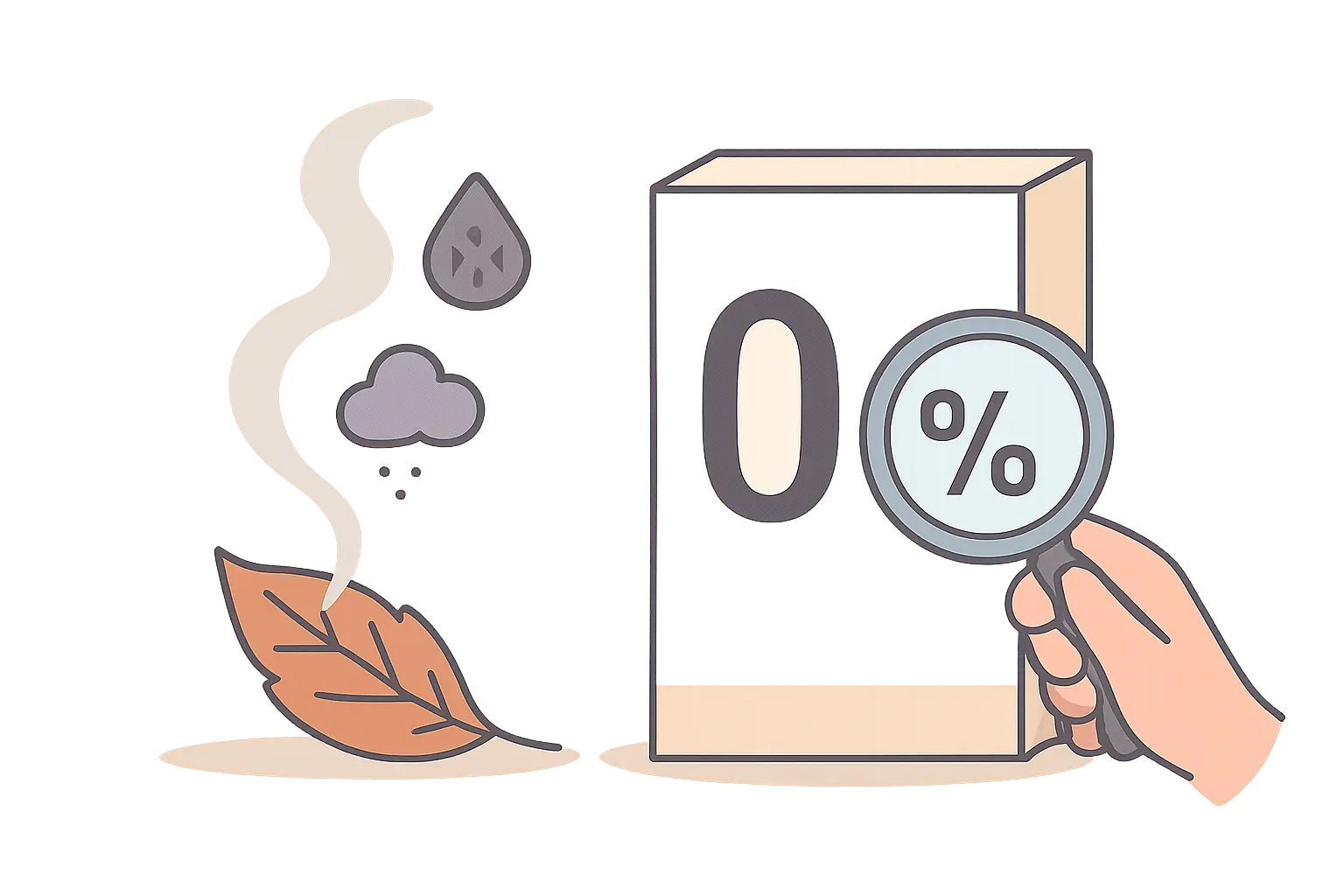
The specific numbers are stark: “herbal cigarette smoke delivers similar amounts of carbon monoxide (CO) and tar as tobacco cigarettes,” and also “contains significant levels of harmful toxicants such as benzo(a)pyrene, phenolic contents, and aromatic amines” — the same broad categories of carcinogen found in ordinary cigarette smoke (Khorasani & Chadi, 2022). For herbal hookah specifically, testing found “significant tar levels… despite ‘0% tar’ labeling on the packaging,” and toxicant levels — CO, nitric oxide, volatile aldehydes, carcinogenic polycyclic aromatic hydrocarbons, and traces of heavy metals like nickel, lead, chromium, and arsenic — that were equivalent to or exceeded tobacco-based hookah (Khorasani & Chadi, 2022).
“0% tar” on a herbal product’s packaging is a claim about what was not added, not a claim about what combustion produces — a distinction the researchers found the label itself does not make clear. If you want the fuller list of what burning tobacco specifically produces for comparison, see our breakdown of what’s in cigarette smoke, and if you have been weighing tar against nicotine as separate risks, our tar-vs-nicotine explainer covers why tar carries most of the cancer risk regardless of what plant it came from.
The carbon monoxide part matters just as much as the tar, and for the same reason: CO comes from combustion, full stop, whether the leaf burning was tobacco or a “wellness” herb blend. Someone switching from tobacco to herbal cigarettes to protect their heart and blood oxygen is not actually reducing their CO exposure — see our timeline of what carbon monoxide does to your oxygen levels in the first 48 hours for what continuing to inhale CO from any burned product keeps doing to your body.
What regulators say about herbal cigarettes
Because herbal cigarettes contain no tobacco, they often sit outside the regulations written specifically for tobacco products. In Canada, researchers note that herbal smoking products “do not fall under the purview of the Tobacco & Vaping Control Act as they do not contain tobacco,” and as a result there are “no federal regulations in place with regards to labeling, sales to minors, promotion, or flavourings for such products,” with no requirement for health warnings and no obligation to report ingredients the way tobacco manufacturers must (Khorasani & Chadi, 2022). The same paper notes that herbal cigarettes can easily be home-rolled with blunt wraps or rolling paper, meaning even the limited labeling rules that do exist for commercially packaged products can be sidestepped entirely.
That gap matters for anyone assuming a product must be safe because it is legally sold with cheerful, colorful packaging next to age-restricted tobacco products. A lighter regulatory burden reflects the fact that Canadian lawmakers built these rules around tobacco specifically, not that public-health testing has cleared herbal products of the same risks. It is a legislative gap, not a safety verdict.
Do they help anyone quit?
There is no good evidence herbal cigarettes function as a quitting aid, and the honest case against them is not moralizing — it is mechanical. Someone using herbal cigarettes to step down from tobacco keeps every part of smoking’s harm profile that comes from combustion (tar, CO, carcinogens, lung irritation) while dropping the one component, nicotine, that nicotine replacement therapy is specifically designed to deliver safely instead. It is the opposite of harm reduction: keeping the smoke, losing the structured off-ramp. Our guide to what tobacco harm reduction actually means explains why removing combustion, not removing nicotine, is the part that lowers risk.
There is also a documented downside specific to young people considering herbal products as a first smoking experience: paediatric researchers warn that “the low perceived risk coupled with youth-friendly flavours and easy access may entice youth to use herbal smoking products and increase the risk of subsequent tobacco and substance use” (Khorasani & Chadi, 2022) — a gateway into the smoking ritual, not an exit from it.
If your goal is genuinely to step away from nicotine dependence, an evidence-based nicotine replacement product gets you there without the smoke; see our comparison of the best NRT options for what that looks like in practice. If your goal is to reduce cancer risk while you work on quitting, the general framing from Cancer Research UK still applies regardless of what you are smoking: “there is no safe way to use tobacco. All forms are addictive and cause cancer” — and the same combustion logic extends to any burned plant product marketed as a safer alternative.

The ritual problem they try to solve, solved better
Herbal cigarettes are, in fairness, solving a real problem: the physical ritual of smoking — the hand-to-mouth motion, something to hold during a stressful moment, the pause it forces into your day — is a genuine part of why quitting is hard, separate from the chemical dependence on nicotine. Researchers reviewing herbal smoking products note that “their use may still lead to an oral fixation or a behavioural addiction to smoking” even though the products contain no nicotine (Khorasani & Chadi, 2022), which is part of why switching to herbal cigarettes rarely feels like “quitting” in practice.
That ritual can be addressed directly without lighting anything at all. iQuit’s virtual cigarette feature gives your hands and mouth something to do — a press-and-hold action that mimics the pacing of a cigarette — while a craving passes, without any combustion, tar, or carbon monoxide involved. It solves the same behavioral gap herbal cigarettes are marketed against, without the smoke.
Craving surfing, breathing exercises, and grounding techniques cover the same territory from a different angle: they give the urge somewhere to go besides “light something.” Combining a hands-on substitute with those techniques, rather than reaching for a different thing to burn, is the version of “solving the ritual” that does not also expose you to a fresh dose of carbon monoxide and tar every time.
Frequently Asked Questions
Are herbal cigarettes actually safer than tobacco cigarettes?
No. Peer-reviewed research finds herbal cigarette smoke delivers similar amounts of carbon monoxide and tar as tobacco cigarette smoke, along with harmful compounds like benzo(a)pyrene, because the harm comes from burning plant material generally, not from tobacco or nicotine specifically.
Do herbal cigarettes contain nicotine?
No, herbal cigarettes are made from non-tobacco plant material such as rose petals, raspberry leaves, chamomile, mullein, lavender, blue lotus, peppermint, or mugwort, and contain no nicotine. However, using them can still create a behavioral or oral-fixation addiction to the smoking ritual itself.
Does “0% tar” on herbal hookah packaging mean it is tar-free?
No. Researchers found significant tar levels in herbal hookah products despite “0% tar” labeling on the packaging. Any burned plant material produces tar as a byproduct of combustion, regardless of what the label claims about added ingredients.
Are herbal cigarettes regulated like tobacco cigarettes?
Often not to the same degree. In Canada, researchers note herbal smoking products fall outside tobacco-specific legislation because they contain no tobacco, meaning no federal requirements for health warnings, ingredient reporting, or restrictions on marketing to minors apply the way they do to cigarettes.
Can herbal cigarettes help me quit smoking?
There is no good evidence they work as a quitting aid. They remove nicotine but keep the combustion, tar, and carbon monoxide that drive most of smoking’s health risk, which is the opposite of how nicotine replacement therapy is designed to work.
What is herbal shisha, and is it different from herbal cigarettes?
Herbal shisha is a tobacco-free, nicotine-free sugarcane-molasses base smoked through a waterpipe by burning charcoal, rather than a rolled cigarette. Research has found it yields toxicants at levels equal to or exceeding tobacco-based hookah, including carbon monoxide and carcinogenic compounds.
What actually addresses the “ritual” of smoking without the harm?
Tools that replace the hand-to-mouth motion without combustion, such as a virtual cigarette feature in a quit-smoking app, address the behavioral ritual directly without exposing you to tar, carbon monoxide, or any combustion byproducts.
Solve the ritual without lighting anything
iQuit’s virtual cigarette gives your hands something to do during a craving — no smoke, no tar, no carbon monoxide.
Download iQuit Free on Google Play
Download on the App Store