
The best nicotine patches for most people in 2026 are store-brand 24-hour patches: they contain the same nicotine doses as NicoDerm CQ, are FDA-approved, and usually cost much less per week. NicoDerm CQ is worth paying for if you want a clear, discreet patch or if generics irritate your skin or will not stick.
Most nicotine patch roundups compare patches with gum or lozenges. This one goes brand by brand, ranking NicoDerm CQ, Habitrol and common store brands on the things that actually decide whether you finish the course: adhesion, skin irritation, discretion and cost per week.
Best Nicotine Patches 2026: Comparison Table
All the patches below contain nicotine as the only active ingredient and follow similar step-down schedules. The differences are in the patch material, adhesive, appearance and price.
| Rank | Patch | Wear time | Strengths | Look | Best for |
|---|---|---|---|---|---|
| 1 | Store-brand 24-hour patch (pharmacy and big-box own brands) | 24 hours | 21, 14, 7 mg | Usually tan or opaque | Best value for most quitters |
| 2 | NicoDerm CQ | 24 hours (can remove at bedtime) | 21, 14, 7 mg | Clear | Discretion, sensitive skin, brand support materials |
| 3 | Habitrol | 24 hours | 21, 14, 7 mg | Opaque | People who want a branded alternative to NicoDerm |
| UK pick | Nicorette Invisipatch | 16 hours | 25, 15, 10 mg | Thin, translucent | Daytime-only use, avoiding vivid dreams |
| UK pick | NiQuitin Clear | 24 hours | 21, 14, 7 mg | Clear | Morning cravings |
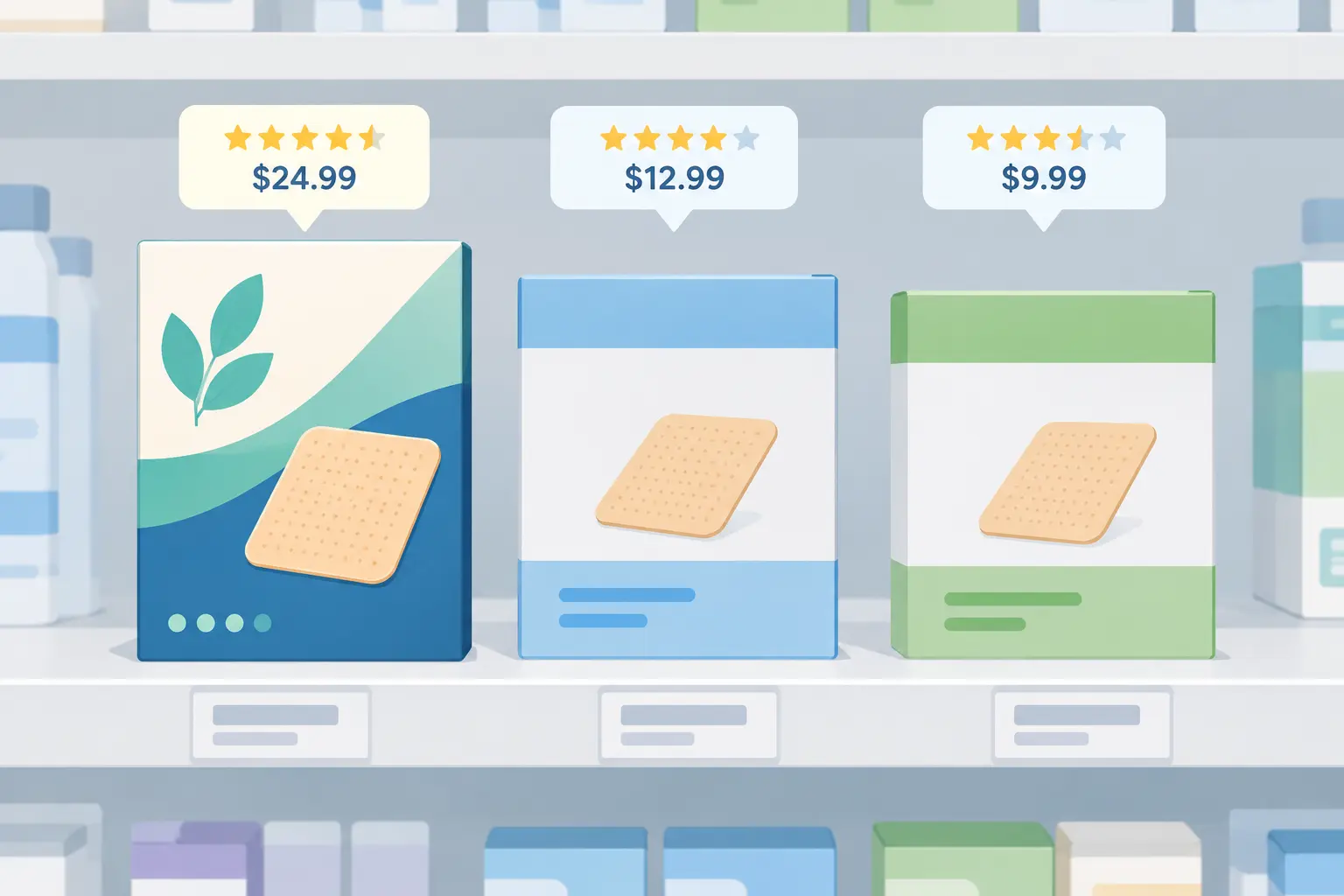
Our pick: start with a store-brand 24-hour patch. If it irritates your skin, peels off, or you want something nearly invisible under a T-shirt, switch to NicoDerm CQ. The nicotine dose is the same either way.
How We Ranked the Nicotine Patches
Because every approved patch delivers nicotine through the skin in the same basic way, effectiveness is broadly similar across brands at the same dose. So we focused on factors that affect whether people keep wearing the patch every day for the full course:
- Adhesion: does it stay on through sleep, showers and exercise?
- Skin irritation: how likely is redness, itching or a rash at the patch site?
- Discretion: clear vs tan or opaque backing.
- Cost per week across a typical 8 to 10 week program.
- Availability of all three steps, so you can taper without switching brands.
Skin reactions and adhesion vary a lot from person to person, so our rankings reflect the general trade-offs rather than a guarantee. If you want the deeper evidence on whether cheaper versions really perform the same, see our guide to generic vs brand name nicotine patches.
Brand-by-Brand Nicotine Patch Reviews
1. Store-brand 24-hour patches: best value
Most US pharmacy chains and big-box stores sell their own nicotine transdermal system in 21, 14 and 7 mg steps. These generics are FDA-approved and must deliver the same nicotine as the brand-name product they are compared with.
- Pros: lowest cost per week, widely available, all three steps.
- Cons: often tan or opaque, so more visible; adhesive and backing differ between store brands, so comfort can vary.
- Verdict: the sensible default. If one store brand irritates you, try another before paying for the brand.
2. NicoDerm CQ: best for discretion and sensitive skin
NicoDerm CQ is the best-known US patch, with a clear patch that is hard to spot on most skin tones. Its package directions allow removing the patch at bedtime if you have vivid dreams or sleep problems, which gives it 16-hour flexibility.
- Pros: clear and discreet, consistent quality, detailed quit program materials.
- Cons: usually the most expensive option per week.
- Verdict: worth it if appearance matters to you or if generics do not stick or irritate your skin.
3. Habitrol: a branded alternative
Habitrol is another long-standing branded 24-hour patch with the same three-step dosing. It is less widely stocked than NicoDerm CQ in many stores but can be a good middle option if you want a brand name and find it at a better price.
- Pros: branded consistency, same step-down program.
- Cons: opaque backing, availability varies.
Outside the US
In the UK and many other countries, the main choices are Nicorette Invisipatch, a 16-hour patch in 25, 15 and 10 mg steps, and NiQuitin Clear, a 24-hour patch in 21, 14 and 7 mg. NHS stop smoking services can supply patches and advise on which suits you; the NHS overview of stop smoking treatments explains the options.
Cost per Week: Brand vs Generic Nicotine Patches
Prices vary by store, region and pack size, so always compare the price per patch. As an illustrative example, assume a 14-patch box costs $50 for the brand and $30 for a store brand. These are example figures, not national averages.
| Program | Patches | Brand (example) | Store brand (example) |
|---|---|---|---|
| Per week | 7 | About $25 | About $15 |
| 10-week program | 70 | About $250 | About $150 |
| Versus a pack a day at $9 for 10 weeks | N/A | About $630 spent on cigarettes | |
Even the brand-name course usually costs less than continuing to smoke over the same period. Check whether your insurance, Medicaid, employer plan or state quitline covers patches for free or at low cost; many do.
16-Hour vs 24-Hour Nicotine Patches
| 24-hour patch | 16-hour patch | |
|---|---|---|
| Wear pattern | On around the clock, change daily | On when you wake, off at bedtime |
| Morning cravings | Better controlled | Can be stronger on waking |
| Vivid dreams / sleep issues | More likely | Less likely |
| Best for | People who smoke soon after waking | Light sleepers, daytime smokers |
Both work. If you smoke within 30 minutes of waking, a 24-hour patch usually suits you better. If vivid dreams bother you, remove a 24-hour patch at bedtime or choose a 16-hour product.
Choosing Your Starting Strength
Package directions for most 24-hour patches follow a similar schedule. Always follow the label for your product, and ask a pharmacist if you are unsure.
| If you smoke | Start with | Typical schedule |
|---|---|---|
| More than 10 cigarettes a day | 21 mg (Step 1) | About 6 weeks at 21 mg, 2 weeks at 14 mg, 2 weeks at 7 mg |
| 10 or fewer a day | 14 mg (Step 2) | About 6 weeks at 14 mg, 2 weeks at 7 mg |
According to MedlinePlus, patches are generally used for 6 to 20 weeks depending on package directions, you should never wear two patches at once, and you should not smoke or use other nicotine products while using them because of the risk of too much nicotine. For more detail, read our guide on whether you can smoke while using nicotine patches.
Many people do better pairing a patch with a fast-acting product for breakthrough cravings. Our guide to the best nicotine gum compares options that work well alongside a patch.
Fixing Adhesion and Skin Irritation
Patches that fall off or itch are the most common reason people quit the patch early. These steps help with any brand.
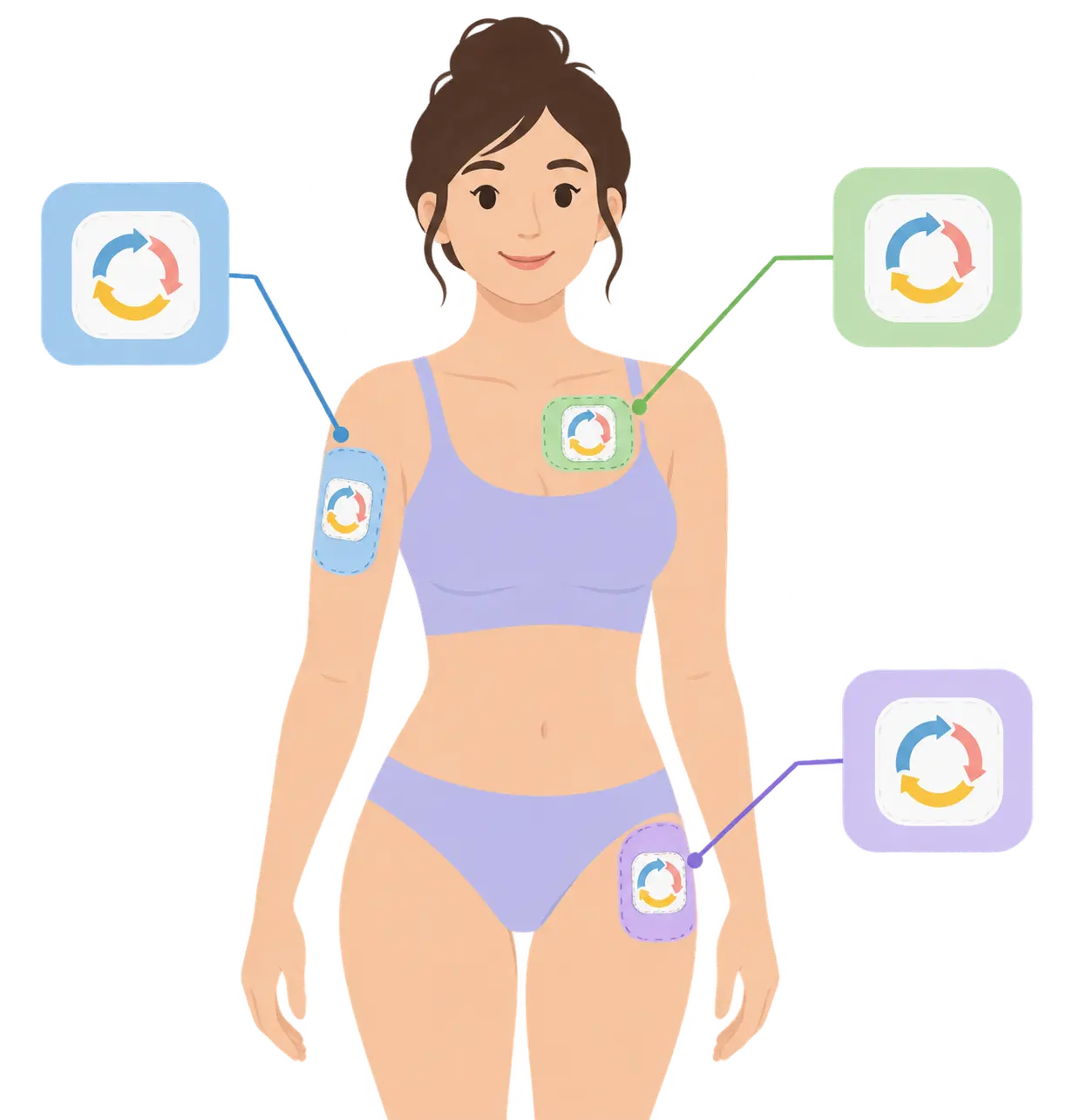
To keep the patch on
- Apply to clean, dry, hairless skin with no lotion, oil or powder.
- Press firmly for about 10 seconds, especially at the edges.
- Avoid areas that bend a lot or rub against waistbands or straps.
- If a patch loosens or falls off, replace it with a new one rather than taping a used one.
To reduce irritation
- Rotate sites every day and avoid reusing the same spot for several days.
- Never apply to broken, scarred or irritated skin.
- Mild redness after removal is common and usually fades. Severe rash or swelling needs medical advice.
- If one brand irritates you consistently, try another; adhesives differ.
Do Nicotine Patches Work? Success Rates
Patches are one of the FDA-approved first-line treatments for quitting smoking, and they roughly replace the steady background nicotine your body is used to, easing withdrawal while you break the habit. The evidence is strongest when patches are combined with a fast-acting form of NRT.
A 2019 Cochrane review led by researchers at the University of Oxford found that just over 17% of people who combined a patch with another type of NRT quit for six months or longer, compared with about 14% using a single type. Read the Oxford summary of the review. The same review found that higher-dose patches helped heavier smokers more than lower doses.
For a full breakdown of NRT success data, see our nicotine patch success rate statistics, and for a side-by-side look at every NRT format, read our comparison of nicotine gum vs patch vs lozenge vs inhaler.
How to get the most from a patch
- Start on your quit day and stop smoking completely.
- Use the right strength: under-dosing is a common reason for failure.
- Finish the full course instead of stopping when cravings ease.
- Add support: a quitline, counselor or app improves results.
The iQuit – Quit Smoking App pairs well with patch use: log the patch step you are on, track cravings and see your health milestones and savings grow through the full 8 to 10 weeks.
Best Nicotine Patches FAQ
What are the best nicotine patches?
For most people, a store-brand 24-hour patch is the best value because it has the same nicotine steps as NicoDerm CQ. Choose NicoDerm CQ if you want a clear, discreet patch or if generics irritate your skin or fall off.
Are generic nicotine patches as good as NicoDerm CQ?
Generic patches sold in the US are FDA-approved and deliver the same doses. Differences are mainly in adhesive, backing, color and price.
Which nicotine patch strength should I start with?
Package directions generally recommend 21 mg if you smoke more than 10 cigarettes a day and 14 mg if you smoke 10 or fewer, stepping down over about 8 to 10 weeks.
Is a 16-hour or 24-hour patch better?
24-hour patches help with morning cravings; 16-hour patches may reduce vivid dreams. Both work, and you can remove a 24-hour patch at bedtime if sleep is affected.
How do I stop a nicotine patch from irritating my skin?
Rotate sites daily, use clean, dry, hairless skin, and avoid reusing a spot for several days. Severe rash or swelling needs a doctor.
How do I keep a nicotine patch from falling off?
Apply to skin free of lotion or oil, press firmly for about 10 seconds and avoid hairy or high-friction areas. Replace a patch that falls off.
Do nicotine patches work?
Yes. They are FDA-approved, and Cochrane research shows combining a patch with gum or lozenges raises long-term quit rates compared with a single form.
Can I smoke while wearing a nicotine patch?
Package directions say not to smoke or use other nicotine while using a patch unless a clinician advises it, because of the risk of too much nicotine.