
Figuring out how to quit vaping when your partner vapes is hard because your trigger lives in the same house, sits on the same couch and may be handed to you “just to hold” at the worst moment. A vape is small, quiet and easy to use indoors, so unlike a cigarette it does not announce itself with smoke and an ashtray. The result is that your environment keeps testing you all day, and willpower alone is a weak defense against it.
This guide gives you seven house rules that work in a vaping household, a script for the conversation, a plan for the case where your partner will not quit, and an option for quitting together. Nothing here requires your partner to change, though it works better if they help.
Why a partner’s vape is a stronger trigger than you expect
Nicotine dependence has two parts: the chemical pull and the cues your brain has linked to it. The CDC notes that nicotine is highly addictive and that with repeated use a person’s brain gets used to having nicotine. The cues are the second part, and a partner who vapes supplies them constantly: the sight of the device, the sound of a click, the smell of a flavor, a shared coffee break, the end of a meal.
Vapes make this worse in four specific ways:
- No smell warning. Smoke announces itself and sends people outside. A vape can be used on the couch, in the kitchen or in bed, so you meet the cue in places you are relaxed.
- The device is tiny. It sits on a counter, in a bag or in a coat pocket, where you will see it or find it.
- Borrowing is easy. Reaching for your partner’s device “just once” takes no trip to a shop and no purchase.
- Flavors are cues. A sweet smell in the room can trigger a craving without anyone touching a device.
Plan for those four problems and the house stops working against you. If you want the broader quit plan first, start with the step-by-step plan to quit vaping and come back to these house rules.
How to quit vaping when your partner vapes: 7 house rules
Treat these as a package. Agree them together before your quit date, write them down and put them somewhere you both see.
Rule 1: Vape-free zones
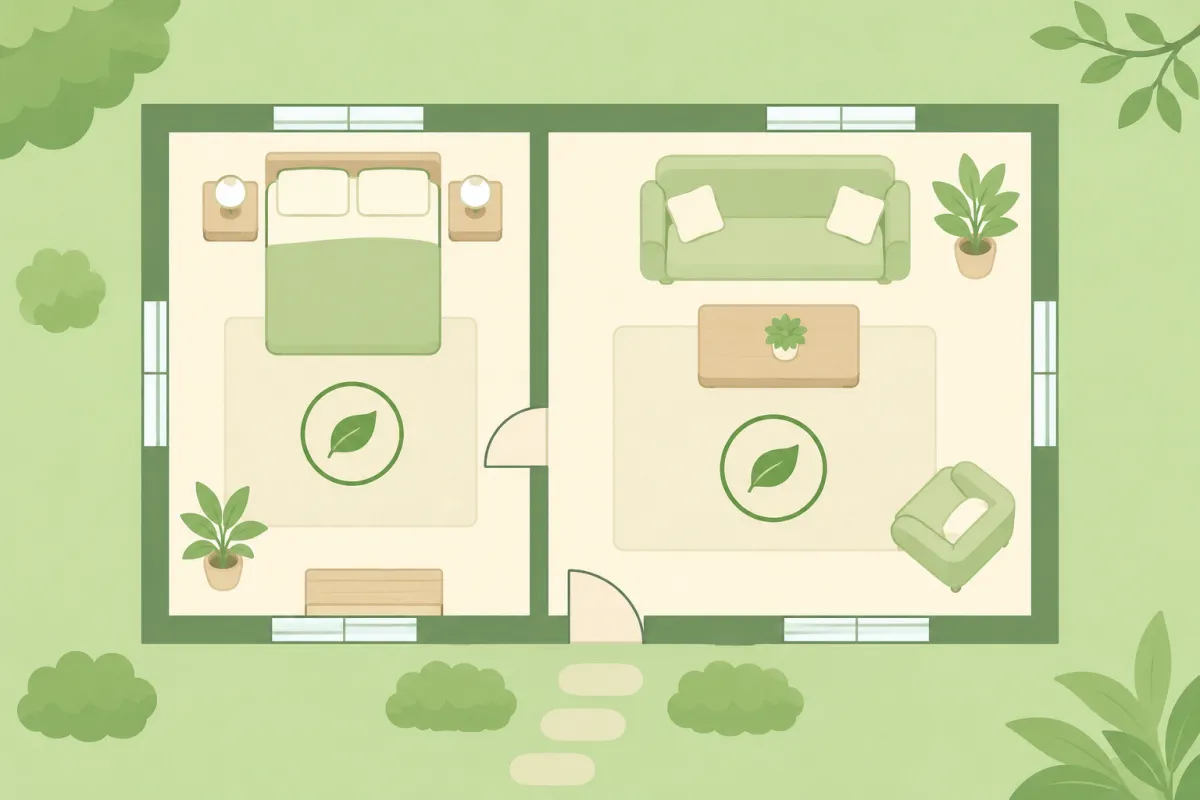
Choose two or three rooms where nobody vapes. The bedroom is the first, because night-time use is a hard habit to break. The kitchen and the sofa are next, since those are where meals and evenings happen.
Rule 2: No shared or “borrowed” devices
Your partner’s device is theirs and not to be offered to you, even as a joke or a test. Make this explicit. If you have your own old device, remove it from the house.
Rule 3: The device lives in one place
Ask your partner to keep their vape, pods and charger in one spot you do not use: a bag, a drawer in their workspace or the garage. Out of sight matters, because a cue you do not see cannot start a craving.
Rule 4: No vaping in the car with you
Cars are small, repetitive and full of triggers. Agree that they do not vape in the car while you are in it, and that you keep your own side of the car clear of supplies.
Rule 5: The “step outside” script
Agree a simple line you can use without a fight, such as “I need a few minutes, can you do it outside?” or “I’m having a rough moment.” A pre-agreed phrase beats improvising when you are already craving.
Rule 6: Shop and clean separately
If you used to buy pods together, your partner buys alone and brings nothing into shared spaces. Clear away the leftovers too: empty pods, spare coils and old chargers. Our guide to getting rid of vapes safely covers batteries and disposal for any device you remove.
Rule 7: A weekly 10-minute check-in
Once a week, ask each other: what worked, what did not, what do we adjust? Include a “slip rule”: if you slip, you say so the same day and nobody lectures. Honest reporting keeps the rules from becoming resentment.
The conversation: what to say and what to avoid
How you ask matters as much as what you ask. Start from your own goal, not your partner’s habit.
What tends to work
- “I’m quitting and I need your help. Can we set a few rules for the house?”
- Pick a calm moment, not a craving moment or an argument.
- Offer something in return: you will not comment on their vaping outside the house, or you will join them for a walk instead of a break.
- Be specific. “Not in the bedroom or car” is easier to follow than “stop vaping around me.”
If they get defensive
A partner who feels judged may hear the rules as an attack. Slow down and say what you are asking for and why: “This is not about your vaping. I know I cannot be around it yet, and I would like us to work out where it happens.” Offer a trial period, such as two weeks, after which you review the rules together. People often accept a temporary arrangement more easily than a permanent one, and two weeks is long enough to see whether the rules are working.
What to avoid
- Demanding that they quit too, in the same breath.
- Criticizing their vaping in front of others.
- Testing yourself by sitting next to them while they vape.
- Waiting until you are in the middle of a craving to make the request.
If the quit date is close, our guide on quitting when you live with a smoker has more wording ideas that translate easily to vapes.
If your partner won’t quit: protecting your quit anyway
Some partners will not quit, and that is their decision. You can still quit. The research on partners is mostly from cigarette smokers, so treat it as a guide: in an Israeli retrospective cohort study of partnered patients who used varenicline to quit smoking, 31% of those whose partner kept smoking reported successful cessation, against 39% with a non-smoking partner and 76% with a partner who also stopped. That is observational data, not proof of cause, but it shows that a partner who keeps using nicotine can make quitting harder, not impossible, and reported success was far higher when both partners quit.
If your partner carries on:
- Hold the rules firmly. The vape-free zones, device storage and car rule matter most when your partner is still vaping.
- Build your own support. A friend, a quitline coach or a group outside the home gives you someone who is not sharing your living room. See finding an accountability partner.
- Plan your exits. When a craving hits and your partner is vaping, you leave the room, you do not negotiate.
- Log it as a trigger. In a craving log, “partner vaping” is its own trigger. Seeing how often it shows up tells you where to focus.
- Check with a clinician. The CDC advises talking to your health care provider about tools and resources and considering counseling and medication together.
For related cigarette-household advice, see when your partner still smokes.
Quitting together: a shared plan that works for both
The same Israeli study found that both partners quitting was associated with increased odds of successful quitting, and its authors urged health providers to engage both partners. Even if your partner is only half-ready, you can offer a low-pressure deal:
- Choose one shared date. A weekend works well, with a day or two off work if possible.
- Clear the house together. Remove every device, pod and charger in one sweep.
- Agree your replacement habits. A walk after dinner, a hobby, a shared snack.
- Keep a shared scoreboard. Count days, money saved and cravings beaten. Our guide to a quit app for couples quitting together shows how couples use tracking.
- Plan for different speeds. One of you may struggle more. Agree in advance that a slip is a reason to help, not to compete.
The free iQuit app can support either path. It is free on Google Play and the App Store, and it lets you log each craving with its trigger and intensity, join community challenges and support groups, and use SOS craving support with breathing exercises and a craving timer.
A short Mayo Clinic video offers seven ways to get past nicotine cravings, handy when the craving arrives with your partner in the room.
For more ways to ride out the worst moments, see techniques for vape cravings.
Aerosol at home: what the evidence says
Many people assume vape aerosol is just water vapor. The CDC’s page on the health effects of vaping says it is not: aerosol from e-cigarettes can contain harmful and potentially harmful substances, including cancer-causing chemicals and tiny particles that can be inhaled deep into the lungs. The same page says the aerosol generally contains fewer harmful chemicals than the mix in cigarette smoke, but that this does not make e-cigarettes safe.
That page describes what the user inhales. How much risk the aerosol poses to people nearby is a separate question that this article cannot put a number on, so avoid both exaggeration (“as bad as smoke”) and dismissal (“harmless”). The practical conclusion is simple: for someone in the first weeks of quitting, a room filled with sweet aerosol is a trigger, and for everyone in the home, especially children, pregnant people and anyone with lung conditions, it is better to keep vaping outdoors. That is why the vape-free zones in Rule 1 benefit the whole household.
Frequently asked questions
How do I quit vaping if my partner still vapes?
Set house rules before your quit date: vape-free rooms, no sharing devices, their device kept out of sight, no vaping in the car, and a script for asking them to step outside. Build support outside the home, log your triggers and have a plan for craving moments.
Should I ask my partner to stop vaping around me?
Yes, and be specific. Asking for no vaping in the bedroom, kitchen or car is easier to follow than a general request. Pick a calm moment and frame it as help for your quit, not a criticism of their habit.
Is secondhand vape harmful?
The CDC says e-cigarette aerosol can contain harmful and potentially harmful substances, including cancer-causing chemicals and fine particles. The risk to bystanders is harder to quantify, so the cautious approach is to keep vaping outdoors, especially around children and pregnant people.
Can couples quit vaping together?
Yes. Most of the research is in cigarette smokers: in the Israeli cohort study described above, reported success was far higher when both partners quit than when one partner kept smoking. Choose one shared date, clear the house together and track progress as a team.
What if my partner refuses to quit?
You can still quit. Keep the house rules, get support outside the home, leave the room when a craving starts and talk to a health care provider about counseling and medication. It may be harder, but it is not out of reach.
Start your quit attempt today
Quit at home, with support
iQuit is free on Google Play and the App Store. Log cravings with their triggers and intensity, join community challenges and support groups, and use SOS craving support when a craving hits.