
If you typed best quit smoking app Reddit into a search bar, you are probably trying to avoid two things: a polished ad disguised as a review, and an app that locks the useful parts behind a subscription after you have already started counting days. Fair instinct. Threads in Reddit’s quit-smoking communities are a good place to ask a question and hear from people who have been where you are. They are a poor place to settle one, because every reply is a single person’s experience, the top answers change from week to week, and none of it is a controlled trial.
This guide takes a different route. It does not rank apps by upvotes or quote usernames. It checks what the research actually says about quit-smoking apps, shows what the main apps disclose on their own store listings, and gives you five checks you can run in about ten minutes to find the best quit smoking app for you. If you want the community side of the story, our separate piece on the quitting advice Reddit gets right covers what peer support does well.
The short answer: what “best” can and cannot mean
“Best” depends on what you need the app to do. If you want a simple counter, almost any free tracker works. If you want help in the middle of a craving, you need something with in-the-moment tools. If you want coaching, you need an app that talks back. No app on any list can promise that it will be the reason you quit, and the independent evidence is a good reason to stay modest about that (more on this below).
What does hold up is a practical principle: an app is a tool inside a quit plan, not the plan itself. People who do best usually combine several supports, such as a quit date, a quitline or clinician, medication where appropriate, and a way to track progress and handle cravings. An app can cover the last two cheaply, which is why the question is worth taking seriously.
| If you mainly want… | Look for… | Watch out for… |
|---|---|---|
| A free progress counter | Days smoke-free, cigarettes avoided, money saved on the free tier | Ads that interrupt cravings; subscription prompts at day 3 |
| Help during a craving | A craving timer, breathing or grounding exercises, a craving log | A “tip of the day” that is not usable in the moment |
| A forgiving streak | A way to log a slip without losing your history | A counter that wipes everything after one cigarette |
| Coaching or structure | A guided program or an AI coach with a free tier | A “free download” where the program itself is paid |
| Something that works alongside medication | Tracking that fits patches, gum or prescription treatment | Apps that treat any nicotine as a failure |
Why Reddit threads are a starting point, not a verdict
Community threads do three things well. They show you which questions other quitters had at day 3, day 30 and month 6. They surface apps you may not have heard of. And they remind you that you are not the only one struggling. That is real value, and it is part of why peer support keeps showing up in quit programs.
They are weaker as a way to pick software. A glowing comment may come from someone who was already motivated and would have quit with a paper calendar. A scathing one may come from someone who hit a bug on an older version. App stores update pricing, features and paywalls constantly, so a recommendation from two years ago can describe a different product today. And a thread rarely tells you whether the person who liked the app was also using a quitline or a patch, which is often the part that mattered.
So treat any thread as a list of questions to test, not answers to copy. The five checks later in this article turn those questions into something you can verify yourself. If you want a broader view of what a free app should include before you compare options, what a free stop smoking app should include is a good companion read.
What the research says about quit smoking apps
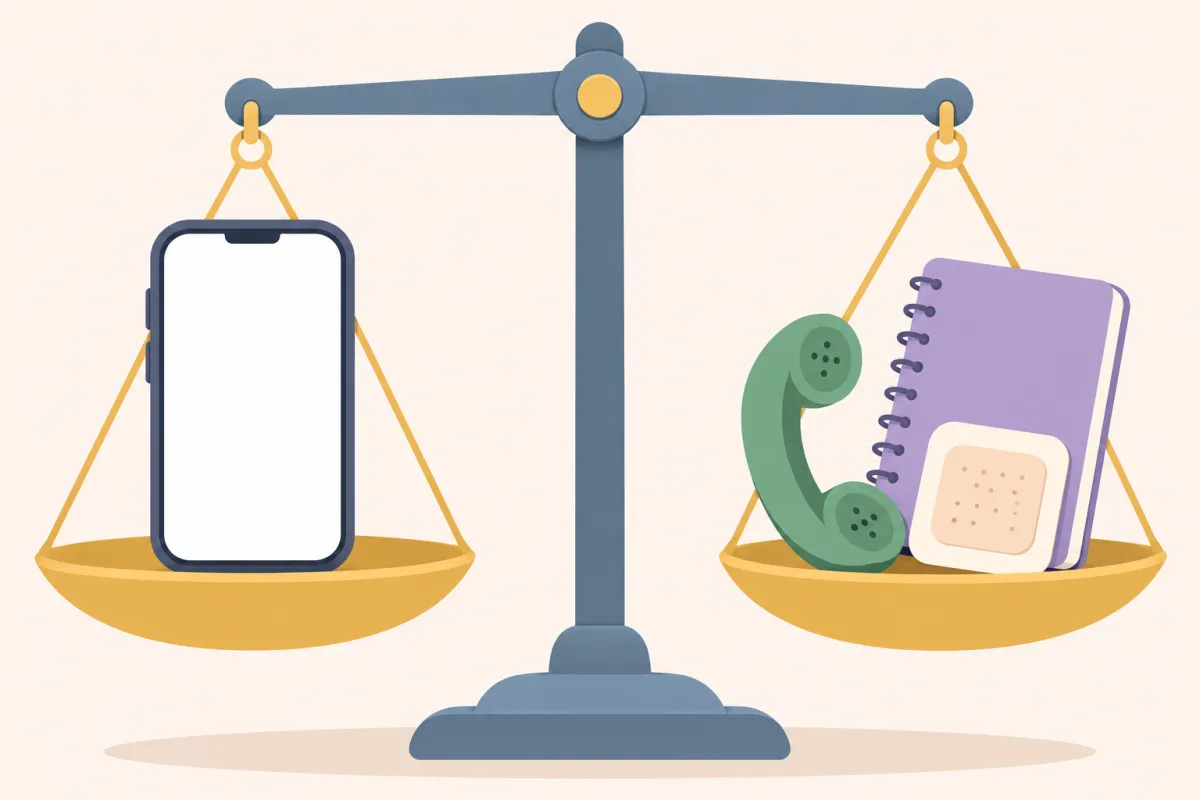
Two independent reviews are worth knowing, and neither one says apps are useless. They say the evidence is thinner than the app store marketing suggests.
The Cochrane review of mobile phone interventions, led by Whittaker and colleagues and published in 2019, pooled 26 studies with 33,849 participants. It found moderate-certainty evidence that automated text messaging programs beat minimal support (risk ratio 1.54). For smartphone apps specifically, five studies compared an app with lower-intensity support and found no evidence that apps improved the likelihood of quitting (risk ratio 1.00, 95% confidence interval 0.66 to 1.52). The reviewers rated that evidence as very low certainty and said more randomized trials were needed. In other words, the answer was “we cannot tell yet,” not “apps fail.”
A 2023 systematic review and meta-analysis by Guo and colleagues in the Journal of Medical Internet Research looked at nine randomized trials with 12,967 adults. Pooled across follow-up points, app interventions did not differ significantly from comparators (odds ratio 1.25, 95% confidence interval 0.99 to 1.56). Two details matter for your decision. First, the three trials that combined an app with medication, compared with medication alone, found higher abstinence (odds ratio 1.79, 95% confidence interval 1.38 to 2.33). Second, apps with higher user adherence were significantly more effective (odds ratio 1.48). The authors concluded that app-only delivery was not supported, while apps combined with pharmacotherapy looked more promising.
Put plainly: an app is most likely to help when you actually use it and when it sits alongside other support. That is also what our own roundup of what the data shows on app effectiveness concludes. It also means the most useful features are the ones that keep you coming back on the hard days, which is where the five checks come in.
A short explainer from a major medical center on the kinds of tools that support a quit attempt:
The apps people compare most, and what their own listings say
Roundups and quitting communities tend to circle the same handful of names. Rather than repeat anyone’s opinion, the table below sticks to facts the App Store listings and the government quit-smoking site publish themselves, checked on 18 November 2026 on the US storefront. Prices and features change, so always confirm on the live listing before you install or pay.
| App | Publisher on the listing | Download cost | What to confirm on the listing |
|---|---|---|---|
| QuitNow | Fewlaps SL | Free to download | Which features need a subscription |
| Smoke Free | 23 Ltd | Free to download | Which features need a subscription |
| Kwit | KWIT | Free to download | Premium plans: the US listing shows weekly through lifetime options |
| quitSTART | ICF International (Smokefree.gov, US National Cancer Institute) | Free | Smokefree.gov describes it as a free app with tailored tips, inspiration and challenges |
| My QuitBuddy | Department of Health, Australian Capital Territory | Free to download | Built for Australian users; check local numbers and services |
| Craving to Quit | Sharecare, Inc. | Free to download; first 4 modules free | The full 21-module program is a paid subscription |
| iQuit: Stop Smoking & Quit | The iQuit developer (that is us) | Free on Google Play and the App Store | Optional Premium unlocks unlimited AI coach messages |
Notice what the table does not say: it does not say which one is best. That is deliberate. For a head-to-head on features, our comparison of iQuit, Smoke Free, QuitNow and Kwit goes feature by feature, and the Smokefree.gov quitSTART page describes the free US government option.
Best quit smoking app Reddit can’t pick for you: five checks
Run these in order. Each takes a couple of minutes and replaces a vague impression with something you can verify.
1. Is the free version actually useful?
Install the app and use it for ten minutes before you set a quit date. Can you log a craving, see money saved and read your progress without hitting a paywall? A free tier that is only a trial is fine if you know that going in, but you should know it before you build a habit around the app.
2. What happens when you slip?
This check is easy to skip and costly to miss. Many trackers reset to zero after a single cigarette, which can feel like a verdict. Lapses are common in quit attempts, and a design that punishes them can push people to uninstall instead of continue. Look for an app that lets you log a slip and keep your history. Our article on why a streak reset can trigger relapse explains the problem in more depth.
3. Does it help in the moment, not just afterwards?
A progress dashboard is motivating on calm days. A craving lasts a few minutes, so the question is whether the app gives you something to do right then: a timer, a breathing exercise, a grounding exercise, a distraction. Open the craving feature and try it while you are not craving, so you know where it is when you are.
4. What does it really cost over a year?
Check the subscription options on the listing, then multiply. A weekly plan that looks cheap can cost more than a lifetime option over a year. For a plain-language breakdown, see how much quit smoking apps cost. Remember that free supports exist too, including quitlines and government apps.
5. Does it fit the rest of your plan?
Given the research above, the app should complement the rest of your plan, not replace it. If you plan to use patches, gum or a prescription, choose an app that tracks that journey rather than treating nicotine replacement as failure. If you want support from a clinician or quitline, make sure the app does not get in the way.
The complaints worth taking seriously before you install
A few concerns are worth having in mind whenever you choose a quit app, and each one maps onto something you can test. Treat them as a checklist, not a verdict on any one product.
- Paywalls after you are invested. The fix is the check above: use the free version before committing, and read the subscription terms on the store listing.
- Ads at the worst moment. An ad that appears when you open the app during a craving is a design problem. Try the app on a quiet day and see how often it interrupts you.
- Streak resets after a slip. Covered above. A forgiving recovery flow is a feature, not a loophole.
- Generic advice. Tips that do not change with your triggers and progress feel like pamphlets. Apps that log triggers and intensity can show you your own patterns.
- Nothing for the first 72 hours. Withdrawal and cravings can be intense in the first days, so an app that goes quiet after day one is not helping when you need it most.
None of these is a reason to avoid apps. They are reasons to choose one deliberately instead of installing the first result, and to spend ten minutes testing before you commit to a quit date.
Where iQuit fits
We make iQuit, so weigh this section accordingly and use the checks above to test it like any other app. iQuit: Stop Smoking & Quit is free on Google Play and the App Store. Here is how it answers the five checks, using only what the app does.
- Free core: a dashboard with days smoke-free, cigarettes avoided and money saved, plus craving logging with triggers and intensity, so you can see patterns over time.
- In the moment: SOS craving support with breathing exercises, grounding, distraction tips, craving timers, a virtual cigarette and craving surfing.
- Slips: streak shields and slip recovery, so one cigarette does not erase your progress.
- Coaching: an AI coach that adapts to your progress, with free daily messages and unlimited messages in Premium.
- Your way: cold turkey or gradual reduction, and a health-recovery timeline that shows what your body is doing as time passes.
For a full walkthrough, read our full iQuit app review. Whatever you choose, give it a fair trial against the five checks, and keep a human in your corner: a quitline, a clinician, or a friend who knows your quit date.
A simple plan for the next ten minutes
Pick two or three apps from the table or from your own search. Install them, then run checks 1 to 3 on each: how much is usable for free, what happens after a logged slip, and where the craving tool lives. Delete the ones that fail. Keep one app, set a quit date you can actually keep, and tell one person about it.
If you want to compare how a single app holds up against another before you commit, the brand-by-brand reviews on this site, such as the one on the free quitSTART app, show the same approach used in this article: facts from the app’s own listing, a fair look at what it lacks, and no store scores that change by country.
Frequently Asked Questions
What is the best free app to quit smoking according to Reddit?
There is no single answer, because threads change constantly and each reply is one person’s experience. Instead of picking by upvotes, choose a free app that tracks progress, helps during a craving and lets you recover from a slip, then confirm what is free on its store listing.
Is Smoke Free or QuitNow better?
Both are free to download on the US App Store, and which one suits you depends on which features sit behind a subscription and how each handles slips and cravings. Test both for ten minutes using the five checks and keep the one you actually open.
Do quit smoking apps actually work?
The evidence is mixed. Published reviews found very low certainty evidence for smartphone apps against lower-intensity support, and app-only interventions did not differ significantly from comparators, though apps combined with medication looked more promising.
Is there a quit smoking app with no ads?
Some apps are ad-supported and some are not. Check the store listing and use the app on a quiet day to see how often it interrupts you. Government-built apps such as quitSTART are described by Smokefree.gov as free.
What app do people use to quit vaping?
Several general quit apps support vaping and nicotine tracking, and Kwit’s listing mentions vaping support. Check each listing for vaping features, because many apps are designed around cigarettes first. See our vaping guides for support beyond an app.
Should I use an app instead of a quitline or medication?
The research points the other way: apps look most useful as an addition to other support, especially medication. Use the app for tracking and cravings, and keep a quitline, clinician or nicotine replacement in your plan.
Test iQuit against the five checks
iQuit: Stop Smoking & Quit is free on Google Play and the App Store. Track days smoke-free, cigarettes avoided and money saved, and use SOS craving support when a craving hits.
Download iQuit Free on Google Play Download on the App Store