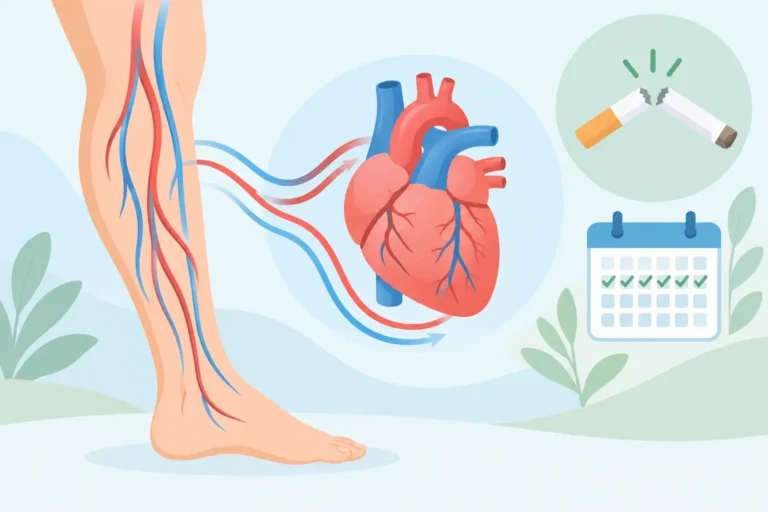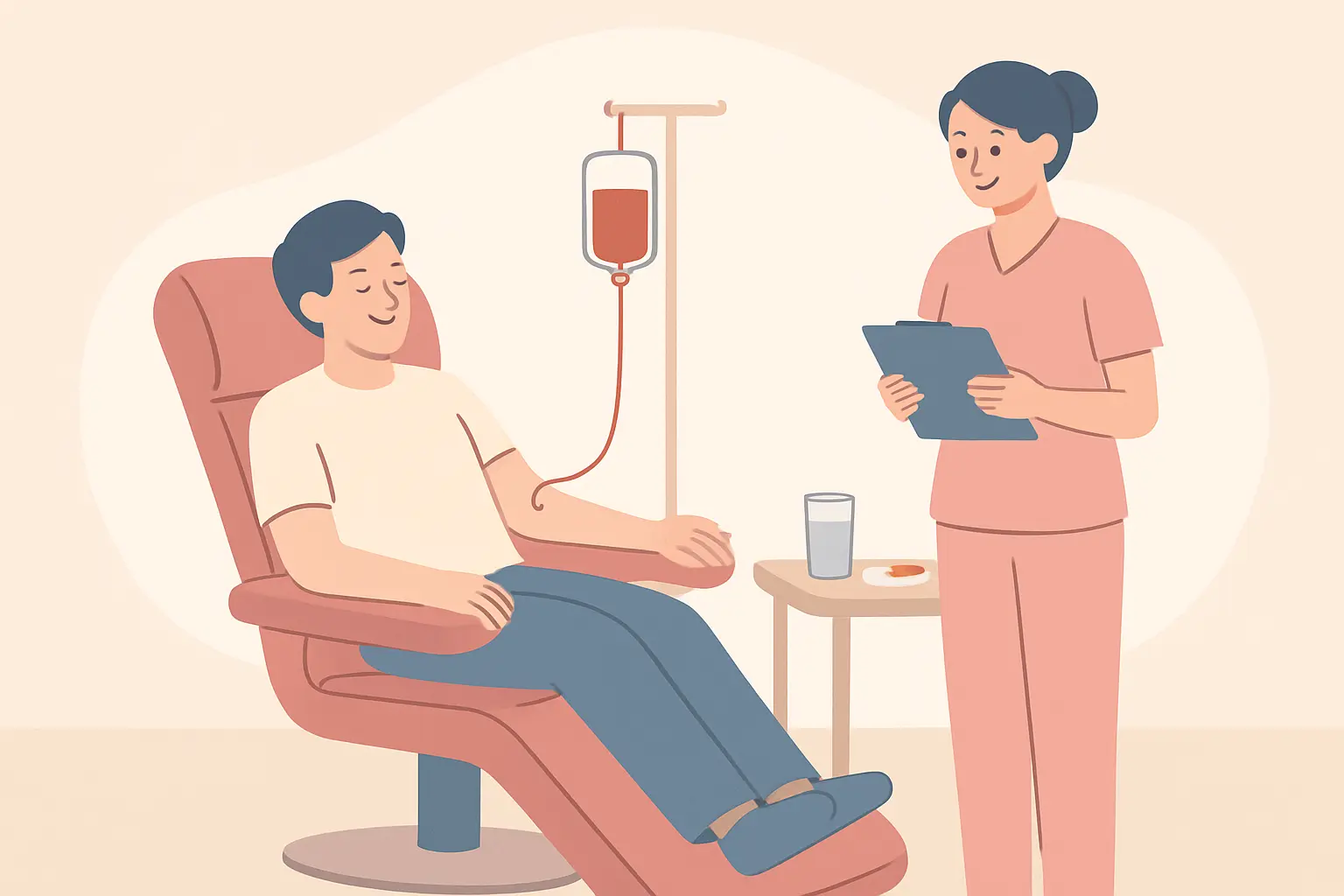
Yes. The short answer to can you donate blood if you smoke is that smoking is not a reason to be turned away. We checked the published eligibility rules of NHS Blood and Transplant, the American Red Cross and Canadian Blood Services on 16 September 2026, and none of them lists smoking, tobacco or nicotine as a deferral at all. You are assessed on the same criteria as everyone else.
That is the eligibility answer. The more interesting question is what smoking does to the donation itself, and to how you feel afterwards, and there the timing of your last cigarette does matter.
The short answer
Blood services defer donors for things that make the donation unsafe for the donor or the recipient: certain infections, some medications, recent travel, low iron, recent tattoos. Smoking is not on those lists.
That is easy to misread as an endorsement, so be clear about what it means. It means your blood is wanted and usable. It does not mean smoking is neutral for the blood in your body, and the sections below explain the difference.
What each blood service actually says
Here is what the three services publish, checked on 16 September 2026. In each case the smoking column is empty because the word does not appear in their donor criteria at all.
| Service | Age | Weight | Interval between whole blood donations | Smoking rule |
|---|---|---|---|---|
| NHS Blood and Transplant (UK) | 17 to 65 for a first donation, up to 72 if you have donated before | Between 7 stone 12 lbs (50 kg) and 25 stone (158 kg) | Every 12 weeks for men, every 16 weeks for women | Not mentioned |
| American Red Cross (US) | At least 16 in most states | At least 110 lbs | Every 56 days, up to 6 times a year | Not mentioned |
| Canadian Blood Services | At least 17 | Height and weight requirements apply to donors aged 17 to 23 | Every 56 days for males, every 84 days for females | Not mentioned |
NHS Blood and Transplant asks that you be generally fit and well with suitable veins, which they check on the day. The American Red Cross sets higher thresholds for a Power Red donation, at least 17 and 5 feet 1 inch and 130 lbs for male donors, at least 19 and 5 feet 3 inches and 150 lbs for female donors. Canadian Blood Services asks that you be in good general health and able to perform your normal day-to-day activities.
Rules change, and they differ outside these three countries. If you donate somewhere else, check that service’s own page rather than assuming the answer transfers.
Why smoking right before you donate matters
Cigarette smoke contains carbon monoxide, and carbon monoxide does not politely wait its turn. A 2023 review in Antioxidants puts the mechanism simply: carbon monoxide rapidly diffuses through tissues and binds to hemoglobin, increasing carboxyhemoglobin levels. Every hemoglobin site holding carbon monoxide is a site not holding oxygen.
That is why stop smoking services measure it. NHS stop smoking services offer a breath test showing the level of carbon monoxide, a poisonous gas in cigarette smoke, at every meeting.
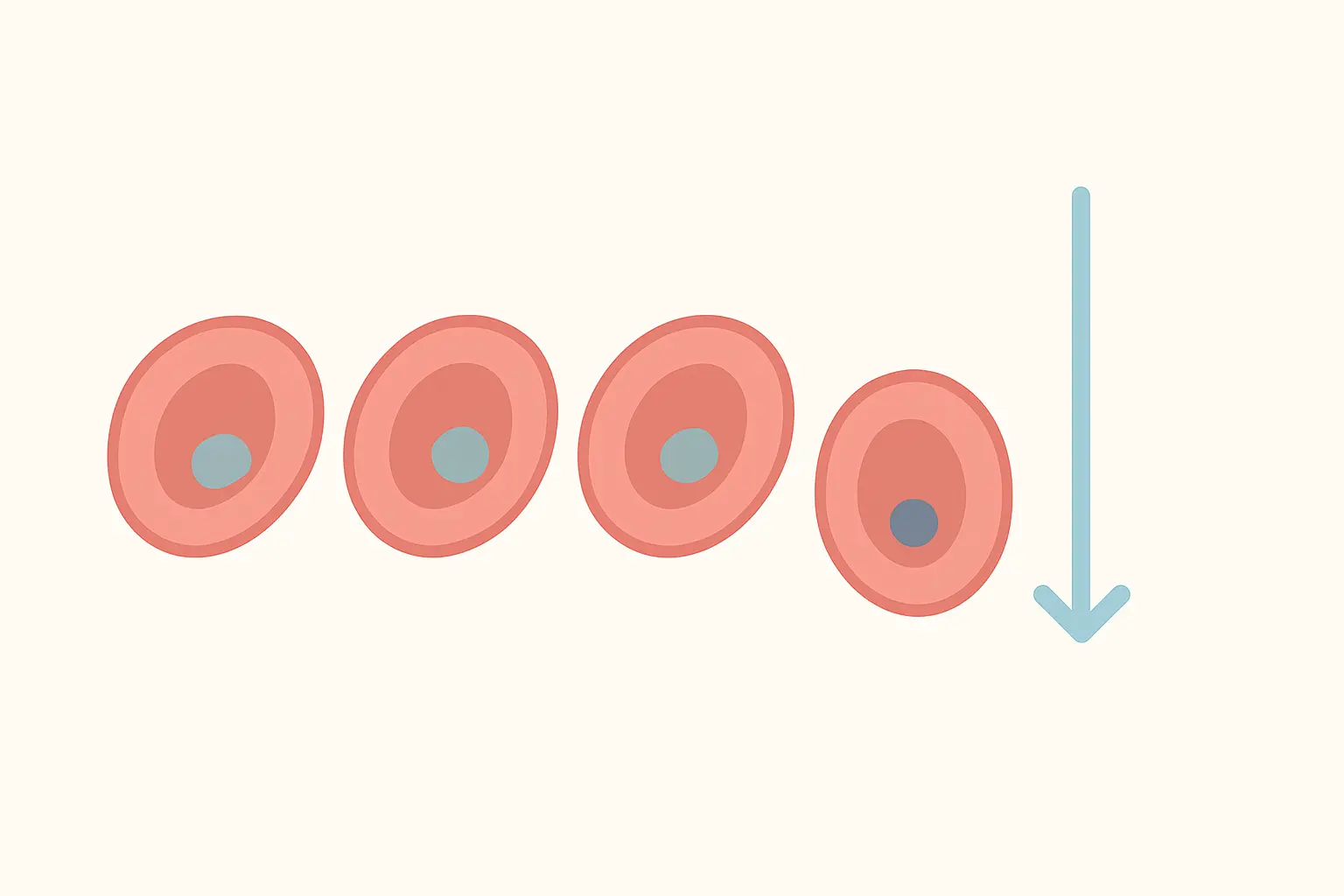
The good news is how quickly it clears. The 2019 Society for Research on Nicotine and Tobacco biochemical verification update gives exhaled carbon monoxide a half-life of two to eight hours depending on physical activity, and puts the time to fall below the 5 to 6 ppm cutpoint at roughly 12 to 24 hours after stopping. So a cigarette in the car park is still in your blood at the chair, and a night without one is not.
No service requires a gap. But if you want to arrive in the best shape for a donation that takes a pint out of you, the practical version is: no cigarette in the hour or two before your appointment, eat properly, and drink the fluids they ask for.
Smoking after you donate
NHS Blood and Transplant’s post-donation advice is specific and, notably, says nothing about smoking. It asks you to keep the pressure dressing on for about 30 minutes and the plaster on for 6 hours, rest for a short time, have at least two drinks and a snack before leaving, avoid carrying anything heavy with the donation arm for the rest of the day, and avoid a hot bath.
Read that list again and the logic becomes obvious. Everything on it is about not fainting and not restarting the bleed. Standing outside in the cold, lightheaded, doing something that reduces the oxygen your remaining red cells can carry, fits the pattern of things they are asking you to avoid, even though nobody has written it down as a rule.
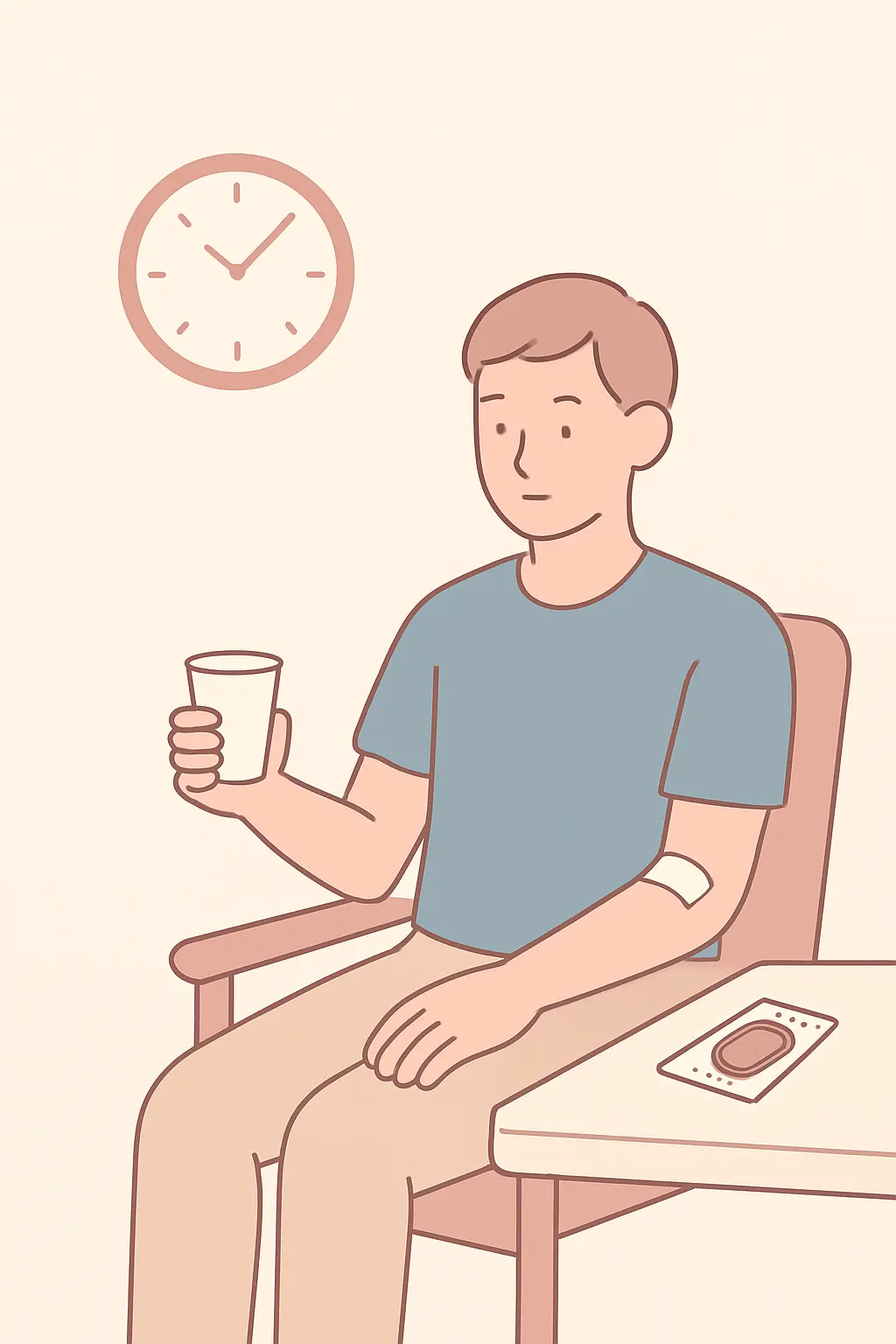
A reasonable personal rule: wait until you have had the drink and the snack, sat for the full rest period, and feel completely steady. If you feel faint, the official advice applies, which is to lie down immediately, rest until you feel better and drink plenty of fluid.
Does your blood get used differently?
We found nothing in the published material from any of these services that separates, screens or transfuses donations differently on the basis of smoking, and we are not going to invent a process that we cannot show you. Donated units are tested, processed and matched the same way.
What is true is that the carbon monoxide bound to your hemoglobin at the moment of donation goes into the bag with it. That is a real effect with an unclear clinical significance in transfusion, and it is an area where we could not find solid published guidance. Treat anyone who states a confident number here with caution.
This short film from NHS Blood and Transplant follows a donation from the chair through testing to the patient who receives it.
Vaping, pouches and nicotine replacement
The same answer applies, and for the same reason: none of the three services mentions nicotine in any form in its donor criteria. Vaping and nicotine pouches are not deferrals on the pages we checked.
There is one physiological difference worth knowing. Carbon monoxide comes from combustion, so products that do not burn tobacco do not produce it. The SRNT report is explicit that exhaled carbon monoxide detects consumption of combustible products. Nicotine still circulates, of course, and if you want to know how long that lasts, our guide to how long nicotine stays in your body covers it, while whether patches and gum show up on a nicotine test explains which markers separate tobacco from medicinal nicotine.
Passing the checks on the day
The checks that actually stop people donating are not about smoking. They are these:
- The hemoglobin or iron check. The American Red Cross treats low iron as its own deferral category with its own guidance, and it is one of the most common reasons a donation does not go ahead.
- Feeling well on the day. All three services ask for good general health, and Canadian Blood Services phrases it as being able to perform your normal day-to-day activities.
- Veins, hydration and food. NHS Blood and Transplant checks veins on the day and wants you to eat and drink around the appointment.
Turning up well hydrated, fed, and without a cigarette in the last hour costs you nothing and makes all three of those easier.
What changes when you quit
If you are reading this because donating made you think about your blood for the first time in years, that is a reasonable place for a quit to start. Carbon monoxide is the fastest thing to go, measurably lower within a day of your last cigarette, which is exactly why stop smoking services use it as an early win.
The rest follows a schedule you can track. Our week-by-week guide to the first 12 weeks sets out what changes and when, immune recovery after quitting covers the slower repairs, and our risk profile across 11 conditions puts the long-run numbers in one place. If you share a home with other people, our summary of secondhand smoke data is worth a look too.
A donation gives you a natural checkpoint. iQuit, free on Google Play and the App Store, has a health-recovery timeline that shows where you are from your quit date, including the early carbon monoxide milestone, alongside a days-smoke-free counter and craving logging. Booking your next donation and setting a quit date for the same week is a surprisingly effective pairing, because both give you a fixed date and a visible result.
One more thing worth knowing: if you are weighing up a nicotine test for a job or a policy at the same time, our guide to who tests for nicotine and why explains what those tests measure and how the timing works.
Smoking and Blood Donation FAQ
Can you donate blood if you smoke?
Yes. On the donor criteria published by NHS Blood and Transplant, the American Red Cross and Canadian Blood Services, checked on 16 September 2026, smoking is not listed as a reason to be deferred. You are assessed on age, weight, general health, iron levels and the usual travel and medication questions.
How long should you wait after smoking before giving blood?
None of these three services publishes a required waiting period. As a personal rule, leaving an hour or two is sensible: exhaled carbon monoxide has a half-life of two to eight hours and takes roughly 12 to 24 hours to fall below the usual cutpoint (SRNT, 2019).
Can you smoke straight after donating blood?
No blood service we checked bans it. NHS Blood and Transplant does ask you to rest, have at least two drinks and a snack before leaving, avoid heavy lifting with that arm and avoid a hot bath. Waiting until you have done all of that and feel steady is the sensible reading of the same advice.
Does smoking affect your hemoglobin test at the donor session?
The screening test measures hemoglobin, not how much of it is carrying oxygen, so a recent cigarette is not the thing that gets people deferred. Low iron is, and the American Red Cross gives it a dedicated deferral category with its own guidance on raising iron levels.
Can you donate blood if you vape or use nicotine pouches?
Yes, on the criteria we checked. None of the three services mentions vaping, pouches or nicotine in its donor eligibility pages. Products that do not burn tobacco also do not produce carbon monoxide, since exhaled carbon monoxide reflects combustion (SRNT, 2019).
Is a smoker’s blood used differently?
We found no published material from these services describing separate handling, screening or allocation for smokers’ donations. Units are tested and processed the same way. Be skeptical of confident claims either way, because the published evidence on this specific question is thin.
How often can I give blood?
It depends on the service. NHS Blood and Transplant says every 12 weeks for men and every 16 weeks for women. The American Red Cross says every 56 days, up to six times a year. Canadian Blood Services says every 56 days for males and every 84 days for females.
Does quitting smoking improve my blood quickly?
Carbon monoxide is the fastest change. Its half-life is two to eight hours and levels typically fall below the usual smoking cutpoint within 12 to 24 hours of your last cigarette, which is why stop smoking services use a breath test as early feedback (SRNT, 2019; NHS).
Give blood, then give your lungs the same favor
Follow a health-recovery timeline from your quit date, watch the smoke-free days add up, and log cravings with their triggers. iQuit is free on Google Play and the App Store.
Download iQuit Free on Google Play
Download on the App Store