

Does smoking cause gray hair? Research suggests smoking is linked to premature graying. In one 2013 study, smokers were about 2.5 times more likely than non-smokers to start going gray before age 30. Scientists believe oxidative stress from cigarette smoke damages the pigment cells in hair follicles. Quitting will not usually restore lost color, but it may slow further graying.
This guide looks at what the studies actually found, how smoking might affect hair color, what other factors are involved, and what you can realistically expect after you quit.
What do studies show about smoking and gray hair?
Several studies have found that smokers are more likely to go gray early. A 2013 study in the Indian Dermatology Online Journal compared 207 people and defined premature graying as gray hair appearing before age 30. After adjusting for other factors, smokers were about 2.5 times more likely to have premature graying.
In that study, 40.2% of people with premature graying were smokers, compared with 24.7% of those without it. The authors concluded there was a significant relationship between smoking and early graying.
An earlier 1996 report in the BMJ by Mosley and Gibbs looked at 606 patients over age 30 and also found a strong link between smoking and both gray hair and hair loss. The authors suggested this visible effect could be used in health education.
How strong is the evidence?
These studies show an association, not proof that smoking directly causes gray hair. They were relatively small and looked at people at one point in time. Larger, longer studies would help confirm the link. Still, the findings fit with what is known about how smoking damages cells throughout the body.
Why would smoking turn hair gray?
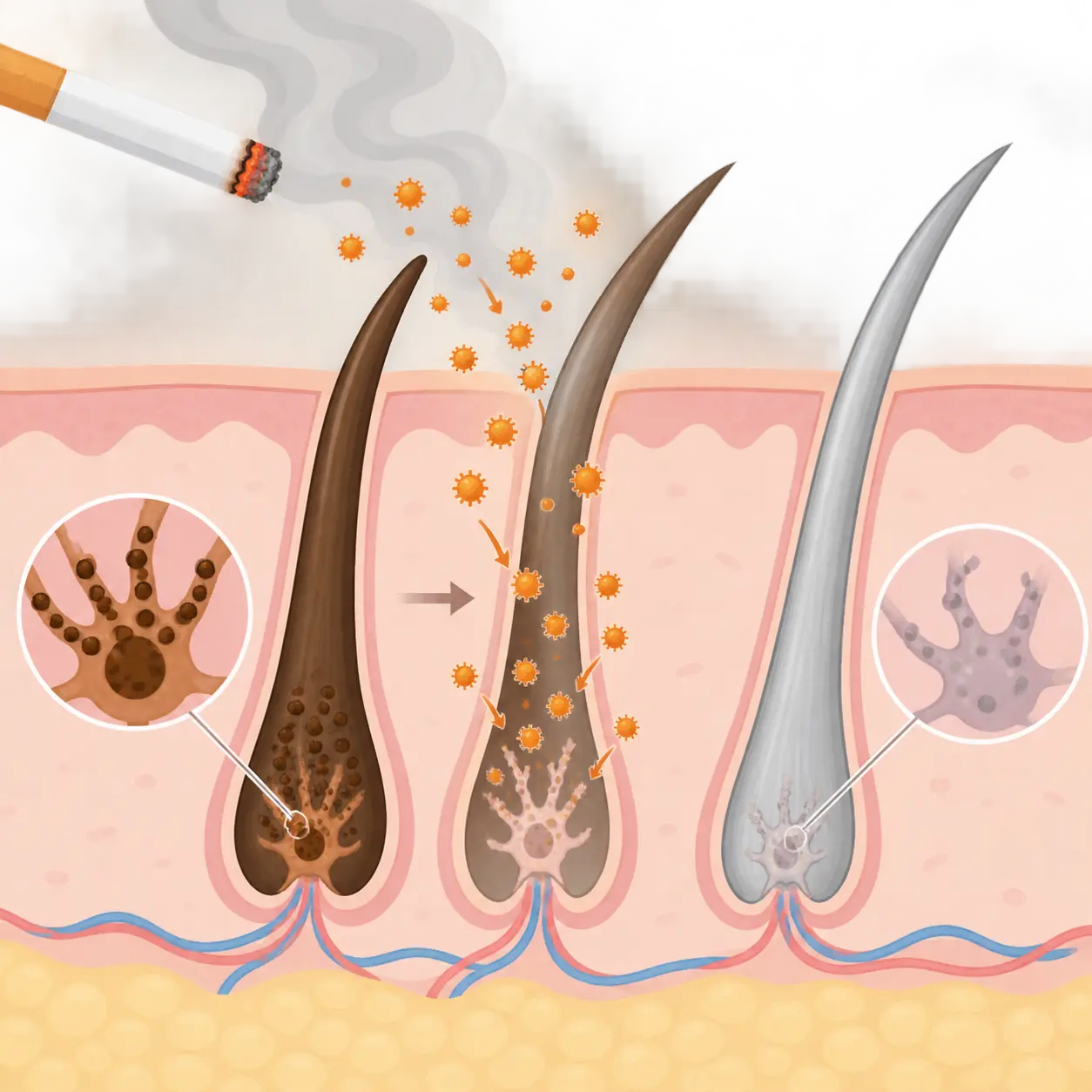
The leading explanation is oxidative stress. Cigarette smoke contains huge numbers of free radicals, unstable molecules that damage cells. Hair color comes from melanocytes, pigment-producing cells at the base of each follicle, and these cells are particularly sensitive to oxidative damage.
Here is how researchers think it works:
- Free radicals attack melanocytes. Smoke increases oxidative stress, which can damage or kill the cells that make pigment.
- Hydrogen peroxide builds up. Hair follicles naturally produce some hydrogen peroxide. Oxidative stress may make it harder for the follicle to break it down, which bleaches hair from within.
- Blood flow drops. Nicotine narrows blood vessels, potentially reducing the oxygen and nutrients reaching hair follicles.
- Antioxidant defenses are depleted. Smoking uses up antioxidants such as vitamin C, leaving cells less protected.
Once melanocytes in a follicle are gone, new hairs from that follicle grow in without pigment. That is why gray hair is usually permanent.
What else causes premature gray hair?
Genetics is the biggest factor, but smoking is one of the few causes you can change. If your parents went gray early, you are more likely to as well. Other contributors include:
- Vitamin B12 deficiency
- Thyroid disorders
- Autoimmune conditions such as vitiligo and alopecia areata
- Low levels of certain minerals, such as copper or iron, in some studies
- Possibly chronic stress, which research in animals has linked to pigment cell loss
Doctors usually consider graying premature if it starts before age 20 in white people, before 25 in Asian people and before 30 in Black people. If you are going gray very early, it is worth asking your doctor whether a blood test for B12 or thyroid problems makes sense.
Can quitting smoking reverse gray hair?
Quitting probably will not bring back color in hairs that are already gray. Once a follicle has lost its pigment cells, they rarely return. But stopping smoking removes a major source of oxidative stress, which may slow the rate at which more hairs turn gray.
There are occasional reports of some repigmentation after major health changes, but these are rare and unpredictable. It is more realistic to think of quitting as protecting the color you still have.
Your body’s antioxidant levels and circulation begin to improve within weeks of quitting. For a full picture of what changes and when, see our guide on what happens when you stop smoking.
How else does smoking affect your hair and skin?
Gray hair is just one visible sign of smoking. The same processes that affect hair pigment also damage skin, teeth and hair growth.
- Hair loss: research links smoking to a higher risk of thinning and baldness, especially in men. Read more in our guide to smoking and hair loss.
- Skin aging: smoking breaks down collagen and elastin, causing earlier wrinkles and a dull complexion. See our article on smoking and skin aging.
- Dry, brittle hair: smoke residue and reduced blood flow can leave hair looking dull.
- Odor: smoke clings to hair and is hard to wash out completely.
Some people notice temporary skin changes after quitting, such as breakouts. If that happens, our guide on whether quitting smoking causes acne explains why and how long it lasts.
Can appearance help motivate you to quit?
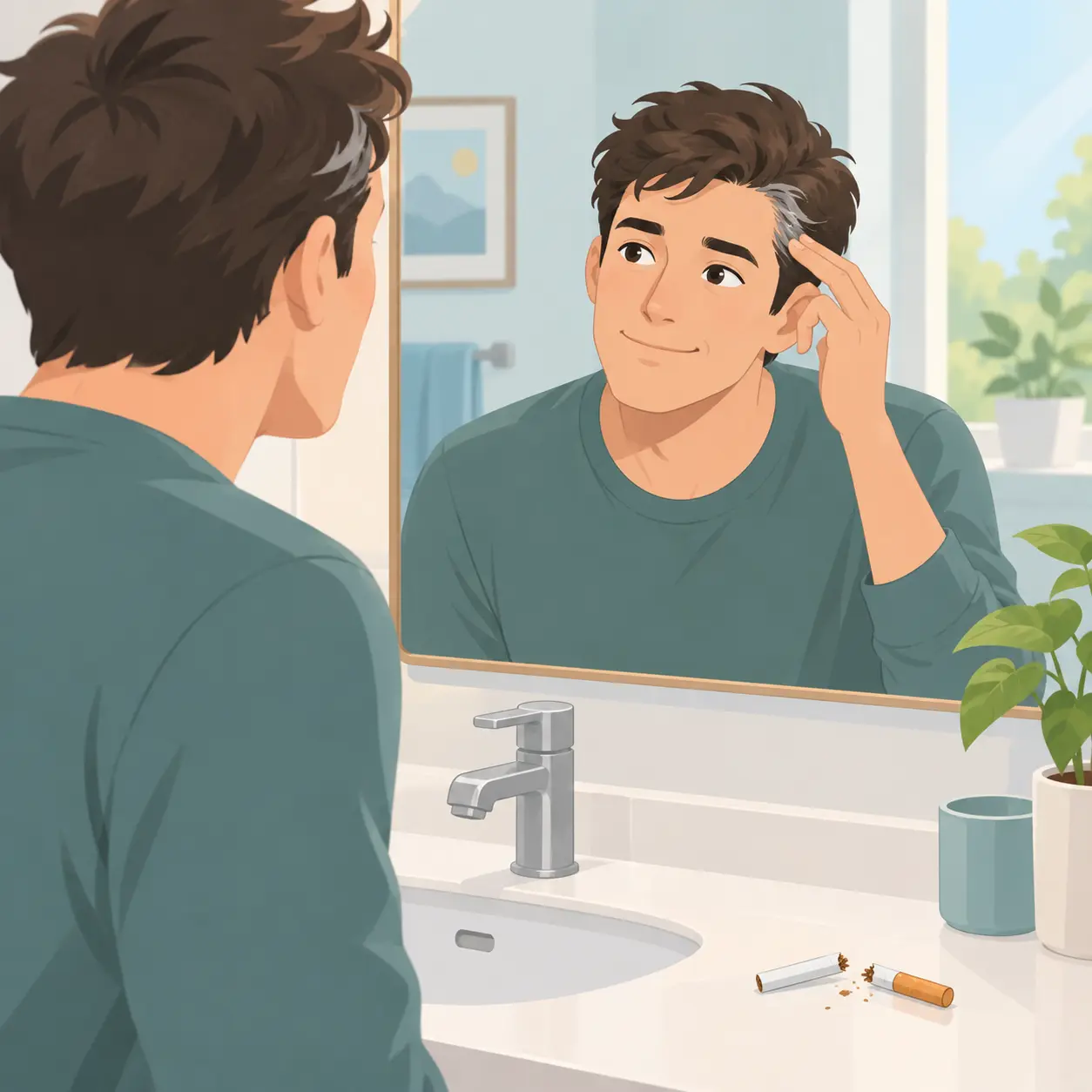
Yes. For many people, looks are a more immediate motivator than distant health risks. The authors of the 1996 BMJ report suggested that the visible effects of smoking on hair could be a useful way to encourage people, especially young people, to quit.
Within weeks of stopping, many people notice brighter skin, fresher breath and hair that no longer smells of smoke. These quick wins can help you stay on track while the bigger health benefits build in the background.
Try taking a photo on your quit day and another after one, three and six months. Seeing changes in your skin tone and overall look can be surprisingly motivating.
Frequently Asked Questions
Does smoking cause gray hair?
Studies link smoking to premature graying. A 2013 study found smokers were about 2.5 times more likely to start graying before age 30, though this shows an association rather than proof of cause.
Why does smoking turn hair gray?
Cigarette smoke creates oxidative stress that can damage melanocytes, the cells that give hair its color. Reduced blood flow to hair follicles may also play a role.
Will my gray hair go back to its color if I quit smoking?
Probably not. Once a follicle has lost its pigment cells, the gray is usually permanent. Quitting may help slow further graying by reducing oxidative stress.
Does vaping cause gray hair?
There is no good research on vaping and gray hair yet. Vaping still exposes the body to nicotine and some oxidants, so a link cannot be ruled out.
Does smoking cause hair loss too?
Research links smoking with a higher risk of hair loss, especially in men. Reduced blood flow and damage to follicle DNA are thought to contribute.
At what age is gray hair considered premature?
Doctors usually describe gray hair as premature if it appears before age 20 in white people, before 25 in Asian people and before 30 in Black people. Some studies simply use age 30.
What else causes premature gray hair?
Genetics is the biggest factor. Others include vitamin B12 deficiency, thyroid problems, some autoimmune conditions and, possibly, stress.
Is gray hair a sign of poor health in smokers?
Not on its own. But early graying in a smoker can be a visible reminder of oxidative damage happening throughout the body, which quitting helps reduce.
The bottom line: does smoking cause gray hair?
Smoking is linked to going gray earlier, most likely because of oxidative damage to hair pigment cells. Quitting will not usually restore lost color, but it protects the pigment you still have and benefits your skin, hair and whole body.
Ready to start? Download the iQuit app to track your smoke-free days and see your health improve week by week.