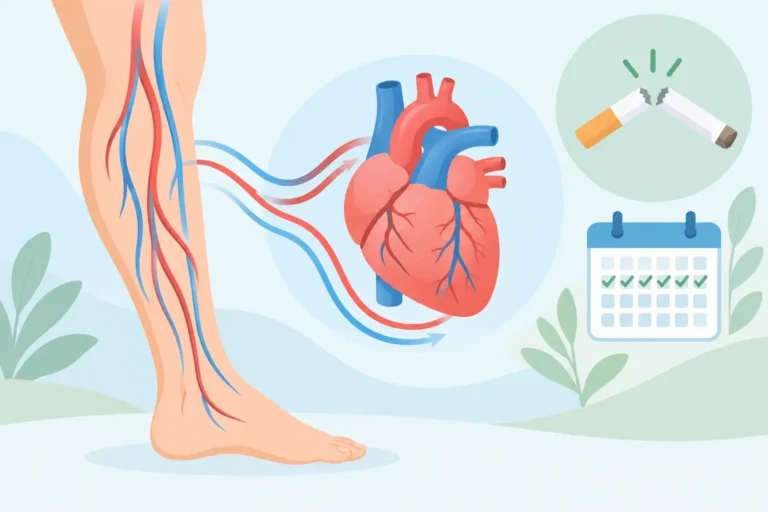
Research increasingly supports what dermatologists have long suspected: smoking and hair loss are genuinely linked, not just a coincidence of aging. A 2026 systematic review and meta-analysis of 31 studies found smoking significantly associated with both the presence and progression of androgenetic alopecia, the most common form of hair thinning in adults. This guide walks through what the evidence actually shows, the proposed biological mechanisms, whether quitting can reverse any of it, a realistic timeline, and what genuinely helps alongside quitting — without overpromising results the research does not support.
What the Evidence Actually Shows
A 2026 systematic review and meta-analysis of risk factors for androgenetic alopecia (AGA) pooled 31 observational studies covering 11,224 AGA cases and 36,825 controls. It found smoking significantly associated with both the presence of AGA (odds ratio 1.46, 95% confidence interval 1.06–2.01) and its progression (odds ratio 1.60, 95% CI 1.29–1.99). For scale, family history was by far the strongest factor in the same analysis (presence OR 2.72; progression OR 4.24), with alcohol consumption, poor sleep, and overweight also linked to progression (Li et al., BMC Public Health, 2026).
Individual population studies point the same way. A survey of Asian men found moderate-to-severe androgenetic alopecia associated with smoking status (OR 1.77, 95% CI 1.14–2.76), rising to OR 2.34 for men smoking 20 or more cigarettes a day — a dose relationship that strengthens the case (Su and Chen, Archives of Dermatology, 2007). A later cross-sectional study specifically linked cigarette smoking to earlier-onset androgenetic alopecia (Salem et al., Journal of Cosmetic Dermatology, 2021).
It is important to be precise about what this kind of evidence can and cannot show. These are observational studies, which means they can demonstrate a statistical association but cannot, on their own, prove that smoking directly causes hair loss in a given individual. Genetics remains by far the dominant factor in androgenetic alopecia — the family history odds ratios above are roughly double the smoking ones. What the numbers indicate is that smoking appears to meaningfully raise the risk on top of that genetic baseline, not that smoking alone determines whether someone loses their hair.
How Smoking Is Thought to Affect Hair Follicles
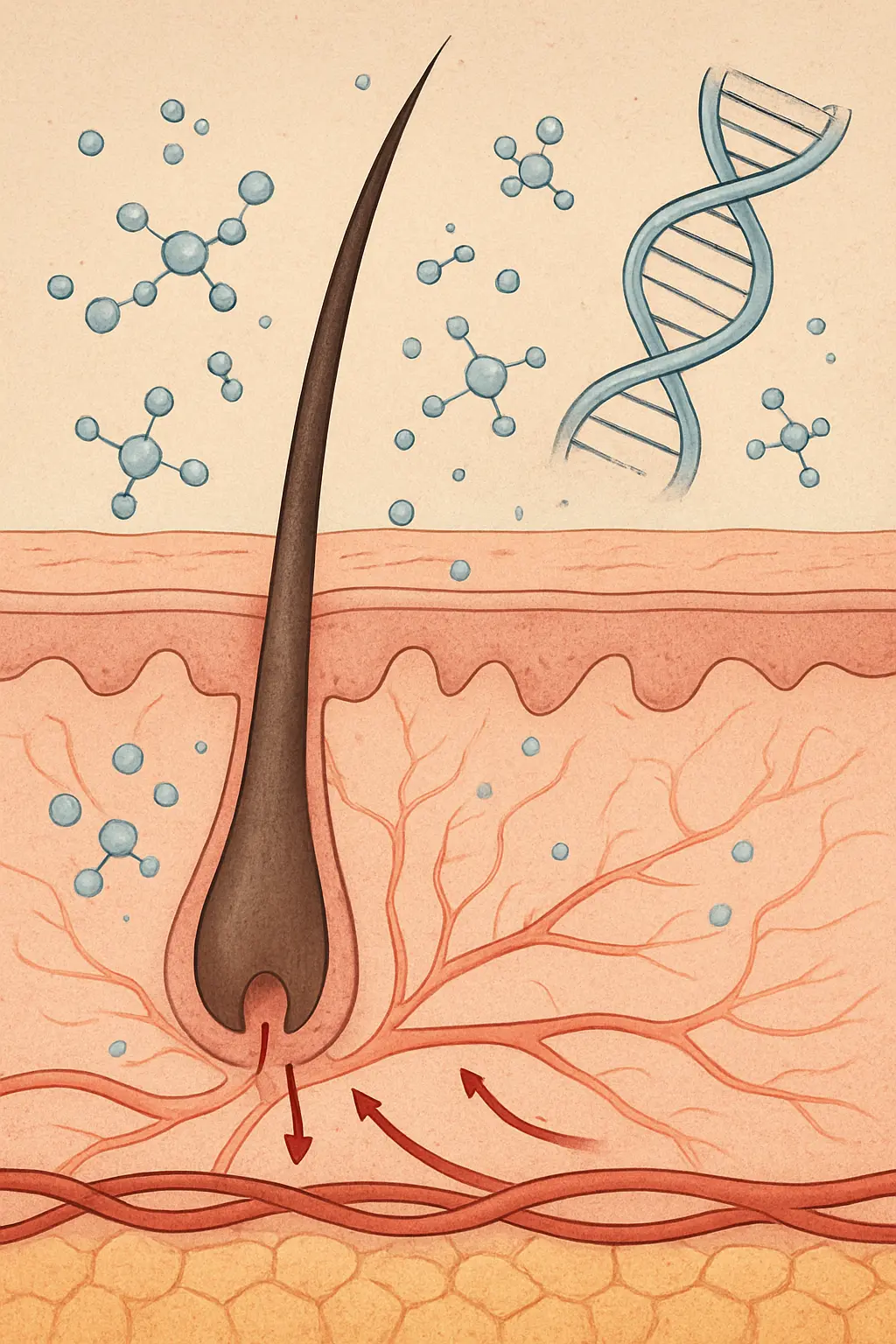
A systematic review focused specifically on smoking’s role in androgenetic alopecia proposes several overlapping mechanisms: vasoconstriction of the small blood vessels supplying the hair follicle, the formation of DNA adducts, free radical damage to follicle tissue, enhanced cellular senescence, and hormonal effects (Kavadya and Mysore, International Journal of Trichology, 2022).
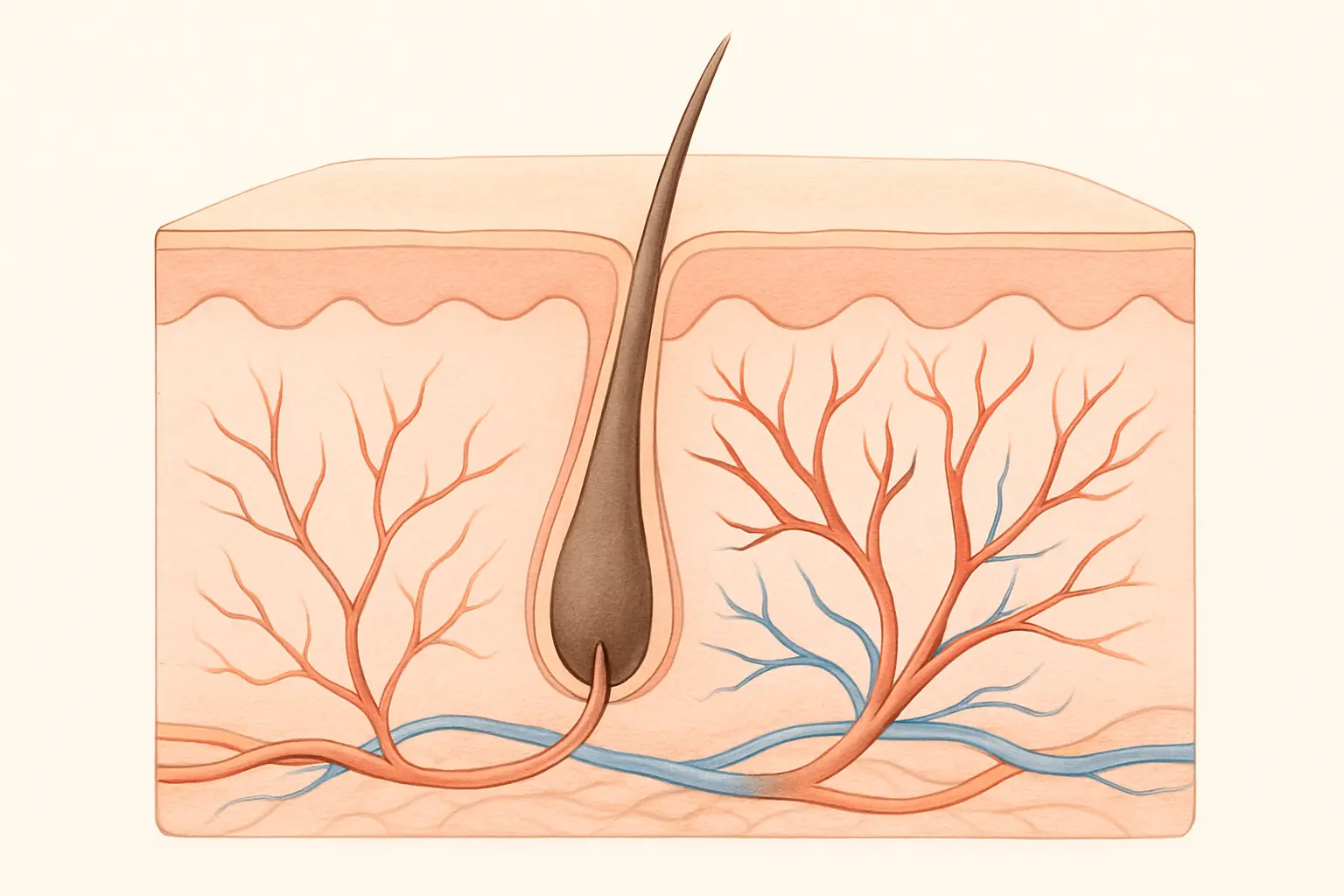
- Vasoconstriction: Nicotine narrows small blood vessels, including the microcirculation feeding hair follicles, potentially reducing the oxygen and nutrient supply follicles need to keep producing hair in their normal growth cycle.
- Oxidative stress: Cigarette smoke contains thousands of chemicals that generate free radicals, which can damage follicle cell DNA and accelerate cellular aging in skin and follicle tissue alike.
- Hormonal and inflammatory effects: Smoking has been linked to changes that may interact with the hormone-sensitive pathways already involved in androgenetic alopecia, on top of general low-grade inflammation.
These mechanisms are biologically plausible and consistent with what is already well established about smoking’s effects on skin, which shares much of the same microcirculation as the scalp — a connection covered in depth in our piece on how cigarettes age your face. The same review is candid about the gap in the evidence, noting that studies demonstrating a benefit from stopping smoking on hair loss are lacking.
Who Is Most Affected
Androgenetic alopecia already affects a large share of adults independent of smoking status: it is the most common cause of hair loss in both men and women, driven primarily by genetics and the hormone dihydrotestosterone (DHT), which gradually shrinks susceptible follicles over years (NHS, hair loss). Smoking’s role, based on the odds ratios above, appears to be as an accelerant or additional risk multiplier on top of that genetic susceptibility, rather than an independent cause capable of producing pattern baldness in someone with no genetic predisposition at all.
This matters for how you interpret your own situation. Two lifelong smokers with different genetic backgrounds can have very different hair outcomes, and two people who have never smoked can still develop significant androgenetic alopecia purely from genetics. If you smoke and are also noticing thinning, it is reasonable to treat smoking as one modifiable factor worth addressing, without assuming it is the sole or even primary cause of what you are seeing.
Smoking and Premature Greying
Beyond thinning, smoking has also been linked to premature greying (canities). A 2026 case-control study at a tertiary dermatology center found people with premature grey hair were significantly more likely than controls to report a family history, smoking, and hair plucking, alongside differences in vitamin B12 and vitamin D3 levels (Indian Dermatology Online Journal, 2026). The proposed mechanism overlaps with hair thinning: oxidative stress is thought to damage melanocytes, the pigment-producing cells in the hair follicle, on top of natural age-related melanocyte depletion.
As with thinning, this is association rather than proof, and nothing in the research suggests grey hair returns to its original color after quitting. What it does suggest is that smoking is one of the few contributors on that list you can actually change.

Does Quitting Reverse Hair Loss?
Here is the honest answer: there is currently no strong direct research demonstrating that quitting smoking regrows hair already lost to androgenetic alopecia. The 2022 systematic review says so explicitly — studies showing a benefit from smoking avoidance on hair loss are lacking. This is a meaningfully more limited evidence base than the well-documented skin recovery timeline after quitting, where measurable improvements in collagen and circulation are established (see our skin recovery after quitting timeline). Follicles that have permanently miniaturized through androgenetic alopecia’s hormonal process are unlikely to spontaneously reactivate just from quitting, since the genetic and hormonal drivers continue regardless of smoking status.
What quitting can plausibly do, based on established general physiology rather than hair-specific trials, is remove one contributing stressor going forward: circulation measurably improves after quitting (our guide on circulation recovery after quitting covers the general timeline), and oxidative stress from cigarette smoke stops accumulating. That may help protect hair you still have from further smoking-related damage, even if it cannot be expected to regrow what is already gone. This is a case where honesty matters more than false hope — if hair loss is a major motivator for you, pair quitting with a realistic conversation with a dermatologist about your specific pattern and options, rather than expecting quitting alone to reverse it.
A Realistic Timeline
| Timeframe | What may change | What likely will not change |
|---|---|---|
| 2–12 weeks | Circulation and blood flow measurably improve throughout the body, including scalp microcirculation | Existing follicle miniaturization from AGA |
| 1–3 months | Reduced ongoing oxidative stress on skin and follicle tissue | Genetic hair loss pattern, which continues independent of smoking |
| Months to years | Potentially slower progression of smoking-related hair thinning going forward | Regrowth of already-lost hair without separate dermatological treatment |
What Genuinely Helps Alongside Quitting
If hair loss concerns you, the most evidence-backed path is treating quitting as one part of a broader plan rather than a stand-alone fix. Approved treatments for androgenetic alopecia, such as topical minoxidil or prescription finasteride, have direct clinical trial evidence behind them and should be discussed with a dermatologist — quitting smoking does not substitute for these where they are appropriate for you. Sleep quality, alcohol intake, and body weight also appeared as independent risk factors in the same 2026 meta-analysis, so a fuller lifestyle view, not smoking alone, tends to serve people best.
Quitting itself is still worth doing on its own separate merits, well beyond any hair-related benefit — and having a structured plan makes it more likely to stick. iQuit’s craving log and predictive craving forecasts help you notice your specific triggers, and its 15 health milestones give you visible markers of the changes that are well documented, like improving circulation and lung function, even while hair-specific effects remain uncertain. For the fuller picture of everything else that changes when you quit, see our complete guide to the health benefits of quitting and our organ-by-organ recovery breakdown. Oral health is another area with strong evidence, covered in teeth and gums after quitting.
Hair Is Part of a Bigger Appearance Picture
Hair rarely tells the whole story on its own. The same microcirculation and oxidative stress mechanisms proposed for hair follicles are far more thoroughly documented for facial skin, where quitting’s benefits are measurable and well established: improved collagen production, better wound healing, and visibly reduced fine lines within weeks to months of quitting. The same vascular story shows up elsewhere in the body too — our guide to erectile dysfunction recovery after quitting covers a blood-flow effect where the evidence for improvement after quitting is considerably stronger than it is for hair, and what your lung age test result actually means gives you another concrete number to watch improve.
For many people, appearance-related motivation to quit is strongest when it is framed around this fuller picture — skin, teeth, circulation, and hair together — rather than hair loss in isolation, since hair is the area where the evidence for reversal is currently weakest. If appearance is a major part of what is motivating you, it is worth being honest with yourself about which changes you can expect to see and roughly when, so the motivation survives the early weeks when the most visible wins (skin tone, breath, teeth) show up well before anything hair-related would even theoretically begin to shift.
Frequently Asked Questions
Does smoking actually cause hair loss?
A 2026 meta-analysis of 31 studies found smoking significantly associated with both the presence (OR 1.46) and progression (OR 1.60) of androgenetic alopecia. That is observational evidence showing an association, not definitive proof of direct causation in every individual (Li et al., BMC Public Health, 2026).
Will my hair grow back if I quit smoking?
There is no strong research showing quitting regrows hair already lost to androgenetic alopecia, and a 2022 systematic review states plainly that studies of the benefit of stopping smoking on hair loss are lacking. Quitting may help protect remaining hair from further smoking-related damage (Kavadya and Mysore, 2022).
How does smoking damage hair follicles?
Proposed mechanisms include vasoconstriction that reduces blood flow to follicles, the formation of DNA adducts, free radical damage to follicle tissue, enhanced cellular senescence, and hormonal effects that interact with the pathways already involved in androgenetic alopecia (Kavadya and Mysore, International Journal of Trichology, 2022).
Does smoking more cigarettes make hair loss worse?
The data suggests a dose relationship. In a study of Asian men, moderate-to-severe androgenetic alopecia was associated with smoking status at an odds ratio of 1.77, rising to 2.34 among men smoking 20 or more cigarettes a day (Su and Chen, Archives of Dermatology, 2007).
Does smoking cause grey hair?
A 2026 case-control study found people with premature greying were significantly more likely than controls to report smoking, alongside family history and hair plucking. Oxidative stress damaging pigment-producing melanocytes is the proposed mechanism (Indian Dermatology Online Journal, 2026).
Is smoking-related hair loss the same as male or female pattern baldness?
Smoking is a risk factor that appears to worsen or accelerate androgenetic alopecia (pattern baldness), rather than a separate, distinct type of hair loss. Genetics remains the dominant underlying driver of pattern baldness in both men and women, with family history carrying roughly double the odds ratio of smoking.
Should I see a dermatologist about smoking-related hair loss?
Yes. If hair loss concerns you, a dermatologist can assess your specific pattern and discuss evidence-based treatments like minoxidil or finasteride, which have clinical trial support that quitting smoking alone does not replace. Quitting sits alongside those treatments, not instead of them.
How soon after quitting does circulation to the scalp improve?
General circulation improves measurably within weeks of quitting as blood vessels recover from nicotine-related constriction. Scalp blood flow specifically, and any hair regrowth outcome, has not been directly studied, so treat improved circulation as a plausible benefit rather than a promised one.
Track the Changes That Are Well Documented
Hair may be uncertain, but circulation, lung function, and disease risk improvements after quitting are well established. iQuit’s 15 health milestones and real-time dashboard help you see and celebrate the recovery that is actually happening. Free on Android.