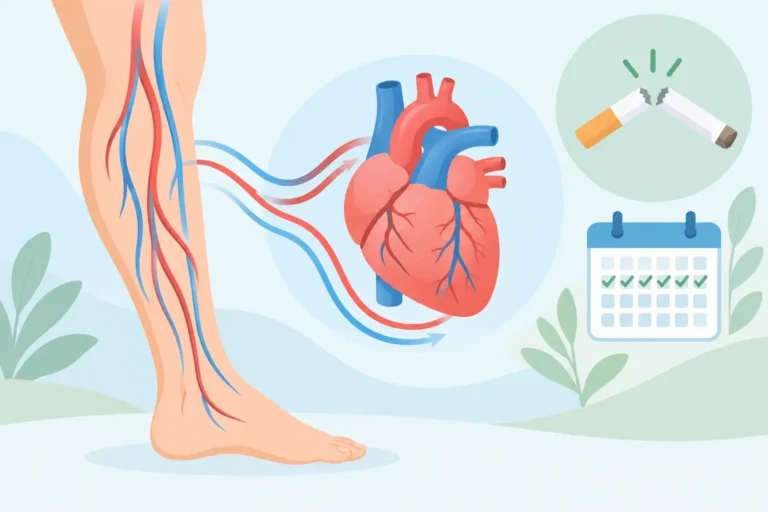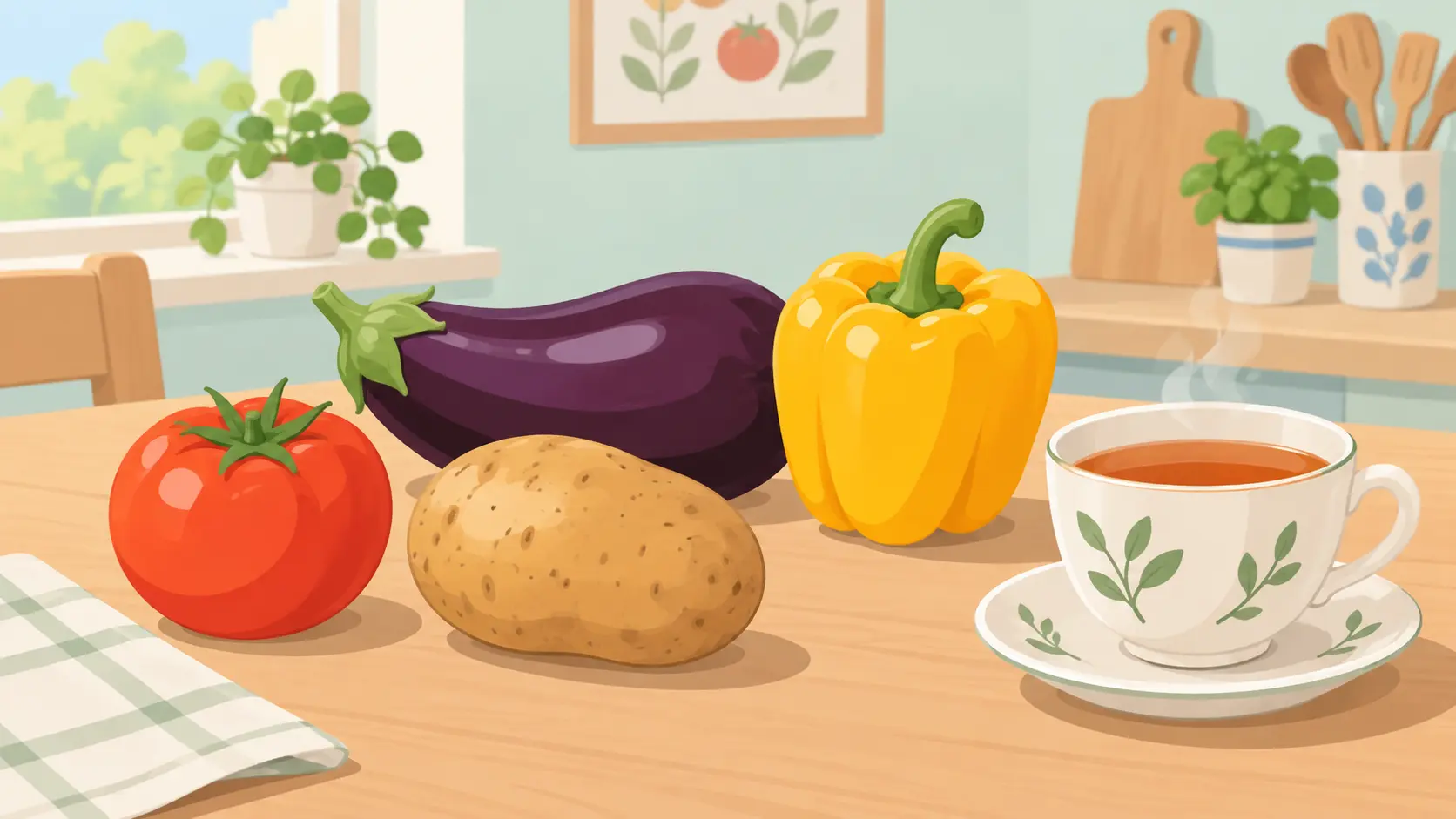
Foods that contain nicotine do exist: tomatoes, potatoes, peppers, eggplant and tea all carry traces, because they belong to the same plant family as tobacco or contain the compound naturally. The amounts are tiny, roughly a million times lower or more per gram than in cigarette tobacco. This guide gives the measured levels, shows what the studies found, explains how the numbers compare with a cigarette, and answers the question behind many searches: can the food on your plate affect a nicotine test?
Foods That Contain Nicotine: The Short Answer
Yes, some everyday foods contain nicotine, but only at trace levels. A 1999 study in the Journal of Agricultural and Food Chemistry measured nicotine in tomatoes, potatoes, eggplants (aubergines) and peppers, all members of the nightshade family (Solanaceae), and found “relatively consistent amounts of nicotine in the range of 2-7 microg/kg for fresh fruits” (J Agric Food Chem, 1999). It also tested teas: “Nicotine content in tea leaves was found to be highly variable and sometimes much larger than in the Solanaceae fruits.”
From those concentrations and national food consumption data, the same study estimated that “the mean daily dietary nicotine intake” is “approximately 1.4 microg/day, 2.25 microg/day at the 95th percentile.” A microgram is one millionth of a gram. For comparison with a cigarette, keep reading, but the headline is simple: eating a salad is not a nicotine habit.
If you are quitting, none of this changes your plan. The nicotine that matters is the one in tobacco and vapes. Our guide to how much nicotine is in one cigarette covers that side.
Tomatoes, Potatoes, Eggplant, Peppers and Tea: Measured Levels
Two research groups measured these foods, and they did not get identical results, which is itself useful to know. A 1991 study in Food and Chemical Toxicology, whose authors worked for the R. J. Reynolds Tobacco Company, analyzed foods by gas chromatography and reported: “Nicotine was not detected (less than 1 ng/ml of extract) in egg plant or green pepper. The average values for nicotine in tomato and potato were 7.3 ng/g wet weight and 15 ng/g wet weight, respectively.” Black teas ranged “from non-detectable to greater than 100 ng/g wet weight,” and instant teas gave the highest values, “up to 285 ng/g wet weight” (Food Chem Toxicol, 1991).
The 1999 study, by contrast, did detect nicotine in eggplants and peppers, at 2 to 7 micrograms per kilogram of fresh fruit. A microgram per kilogram is the same as a nanogram per gram, so the two papers use comparable units. Different methods, varieties and ripeness explain some of the gap: the 1999 authors report that “the nicotine concentrations of the investigated tomato varieties decreased significantly with increasing degree of ripening of the fruits.”
| Food | 1999 study (J Agric Food Chem) | 1991 study (Food Chem Toxicol) |
|---|---|---|
| Tomato | 2 to 7 (all fresh Solanaceae fruits; lower when riper) | 7.3 average |
| Potato | Not given separately in the abstract (the 2 to 7 range is for fresh fruits) | 15 average |
| Eggplant (aubergine) | 2 to 7 | Not detected |
| Pepper | 2 to 7 | Not detected (green pepper) |
| Black tea | Highly variable, sometimes much larger than the fruits | Not detected to over 100 (wet weight) |
| Instant tea | Not reported in the abstract | Up to 285 (wet weight) |
One more source on tea: a 2018 study in PLoS ONE reported endogenous nicotine in tea plants, while noting that sample contamination could not be ruled out. It found that “all samples contained nicotine (0.011-0.694 µg g-1 dry weight)” in tea from six Asian countries, and that nicotine content stayed constant during manufacture of green, oolong and black teas (PLoS ONE, 2018). Those are dry-leaf figures, so they cannot be compared directly with the wet-weight values above.
A 1993 letter in the New England Journal of Medicine on nicotine in common vegetables is often cited on this topic; this guide takes its figures from the full studies above.
How Food Nicotine Compares With One Cigarette

To see the scale, start with the tobacco. A 1998 study in Tobacco Control analyzed 92 cigarette brands from the United States, Canada and the United Kingdom and found the total nicotine content of tobacco averaged 10.2 mg in the United States (range 7.2 to 13.4), which was 1.5% of the tobacco by weight (Tobacco Control, 1998). That is the nicotine in the tobacco, not the amount a smoker absorbs.
Now do the arithmetic, which is ours rather than a study’s. Tobacco at 1.5% nicotine is 15 mg per gram, or 15 million nanograms per gram. Against the 1991 tomato figure of 7.3 ng/g, tobacco holds roughly two million times more nicotine per gram. Against the potato figure of 15 ng/g, roughly one million times more.
| Item | Approximate nicotine |
|---|---|
| A 150 g tomato at 7.3 ng/g (our calculation) | About 1.1 micrograms |
| Mean daily dietary intake (1999 study) | About 1.4 micrograms a day |
| Tobacco in one US cigarette (1998 study) | About 10.2 mg, or 10,200 micrograms |
In other words, the tobacco in a single cigarette contains more than 7,000 times the average daily dietary intake estimated in 1999. The comparison is rough on purpose. A smoker does not absorb all of the nicotine in a cigarette, but the order of magnitude is the point. For how long nicotine from any source stays in the body, see our explainer on how long nicotine stays in your body.
Can Food Cause a Positive Nicotine Test?

This is the question that drives a lot of searches for this topic, and the honest answer is that it is very unlikely, and the studies cited here do not show it happening. The 1991 researchers did raise the idea: “Dietary nicotine would give rise to cotinine in urine and compromise estimates of exposure to tobacco smoke that depend on urinary cotinine.” Their calculation, based on estimated average and maximal consumption of these foods and drinks, produced “potential values for urinary cotinine concentrations (0.6 to 6.2 ng/ml)” (Food Chem Toxicol, 1991).
Compare that with the cutpoints used to tell smokers from nonsmokers. A 2020 update from the Society for Research on Nicotine and Tobacco (SRNT) reports that “Empirical studies of urine-free cotinine as a cutpoint have reported around 30 ng/mL as optimal,” and that for serum, “the optimal cutpoint for serum cotinine among adults was 3 ng/mL” (SRNT update, Nicotine Tob Res). The 1991 estimate for urine sits well below the urine figure, though it concerns a different measurement and an old estimate, so treat the comparison as a guide, not a guarantee.
What actually shows up on a test
The same SRNT report notes that cotinine testing detects exposure to nicotine from all sources, including combustible and noncombustible products and nicotine replacement. So the sources that matter are cigarettes, vapes, pouches and nicotine replacement, not tomatoes. If you are using a patch or gum and worry about a test, our article on whether nicotine patches fail a nicotine test goes through it. For levels and what they mean, see what cotinine test levels mean.
If a test has real consequences for you, such as insurance, surgery or employment, ask the person or lab running it which substance and cutoff it uses. We cannot tell you what any particular lab will report.
Why Food Nicotine Does Not Act Like Smoking
The sources cited here do not describe anyone becoming dependent on food nicotine, and the numbers help explain why. Dependence on tobacco is tied to dose and speed. The National Institute on Drug Abuse says that when smoke enters the lungs, “nicotine levels peak within 10 seconds of inhalation,” and that this rapid cycle drives repeat dosing to maintain the drug’s effects and prevent withdrawal (NIDA research report).
A tomato delivers about a microgram, absorbed slowly through digestion along with everything else in the food. That is the opposite of a fast, repeated spike. We are comfortable saying food nicotine is a trace exposure, not a smoking habit, but we do not claim there is a formal study proving it cannot cause dependence.
Why researchers study it at all
Some research looks at dietary nicotine because of an observed link with Parkinson disease. A 2020 analysis of never-smokers in two large US cohorts reported that for the highest compared with the lowest quintile of dietary nicotine intake, the pooled hazard ratio was 0.70 (95% CI 0.51 to 0.94), but that the inverse association was “only observed in women” (Am J Clin Nutr, 2020). An earlier 2013 study concluded that confirmation of its findings was needed to strengthen causal inferences. These are observational associations. They are not a reason to use nicotine or to eat any particular food, and nothing in them changes the advice to quit tobacco.
Quitting Smoking: What to Eat and Do Instead

If you came here worried that a tomato or a cup of tea could set you back, you can relax. Tomatoes, potatoes, peppers and tea are fine to eat while you are quitting. The more useful question is what to eat and drink to get through cravings and routine changes, which our guide on what to eat when quitting smoking covers.
- Do not skip meals. A steady routine makes it easier to spot real cravings from hunger.
- Plan hand and mouth substitutes. Water, tea or crunchy vegetables can fill the gaps where a cigarette used to sit.
- Keep your focus on the real source. If a test is worrying you, stopping tobacco is the thing that moves the result. Our complete evidence-based quit smoking guide covers how.
iQuit can help you with the tobacco side. You can quit your way, with cold turkey or gradual reduction, log each craving with its trigger and intensity, and watch days smoke-free and money saved on the dashboard. It does not treat any condition, so check with a clinician about medicines or a medical test.
Frequently Asked Questions
What foods contain nicotine?
Nightshade vegetables such as tomatoes, potatoes, eggplants and peppers contain trace nicotine, and so does tea. A 1999 study measured 2 to 7 micrograms per kilogram in fresh Solanaceae fruits and found tea highly variable and sometimes much higher (J Agric Food Chem, 1999).
How much nicotine is in a tomato?
Very little. A 1991 study reported an average of 7.3 ng of nicotine per gram of wet tomato, and the 1999 study reported 2 to 7 micrograms per kilogram for fresh fruits, which is the same as 2 to 7 ng/g. A 150 g tomato therefore has roughly one microgram (Food Chem Toxicol, 1991; J Agric Food Chem, 1999).
Does eggplant have nicotine?
Results differ. The 1999 study found nicotine in eggplants (aubergines) within a 2 to 7 microgram per kilogram range for fresh nightshade fruits, while the 1991 study did not detect nicotine in eggplant. In both cases the amounts are trace-level and far below tobacco (J Agric Food Chem, 1999; Food Chem Toxicol, 1991).
Does tea contain nicotine?
Yes. A 2018 study reported nicotine made by the tea plant itself, finding it in all samples (0.011 to 0.694 micrograms per gram dry weight) from six Asian countries. The 1991 study reported up to 285 ng/g wet weight in instant teas, and 1999 results varied widely (PLoS ONE, 2018; Food Chem Toxicol, 1991).
Can eating tomatoes make me fail a nicotine test?
It is very unlikely. A 1991 study estimated food could add 0.6 to 6.2 ng/ml of urinary cotinine, while the SRNT reports an optimal urine cotinine cutpoint of around 30 ng/mL. Cutoffs vary by test, so ask the lab (Food Chem Toxicol, 1991; SRNT update).
Is food nicotine addictive?
None of the sources cited here describe addiction from food nicotine. NIDA ties tobacco dependence to nicotine levels that peak within 10 seconds of inhalation, a very different pattern from a few micrograms absorbed slowly with a meal. We do not claim a study has ruled it out (NIDA; J Agric Food Chem, 1999).
How does food nicotine compare with a cigarette?
A 1998 study found US cigarette tobacco averaged 10.2 mg of nicotine per cigarette, or 1.5% by weight. The 1999 study estimated mean dietary intake at about 1.4 micrograms a day, so one cigarette holds more than 7,000 times that, although smokers absorb only part of it (Tobacco Control, 1998; J Agric Food Chem, 1999).
Focus on the Tobacco, Not the Tomato
The Real Nicotine Source Is the One You Can Change.
iQuit gives you a real-time dashboard of days smoke-free, cigarettes avoided and money saved, craving logging with triggers and intensity, SOS tools for hard moments and an AI coach, so you can quit your way. Free on Google Play and the App Store.
Download iQuit Free on Google Play
Download on the App Store