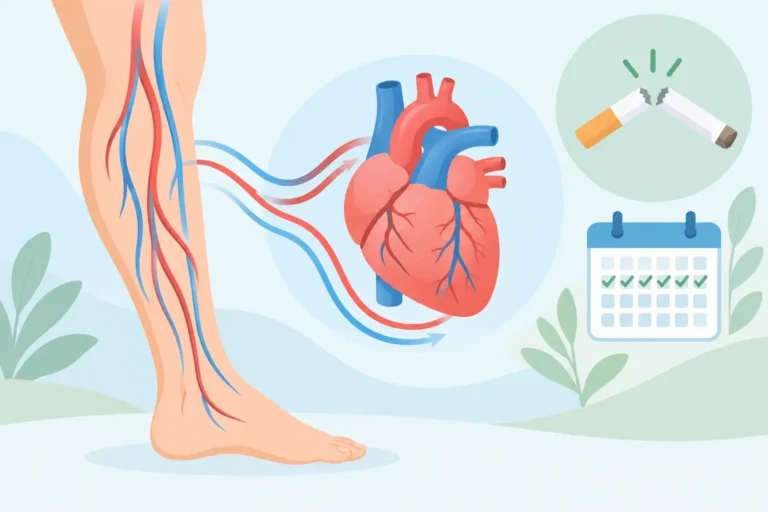
Seeing a flag next to your hemoglobin or hematocrit on a blood test can be unsettling, and if you smoke, the next question is whether the two are connected. High hemoglobin in smokers is a recognized pattern, often called smokers’ polycythemia, and in many people it is one of the few abnormal results that quitting can directly address. This guide explains what the number means, why smoking raises it, what else has to be ruled out, and what the evidence says about stopping. It cannot diagnose you; your own clinician has to interpret your result.
What high hemoglobin in smokers means
MedlinePlus explains that hemoglobin “is an iron-rich protein in your red blood cells. It carries oxygen from your lungs to the rest of your body.” A hemoglobin test is usually part of a complete blood count. Hematocrit, which you may see on the same report, is the amount of space red blood cells take up in the blood.
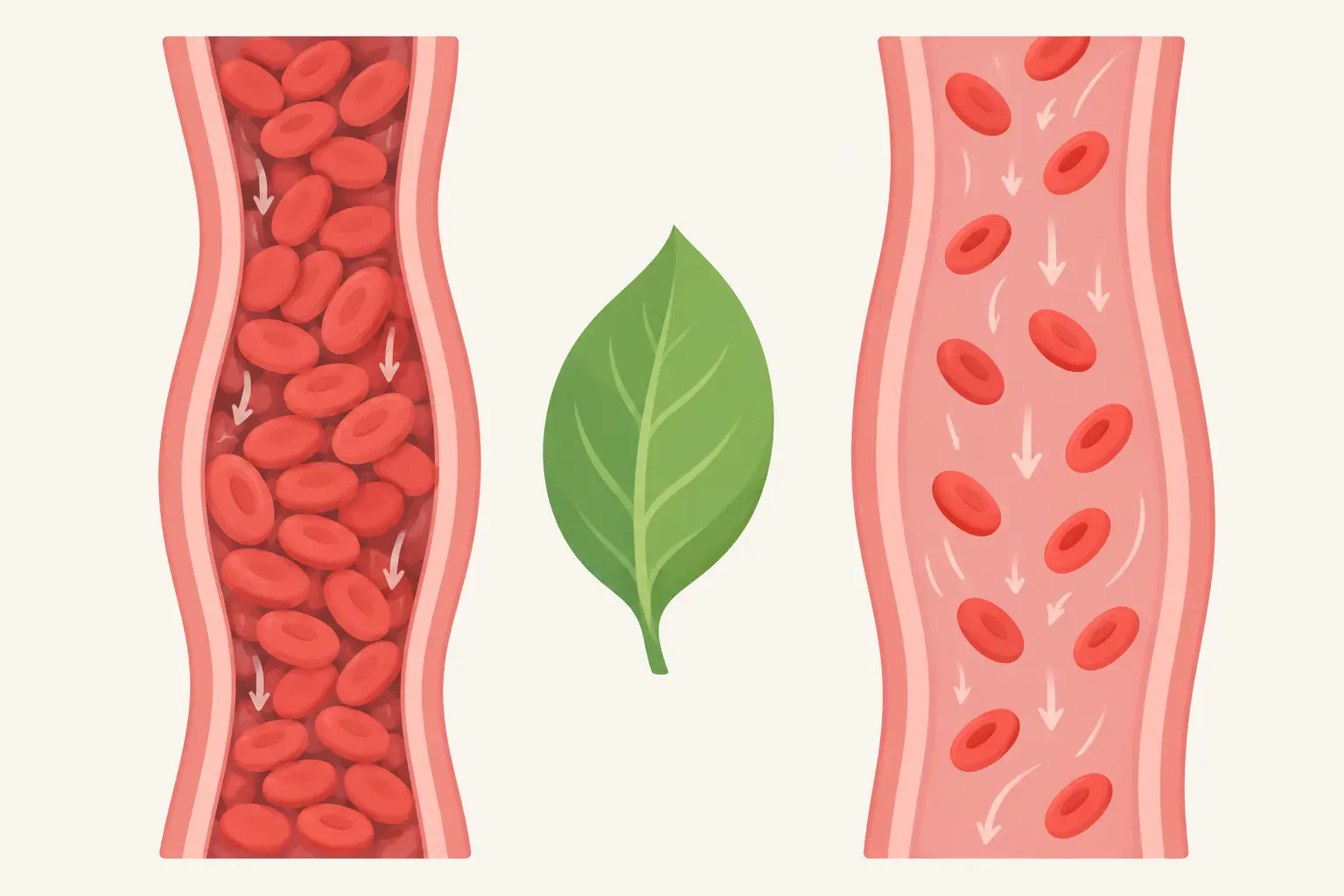
The NHS page on erythrocytosis uses that term, which is sometimes called polycythemia, and defines it as “a high concentration of red blood cells in your blood. This makes the blood thicker and less able to travel through blood vessels and organs.” Many of the symptoms come from that sluggish flow. The NHS lists headaches, blurred vision, red skin (particularly the face, hands and feet), tiredness, high blood pressure, dizziness, discomfort in the tummy, confusion, bleeding problems such as nosebleeds and bruising, gout and itchy skin, especially after a bath or shower. It also notes that not everyone has symptoms.
One thing to hold onto: an abnormal number is not automatically a diagnosis. MedlinePlus says “If any of your levels are abnormal, it doesn’t always mean you have a medical condition that needs treatment.” If you have just had a result like this, our related guides on high white blood cell count in smokers and whether you can smoke before a blood test cover how smoking shows up in other parts of the same report.
Why smoking can raise hemoglobin
A 2025 paper in PLoS One opens with a simple statement: “Cigarette smoking induces relative and absolute erythrocytosis (smokers’ polycythemia).” The NHS describes the two ideas separately. In “apparent erythrocytosis” the red cell count is normal, but there is less plasma (the fluid part of the blood), so the blood is thicker. The NHS says this “is often caused by being overweight, smoking, drinking too much alcohol or taking certain medicines,” including diuretics. In “absolute” erythrocytosis the body produces too many red blood cells.
Carbon monoxide is a likely part of the story. It is a gas in cigarette smoke, and it attaches to hemoglobin, forming carboxyhemoglobin, which reduces the room available for oxygen. A 2025 study in BMC Pharmacology and Toxicology measured carboxyhemoglobin saturation (SpCO) in 136 smokers and 60 people who had never smoked, and found that the smokers’ baseline values were “approximately 200% higher” (3.07 versus 1.77). The NHS notes that when not enough oxygen reaches the body’s tissues, as in COPD, the kidneys produce more of the hormone erythropoietin, which stimulates the bone marrow to make red cells. The authors of a case report discussed below went further and proposed testing carboxyhemoglobin in all patients with erythrocytosis and a normal or high erythropoietin level. Our guide to the carbon monoxide breath test reading explained shows how that gas can be measured directly.
A 2026 study of 292 people in Korea found that blood viscosity, a measure of how thick blood is, was higher in ever-smokers than in never-smokers, whether or not they had COPD, and concluded that it “appeared to be more closely associated with smoking-related hemorheological changes than with COPD.” That is a small cohort, but it fits the picture that smoking itself changes how the blood behaves.
Reference ranges: what counts as high?
You will probably want a number. Here the honest answer is that MedlinePlus deliberately gives none. It says your results are compared “to the normal range, which may be called the reference range. This range may vary, based on the laboratory used and your age, race, and sex.” So the cut-off on your report is the one that applies to you, and a value that is flagged at one lab may not be at another.
MedlinePlus also stresses: “The test can’t tell you what’s causing an abnormal level.” Knowing how high it is helps a clinician judge how severe a condition may be. A generic list of figures could mislead you, so use the range printed on your own result, and let your clinician interpret where you sit against it.
Risks of thick blood
This is the part that deserves attention. The NHS says erythrocytosis “can cause blood clots,” which “put you at risk of life-threatening problems” such as pulmonary embolism and deep vein thrombosis (DVT). It adds that erythrocytosis “also increases your risk of heart attack and stroke.” And in its lifestyle section it states: “Having erythrocytosis means you’re already at high risk of a blood clot, and being overweight or smoking only increases this risk.”
To understand how smoking affects clotting more broadly, see our article on whether smoking causes blood clots. Here are the warning signs the NHS tells people to act on:
- Seek medical help immediately if you or someone you are with shows signs of DVT or a pulmonary embolism. The NHS lists pain, swelling, redness and tenderness in one of your legs, a heavy ache in the affected area, warm skin in the area of the clot, breathlessness, chest or upper back pain, coughing up blood, feeling lightheaded or dizzy, and fainting.
- Seek emergency medical help if you think that you or someone you are with is having a heart attack or stroke.
- Make an appointment to see your GP if you have persistent symptoms of erythrocytosis, such as the headaches, blurred vision, red skin, tiredness and dizziness listed above.

Other causes to rule out
Smoking is only one reason a hemoglobin or hematocrit result can come back high, and that is why you should never assume. MedlinePlus lists lung disease, heart disease, polycythemia vera (a disease which causes the bone marrow to make too many red blood cells) and sleep apnea as possible signs of a high hemoglobin level, and says living at a higher altitude can also cause it. It names diet, activity level, certain medicines, dehydration, smoking and certain genetic conditions as other factors.
| Possible reason | What the source says | What usually follows |
|---|---|---|
| Smoking | NHS: among the things that often cause apparent erythrocytosis; stopping may help | Smoking cessation, ask your clinician |
| Dehydration | NHS: can cause relative polycythemia; MedlinePlus lists it as a factor | Clinician review of fluids |
| Lung disease such as COPD | NHS: not enough oxygen reaching tissues raises erythropoietin | Treat the underlying condition |
| Sleep apnea | MedlinePlus: possible sign of a high level | Sleep assessment if suspected |
| Living at high altitude | MedlinePlus: can cause a high level | Context for your result |
| Polycythemia vera | NHS: rare; usually a JAK2 gene change | Specialist care by a hematologist |
The NHS adds that relative polycythemia can result from dehydration, and that secondary erythrocytosis can come from conditions such as COPD or a kidney problem. Polycythemia vera “is rare” and “usually caused by a change in the JAK2 gene,” and the NHS calls it “a slow-growing type of blood cancer.” Your GP may refer you to a hematologist for more tests, which may include a blood test for the changed JAK2 gene and an ultrasound scan of the tummy to look at the kidneys.
Treatment depends on the cause. The NHS describes venesection (removing about 1 pint, or half a liter, of blood at a time) as the simplest and quickest way of reducing the number of red cells, for instance in polycythemia vera, and says low-dose aspirin may be prescribed in some cases. It also says that if erythrocytosis is well controlled, it should not affect your life expectancy. These are decisions for a specialist; do not try to treat a high result yourself.
How fast does it fall after quitting?
There is no published timetable that applies to everyone. What exists is a handful of studies that point in the same direction.
A prospective study published in Open Medicine in 2025 followed 142 patients with polycythemia at a hematology clinic. At first presentation, 65.4 percent (93 patients) were current smokers, and hemoglobin, hematocrit and mean corpuscular volume were higher in active smokers than in non-smokers. Smoking cessation interventions were offered, and 51 percent (47) of the active smokers had quit by the three-month follow-up. The authors reported that “Hb and Hct values decreased in smokers who quit smoking compared to baseline values at 3 months.” They did not report that every value returned to the reference range.
A smaller 2025 PLoS One study of 15 smokers with erythrocytosis, which mainly looked at switching to heated tobacco (not a recommended route), found that all five who chose to stop smoking completely showed improved hematocrit and less sputum, with less numbness, headache and vertigo. Five people is a tiny sample, so treat it only as consistent with the larger study. And in a 2020 case report in the Netherlands Journal of Medicine, a young man with chronic carbon monoxide exposure from a daily waterpipe and a carboxyhemoglobin level of 21 percent was advised to stop. The authors report that within a few weeks, the erythrocytosis normalized. One case cannot be generalized, but it shows the direction.
The NHS puts it more simply: for apparent erythrocytosis, “stopping smoking or reducing your alcohol intake, for example, may help.” If you are planning a re-test, ask your clinician how long to wait after you quit before repeating the blood count. Your first few weeks smoke-free are also covered in our what happens when you quit smoking complete health recovery guide.
Quitting before your re-test
If your clinician has told you smoking is the likely reason, you now have a clear, practical reason to quit. A few steps tend to help.
- Tell your clinician you want to stop. They can advise on timing the re-test, and on stop-smoking medicines and counseling.
- Do not swap to another smoked product. The Dutch case above involved a waterpipe, and that case report suggests it can cause the same problem.
- Ask about fluids and alcohol. The NHS lists dehydration and drinking too much alcohol among the causes of thicker blood, so ask your clinician what applies to you.
- Keep a record of your quit date and smoke-free days, so your clinician can see how long you had stopped when the re-test was done.
The free iQuit app can help with that last step. You can choose cold turkey or gradual reduction, log cravings and their triggers, use SOS tools when an urge hits, and track smoke-free days and money saved, which gives you a clear count to share before a re-test. It does not measure blood values or diagnose any condition, so it supports your quit while your clinician handles the results. You can compare tools in our best quit smoking apps feature comparison rankings, and if you are curious about giving blood as a smoker, see can you donate blood if you smoke.
Frequently Asked Questions
Does smoking cause high hemoglobin?
Smoking is a recognized cause of raised red cell measures. The NHS says apparent erythrocytosis is often caused by being overweight, smoking, drinking too much alcohol or taking certain medicines, and that stopping smoking may help. A 2025 paper describes smokers’ polycythemia, but a clinician must rule out other causes (NHS; PLoS One, 2025).
What is a normal hemoglobin level for a smoker?
MedlinePlus gives no single figure. It says your result is compared with a reference range that may vary by the laboratory used and your age, race and sex. Use the range printed on your own report and ask your clinician how to read it (MedlinePlus).
Is high hemoglobin from smoking dangerous?
It can be. The NHS says erythrocytosis can cause blood clots, increases the risk of heart attack and stroke, and that being overweight or smoking only increases the clot risk further. Seek medical help immediately for signs of DVT or a pulmonary embolism, and emergency help for a suspected heart attack or stroke (NHS).
Will my hemoglobin go down if I quit smoking?
In a 2025 study of polycythemia patients, hemoglobin and hematocrit values decreased in smokers who quit compared with their baseline at three months. There is no fixed timeline that applies to everyone, and results vary by person, so ask your clinician when to re-test (Open Med, 2025).
What else can cause high hemoglobin besides smoking?
MedlinePlus lists lung disease, heart disease, polycythemia vera and sleep apnea as possible signs, and says living at a higher altitude can also cause a high level. Dehydration, certain medicines and certain genetic conditions can also affect it (MedlinePlus; NHS).
Does carbon monoxide raise hemoglobin?
Smokers have higher carboxyhemoglobin, which is hemoglobin bound to carbon monoxide. A 2025 study found smokers’ baseline levels were approximately 200% higher than non-smokers’. A 2020 case report linked chronic carbon monoxide exposure to erythrocytosis that normalized within a few weeks (BMC Pharmacol Toxicol, 2025; Neth J Med, 2020).
Should I see a doctor about a high hemoglobin result?
Yes. A test cannot tell you what is causing an abnormal level. The NHS says to make an appointment with your GP if you have persistent symptoms of erythrocytosis, and a GP may refer you to a hematologist for more tests (MedlinePlus; NHS).
Quit Smoking Before Your Next Blood Test
Stopping smoking is one step you can take while your clinician investigates a high result. iQuit is free on Google Play and the App Store and helps you log cravings and triggers, use SOS tools when urges hit and count your smoke-free days.