If you want to know how to get rid of smoker’s breath, the honest answer has two parts: you can freshen your mouth for an hour or two with good cleaning habits, and you can fix the cause for good by quitting. Both the NHS and the American Dental Association (MouthHealthy) list smoking as a cause of bad breath, and both say that stopping is part of the solution. This guide explains why the smell lingers, what actually helps in the short term, why masking it keeps failing, and what to expect from your mouth after your last cigarette.
Why smoker’s breath happens
Bad breath is not unique to smokers. The ADA says studies show that 50 percent of adults have had bad breath, or halitosis, at some point in their lives, and the NHS calls it “very common.” What smoking does is stack several causes on top of each other, so the problem is more stubborn and harder to hide.
The NHS lists smoking by name among the causes of bad breath, next to strong-smelling foods, problems with your teeth or gums, fasting or crash dieting, and medical conditions such as dry mouth, tonsillitis and acid reflux (see NHS: bad breath). The ADA’s page gives smoking and tobacco its own heading and says that smoking “gives you bad breath” and “puts you at risk for a host of health problems.”
Cause 1: the smoke itself
Cigarette smoke has a strong smell of its own, and it clings to everything it touches: your mouth, throat, hair, hands and clothes. That is one reason mints feel like a losing race: you are covering a smell that arrives again with the next cigarette.
Cause 2: a drier mouth
Saliva works around the clock to wash out your mouth, according to the ADA. With too little of it, “your mouth isn’t being cleaned as much as it should be.” The ADA lists medications, salivary gland problems and breathing through your mouth as common causes of dry mouth. If you are not sure whether smoking is contributing to dryness in your own mouth, a dentist can look at it with you.
Cause 3: bacteria and gum disease
Hundreds of types of bacteria that cause bad breath naturally live in your mouth, and the ADA explains that they feed on food left in your mouth and leave “a foul-smelling waste product” behind. Gum disease adds to this. The NHS says gum disease can lead to “bad breath and a bad taste in your mouth,” and the ADA warns that bad breath that “just won’t go away” or a constant bad taste can be a warning sign of advanced gum disease. It also says tobacco users are more likely to suffer from gum disease. We cover that link in more depth in our guide to teeth and gums after quitting smoking.
There is one more twist worth knowing. The ADA notes that because smoking affects your sense of smell, “smokers may not be aware of how their breath smells.” You may be a worse judge of your own breath than you think, which is a good reason to ask a trusted person or your dentist.
How to get rid of smoker’s breath fast
These steps come from the NHS self-care list, and they work because they remove what feeds the smell rather than only covering it.
- Brush your teeth and gums gently, at least twice a day for 2 minutes, with a fluoride toothpaste.
- Clean your tongue once a day with a tongue scraper or cleaner.
- Clean between your teeth with interdental brushes or floss at least once a day.
- Keep dentures clean and take them out at night, if you wear them.
- Use sugar-free mints or gum after strong-smelling food and drink. The NHS suggests this after strong-smelling food and drinks, and the ADA says chewing sugar-free gum or sucking on sugar-free candies helps keep saliva flowing.
- Try an antibacterial mouthwash or toothpaste, as the NHS suggests.
The NHS also gives a short “do not” list that is easy to miss: do not rinse your mouth with water straight after brushing your teeth, and do not brush so hard that your gums or tongue bleed. Gentle and consistent beats aggressive.
The ADA adds that you can “keep that saliva flowing” by eating healthy foods that need a lot of chewing, such as carrots or apples. Drinking water through the day is a free habit that also supports the quit; our article on the water hydration craving tool explains how to use it when an urge hits.
What does not work: masking the smell
A mint after every cigarette or mouthwash in the car can buy you a little time, but it is not a fix. The ADA is plain about it. Over-the-counter mouthwashes “can help kill bacteria or neutralize and temporarily mask bad breath. It’s only a temporary solution, however.”
That wording matters. The product is not useless, since the NHS does list an antibacterial mouthwash as one option, but the effect is brief and the cause is still there. The same goes for strong mints. They are fine after a coffee or a garlicky lunch. They cannot undo a habit that renews the smell several times a day.
| Approach | What it does | How long it lasts |
|---|---|---|
| Sugar-free mints or gum | Freshens breath after strong-smelling food (NHS); chewing keeps saliva flowing (ADA) | Short; fades once you stop chewing |
| Mouthwash | Can kill bacteria or temporarily mask the smell (ADA) | Temporary, per the ADA |
| Brushing, tongue cleaning, flossing | Removes the food and bacteria that cause odor (NHS) | Works as a daily habit, not a one-off |
| Dentist or hygienist visit | Finds gum disease and other causes (NHS, ADA) | Treats the underlying problem |
| Quitting smoking | Removes the smoke itself and a risk factor for gum disease (ADA) | Ongoing, as long as you stay quit |
There is no reliable “fresh in 48 hours” figure. Neither the NHS nor the ADA gives a timeline for how quickly breath improves after the last cigarette, and an invented figure would only set you up to feel like you are failing. What the ADA does say is simple: when you give up smoking, “Not only will you have better breath, you’ll have a better quality of life.”
Gum disease and breath: the cause you cannot see
If your breath stays bad even with good cleaning, gum disease is the first thing to rule out. The NHS describes it as gums that become red, swollen and sore, and that bleed. It adds that “it’s very common, but it’s important to get it checked by a dentist.” Symptoms include gums bleeding when you brush, floss or eat hard foods such as apples.
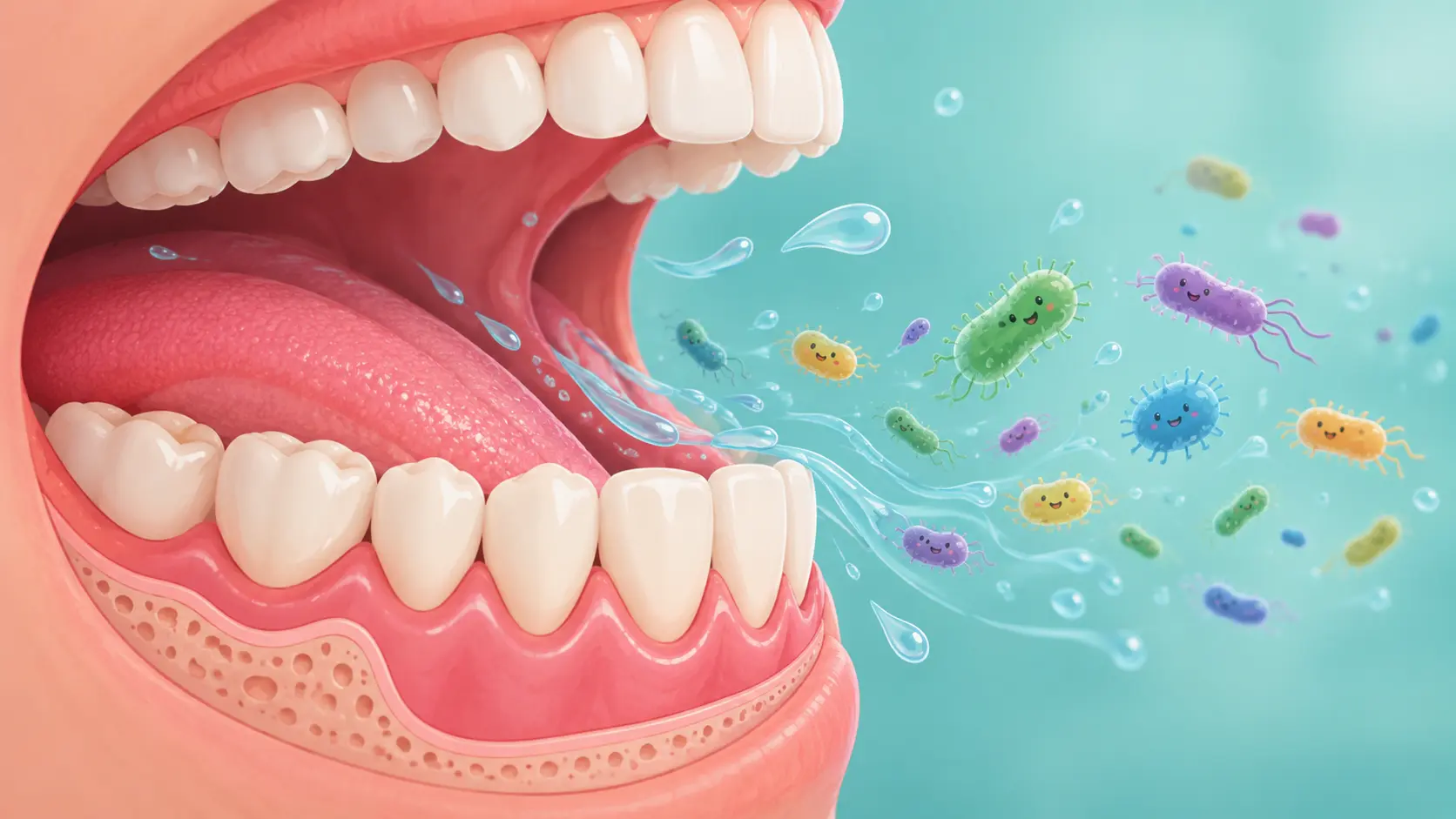
Gum disease is caused by a build-up of plaque on your teeth, says the NHS. If plaque is not removed by brushing and cleaning between your teeth regularly, it builds up and irritates your gums. In the early stages, the NHS says, a dentist will give you advice about keeping your teeth clean, such as using interdental brushes, advise you to stop smoking, if you smoke, and advise you to get your teeth cleaned by a hygienist. More serious gum disease may need deep cleaning under the gums, antibiotics, tooth removal or gum surgery.
See a dentist, the NHS says, if your gums bleed when you brush or eat hard foods, your gums are painful and swollen, or you have bad breath (see NHS: gum disease). Ask for an urgent appointment if you have very sore and swollen gums, loose teeth, or ulcers, red patches or a lump in your mouth. These are serious signs; do not wait them out.
What to expect for your breath after quitting
People often ask for a date: “When will my breath be normal?” The honest reply is that it depends on what was causing it. If smoke residue and a dry mouth were the main issues, you may notice the change as your sense of smell and taste recover. If gum disease or another medical cause was involved, you need that treated too.
The ADA says tobacco “reduces your ability to taste foods and irritates gum tissues.” As that effect eases, many ex-smokers notice food tastes stronger and, importantly, that they can smell the stale smoke on others and on old clothes. Our taste and smell after quitting timeline covers how senses return. The wider picture, from the first day to the long-term gains, is in what happens to your body when you stop smoking.
Two practical points for the first few weeks:
- Do not treat a dry or odd-tasting mouth as a reason to relapse. Keep up the brushing, sip water, chew sugar-free gum, and mention it at your next dental visit if it persists.
- Do not mask a smell that is not there yet. If you still smell of smoke, check your clothes, car and home too. Our guide to removing smoke smell from your home, car and clothes covers those.
Dentist and hygienist checks
The NHS says to see a dentist if bad breath “does not go away after treating it yourself for a few weeks,” or if you have painful, bleeding or swollen gums, toothache, wobbly adult teeth or problems with your dentures. The ADA similarly suggests regular checkups so a dentist can “detect any problems such as gum disease or dry mouth and stop them before they become more serious.” If your dentist finds your mouth is healthy, the ADA says you may be referred to your primary care doctor, because a sinus condition, gastric reflux, diabetes, or liver or kidney disease can also be behind a persistent odor.

Be open about smoking at the appointment. It is not a confession; it helps the dentist judge your gum risk and, as the NHS notes, advising you to stop smoking is a standard part of treating early gum disease.
The real fix: quit, and keep the habits
Everything above helps. None of it replaces the one change that stops the cause. The ADA’s advice is a single heading, “Quit Smoking,” in its list of solutions, which says giving up this habit “is good for your body in many ways.”
A practical approach for a quit that sticks:
- Choose a method with support. Our comparison of nicotine replacement options can help you pick, and a pharmacist or doctor can advise on what suits you.
- Keep the new mouth routine. Brushing, tongue cleaning and flossing become your new post-meal ritual, replacing the cigarette.
- Plan for the money. Saving on cigarettes can fund a dental cleaning; see how much money you save when you quit smoking for a way to work out your own figure.
iQuit can support the quitting part. You can log each craving with its trigger and intensity, use the SOS tools when an urge hits, and watch your smoke-free days and money saved build up on the dashboard. You can quit gradually or cold turkey, whichever fits you. It does not diagnose dental problems or bad breath, so keep your dentist in the loop for that.
Quit for good with iQuit
Smoker’s breath is a symptom of smoking, and quitting removes the cause. iQuit helps with craving logging, SOS craving tools and a dashboard of smoke-free days and money saved, and it is free on Google Play and the App Store.
Download iQuit Free on Google Play
Download on the App Store
Frequently Asked Questions
How do I get rid of smoker’s breath fast?
Brush your teeth and gums for 2 minutes, clean your tongue, clean between your teeth, and use sugar-free gum or mints, all of which are on the NHS self-care list. These help for a short time. Lasting improvement needs the cause treated, which includes quitting smoking and checking for gum disease (NHS).
Why does my breath smell even after brushing?
Smoke residue, a dry mouth, bacteria on the tongue and gum disease can all keep breath unpleasant after brushing. The ADA says persistent bad breath or a constant bad taste can be a warning sign of advanced gum disease, so see a dentist if it does not clear (ADA).
Does mouthwash get rid of smoker’s breath?
Not for long. The ADA says over-the-counter mouthwashes can help kill bacteria or neutralize and temporarily mask bad breath, but it is only a temporary solution. The NHS lists an antibacterial mouthwash as one option alongside brushing and cleaning between your teeth (ADA; NHS).
Can smokers tell if their breath smells?
Often not well. The ADA says smoking affects your sense of smell, so smokers may not be aware of how their breath smells. Ask someone you trust, or ask your dentist or hygienist to tell you honestly at your next checkup (ADA).
Does quitting smoking fix bad breath?
The ADA lists quitting smoking as one of its solutions and says you will have better breath. It does not give a timeline, and if gum disease or another condition is involved, that needs treatment too. A dentist can tell you whether smoking is the main cause (ADA).
When should I see a dentist about bad breath?
The NHS says to see a dentist if bad breath does not go away after treating it yourself for a few weeks, or if you have painful, bleeding or swollen gums, toothache or wobbly adult teeth. Ask for urgent care if gums are very sore and swollen or teeth become loose (NHS).
Can gum disease cause bad breath in smokers?
Yes. The NHS lists bad breath and a bad taste in the mouth among the effects of gum disease, and the ADA says tobacco users are more likely to suffer from gum disease. A dentist can treat gum disease, and early-stage advice includes stopping smoking (NHS; ADA).