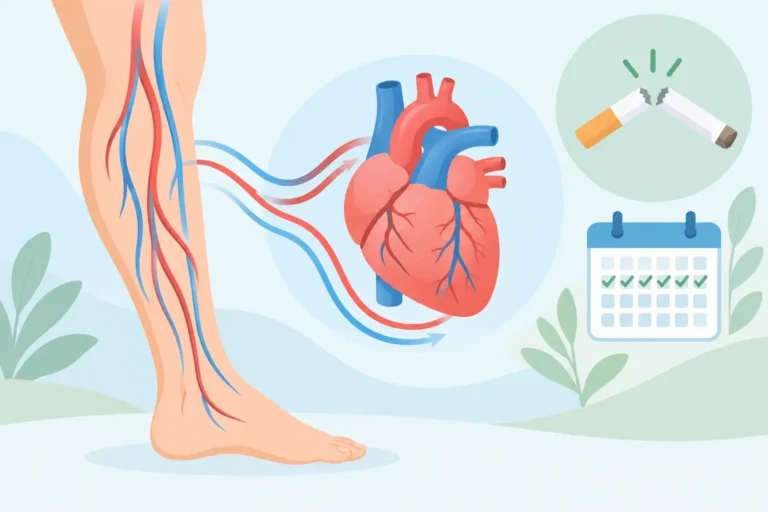
If you are wondering how to quit smoking over the holidays, or how to stay quit through them, the short answer is to plan for the specific moments that will tempt you. Parties, family dinners, drinks and travel are all situations that Smokefree.gov lists as common smoking triggers. This guide gives you a plan you can use for Thanksgiving, Christmas and New Year, built on advice from Smokefree.gov and the NHS.
Why the Holidays Are Full of Triggers
Smokefree.gov explains that “a trigger is something that makes you want to smoke. It can be experiencing a stressful situation, sipping coffee, going to a party, or smelling cigarette smoke.” It groups triggers into four types, and the holiday season can touch every one (Smokefree.gov, Know Your Smoking Triggers).
- Social triggers are “occasions that usually include other people who smoke.” Its examples include “Going to a party or other social event,” “Celebrating a big event,” “Being with friends who smoke” and “Going to a bar.”
- Pattern triggers are activities you connect with smoking. The list includes “Drinking alcohol,” “After a Meal” and “Taking a work break.”
- Emotional triggers come from intense feelings, including being “Stressed,” “Excited,” “Happy” or “Lonely.”
- Withdrawal triggers include “Smelling cigarette smoke” and “Needing to do something with your hands or mouth.”
A single holiday dinner can include a big meal, a drink, a relative who smokes on the porch and a lot of emotion. That is why a plan beats willpower.
This short video from the University of Wisconsin Center for Tobacco Research and Intervention covers how to deal with smoking triggers.
Dates for 2026: the US government’s federal holiday schedule lists Thanksgiving Day on Thursday, November 26 and Christmas Day on Friday, December 25 (US Office of Personnel Management). Both are reasonable deadlines for your plan.
How to Quit Smoking Over the Holidays: A Plan-Ahead Checklist
Smokefree.gov’s advice for triggers is to know them ahead of time: “Knowing your triggers and having strategies to help you deal with them can help you control cravings and make it less likely that you will smoke.” Use the table below to turn that into a holiday plan. Each strategy comes from its guidance on triggers and cravings.
| Holiday moment | Trigger type | Plan from Smokefree.gov |
|---|---|---|
| Big dinner, then everyone steps outside | Pattern (“After a Meal”) | “Change your routine,” such as brushing your teeth right after you eat a meal |
| Office or friends’ party | Social | “Tell your friends and family that you have quit. Ask them for their support.” |
| A drink in your hand | Pattern (“Drinking alcohol”) | “Find a replacement. Chew gum. Eat sugar-free candy. Suck on a straw.” |
| Family tension or loneliness | Emotional | “Talk about your emotions. Telling a friend or family member how you feel can help.” |
| A craving out of nowhere | Withdrawal | “Take slow, deep breaths.” Repeat 10 times or until you feel more relaxed |
For the same reason, write your craving list before the event and keep it on your phone. Smokefree.gov recommends having “go-to strategies ready to distract yourself and beat the urge to smoke.” Including your own reasons for quitting helps. The same page says to “remind yourself why you want to quit.”
If stress is your main holiday trigger, our guide on how to relax without smoking has ten ways to unwind that you can try between events.

Your Week-Before Checklist
A week before your first big event, run through this list. Every item below comes from Smokefree.gov’s guidance.
- Write your craving list. Smokefree.gov says to prepare “by making a list of things you can try when you have the urge to smoke” and to keep the list handy.
- Write down your reasons. Reviewing why you want to quit “can be a powerful motivator to keep you smokefree.”
- Do the money math. Smokefree.gov suggests you “add up the money you’ll save, and decide what to do with it,” which also helps pass a craving.
- Line up a person to call or text. The same page says “you don’t have to do this alone” and suggests you call or text someone.
- Talk to a clinician about medication if you want it. Smokefree.gov notes that nicotine replacement therapy can reduce withdrawal symptoms and that “teens, women who are pregnant, and people with severe medical conditions should talk to their doctor before using NRT.”
- Plan one reward. Smokefree.gov says “your rewards don’t have to cost anything,” such as a hike or inviting “a friend over for a movie night.”
Having these in place before the first dinner means you are not inventing a plan while a craving is already under way.
Gatherings and Travel
Holiday visits mean other people’s homes, other people’s rules and sometimes other people’s cigarettes. Smokefree.gov’s advice for social triggers is direct: “Once you’ve made the decision to quit, it is best to avoid places where people smoke and ask your friends not to smoke around you. Over time, it will get easier.”
Tell people before you arrive
Send a short message saying you have quit and will be skipping the smoke breaks this year. Smokefree.gov’s guidance on asking for help lists what you can ask people not to do, including “Smoke around you,” “Offer you a cigarette” and “Nag you about your efforts to quit.” You can also ask them to “Help you find ways to keep busy” and to “Celebrate your progress with you.” The same page notes you can tell them “you may not be your usual self for a few days or weeks after you quit” (Smokefree.gov, Ask for Help To Quit Smoking).
Give yourself an exit
If a visit goes on too long, leave the room. Smokefree.gov says that “most public places don’t allow smoking” and suggests going somewhere like “a movie, a store, or another place where you can’t smoke.” On a family trip, that can mean a walk to the store or a drive for an errand. For a stranger-filled event, our guide to getting through a wedding party without smoking has tactics that work for any party. If the relative who smokes is the main issue, see how to be around smokers without smoking.
Keep your regular routine going
Smokefree.gov also suggests getting active, which fits any trip: “Go for a walk. Ride a bike. Go swimming. Exercising can distract you from smoking.” A morning walk before the day’s events gives you something to do with the hours that used to include a cigarette.
Drinking Without Smoking
Alcohol appears twice on Smokefree.gov’s trigger lists: “Drinking alcohol” is a pattern trigger and “Going to a bar” is a social trigger. If you plan to drink at all, decide before the event how you will handle the moment a glass is in your hand.
Smokefree.gov’s pattern-trigger advice is to “break the association with the trigger and transfer the feeling to another activity.” In practice, that means holding something else in your free hand, such as a sparkling water or a straw, and standing somewhere other than the smokers’ spot. Our guide on how to drink without smoking goes through this in more detail.
A simple rule: put the plan in place before the first drink, not after. A craving you have already planned for is easier to ride out.

If You Slip
A slip during the holidays does not erase your progress. Smokefree.gov says: “If you slip up and smoke when you are trying to quit, that’s ok. Use a slip as an opportunity to learn. Remind yourself that a slip is just a temporary setback. Be proud of all the cigarettes you didn’t smoke. You have not failed and you’re not back to square one.”
It also suggests asking what happened: “Think about why you slipped. Can you identify a specific reason? What will you do the next time you find yourself in the same situation?” And it adds a time frame: “It’s important to restart quitting right away – today or tomorrow at the latest” (Smokefree.gov, Get Back on Track After a Setback).
If you want a person or a nudge after a slip, Smokefree.gov lists SmokefreeTXT (text QUIT to 47848) and says you can find your state’s quitline by calling 1-800-QUIT-NOW (1-800-784-8669) (Smokefree.gov, How to Manage Cravings).
Start Before New Year or Wait?
Neither Smokefree.gov nor the NHS says the holidays are a bad time to quit, or that January is a better one. What the NHS does say is that “smokers should set a day within the next 2 weeks of deciding to stop when they do not have too much stress going on” (NHS Better Health). Use that as a test. If the next two weeks are packed with travel and hosting, you may prefer a calmer day; if you are ready now, the work of planning is the same.
If you are already smoke-free, the goal is simply to arrive at January still smoke-free. If you want a structured path from now to the new year, our smoke-free by New Year plan lays out the weeks. If you are in the US, our Great American Smokeout 24-hour plan is a useful first step before the big meals. For motivation across the whole season, see the quit smoking motivation guide.
Frequently Asked Questions
Is it harder to quit smoking over the holidays?
It can feel harder because the season is full of triggers. Smokefree.gov lists parties, celebrating a big event, drinking alcohol and strong emotions among them. There is no evidence that quitting is less likely to work in December, so plan for the triggers instead (Smokefree.gov).
How do I avoid smoking at a holiday party?
Tell friends and family you have quit and ask for support, avoid places where people smoke, and keep a craving list on your phone. Smokefree.gov advises asking friends not to smoke around you, and says that over time it gets easier (Smokefree.gov).
Can I drink alcohol while trying to quit?
Smokefree.gov lists drinking alcohol as a pattern trigger and going to a bar as a social trigger. It does not say you must avoid alcohol, but it advises breaking the association by transferring the feeling to another activity, such as chewing gum or using a straw (Smokefree.gov).
What should I do if someone offers me a cigarette?
Say you have quit and ask them not to offer. Smokefree.gov’s list of things you can ask loved ones not to do includes “Offer you a cigarette.” Keep your reasons for quitting handy and remember that cravings pass (Smokefree.gov).
What if I slip at Thanksgiving or Christmas?
Treat it as a setback. Smokefree.gov says a slip is a temporary setback, you have not failed, and it is important to restart quitting right away, today or tomorrow at the latest. Work out what triggered it and plan for next time (Smokefree.gov).
Should I wait until after New Year to quit?
The NHS advises choosing a day within two weeks of deciding to stop, when you do not have too much stress going on. If you are ready now, you can plan for the holidays instead of waiting. If you are not, a calmer date is a valid choice (NHS Better Health).
When are Thanksgiving and Christmas in 2026?
In the US, Thanksgiving Day is Thursday, November 26, 2026 and Christmas Day is Friday, December 25, 2026, according to the federal holiday schedule (US Office of Personnel Management).
Take Support With You This Season
The holidays are full of long evenings and tempting moments. iQuit gives you a craving log for triggers and intensity, predictive craving forecasts, streak shields for tough days, SOS support, and a moderated community. It is free to download on Google Play and the App Store.
Download iQuit Free on Google Play Download on the App Store