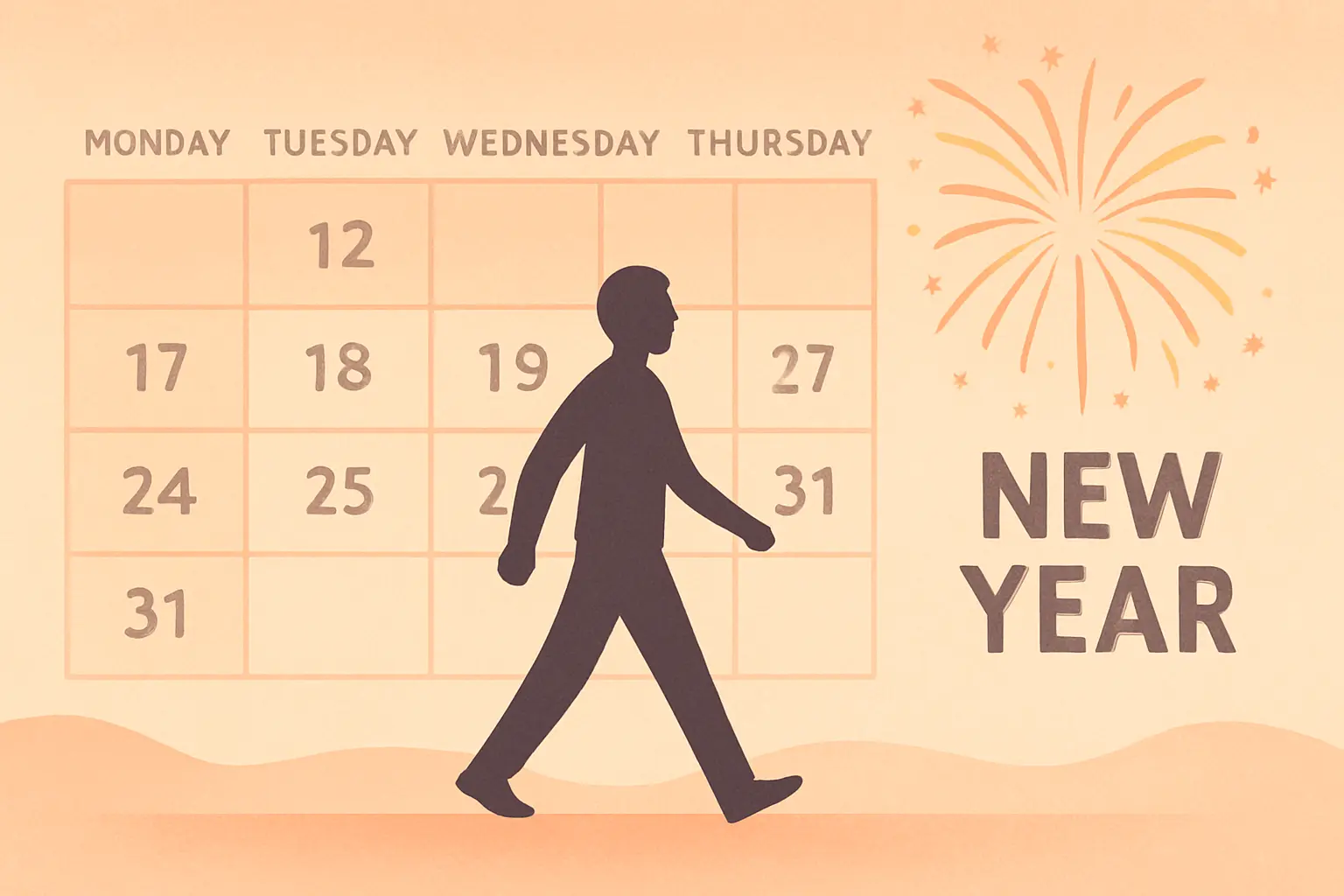
Every January, gyms fill up and quit-smoking searches spike — and by February, most of both have emptied out again. How to quit smoking before New Year is really a different question from “how to quit on New Year’s Day,” because picking 1 January as your actual quit date sets you up to fail in a very specific, avoidable way: it puts your hardest day of withdrawal on the same night as a party, alcohol, and a room full of triggers.
This guide reframes the New Year quit as a 15-week countdown that starts now, in September, and treats 1 January as a finish line you cross already smoke-free — not a starting gun. The failed New Year’s resolution isn’t a personal failing; it’s a predictable design flaw in the timing, and it’s fixable.
Why 1 January is the worst quit date (and how to fix it)
New Year’s Eve is one of the highest-alcohol, highest-stimulation nights of the year, and alcohol is one of the most reliable smoking triggers there is. If your quit date is 1 January, your first hours as a non-smoker land directly on top of the party itself — meaning peak temptation arrives before you’ve built any smoke-free momentum at all. It’s a structurally difficult place to start.
Quitting smoking is one of the most commonly made and most commonly abandoned New Year’s resolutions, and a large share of people who set 1 January as their quit date are smoking again within weeks. That isn’t because smokers who make this resolution want it less than anyone else — it’s because the date itself works against them from hour one.
The fix isn’t a different resolution — it’s a different date. Quitting a few weeks before New Year, so that 1 January becomes a milestone you’re already past rather than a start line, removes the single hardest night from your first-week withdrawal window entirely. This is the same logic behind why our guide on October being a strong quit month works: getting ahead of the holiday season, rather than starting in the middle of it, changes your odds.
| Factor | Quitting on 1 January | Quitting mid-December |
|---|---|---|
| First 24–72 hours land on | NYE party + hangover | An ordinary week you control |
| Alcohol exposure in week one | High | Your choice |
| Status on 1 January | Day 0–1, hardest phase | Already 2–3 weeks smoke-free |
| Holiday stress handled | While also in acute withdrawal | Mostly before withdrawal begins |
Weeks 15–12: baseline and dependence score
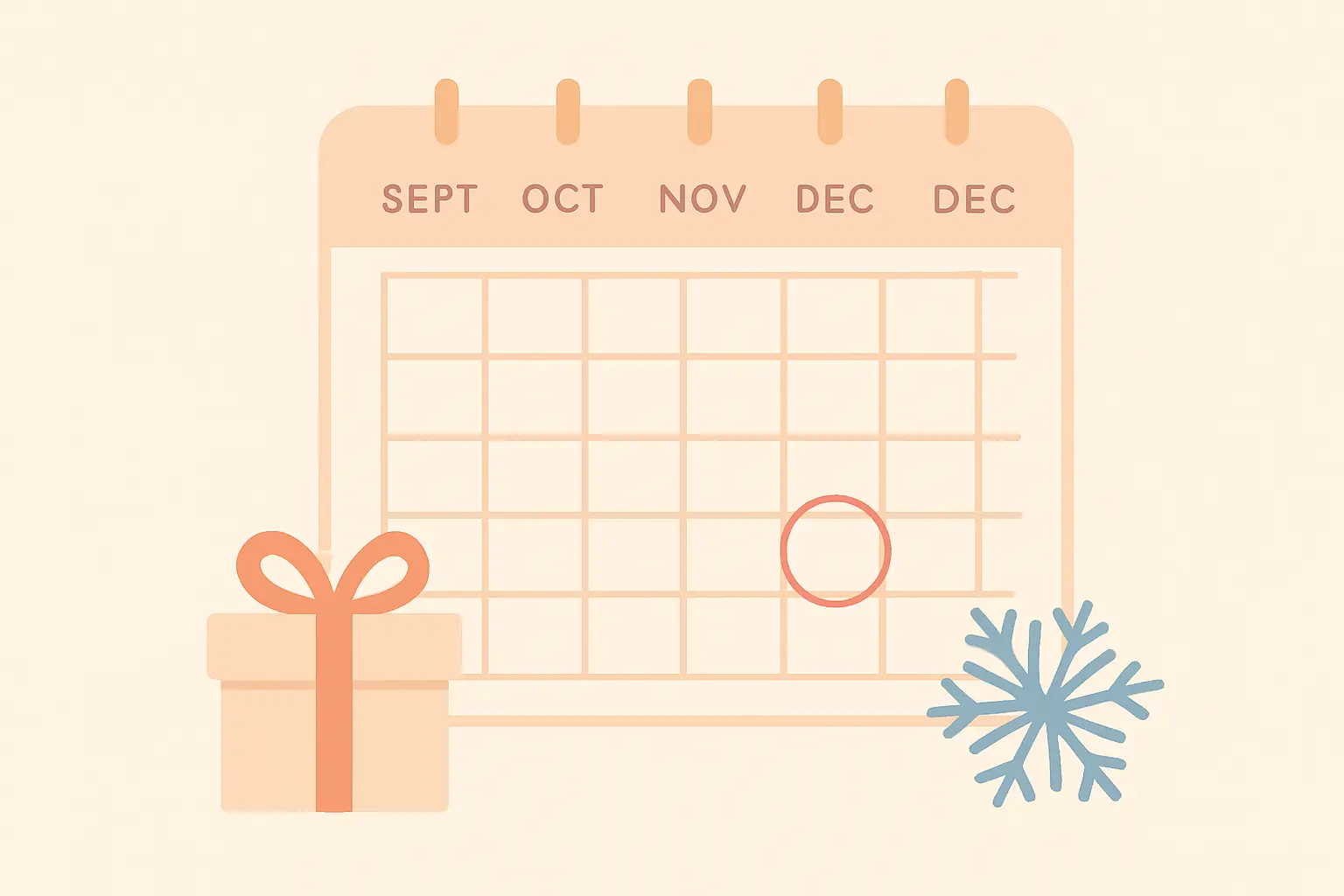
Fifteen weeks before 1 January lands in mid-September — which is exactly why starting now matters. The first month of this countdown isn’t about quitting yet; it’s about understanding your actual pattern. Log every cigarette for a week: time, place, and how automatic versus how “wanted” it felt. Most smokers discover that a large share of their daily cigarettes are near-automatic, tied to specific moments (coffee, driving, a work break) rather than genuine craving.
Pair that log with a structured look at your dependence level rather than guessing — our nicotine dependence test scores this in a few minutes and points you toward whether you’ll likely need NRT, combination NRT, or can manage with behavioral support alone. Knowing this now, three and a half months out, means you’re not making that decision under time pressure later.
This baseline period also surfaces your specific risk windows — the two or three moments in your day where a cigarette feels closest to automatic. Naming these now, while you’re not yet trying to quit, makes them far easier to plan around once you start actively cutting back.
This Mayo Clinic Minute covers practical strategies that pair well with a planned countdown like this one:
Weeks 11–8: cut the automatic cigarettes
With your baseline data in hand, this stretch is about removing the automatic cigarettes first — the ones you smoke without really wanting one — while leaving the cigarettes you actually crave alone for now. This isn’t a full taper; it’s targeted removal of the lowest-value smoking moments, which lowers your daily count without triggering the full withdrawal response a true quit attempt does.
Replace each removed automatic cigarette with a specific, planned substitute for that exact moment (a short walk after the coffee cigarette, a different route that skips the smoking spot). Vague willpower doesn’t hold up here — a concrete swap for a concrete trigger does. By the end of this stretch, most people have already cut their daily count meaningfully without having attempted a full quit, which builds real confidence heading into the harder stage.
Weeks 7–4: choose and start your method
By seven weeks out, it’s time to commit to a quit method rather than continuing to reduce indefinitely. Options include NRT (patches, gum, lozenges), prescription medication, or a structured behavioral program — and starting it now, rather than waiting until your quit date itself, means any adjustment period (finding the right NRT dose, getting used to a new routine) happens before the holidays add extra stress on top.
If you haven’t already picked a specific quit date, do it now using the method in our guide to setting a quit date that actually sticks, and prepare using the same 24-hour prep steps in our quit day checklist — both apply regardless of which week you land your date in. Aim to land your actual quit date somewhere in this window or the next, giving yourself several weeks of buffer before the December minefield begins.
Weeks 3–1: the December minefield

The final three weeks before New Year are genuinely the hardest stretch to navigate — holiday parties, family stress, and alcohol all cluster here, and being around other people who are smoking is one of the most reliable relapse triggers there is. The CDC’s quit-smoking guidance puts planning ahead for your trigger situations at the center of staying quit, and holiday gatherings are exactly that kind of situation. Plan concrete exit strategies for specific events: which parties you’ll leave early, which conversations you’ll step away from, and who you’ll text the moment a craving hits.
If you already quit in the weeks-7-to-4 window, this stretch is about defending a quit you’ve already made, not starting one — a meaningfully easier position to be in than facing your first 72 hours during the same three weeks. Treat each individual holiday event as its own small challenge with its own plan, rather than one long undifferentiated stretch of risk.
Your actual quit date: mid-December vs. 1 January
If you’re choosing between the two, mid-December wins for one simple reason: it puts your hardest 72 hours somewhere you can control, on an ordinary week, rather than during the single most trigger-dense night of the entire year. By the time 1 January arrives, you’re not starting — you’re two to three weeks in, already past the worst of acute withdrawal, and New Year’s Eve becomes a night to defend rather than a night to survive while also quitting.
This is the same principle behind Stoptober’s late-September prep window; our 28-day Stoptober plan and the broader complete quit-smoking guide both use the same “prepare before the hard part” logic this countdown is built on.
The first week of January
If you followed the mid-December date, your first week of January is about consolidating, not surviving — Mayo Clinic’s craving-resistance techniques (delay, distract, deep breathe, drink water) are worth reviewing again here, since new-year routines (different gym schedule, new resolutions, changed social plans) can quietly introduce new triggers even after the acute phase has passed.
Structured challenges timed to this exact window help: the iQuit 21-Day Habit Breaker challenge fits neatly if started in mid-December, ending right around the point where new-year routines have settled in, and if you haven’t quit yet by January, the Great American Smokeout 24-hour framework or a fresh week-long baseline using our guide to tracking your smoking for a week before you quit are both solid restart points. Whichever week you’re in, seeing a visible smoke-free streak and rising savings total tends to matter more for staying quit through January than any single willpower moment does.
The whole countdown on one page
If you only keep one thing from this guide, keep this: every phase has one job, and doing that job on time is what makes the next phase easier. Nothing here asks you to quit before you’re prepared — it asks you to be prepared before you quit.
| Weeks out | Calendar (for 1 January) | Your one job |
|---|---|---|
| 15–12 | Mid-September to early October | Log every cigarette for one week; score your dependence level; name your two or three highest-risk moments. |
| 11–8 | October to early November | Remove only the automatic cigarettes, one trigger at a time, each with a planned substitute. |
| 7–4 | Mid-November to early December | Choose your method, start it, and lock in a specific quit date in this window or the next. |
| 3–1 | Mid to late December | Defend the quit through the party season with a per-event plan and an exit strategy. |
| 0 | 1 January | Nothing. You’re already two to three weeks smoke-free — this is a milestone, not a start line. |
Two practical notes. First, if you’re reading this later than mid-September, don’t compress the whole plan into the time left — drop the middle stretch and keep the two phases that matter most: pick your method early, and set the date away from New Year’s Eve. Second, if life makes mid-December impossible, an early-January date (say, the 8th or 10th) still beats the 1st, because it puts your hardest days after the celebrations rather than inside them.
New Year quit FAQ
Why do so many New Year’s quit-smoking resolutions fail?
Quitting smoking is consistently one of the hardest resolutions to keep, largely because 1 January puts the hardest days of withdrawal directly on top of a high-alcohol, high-stimulation night, rather than giving you a controlled environment to start in.
Should I quit on New Year’s Day or before it?
Quitting a few weeks before New Year, ideally in mid-December, is easier because your hardest 72 hours land on an ordinary week you control, and you enter New Year’s Eve already past the worst of acute withdrawal instead of starting it that night.
How do I handle holiday parties while quitting?
Plan concrete exit strategies in advance: which events you’ll leave early, which conversations you’ll step away from, and who you’ll contact the moment a craving hits. Planning ahead for the specific situations that trigger you is the core of most quit-smoking guidance, and holiday gatherings are exactly that kind of situation.
What should I do in the 15 weeks before New Year if I’m not ready to quit yet?
Start by tracking your smoking pattern and checking your dependence level, then remove your most automatic (least-craved) cigarettes first. This lowers your daily count and builds momentum before you commit to a full quit date and method.
What if I relapse over the holidays anyway?
A slip during a high-trigger night isn’t a sign the plan failed. Set a new, near-term quit date rather than waiting for another symbolic start date, and use what the slip taught you about that specific trigger. Combining a stop-smoking medicine with behavioral support gives you better odds on the next attempt than either alone.
Is it better to taper down or quit all at once before New Year?
This plan uses a hybrid: cut the automatic, low-craving cigarettes gradually over several weeks, then quit fully on a set date rather than tapering all the way to zero. That combination builds momentum without dragging out the hardest withdrawal days indefinitely.
It’s already December — is 15 weeks still worth it?
Don’t compress the full plan into a fortnight. Keep the two phases that carry most of the benefit: choose and start your method now, and set your quit date away from New Year’s Eve — an early-January date such as the 8th still beats the 1st.
Can I drink alcohol during the first weeks of my quit?
Alcohol is one of the most reliable smoking triggers, and it also lowers the resolve you’d normally use to ride out a craving. Most people find the first few weeks far easier if they cut back sharply or skip alcohol entirely, then reintroduce it deliberately once the acute phase has passed.
Start your countdown with a challenge built for the timing
iQuit is free to start, with craving forecasts, streak shields and SOS support for the exact nights you’ll need them most. The 21-Day Habit Breaker is one of the Premium challenges, and its 7-day free trial times neatly to a mid-December quit date. Available on Android and iPhone.