
A long-haul flight can mean 10 hours or more without a cigarette, plus security queues, boarding and immigration on top. If you smoke, that stretch can feel daunting. The good news is that how to survive a long flight without smoking comes down to planning: sorting your nicotine before you leave, knowing what you can take through security, and having a craving plan for each stage of the journey.
This step-by-step guide covers the rules on smoking and vaping in the air, which nicotine replacement products you can carry, how to handle cravings at 30,000 feet and on layovers, and how to use a forced break from cigarettes as a head start on quitting.
Can you smoke or vape on a plane? The rules in 2026
No. Smoking has been banned on commercial flights for years, and the ban covers vaping too. In the US, federal rules in 14 CFR Part 252 prohibit smoking on flights by US and foreign airlines to, from and within the United States. The rule defines smoking to include electronic cigarettes and similar products that produce smoke, mist, vapor or aerosol. It applies to every part of the aircraft, including the lavatories, and while the plane is on the ground.
Other countries and airlines apply their own bans, and in practice you should assume no airline allows smoking or vaping on board. Trying it in the toilet is not a loophole, since the US rule explicitly covers lavatories.
What you can carry
| Item | Hand luggage | Checked or hold luggage | Use on board |
|---|---|---|---|
| E-cigarettes and vapes | Yes | No | No |
| Standard lighter | One, kept on you (UK: in a clear bag) | No | No |
| Torch or jet-flame lighter | No | No | No |
| Nicotine patches, gum, lozenges | Yes | Yes | Yes |
| Nicotine mouth spray | Yes, within liquids limits | Yes | Yes |
The vape rule is strict in both directions. The TSA says electronic smoking devices are allowed only in carry-on baggage, because of their lithium batteries, and UK government guidance also lists e-cigarettes as hand luggage only. UK rules allow just 1 lighter on board, sealed in a resealable plastic bag that you keep on you. The FAA bans torch lighters from both the cabin and checked bags.
Step 1: Plan your nicotine before you fly
The biggest decision comes before you pack: will you use nicotine replacement therapy (NRT) on the flight? NRT products are licensed as stop smoking aids to reduce withdrawal symptoms and cravings when you quit. That makes a flight an ideal quit day. If you plan to go back to smoking after you land and want NRT only for the journey, ask a pharmacist first so they can advise on the product and strength.
Your pre-flight checklist
- The week before: buy your NRT and try it at home, so the flight isn’t the first time you use it.
- The day before: pack NRT in your hand luggage, not your checked bag.
- The morning of the flight: if you use a patch, put a fresh one on as usual. A 24-hour patch gives steady background nicotine through the whole journey.
- At the airport: use a fast-acting product before stressful moments like security or boarding, rather than waiting for a craving to peak.
- Download what you need offline: films, podcasts, books and any apps you rely on.
Not sure which product to carry? Our guide to the fastest-acting NRT compares spray, gum and lozenges. If you are new to patches, read which patch side effects are normal before your trip.

Step 2: NRT you can take through security
Patches, gum and lozenges are solid items, so they go through security in your carry-on without special handling. Keep them in their original packaging with the label, which makes any questions quick to answer.
Mouth sprays are different because they count as liquids. The TSA liquids rule limits liquids, aerosols and gels in carry-on bags to travel-size containers of 3.4 ounces (100 milliliters) or less, packed in a quart-size bag. UK airports also treat sprays as liquids, and the limits vary by airport, so check with your departure airport. A standard nicotine mouth spray is small, but pack it with your other liquids so it’s easy to show.
If you’re flying with a vape, remember it has to stay in your hand luggage and you can’t use it on board. Many people find it easier to leave it at home if they are using the trip as a quit attempt.
Step 3: Getting through boarding and take-off
The hour before boarding is often the hardest part. You have finished security, you’re waiting, and you know the next chance to smoke is many hours away. That “last chance” feeling is a strong trigger.
- Don’t treat the terminal as a last-chance smoke. Building it up only makes the flight feel longer.
- Keep moving. Walk the terminal instead of sitting near the doors of the outdoor smoking area.
- Eat a proper meal before boarding. Hunger and cravings are easy to confuse.
- Use fast-acting NRT at the gate if you have it, so it’s working before take-off.
Nicotine gum is a common choice for flights, but it only works if you use it properly. According to the US label for Nicorette 4 mg gum on DailyMed, people who smoke their first cigarette within 30 minutes of waking should use 4 mg gum, and those who smoke later should use 2 mg. Chew slowly until it tingles, then park it between your cheek and gum, and chew again when the tingle fades. Don’t eat or drink for 15 minutes before or while chewing, don’t use more than 24 pieces a day, and don’t use one piece straight after another, since that can cause hiccups, heartburn or nausea.
This CDC video shows the chew-and-park method step by step:
Step 4: Cravings at 30,000 feet
Once you’re in the air, cravings tend to come in waves rather than as one long, unbroken urge. They build, peak and fade. Knowing that makes them easier to ride out. Our guide on how long cravings last explains the pattern in more detail.
Your in-flight craving toolkit
- Drink water regularly. Cabin air is dry, and sipping gives your hands and mouth something to do.
- Go easy on alcohol. It lowers your guard and is a common smoking trigger.
- Time your NRT. If you use gum or lozenges, avoid coffee and soft drinks just before, since acidic drinks can reduce how well nicotine is absorbed through your mouth.
- Get up and walk to the galley or stretch when the seatbelt sign is off.
- Try slow breathing. Breathe in gently through your nose and out slowly through your mouth for a few minutes.
- Plan your distractions. Line up a film, a playlist, a puzzle book or sleep for the long middle stretch.
- Brush your teeth or use mints after meals, a classic “cigarette moment”.
For more quick techniques, see our guide to stopping a craving fast.
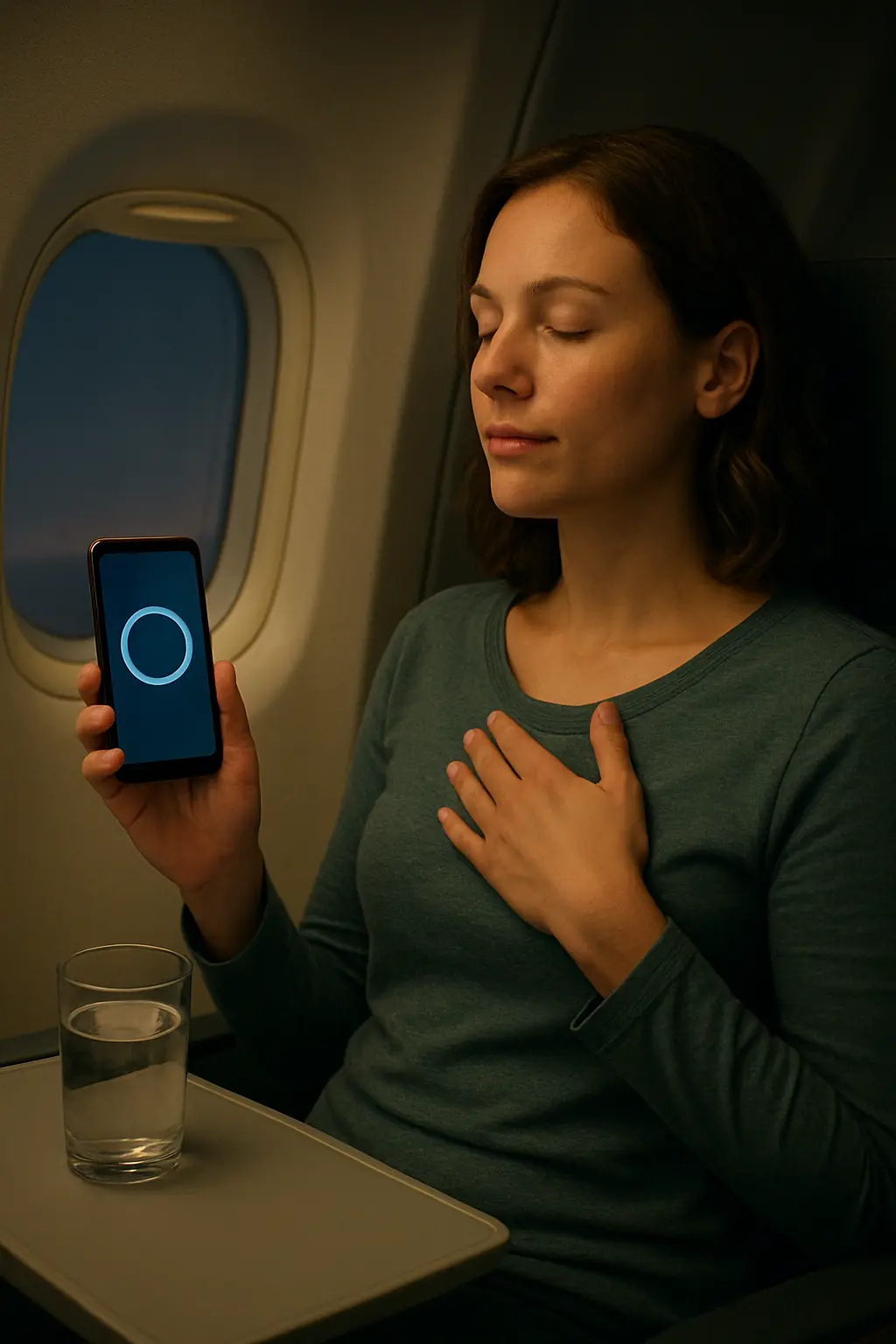
Your phone can help even in airplane mode. iQuit is built offline-first, so its SOS craving support, with breathing exercises, distraction tips, craving timers and a virtual cigarette, works without Wi-Fi. You can also log each craving with its trigger and intensity and review the pattern after you land. Read more about an app that works offline and how the SOS button works. iQuit is free on Google Play and the App Store.
Step 5: Layovers and smoking areas
Some airports have indoor smoking rooms or outdoor smoking areas, and a layover can look like a chance to “top up”. Think it through before you go looking for one.
- Leaving security can cost you time. Outdoor smoking areas may be outside the secure zone, so you could have to go through security again before your connection.
- A cigarette resets the clock. If you have gone several hours without smoking, one cigarette restarts the craving cycle for the second flight.
- Follow local rules. Smoking rules differ by country and airport, and vaping may be banned indoors too.
- Use the layover well. Walk, eat, shower if the airport has facilities, and use your NRT as planned.
If you are using the trip as a quit attempt, treat the layover as the halfway point. You have already done the hard part once.
Step 6: The arrival craving
For many smokers the strongest craving comes not in the air but on the ground: walking off the plane, through passport control and straight out of the terminal doors, where people are lighting up. Plan this moment as carefully as the flight.
- Decide in advance what you will do when you step outside. Have a drink, call someone or head straight for your transport.
- Don’t carry cigarettes in your pocket if you are trying to stay smoke-free.
- Use fast-acting NRT while you wait for bags, so it’s working before you reach the exit.
- Keep your hands busy with your phone, luggage or a coffee.
Turn the flight into your quit day
Once you know how to survive a long flight without smoking, you have a skill you can build on. By the time you land, you may have gone longer without a cigarette than you have in years. That is proof you can do it. Many people find a long flight is a natural starting point because the usual cues of home and work are gone, and the first smoke-free hours are already behind you.
| Stage | Temporary break | Quit day |
|---|---|---|
| Before the flight | Smoke as usual, pack NRT | Throw away cigarettes, pack NRT, tell someone your plan |
| During the flight | Manage cravings until landing | Manage cravings and start logging them |
| On arrival | Smoke outside the terminal | Walk past the smoking area and use your craving plan |
| First days away | Back to normal | New place, new routine, no old triggers |
If you decide to make it a real quit attempt, a tracking app helps you keep the momentum after the trip. iQuit shows days smoke-free, cigarettes avoided and money saved, so your flight becomes day one on the counter.
Long Flight Without Smoking FAQ
Can you vape on a plane?
No. US federal rules define smoking to include electronic cigarettes and ban it on flights by US and foreign airlines to, from and within the United States, including in lavatories. Vapes must travel in carry-on bags only, and you should assume no airline allows vaping on board (eCFR, TSA).
Can I bring nicotine gum or patches on a plane?
Yes. Patches, gum and lozenges are solid items you can pack in hand luggage and use during the flight. Nicotine mouth sprays count as liquids, so keep them within your airport’s liquids limits, which is 3.4 ounces or 100 milliliters per item under TSA rules (TSA).
Can I take a lighter on a plane?
Usually one standard lighter, carried on you rather than in checked bags. UK rules say it must be in a resealable plastic bag kept on your person. Torch or jet-flame lighters are banned from both the cabin and checked baggage (GOV.UK, FAA).
What is the best NRT for a long flight?
Many people combine a 24-hour patch for steady nicotine with gum or lozenges for sudden cravings. Try the products at home before you travel, and ask a pharmacist which strength suits you, especially if you plan to smoke again after landing (DailyMed, NHS).
How do I use nicotine gum on a plane?
Chew slowly until it tingles, then park it between your cheek and gum, and chew again when the tingle fades. Don’t eat or drink for 15 minutes before or while chewing, and don’t use more than 24 pieces a day (DailyMed).
Should I smoke in the airport smoking area on a layover?
It’s better not to. Outdoor smoking areas may be outside security, so you could need to be screened again, and one cigarette restarts the craving cycle before your next flight. Use the layover to walk, eat and take your NRT instead.
Can a long flight help me quit smoking?
It can be a strong starting point. You will already have hours without a cigarette behind you, and travel breaks many of your usual triggers. If you want to make it your quit day, throw away your cigarettes before you fly and plan for the arrival craving.
Craving help that works in airplane mode
iQuit’s SOS craving support, breathing exercises and craving log work offline, so you can use them at 30,000 feet. Free on Google Play and the App Store.
Download iQuit Free on Google Play
Download on the App Store