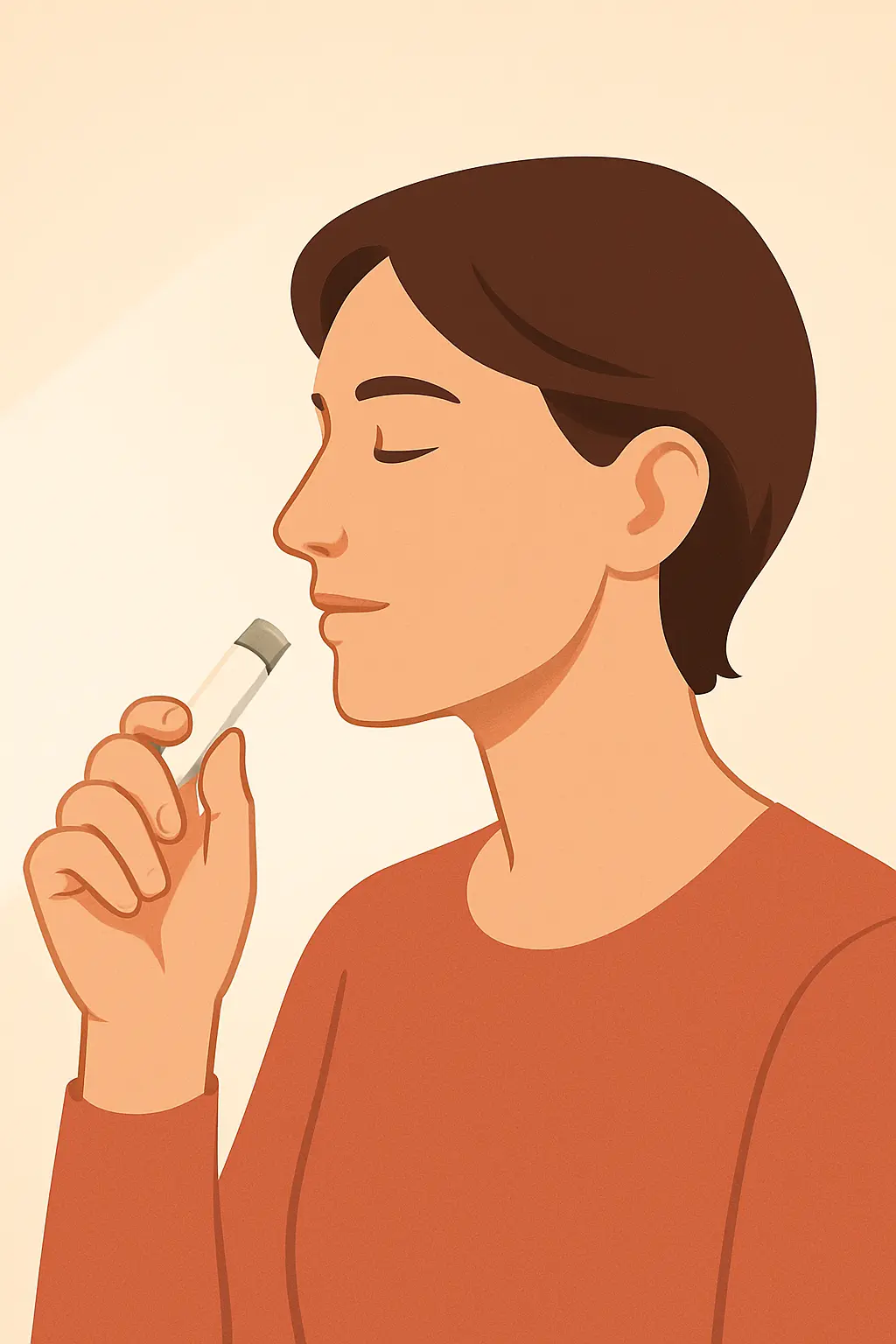
The nicotine inhaler is one of the most misunderstood products in the NRT lineup, mostly because its name invites confusion with vaping. Learning how to use a nicotine inhaler correctly means understanding that it’s a puff-and-mouth device, not a lung-delivery one, and that getting the technique and cartridge routine right makes a real difference to whether it actually helps.
What a Nicotine Inhalator Actually Is (Not a Vape)
A nicotine inhalator is a licensed nicotine replacement product: a plastic mouthpiece holding a porous cartridge containing nicotine. Per the UK product label, it “relieves and/or prevents craving and nicotine withdrawal symptoms in nicotine dependence, such as those arising from the use of tobacco or electronic cigarettes,” and is “indicated to aid quitting or reduction prior to quitting” (Nicorette Inhalator SmPC, medicines.org.uk). Note that the label itself distinguishes it from e-cigarettes — it’s a medicine designed to satisfy the hand-to-mouth habit and deliver nicotine through the lining of your mouth, not something you vape.
It contains no tobacco, produces no smoke, and unlike a vape, most of the nicotine never reaches your lungs at all.
The exact product differs by country, and the numbers below are not interchangeable. The UK’s Nicorette Inhalator uses a 15 mg cartridge with a 6-cartridge daily maximum. The US equivalent, NICOTROL Inhaler, uses a different cartridge (a 10 mg plug that delivers roughly 4 mg) and a much higher permitted range — per its FDA label, “most successful patients in the clinical trials used between 6 and 16 cartridges a day,” with an initial recommendation of “at least 6 cartridges per day… for the first 3 to 6 weeks” (NICOTROL Inhaler label, DailyMed). The two also differ in how you get them: Nicorette Inhalator’s UK label lists it as a General Sale List product, meaning it can be bought without a prescription, while NICOTROL Inhaler’s US label lists it as “Rx only” — a prescription from a doctor is required to obtain it in the United States. This guide covers the general technique that applies to both, but always follow the maximum dose and duration printed on the box you actually bought, not a number from a different country’s product.
Loading a Cartridge
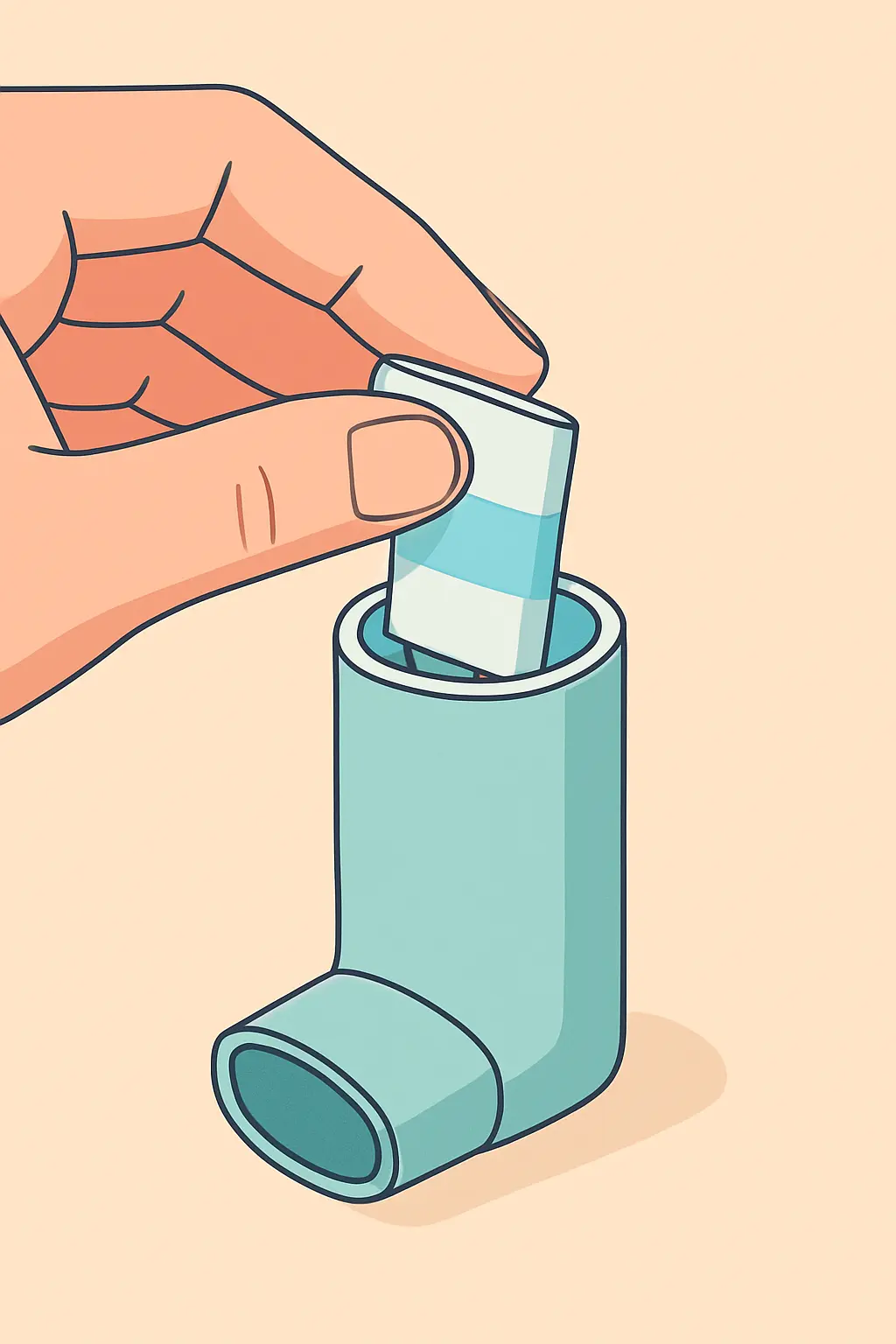
Each cartridge is inserted into the mouthpiece before use. Once a cartridge is opened and put into the device, the label specifies it “should be disposed of within 48 hours even if it has not been used” — so don’t load one “just in case” and leave it for later in the week. Load a fresh one when you’re actually about to use it.
Puff Technique: Shallow and Frequent, Not Deep
This is the detail that trips up most first-time users, because the instinct from smoking is to inhale deeply. The label explains why that’s the wrong technique here: “when a patient draws air into the mouth through the mouthpiece, nicotine is vaporised and absorbed by the buccal mucosa. Minimal nicotine reaches the lungs.” Because each puff delivers less nicotine than a drag on a cigarette, “it is necessary to inhale more often than when smoking a cigarette” — shallow, frequent puffs into the mouth, not deep lung inhalation, is the technique that actually works.
Think of it less like smoking and more like sipping through a straw with frequent small sips, rather than one long deep pull.
Roswell Park Cessation Services demonstrates correct nicotine inhaler use.
How Long a Cartridge Lasts
Per the UK Nicorette label, each 15 mg cartridge “can be used for approximately eight 5-minute sessions, with each cartridge lasting approximately 40 minutes of intense use.” Temperature affects this: in cold conditions (below 15°C) nicotine evaporates more slowly, so you’ll need to puff more to get the same effect; in warm conditions (above 30°C) it evaporates faster, so puff less often to avoid taking in more than you intend. Store the device at room temperature, below 25°C, for the most predictable release. The US NICOTROL label describes a similar continuous-puffing pattern but doesn’t specify the same fixed minute count, instead noting “best effect was achieved by frequent continuous puffing” over roughly 20 minutes per cartridge.
| Detail | UK: Nicorette Inhalator (15 mg) | US: NICOTROL Inhaler (10 mg plug / 4 mg delivered) |
|---|---|---|
| Cartridge nicotine content | 15 mg per cartridge | 10 mg plug, ~4 mg delivered |
| Typical single-cartridge use | ~8 sessions of 5 minutes (~40 min total) | Continuous puffing, ~20 minutes |
| Maximum daily dose | 6 cartridges | 16 cartridges |
| Recommended starting use | As needed, up to the maximum | At least 6 cartridges/day for the first 3–6 weeks |
| How you obtain it | General Sale List — no prescription needed | “Rx only” — prescription from a doctor required |
| Disposal after inserting into mouthpiece | Within 48 hours, even if unused | Follow the specific product’s insert |
| Recommended treatment length | Not fixed on the label; discuss ongoing use with a pharmacist | Up to 3 months, then taper over 6–12 weeks; not studied beyond 6 months |
Sources: Nicorette 15 mg Inhalator Summary of Product Characteristics (medicines.org.uk/emc) and NICOTROL Inhaler label (dailymed.nlm.nih.gov), both fetched this session. Always check the label of the exact product you buy, since strengths, maximums, prescription status and country availability vary and other countries’ products may differ from both of these.
How Many Cartridges a Day
Follow the maximum printed on your specific product — 6 a day for the UK Nicorette Inhalator, up to 16 a day for the US NICOTROL Inhaler during initial treatment. Within that ceiling, how many you actually use depends on your quitting approach: if you’re replacing cigarettes immediately, the UK label describes starting by replacing “all their cigarettes/e-cigarettes with the Inhalator” and then reducing cartridges as you’re able; the US label similarly recommends a higher starting dose in the first weeks, with self-titration to the level of nicotine you need. Both labels converge on the same underlying point: under-using the product out of caution tends to work against you, provided you stay within your product’s stated maximum. The UK label frames it as “the more the subject is able to use the Inhalator, the easier it will be to achieve maximum reduction… and/or quit smoking/vaping completely.”
Throat Irritation and Cough
Mild throat and mouth irritation is common early on — the label notes that “about 40% of users experience mild local reactions such as cough and irritation in the mouth and throat,” but adds that “most subjects adapt to this with ongoing use.” If irritation is severe, doesn’t ease after the first week or two, or comes with other symptoms, that’s worth mentioning to a pharmacist rather than pushing through or stopping altogether.
Combining With a Patch
The inhalator is often used alongside a nicotine patch as part of combination NRT — the patch covers your steady background level, and the inhalator handles the hand-to-mouth habit and sharper craving moments the patch alone doesn’t address. The label itself frames NRT’s risk-benefit position clearly: “any risks that may be associated with NRT are substantially outweighed by the well-established dangers of continued smoking.” Specific combination dosing should still come from your pharmacist or GP rather than a general guide. Our full comparison of NRT options and gum vs patch vs lozenge vs inhaler comparison both cover how the inhalator sits alongside the other formats.
Stepping Down
Once you’ve quit smoking and are relying on the inhalator itself, the same principle applies to coming off it: reduce cartridges gradually rather than stopping abruptly. The US NICOTROL label is explicit about a schedule here — up to 3 months of use, then a gradual reduction over a further 6 to 12 weeks, with “no tapering strategy… shown to be superior to any other” and continued use beyond 6 months “not recommended” because it hasn’t been studied. The UK label doesn’t fix a fitting-and-taper schedule as precisely, and if you’re finding it hard to discontinue, it specifically recommends contacting “their pharmacist or doctor for advice” rather than treating a longer taper as a failure. If your inhalator use overlaps with gum, our step-down plan for tapering off nicotine gum covers a similar gradual approach for that product, and our guide to using nicotine lozenges correctly is useful if you’re comparing formats for the craving-management role specifically. For a fast-acting comparison across every format, see our fastest-acting NRT comparison and the equivalent patch technique in our guide to using nicotine patches correctly. If you’re deciding between the inhalator and a mouth spray specifically, our nicotine spray vs gum comparison covers the closest alternative fast-acting formats.
Tracking Cartridges Alongside Cravings
Because the inhalator’s daily maximum and cartridge-life numbers are specific and easy to lose track of by the afternoon, logging each use against your craving intensity in iQuit makes it easier to see whether you’re actually within the label’s guidance and whether specific hours are eating through cartridges faster than others.
Frequently Asked Questions
Is a nicotine inhaler the same as a vape?
No. A nicotine inhalator is a licensed medicine that delivers nicotine absorbed through the lining of the mouth, with minimal nicotine reaching the lungs. A vape is a separate consumer product that heats e-liquid into an aerosol you inhale into the lungs. The inhalator’s own product label explicitly distinguishes it from electronic cigarettes.
How many cartridges can I use a day?
The Nicorette 15 mg Inhalator’s label sets a maximum daily dose of 6 cartridges. Within that limit, how many you use depends on whether you’re replacing cigarettes immediately or reducing gradually before quitting.
How long does one cartridge last?
About 40 minutes of intense use, typically across eight 5-minute sessions, according to the product label. Temperature affects the release rate — colder conditions slow nicotine release and warmer conditions speed it up.
Should I inhale deeply like a cigarette?
No. The device delivers nicotine through the mouth lining, not the lungs, so deep inhalation isn’t necessary and doesn’t help. Shallow, frequent puffs — more often than you would puff a cigarette — is the technique the product label describes.
Can I use a nicotine inhaler with a nicotine patch?
Combining a patch with the inhalator is a recognised combination NRT approach — the patch covers steady background nicotine while the inhalator handles the hand-to-mouth habit and sharper cravings. Confirm the specific combination and any dose adjustment with a pharmacist or GP rather than combining products without guidance.
Is the nicotine inhaler the same in the US and UK?
No. The UK’s Nicorette Inhalator uses a 15 mg cartridge with a maximum of 6 a day and is sold without a prescription. The US’s NICOTROL Inhaler uses a different cartridge (a 10 mg plug delivering about 4 mg), allows up to 16 cartridges a day during initial treatment with a defined 3-month use period and taper, and — unlike the UK product — is available only by prescription from a doctor. Always follow the label on the specific product you bought rather than a figure from a different country’s version.
Why does my throat feel irritated when I use it?
Mild cough and throat or mouth irritation are common in the first weeks — the product label notes around 40% of users experience this, and most adapt with continued use. If irritation is severe or doesn’t improve, speak to a pharmacist.
Track Your NRT Alongside Your Cravings
iQuit’s craving log helps you see whether your NRT use — inhaler, gum, patch or a combination — is actually lining up with your hardest hours. Free on Google Play and the App Store.
Download iQuit Free on Google Play
Download on the App Store