

Most people who quit smoking with nicotine gum notice something in the first week or two: a hiccup during a meeting, a burning feeling in the throat, or a jaw that aches after chewing. Nicotine gum side effects like these are usually a sign of technique, not danger, and nearly all of them fade once you switch to the “chew and park” method the manufacturer’s label actually describes.
What nicotine gum side effects are normal
Nicotine polacrilex gum — the active ingredient in Nicorette, Habitrol and store-brand nicotine gums — carries a drug label with an explicit list of expected effects. The manufacturer’s directions warn that chewing piece after piece “may cause you hiccups, heartburn, nausea or other side effects,” which tells you these are anticipated outcomes of overuse, not rare reactions.
In practice, four clusters of side effects show up most often in the first two weeks: hiccups and heartburn from swallowed saliva and nicotine, soreness in the mouth or jaw from over-chewing, mild nausea or dizziness from absorbing more nicotine than your body is used to, and a short-lived tingling or peppery taste that is simply the nicotine release itself. NHS-affiliated stop-smoking services describe the same pattern: “a sore mouth or throat, jaw-muscle ache, stomach discomfort, hiccups, nausea and headache” are the common complaints reported by people using nicotine replacement therapy (NRT), including gum.
One complicating factor: several of these overlap with nicotine withdrawal itself. Headache, irritability and poor concentration can come from the cigarettes you are not smoking as much as from the gum you are chewing, which is why tracking symptoms against your usage — not just guessing — helps you tell the two apart. If you want the fuller withdrawal picture first, see the stages of nicotine withdrawal.

Why chew-and-park stops most of them
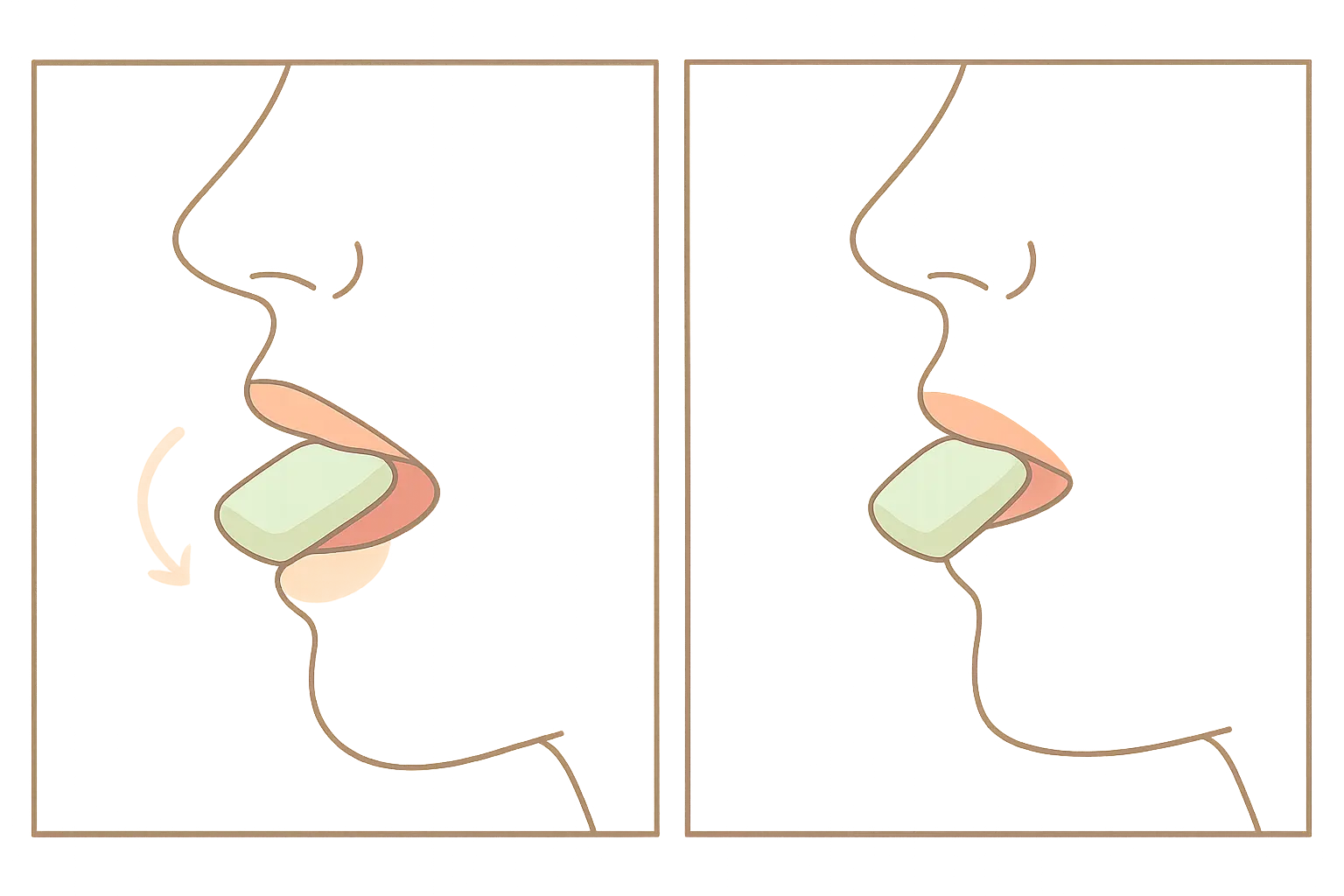
Nicotine gum is not regular chewing gum, and treating it like one is the single biggest cause of avoidable side effects. The FDA-approved directions for nicotine polacrilex gum describe a specific technique: chew slowly until you notice a tingling or peppery taste, then “park” the gum between your cheek and gum line so the nicotine can absorb through the lining of your mouth. Once the tingle fades — usually after a few minutes — you chew a few more times and park it again, repeating this cycle for about 30 minutes per piece.
Chewing continuously, the way you would chew regular gum, forces you to swallow nicotine-laced saliva. Nicotine absorbed through the stomach lining rather than the cheek is processed differently and is far more likely to cause hiccups, heartburn and nausea. The label is direct about the daily structure too: at least 9 pieces a day for the first six weeks, spaced roughly every 1–2 hours, tapering to every 2–4 hours in weeks 7–9 and every 4–8 hours in weeks 10–12, with a hard ceiling of 24 pieces a day. Under-dosing (too few pieces, chewed too gently) is its own problem, because it leaves cravings unmanaged; the goal is steady technique, not minimal use.
If you have tried gum and technique alone has not solved the side effects, it is worth comparing formats — see how gum, patch, lozenge and inhaler compare and which NRT products act fastest for cravings that hit hard and quickly.
Hiccups, burping and heartburn: the swallowing problem
Hiccups and heartburn from nicotine gum are almost always a swallowing problem, not a nicotine-sensitivity problem. Every time saliva loaded with nicotine goes down instead of staying parked in the cheek, it irritates the esophagus and stomach lining, which is exactly the mechanism the label warns about when it tells you not to “continuously use one piece after another.”
Three adjustments usually resolve this within a few days: chew more slowly so you produce less saliva at once, park the gum fully rather than half-chewing throughout, and avoid drinking coffee, soda or juice in the 15 minutes before or during a piece, since acidic drinks change how much nicotine your mouth absorbs and can worsen the burning sensation. If hiccups or heartburn are severe, persistent beyond the first couple of weeks, or come with chest pain, that crosses into “ask a pharmacist” territory covered further down.
Mouth, throat and jaw soreness
A sore jaw, tender gums or a raw feeling at the back of the throat usually means the gum is being chewed too hard, too fast, or for too many consecutive hours. Nicotine gum requires far less chewing force than regular gum — the manufacturer’s label specifically lists “mouth, teeth, or jaw problems” as a reason to stop and ask a doctor if they do not improve, which is a useful signal that mild soreness is common but should not become a daily fixture.
Switching flavors or textures sometimes helps if the coating itself irritates your mouth, and giving your jaw a rest between pieces — rather than starting a new one the second the last one loses flavor — reduces cumulative strain. People with dentures, braces, TMJ problems or recent dental work should raise nicotine gum specifically with their dentist or pharmacist before relying on it as their main quit method, since an alternative NRT format may be more comfortable.
Nausea, dizziness and racing heart (too much nicotine)
Mild lightheadedness in the first day or two of any new NRT product is common as your body adjusts to a different nicotine delivery pattern than smoking. But nausea, dizziness, a racing or irregular heartbeat, sweating or vomiting together are the label’s own overdose warning signs: “nausea, vomiting, dizziness, diarrhea, weakness, and rapid heartbeat.” This combination usually means you are getting more nicotine than you need — often from chewing multiple pieces back to back, parking two pieces at once, or combining gum with a patch and cigarettes at the same time.
The fix is almost always to reduce, not stop cold: drop to one piece at a time, extend the gap between pieces, and confirm you are not also smoking while wearing a patch or using another nicotine source, since combination use without guidance is a common cause of these symptoms. Genuine palpitations or an irregular heartbeat are different from a temporarily fast pulse and should prompt a same-day call to a pharmacist or doctor, not a wait-and-see approach.
Here is how the CDC demonstrates the technique in practice, which is worth watching once even if you have used gum before, since most side effects trace back to skipping the “park” step.
Side effects that mean you should stop and ask a pharmacist
Most nicotine gum side effects are a technique problem you can fix yourself within days. A smaller set of symptoms are the label’s explicit “stop and ask a doctor” list, and they deserve a same-day conversation with a pharmacist or prescriber rather than working around them:
| Symptom | Usually means | What to do |
|---|---|---|
| Occasional hiccups, mild heartburn | Swallowing saliva while chewing | Slow down, chew-and-park properly |
| Sore jaw or mouth | Chewing too hard or too long | Reduce chewing force, space out pieces |
| Mild nausea, light dizziness (day 1–2) | Adjusting to nicotine delivery | Usually settles within days; reduce pace if not |
| Irregular heartbeat or palpitations | Label warning sign | Stop and ask a doctor the same day |
| Oral blistering, mouth/teeth/jaw problems that persist | Label warning sign | Stop and ask a doctor |
| Difficulty breathing or rash | Possible allergic reaction | Discontinue and seek medical care |
None of this means nicotine gum is unusually risky — quit-smoking medicines, including gum, are consistently described by health authorities as far safer than continuing to smoke. It means the label’s warnings exist for a reason and are worth taking literally rather than pushing through.
How long side effects last
For most people, the technique-related side effects — hiccups, mild heartburn, jaw soreness — ease within the first one to two weeks as chewing habits adjust, which lines up with the label’s own weeks 1–6 dosing phase being the most intensive. If you are still getting hiccups or a sore jaw after two to three weeks of correct chew-and-park technique, that is a reasonable point to talk to a pharmacist about switching NRT formats — NICE guideline NG209 on tobacco dependence treatment covers how stop-smoking support and NRT choice should be reviewed — rather than assuming it will keep improving on its own.
Side effects that persist unchanged, worsen, or that mix in with new symptoms are worth reviewing against your overall NRT plan — including whether gum is even the best fit for your craving pattern. Comparing NRT options side by side or reading about using nicotine gum for longer than the standard 12-week course can help you decide whether to adjust technique, switch products, or extend use under a pharmacist’s guidance.
Tracking what triggers your side effects
See exactly when your side effects happen
iQuit’s craving log lets you record when you chew a piece, how intense the craving was, and any symptoms that followed — so a pattern like “hiccups only after coffee” or “jaw ache only after the third piece of the day” becomes obvious instead of guesswork. It is free on both stores, with no therapeutic claims — it is a tracking and support tool, not a substitute for medical advice.
Download iQuit Free on Google Play
Download on the App Store
Frequently Asked Questions
Is it normal to hiccup when using nicotine gum?
Yes. Hiccups are one of the most common nicotine gum side effects and usually happen when saliva containing nicotine is swallowed instead of staying in the cheek. The gum’s own directions warn that chewing one piece after another “may cause you hiccups, heartburn, nausea or other side effects.” Slowing down and using the chew-and-park technique resolves most cases within days (DailyMed nicotine polacrilex label).
Why does nicotine gum give me heartburn?
Heartburn happens when nicotine-containing saliva is swallowed rather than absorbed through the cheek lining, irritating the esophagus and stomach. Chewing more slowly, parking the gum properly, and avoiding acidic drinks like coffee or soda while chewing usually reduces or stops it within the first one to two weeks (DailyMed label; NHS-affiliated NRT guidance).
How many pieces of nicotine gum can I chew in a day?
The nicotine polacrilex label recommends at least 9 pieces a day for the first six weeks, spaced roughly every 1 to 2 hours, tapering through weeks 7–12, with a maximum of 24 pieces a day at any point in the course. Chewing more than directed increases the risk of side effects rather than improving quitting outcomes (DailyMed label).
What does chewing too much nicotine gum feel like?
Overuse symptoms include nausea, vomiting, dizziness, diarrhea, weakness and a rapid heartbeat, according to the manufacturer’s overdose warning. If you notice several of these together, reduce to one piece at a time, extend the gap between pieces, and check you are not combining gum with a patch or continued smoking (DailyMed label).
Can nicotine gum cause jaw pain?
Yes, jaw soreness is common when the gum is chewed too hard, too fast, or continuously rather than parked between the cheek and gum. Persistent mouth, teeth or jaw problems are listed on the label as a reason to stop use and ask a doctor if they do not resolve with gentler technique (DailyMed label).
When should I stop using nicotine gum and see a doctor?
Stop use and contact a doctor if you experience irregular heartbeat or palpitations, persistent mouth, teeth or jaw problems, oral blistering, difficulty breathing, or a rash — these are listed directly on the nicotine polacrilex drug label as warning signs that go beyond normal, technique-related side effects (DailyMed label).
Do nicotine gum side effects mean it isn’t working?
No. Mild, technique-related side effects are a normal part of learning to use nicotine gum correctly, not a sign the product has failed. Health authorities consistently note that approved quit-smoking medicines, including gum, are far safer than continuing to smoke, and most side effects ease within one to two weeks (CDC quit-smoking medicines guidance).
Can I switch to a different NRT if gum side effects don’t improve?
Yes. If hiccups, heartburn or jaw soreness persist beyond two to three weeks of correct technique, a pharmacist can help you compare patches, lozenges, inhalers or nasal spray, which deliver nicotine differently and may suit you better (NICE guideline NG209 on tobacco dependence treatment).