
Is long-term nicotine gum use safe? For practical purposes, yes — using nicotine gum for months or even years is dramatically safer than smoking, and staying on it is not a failed quit or a swapped addiction. Nicotine itself is not what drives smoking-related cancer, and the small risks of prolonged gum use are mainly dental and jaw effects. It is still worth reviewing long-term use with a pharmacist or doctor.
What does the long-term safety evidence actually show?
Nicotine replacement therapy, including gum, has been in widespread clinical use since the 1980s, giving researchers decades of real-world safety data — far longer than the 8-to-12-week course most gum packaging recommends. The core finding across this evidence base is consistent: NRT delivers nicotine considerably more slowly than a cigarette, producing lower peak blood nicotine levels, and correctly used NRT has not been shown to carry the kind of dependence risk seen with smoking.
Guidance is careful about how it frames the timeline, and it is worth quoting precisely. The American Cancer Society’s guide to nicotine replacement therapy notes that the FDA has approved the patch for a total of three to five months, and adds that “NRT is not recommended for long-term use, but if it’s needed to prevent relapse, continuing to use it is preferable to returning to smoking.” That is the honest position: indefinite use is not the official goal, but it clearly beats the alternative.
Nicotine on its own also does not carry the combustion byproducts responsible for smoking-related disease. A cigarette delivers nicotine alongside tar, carbon monoxide, and thousands of other chemicals produced by burning tobacco; gum delivers nicotine and essentially nothing else of consequence. This distinction is the foundation of why prolonged NRT use is treated as low-risk where long-term smoking is not.

Does nicotine itself cause cancer?
No — not in the way cigarettes do. Cancer risk from tobacco comes overwhelmingly from the carcinogens generated by burning tobacco leaf and inhaling the resulting smoke. Nicotine is the addictive component, but it is not the primary driver of smoking-related cancers, and nicotine replacement therapy, as the American Cancer Society puts it, “gives you nicotine without the other harmful chemicals in tobacco.”
This is genuinely counterintuitive for many long-term gum users, who sometimes worry they have simply “swapped one carcinogen for another.” That framing does not hold up: nicotine is the reason cigarettes are addictive, but it is the thousands of other chemicals in smoke — not nicotine — that cause the overwhelming majority of smoking-related cancer risk.
What are the dental and jaw effects of long-term gum use?
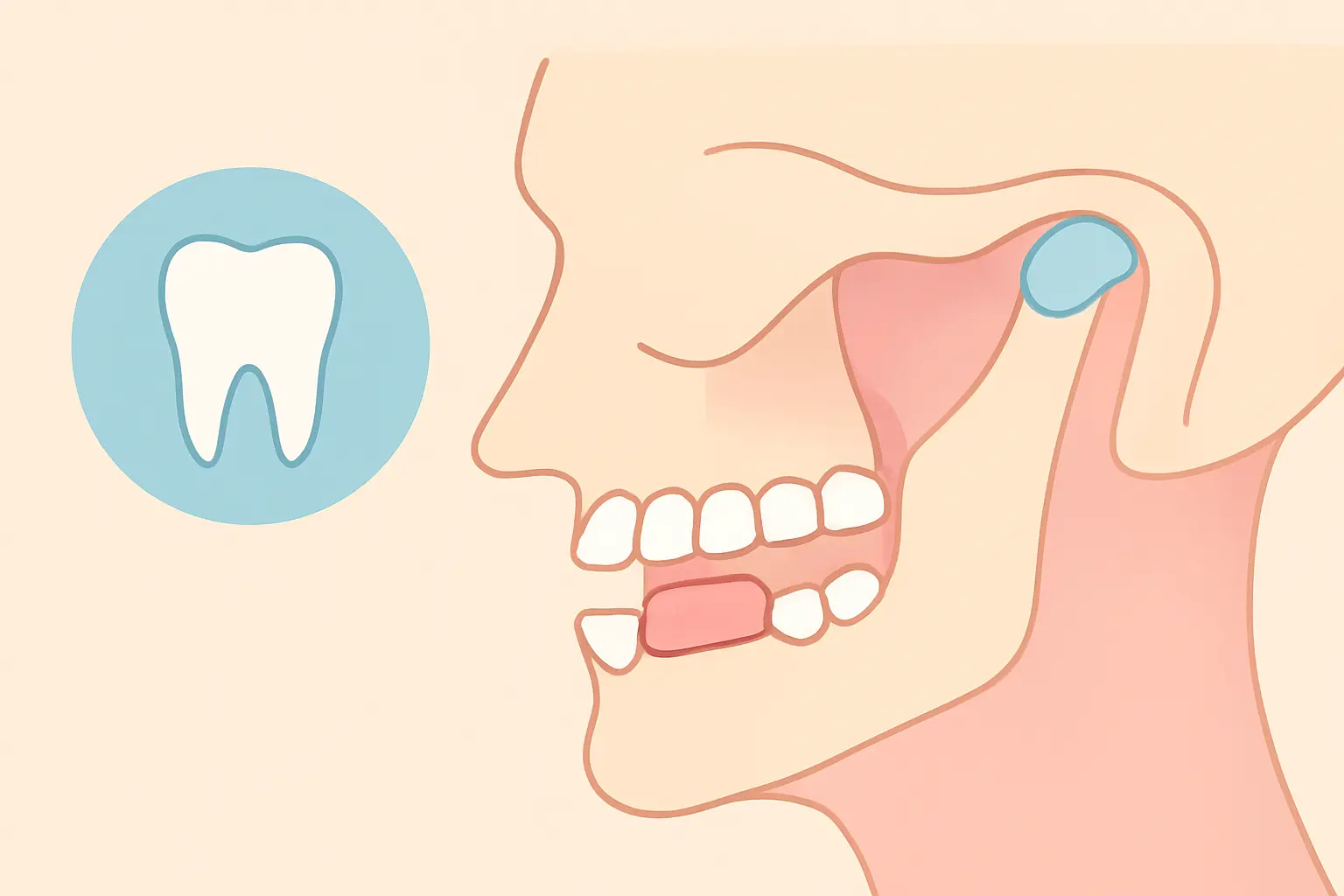
This is where the real, if modest, risks of prolonged gum use actually live. Nicotine gum is sugar-free, so it does not carry a cavity risk in the way ordinary chewing gum might, but frequent, prolonged chewing can aggravate temporomandibular joint (TMJ) problems in people prone to them, and repeatedly “parking” the gum in the same spot in your cheek can cause localized mouth irritation or small ulcers.
Gum can also interfere with dentures, bridges, and other dental work, since it is designed to be chewed and parked rather than swallowed, which can be awkward or damaging with certain dental appliances. None of these effects are dangerous in the way that continuing to smoke is, but they are worth managing: switching to a different NRT format (patch, lozenge, or spray) if jaw soreness or dental interference becomes a persistent problem is a reasonable, low-stakes adjustment your pharmacist can help with.
Is being dependent on the gum itself a problem?
It’s a common worry, but the evidence does not support treating gum dependence as equivalent to cigarette dependence. NRT delivers nicotine slowly enough that it does not produce the same rapid reward spike that makes cigarettes so reinforcing, and correctly used NRT has not been shown to carry elevated dependence risk in the research literature.
That said, some long-term users do develop a psychological attachment to the ritual of chewing, similar in a mild way to any long-standing habit. That is a quality-of-life consideration worth being honest with yourself about, not a medical emergency. If you notice you are using gum in situations that have nothing to do with a craving, or find the idea of stopping genuinely stressful, that’s a reasonable moment to think about tapering, covered next.
How do you taper off gum when you’re ready?
Standard gum protocols are built around a 12-week regimen that gradually spaces out use rather than stopping abruptly, and the same taper logic works for someone stepping down from long-term use.
| Weeks | Typical frequency |
|---|---|
| Weeks 1–6 | One piece every 1–2 hours |
| Weeks 7–9 | One piece every 2–4 hours |
| Weeks 10–12 | One piece every 4–8 hours |
For someone who has used gum for years, the same principle applies on a slower timeline: gradually extend the interval between pieces, drop one habitual use at a time (the after-meal piece, say, before the driving piece), and track how you feel rather than following a fixed calendar. It is worth completing a full, deliberate taper rather than trying to stop abruptly, since gradual reduction gives your brain time to adjust and makes the process far less uncomfortable than quitting the gum cold.
When should you just stay on it?
If tapering feels genuinely destabilizing, or if every attempt to stop the gum has been followed by a return to cigarettes, staying on gum is a legitimate, medically reasonable choice, not a failure. This is exactly the logic behind harm reduction, and it is why guidance says continuing NRT is preferable to relapsing: gum poses a small, well-characterized set of manageable risks, while cigarettes pose a large, well-documented set of serious ones. Choosing the smaller risk on an ongoing basis is not the same as never having quit.
If you’re weighing whether gum is still the right NRT format for you long-term, comparing it against other options in the best NRT options ranked can help, and how gum compares with patches, lozenges, and inhalers sets out the practical trade-offs between formats.

Who should check with a clinician first?
Long-term NRT is low-risk for most adults, but it is not a decision to make alone in every situation. Anyone who is pregnant or breastfeeding, anyone under 18, and anyone with unstable heart disease, a recent cardiac event, or a serious heart rhythm problem should get individualized advice before continuing gum beyond the standard course. Nicotine is not carcinogenic, but it is not inert either: it raises heart rate and blood pressure and affects the developing brain, which is why these groups are treated differently.
The same applies if you are taking prescription stop-smoking medication, or if a dentist has raised concerns about your dental work. A pharmacist can usually answer these questions in a few minutes without an appointment, and the NHS quit smoking hub sets out what support is available if you want a structured plan behind your decision.
The verdict: relapse is the bigger risk
Every major public health body that has examined this question reaches a similar conclusion: the risk of long-term nicotine gum use is small and manageable, while the risk of relapsing to smoking is large and well-documented. Framing continued NRT use as “still not free of it” misses the point — the goal was always to be free of cigarettes and their combustion products, not necessarily free of nicotine on a fixed timeline.
When to see a doctor: If you have persistent jaw pain, mouth ulcers that don’t heal, or dental appliance problems from gum use, or if you have a heart condition and are unsure whether long-term nicotine use is appropriate for you specifically, talk to a doctor or pharmacist — these are solvable, individual questions, not reasons to panic or quit NRT abruptly. Never stop a prescribed stop-smoking medication or NRT plan without discussing it with the clinician who recommended it.
Apps like iQuit are built around this same harm-reduction mindset: whether you’re actively tapering off gum, staying on it long-term, or somewhere in between, the goal is staying smoke-free, not hitting an arbitrary nicotine-free deadline. If tapering is your goal, understanding how long nicotine stays in your body and how nicotine rewires the brain’s reward loop makes the whole process easier to understand, and a longer-term view of staying smoke-free long term is worth reading regardless of where you land on gum. If dental changes are on your mind, how your teeth and gums recover after quitting covers the (unrelated) healing of your actual gum tissue after leaving cigarettes behind. For those managing multiple NRT products, combination NRT versus single NRT and finding the right patch strength are useful next reads.
Frequently Asked Questions
Is it safe to chew nicotine gum for years?
For most adults, yes. Decades of clinical use have not established a significant increase in dependence or serious health risk from correctly used long-term NRT, and gum avoids the combustion byproducts responsible for most smoking-related disease. Guidance still frames NRT as a time-limited aid, so it is worth reviewing years-long use with a pharmacist.
Does nicotine gum cause cancer?
No. Cancer risk from tobacco comes from the carcinogens produced by burning tobacco, not from nicotine itself. As the American Cancer Society puts it, nicotine replacement therapy gives you nicotine without the other harmful chemicals in tobacco.
Can long-term nicotine gum use damage your teeth or jaw?
Nicotine gum is sugar-free, so it doesn’t cause cavities, but frequent chewing can aggravate temporomandibular joint (TMJ) issues in people prone to them, and repeated parking in one spot can cause mouth irritation or small ulcers. It can also interfere with dentures or bridges. Switching NRT format can resolve these issues if they become bothersome.
Am I still addicted if I’m using nicotine gum long-term?
Not in the way you were addicted to cigarettes. NRT delivers nicotine slowly enough that it does not produce the rapid reward spike that drives cigarette dependence, and correctly used NRT has not been shown to carry elevated dependence risk. Some users do form a mild habitual attachment to the chewing ritual, which is a quality-of-life question rather than a medical danger.
How do I taper off nicotine gum after long-term use?
Follow the same logic as the standard 12-week protocol: one piece every 1 to 2 hours in weeks 1 to 6, every 2 to 4 hours in weeks 7 to 9, and every 4 to 8 hours in weeks 10 to 12. For someone tapering after years of use, doing this more slowly and tracking how you feel tends to work better than an abrupt stop.
Is it okay to just stay on nicotine gum indefinitely?
Guidance does not set indefinite use as the goal, but it is clear that if NRT is needed to prevent relapse, continuing to use it is preferable to returning to smoking. Staying on a small, well-characterized risk rather than cycling back to a much larger one is a legitimate harm-reduction decision, not a failed quit.
Is nicotine gum bad for your heart long-term?
For most people without unstable heart conditions, long-term nicotine gum use is not considered a significant cardiovascular risk, since it delivers nicotine at much lower peak levels than smoking. Nicotine does raise heart rate and blood pressure, so people with a recent cardiac event or unstable heart disease should check with a doctor about long-term NRT use for their situation.
Can you use nicotine gum long-term during pregnancy?
Not without medical supervision. NRT in pregnancy is a decision for a midwife or doctor, who will weigh the clear benefit of stopping smoking against nicotine exposure and usually recommend the shortest effective course. The same applies to anyone breastfeeding or under 18.
Why do some people use nicotine gum for years instead of months?
Some people find gum manages residual cravings better than expected, some have tried tapering and relapsed to smoking, and some simply prefer the small, known risks of NRT to the discomfort of stopping altogether. All of these are valid reasons, and none of them represent a failure to have quit smoking successfully.
Whatever your NRT timeline, iQuit helps you stay smoke-free
Whether you’re actively tapering off gum or staying on it long-term, iQuit’s craving tools, milestone tracker, and AI coach support the goal that actually matters: staying free of cigarettes.