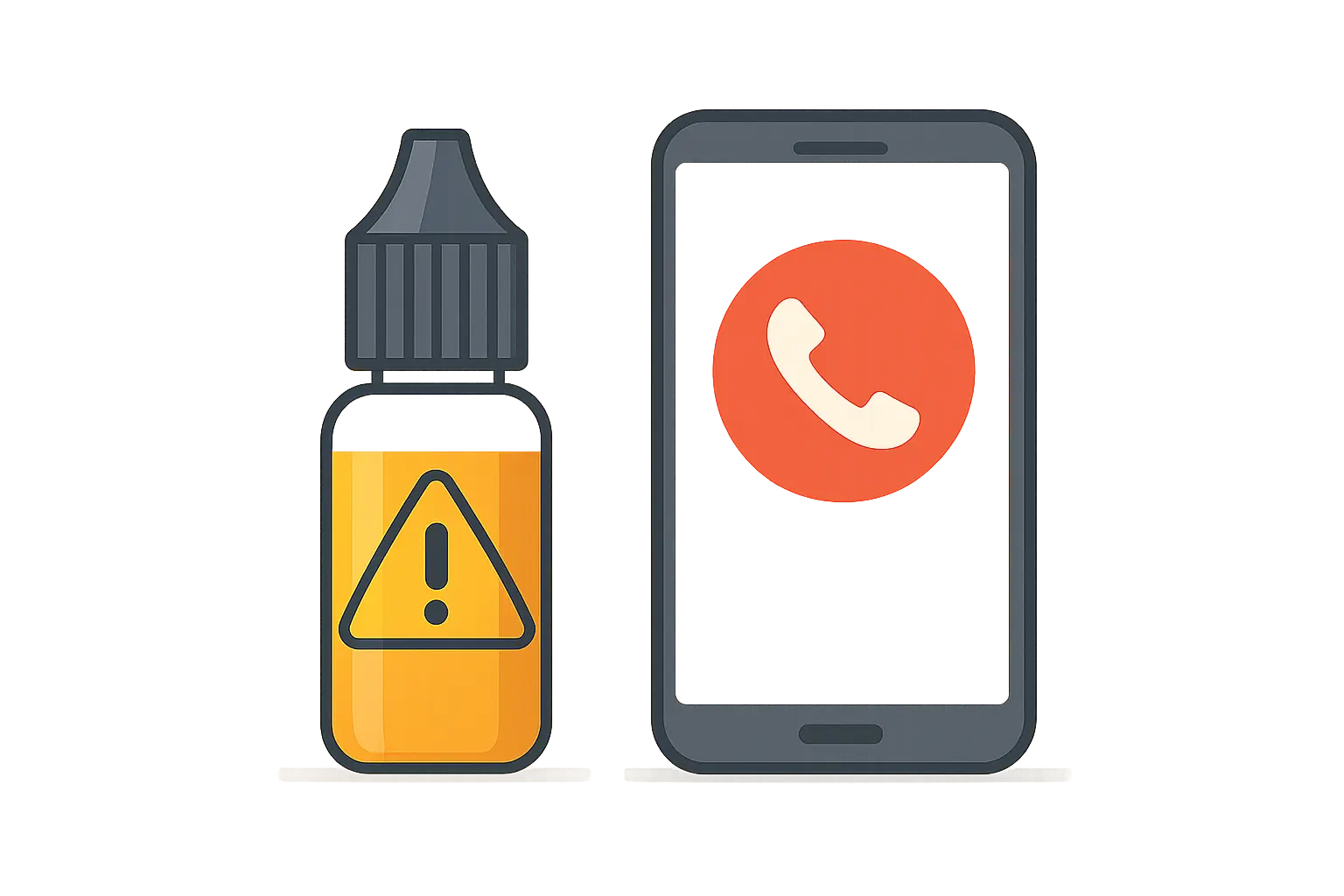
Nicotine poisoning starts with nausea, vomiting and a racing heart, and it can happen to a heavy vaper stacking NRT on top of cigarettes just as easily as to a toddler who found a pouch on the coffee table. The old rule of thumb that “just a few milligrams can kill you” is not well supported by the evidence, but nicotine is still genuinely toxic in the wrong amount, and a real e-liquid poisoning surge in young children over the past decade means the risk is not theoretical.
Early Signs of Too Much Nicotine
The FDA-approved label for over-the-counter nicotine lozenges tells users to stop and seek help if “you get symptoms of nicotine overdose such as nausea, vomiting, dizziness, diarrhea, weakness and rapid heartbeat” (DailyMed, nicotine polacrilex lozenge label). A national study of e-liquid poisoning cases in young children found the same pattern show up first and most often: “the most common symptoms (63.6%) related to nicotine poisoning were nausea and vomiting” (national ED study, 2013–2017). Sweating, headache, a fast or irregular heartbeat and unsteadiness on your feet often follow.
None of this requires a huge dose to show up. Mixing an NRT product with continued smoking or vaping, or accidentally doubling up on gum and a patch at once, is enough to trigger these symptoms in adults.
Why It Feels Like Food Poisoning
Nicotine acts on receptors throughout the gut and nervous system, not just the brain’s reward pathway, which is why an overdose produces a stomach-flu-like picture — nausea, vomiting, cramping and sweating — rather than something that obviously screams “drug problem.” A 19th-century self-experiment later cited as the basis for nicotine’s lethal-dose estimate described exactly this pattern after a few milligrams: “burning in the mouth, scratching in the throat, increased salivation, then a feeling of warmth spreading from the stomach across the chest and head to the fingertips,” followed by headache, dizziness and nausea (Mayer, Archives of Toxicology, 2014, describing the original 19th-century account). That resemblance to gastro illness is exactly why mild nicotine overdose in adults is so often shrugged off rather than reported.
How Much Nicotine Is Too Much (and Why the Old Number Is Disputed)
This is the honesty trap worth naming directly. For over a century, “standard textbooks, databases, and safety sheets consistently state that the lethal dose for adults is 60 mg or less (30–60 mg),” a figure that has led to warnings that “ingestion of five cigarettes or 10 ml of a dilute nicotine-containing solution could kill an adult” (Mayer, 2014). A 2014 toxicology review traced that number back to “highly dubious self-experiments performed in the mid of the nineteenth century” and pointed out that “there are countless records of subjects who survived consumption of nicotine in amounts far higher than 60 mg” — including one documented suicide attempt with 4 grams of pure nicotine that the person survived. The review’s own conclusion: current evidence indicates “more than 0.5 g [500 mg] of oral nicotine is required to kill an adult.”
That reappraisal does not mean nicotine is harmless in large amounts — 500 mg is still easily reached by concentrated e-liquid, and severe symptoms clearly occur well below any lethal threshold. It means the specific “60 mg will kill you” warning, still printed in many safety sheets, is not well supported, and panic based on that exact number is misplaced. What is not in dispute is that children need far less to be seriously harmed, covered next.
| Claim | Status |
|---|---|
| “60 mg (or 5 cigarettes’ worth) will kill an adult” | Disputed — traced to flawed 19th-century self-experiments (Mayer, 2014) |
| Modern estimate for adult lethal dose | More than 500 mg oral nicotine (Mayer, 2014) |
| Nausea, vomiting, dizziness, rapid heartbeat at much lower doses | Well supported (FDA OTC label; national poisoning study) |
| Small amounts of e-liquid can seriously harm a young child | Well supported — highest ingested amount in a national dataset was 118.2 mL (America’s Poison Centers; PMC6582692) |
Nicotine Sickness From Gum, Pouches and Vapes
Understanding how much nicotine is actually in one cigarette is a useful baseline, because it’s easy to underestimate how much a gum, pouch or vape session adds on top. Chewing several pieces of nicotine gum in a short window, or vaping heavily right after using a patch, is a common way adults accidentally overshoot into overdose territory — not through any single huge dose, but through stacking several smaller ones close together. If you’re comparing options, how combination NRT compares with a single product explains the intended, medically supervised way to combine nicotine sources, which is very different from accidentally doubling up.
People switching between products are also often unsure how long nicotine actually stays in the body, which matters directly here: nicotine from a previous dose can still be active when a new one is added, making the combined effect larger than either dose alone would suggest.
Children, Pets and E-Liquid: an Emergency
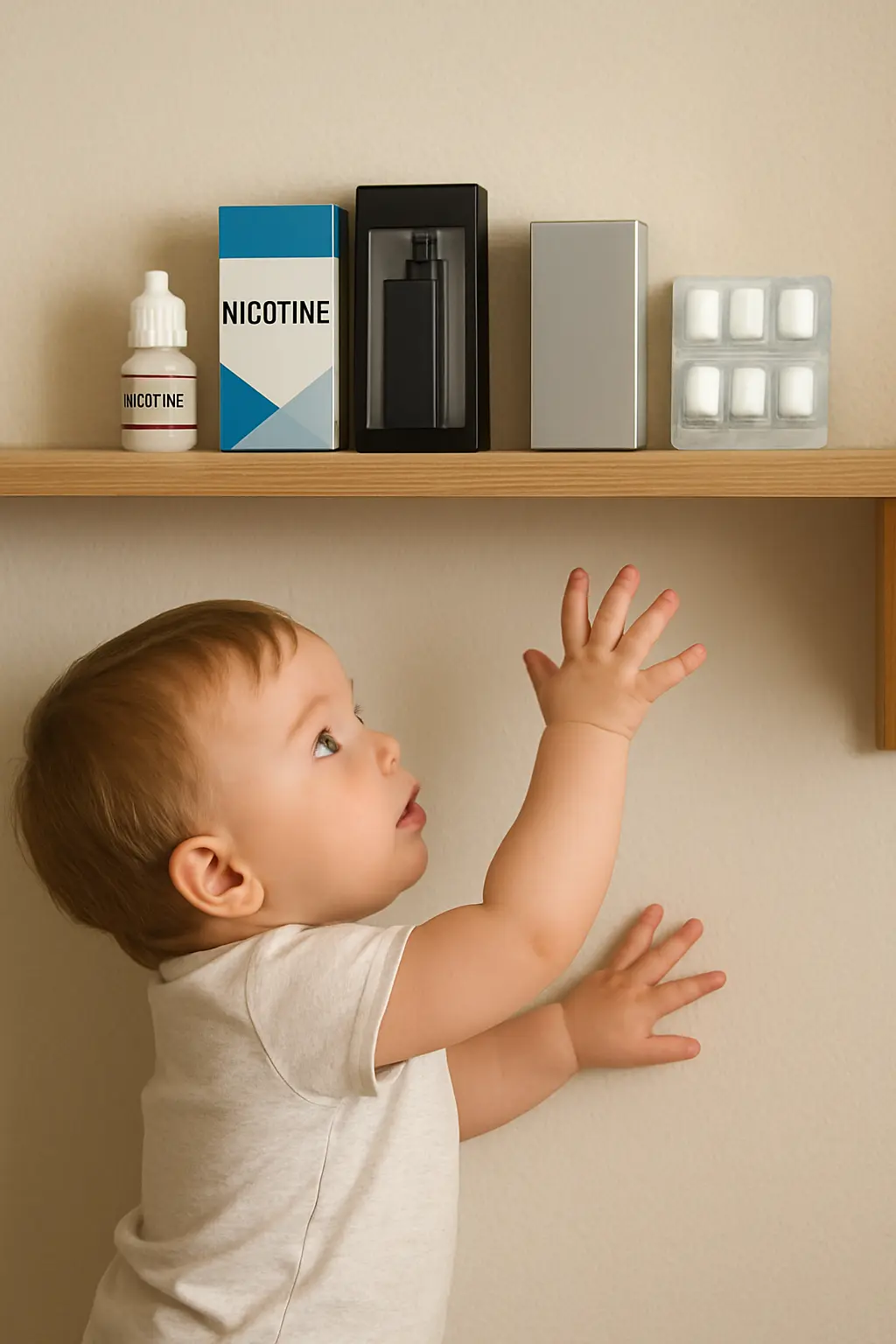
This is where the numbers stop being contested and start being urgent. America’s Poison Centers report that “from 2011 to 2025, Poison Centers have managed 59,297 e-cigarette and liquid nicotine related exposure cases” in the US, and that “the majority of cases reported to poison centers are due to accidental exposures in children less than 6 years old” (America’s Poison Centers, e-cigarette and liquid nicotine tracker). A national hospital study of children under five found an estimated 4,745 e-liquid poisoning cases treated in emergency departments between 2013 and 2017 alone, with cases peaking at 1,736 in a single year; 96.9% of exposures were through ingestion, and 4.1% required hospital admission (PMC6582692, 2019).
Pets are vulnerable for the same reason children are: small body weight relative to even a “small” dose. A spilled bottle of e-liquid, a chewed nicotine pouch, or a dropped lozenge is a real emergency for a toddler or a dog, not a “wait and see” situation.
What to Do Right Now
If you or someone you’re with may have taken too much nicotine — whether from stacking NRT, a child getting into e-liquid, or a pet chewing a pouch — act on symptoms and exposure, not on trying to estimate an exact “safe” dose:
- In the US, call Poison Control at 1-800-222-1222 (or your country’s poison control equivalent) right away — they will tell you within minutes whether home monitoring is appropriate or emergency care is needed.
- Call emergency services for severe symptoms: difficulty breathing, seizures, loss of consciousness, or a young child who is limp or unresponsive.
- Don’t try to make the person vomit unless a poison control specialist or medical professional specifically tells you to.
- Bring the product or packaging to the phone call or the emergency room — knowing the concentration and format speeds up the right response.
The FDA-approved lozenge label states this plainly: “in case of overdose, get medical help or contact a Poison Control Center right away” (DailyMed label, 2026). That instruction applies whether the exposure came from a medicine-cabinet product or a vape.
Preventing It While Using NRT
The safest way to avoid an accidental overdose while quitting is to follow one nicotine-replacement product’s dosing instructions at a time rather than layering products on your own judgment, and to keep smoking or vaping out of the picture entirely once NRT starts — the combination, not either product alone, is usually what pushes someone into overdose territory. Reviewing how the major NRT options compare before you start is a better way to choose a dose that fits your habit than guessing and adjusting after the fact. Logging your NRT doses and any cigarettes or vape sessions in the same place makes it far easier to notice when you’re stacking sources without meaning to.
If withdrawal symptoms are what’s tempting you to double up on nicotine sources, understanding what the stages of nicotine withdrawal actually feel like can make it easier to ride out a rough patch with your current dose rather than reaching for more.
Frequently Asked Questions
What are the first signs of nicotine poisoning?
Nausea and vomiting are the most common first symptoms, reported in about 63.6% of documented e-liquid poisoning cases in children. Dizziness, sweating, weakness and a rapid or irregular heartbeat commonly follow, according to the FDA-approved nicotine lozenge label and national poisoning research.
Is 60 mg of nicotine really a lethal dose?
That figure, long printed in safety references, has been traced back to flawed 19th-century self-experiments. A 2014 toxicology review found people have survived far higher doses (including one documented 4-gram suicide attempt) and concluded that more than 500 mg is likely required to kill an adult. This does not mean smaller doses are harmless — they can cause serious illness, especially in children.
Can you overdose on nicotine gum or lozenges?
Yes, particularly if you chew or dissolve several pieces close together, or combine gum or lozenges with a patch and continued smoking or vaping. The FDA-approved label warns to stop and seek help if you develop nausea, vomiting, dizziness, diarrhea, weakness or a rapid heartbeat.
How much e-liquid is dangerous for a child?
There is no single “safe” small amount — national poisoning data shows children have been seriously harmed by e-liquid exposures, with the highest recorded amounts in one dataset reaching 118.2 mL or a full bottle. Any suspected ingestion by a child should be treated as an emergency and reported to poison control immediately, not judged by volume.
What number do I call for nicotine poisoning in the US?
Call Poison Control at 1-800-222-1222, as printed on FDA-approved nicotine product labels. For severe symptoms such as difficulty breathing, seizures or unresponsiveness, call emergency services immediately instead.
Should I make someone throw up after a suspected nicotine overdose?
Not unless a poison control specialist or medical professional specifically instructs you to. Call Poison Control or emergency services first and follow their guidance rather than acting on your own judgment.
Are pets at risk from nicotine products in the house?
Yes. A pet’s small body weight means even amounts that seem minor to an adult human, such as a chewed nicotine pouch or a few drops of e-liquid, can cause serious illness. Treat any suspected pet exposure as urgent and contact a veterinarian or animal poison control line right away.
Track Your Nicotine Intake, Not Just Your Cravings
See Your Own Usage Patterns Before They Add Up
iQuit’s craving log shows exactly when and how often you’re reaching for nicotine, so stacking multiple sources close together becomes visible instead of invisible — with SOS tools to help you ride out a craving without reaching for another dose. Free on Google Play and the App Store.
Download iQuit Free on Google Play
Download on the App Store